Behind The Scenes On Silver Linings Playbook

Paul Brownfield is an AwardsLine contributor. This article appeared in the Dec. 12 issue of AwardsLine.

The least saleable aspect of David O. Russell’s Silver Linings Playbook is also one of its central themes: obsession.

Pat Solitano, the lead character played by Bradley Cooper, is bipolar and manically fixated on getting his estranged wife back. Pat’s father, played by Robert De Niro, is a would-be bookmaker whose OCD behaviors (and his love) get projected onto his gambling and his diehard devotion to the hometown Philadelphia Eagles.
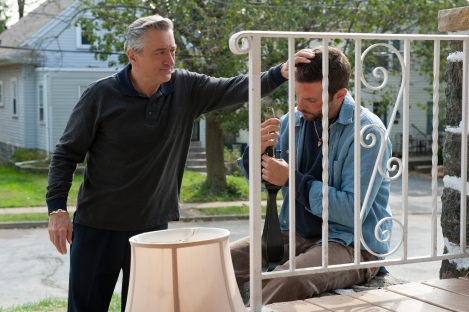
Robert De Niro, left, plays Pat Sr., father to Bradley Cooper's character in Silver Linings Playbook
Robert De Niro, left, plays Pat Sr., father to Bradley Cooper’s character in Silver Linings Playbook

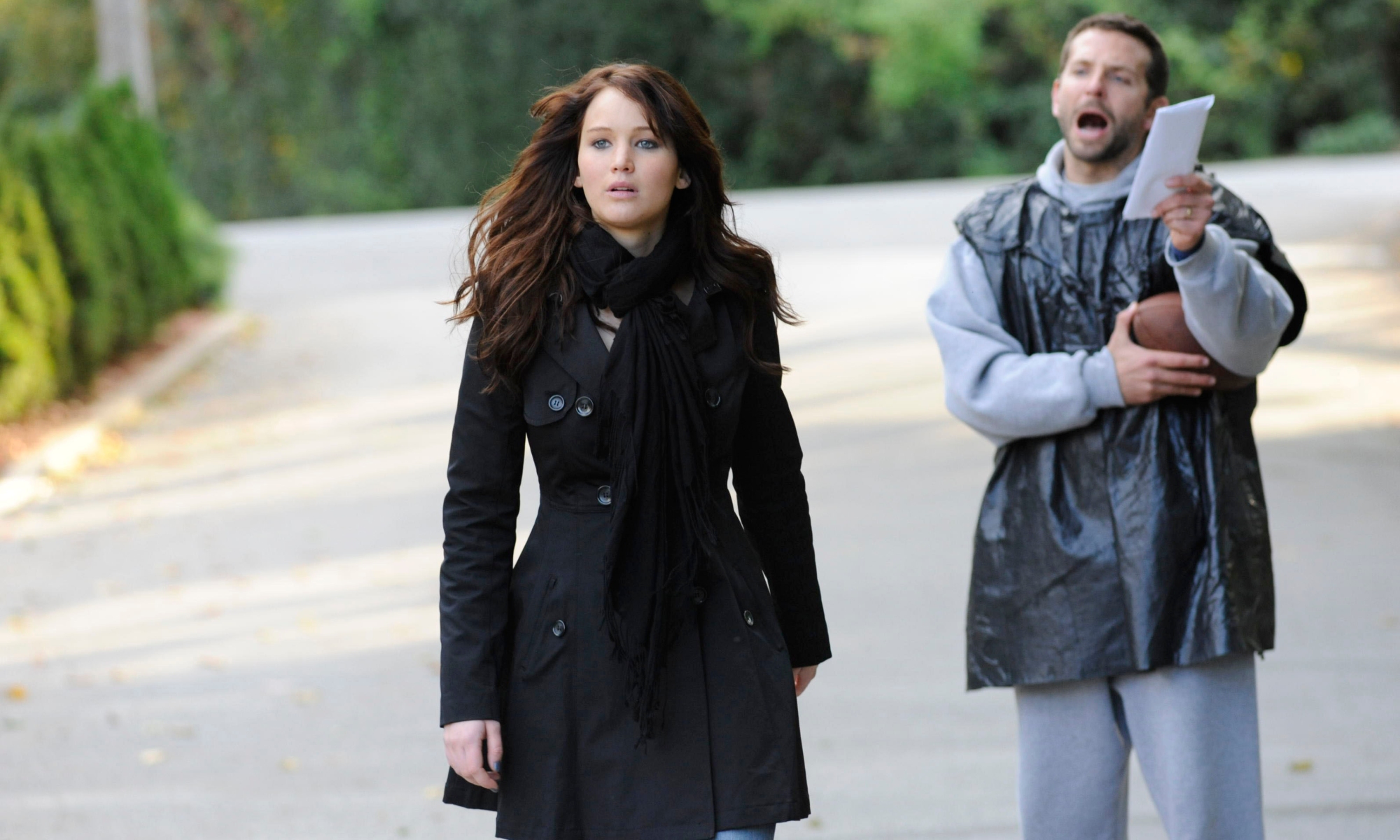
As the film begins, Pat is being released from a psychiatric hospital and moving back into a kind of halfway house—his childhood bedroom. De Niro spends much of the film in Eagles green, trying not to notice his son’s psychosis, which involves long runs through his neighborhood wearing sweats and a trash bag, while Pat’s mother, played by Jacki Weaver, tiptoes through the minefield created by her husband and son.

This is, in other words, prime Russell territory. The setting of Silver Linings Playbook, a no-frills, middle-class neighborhood in Philadelphia, has echoes of Russell’s last film, The Fighter, which evoked working-class Lowell, MA.

Russell calls Silver Linings a cousin to the world of The Fighter. He shot both films on similar 33-day schedules. His budget on Silver Linings was a reported $21 million. Jon Gordon, one of the film’s producers, noted that Russell can even be heard in a few scenes.

“We got most of it out in the post process, but if you listen very, very closely, there’s still a couple places in the movie where you can hear David’s voice in the background,” Gordon says.
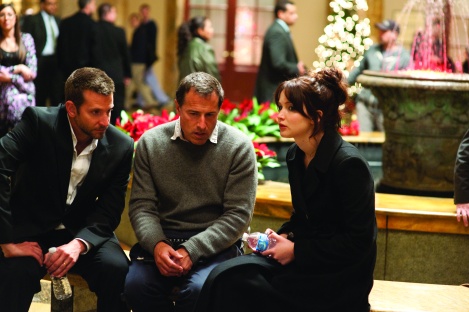
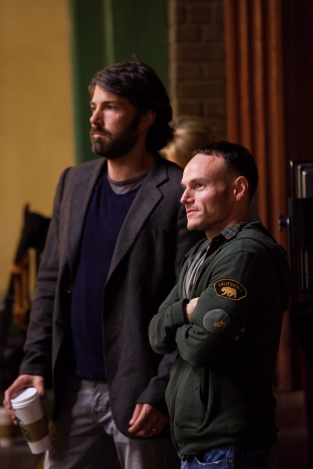
Director David O. Russell, center, with stars Bradley Cooper and Jennifer Lawrence on the set of Silver Linings Playbook,

This fits Russell’s image as a director who himself wades into the emotional muck he means to bring out onscreen. The world of Silver Linings Playbook is not as hardened or volcanic as the world of The Fighter, though there are still verbal—and a few physical—punches thrown, including by Tiffany (Jennifer Lawrence), the widow of a cop with whom Pat forges a connection.

What resonated for Russell when he was adapting the novel by Matthew Quick, he says, was a personal connection to the relationship between a father with OCD and his bipolar son.

“I liked that it was a very specific world, and part of what makes it specific is that there’s a father-son and a mother-son relationship that I have personally experienced with my own son,” Russell says. “Mr. De Niro doesn’t like to talk about his personal motivation so much, but it was also personal to him.”

Not so long ago, the director of Flirting With Disaster and Three Kings was in a self-described “wilderness period.” He hadn’t completed a film since 2004’s existential comedy I Heart Huckabees. The film that changed Russell’s course, and made Silver Linings Playbook possible, was The Fighter. Russell was only a few months removed from the awards-season fanfare for that film when he began preproduction on Silver Linings, and he attacked the production in the way he made The Fighter: Lean below the line; lots of steady cam and hand-held camera; and “show up and do the best you can.”

The film’s pathway to the screen, in the words of the Weinstein Co.’s Donna Gigliotti, had “luck and serendipity on its side.” The novel had been optioned by Sydney Pollack and Anthony Minghella, producing partners who had a first-look deal with Weinstein. They in turn gave the book to Russell to adapt. At the time, his son was 13, and he had recently divorced.

“I needed to work, I needed to write something, and I needed to make a living. And I also really responded to the material, so it was a matter of having the tone right,” Russell says. “You had to not stop working on the tone all the way through the editing process. The key to the whole thing is to keep it real, is to keep the people’s emotions committed and real.”

Early in 2008, Pollack and Minghella passed away within a few months of each other. Michelle Raimo, another producer attached to Silver Linings, was named president of Sony Pictures Animation. The script was languishing, Gigliotti explains, until Raimo urged her not to let Silver Linings fall by the wayside.

At the time, Gigliotti was in the midst of an Oscar campaign for the Weinstein Co.’s The Reader. By then, Russell had gone on to make The Fighter, after which the writer/director was suddenly a hot commodity again. “And thus,” Gigliotti explains, “there was new life in the project.”

It is the kind of movie—part family drama, part romantic comedy, not easily reduced in a trailer—that doesn’t come out of Hollywood with regularity.

“Studios used to make movies like this, and they don’t anymore,” Gigliotti says. “They’ve simply ignored the films that are adult-oriented and in that wheelhouse of $20 million to $40 million.”

Asked about reports that Silver Linings was originally to have starred Mark Wahlberg and Anne Hathaway, Gigliotti says that by the time the film got off the ground, Wahlberg had a scheduling conflict with the action-thriller Contraband, and Hathaway had a commitment to the Batman movie The Dark Knight Rises.

In their stead came Bradley Cooper, best known for The Hangover franchise, and Jennifer Lawrence, Oscar-nominated for her performance in Winter’s Bone but not yet the Hunger Games star.

“It’s funny,” Lawrence says. “I had just worked with Gary (Ross) on Hunger Games, who worked in a completely different way from David, no better, no worse. I’m always slightly embarrassed, as I don’t have any kind of acting background. It’s a silly thing to say, but you work with actors who talk about different methods, and I never had that and it’s a worry of mine because I don’t know technically what I’m doing. Any moment I could show up on set and blow it. That was the first movie that I felt like it was an advantage, because I felt so open to working with—not so much an advantage, but a blessing—any kind of director. But it was so easy with him, I understood him.”

Particularly for Cooper, the film would require that he stretch himself as an actor.

“When I read the script—I think it was probably sort of my defense mechanism—I just sort of thought, ‘Ah, I’m not really right for this,’ which is kind of counterintuitive because I’m from Philly,” Cooper says. “I’m obsessed with the Eagles, I’m Italian-Irish, my parents grew up in households very similar to (Pat’s family), my grandparents lived like that. I grew up basically with my grandparents.”

Watching Cooper play the conceded groom in one of the actor’s early Hollywood roles, 2005’s Wedding Crashers, Russell saw a “palpably angry individual” otherwise being used to play a comedic heavy.

Sure enough, Russell says, Cooper told him he had been an angrier person then. “There were substances and a lot of vulnerable emotions that he was hiding behind anger,” Russell recounts. Inside of five minutes of their meeting, Russell thought Cooper was a “much more vulnerable and interesting person than I’ve seen him be in cinema.”

Russell drew other parallels between Cooper and the character he plays: Both lost weight by way of remaking themselves, and both were hungry to be reintroduced to their respective communities.

“The hunger of Bradley to do this role, the hunger to step up as an actor and to do whatever it took is a wonderful thing for a director, and it mirrors the character’s hunger to be reintroduced to his community. They’re both in a way being reintroduced.

“That’s why I was conscious of starting the film on Bradley’s back,” Russell continues, referring to the movie’s opening scene, in which the camera is trained on Cooper as he is about to leave the hospital. “It’s not the first time I feel I’ve been down that road, in the sense that I feel like people thought they had a reductive idea of Amy Adams. When I told them she was playing a very tough, strong, sexy bitch in The Fighter, people were extremely skeptical. And I said, ‘Well, see the movie.’ ”
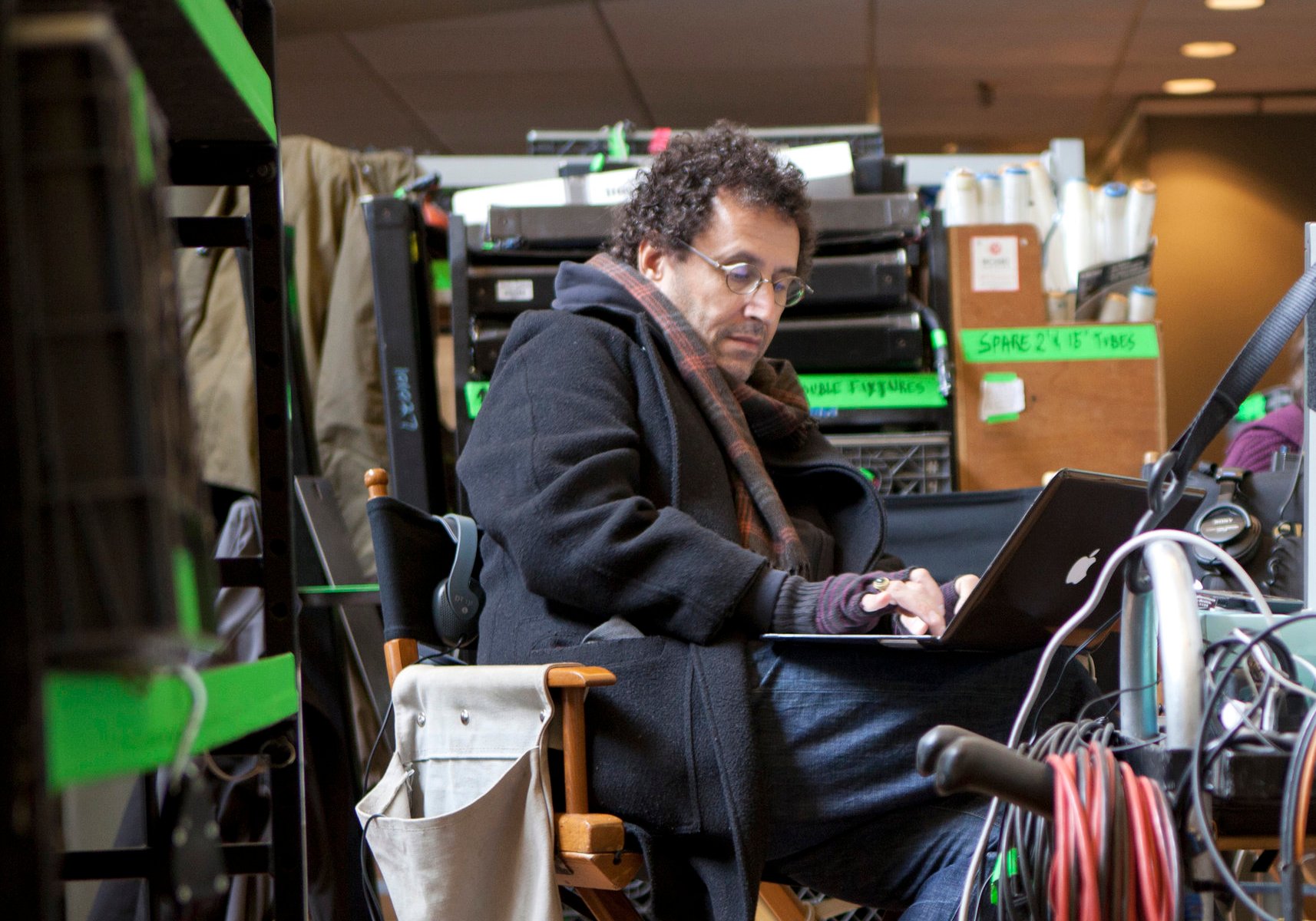
Q&A: Tony Kushner on Lincoln

Mike Fleming Jr. is Deadline’s film editor. This article appeared in the Dec. 12 issue of AwardsLine.

Whittling down the 56-year life of a landmark U.S. president to a feature-length screenplay is a daunting task, and playwright Tony Kushner initially turned down the offer to adapt Abraham Lincoln’s story for the big screen for Steven Spielberg, even after their Oscar-lauded collaboration on 2005’s Munich. But if there’s one writer who can effectively generate emotional drama against a political venue, it’s Kushner, whose Pulitzer Prize-winning seven-hour-long Angels in America play dramatized the AIDS crisis amidst the complex attitudes of Reagan-era times. While length worked in Kushner’s favor during Angels, on Lincoln it was the rock that he pushed up a hill. But after conferring with Spielberg, Kushner soon found the cornerstone that would condense his first 500-page draft down to a 150-minute film: Lincoln’s political fight to get the 13th Amendment to the U.S. Constitution pushed through Congress while the Civil War lingered.

AWARDSLINE: What was the biggest challenge you had in terms of focusing on a part of Lincoln’s life and keeping this feature length?

TONY KUSHNER: It very easily could have been a miniseries. There were a lot of challenges in that regard. It was just an astonishing amount of really incredibly dramatic historical material. By the time I finished doing my research, I could pretty much make a miniseries out of any weekend Lincoln was in the White House. And I know that is not in any way an exaggeration. More than any other moment in American history, (the Civil War) is a gathering of all our country’s central themes. My goal from the beginning was to not make a bare-bones outline of life in his administration. I wanted it to be a drama dictated by the working out of contradictions and conflict rather than a faithful recounting of all the high points in Lincoln’s life. It was very important that we not try to cover too much terrain, rather dramatize it in a small moment. The expanse of time itself defuses a certain amount of dramatic tension.

AWARDSLINE: Why didn’t you say yes to Lincoln right away? Was Munich a tough one to crack as well?

KUSHNER: Not at all. I really loved working with Steven on Munich, and it was hard in certain ways, but I just thought, “How do you write a character named Abraham Lincoln with anything other than an immortalization that you know? And who’s going to play him? And is Daniel Day-Lewis available?” I was told that he wasn’t interested in playing Abraham Lincoln at that point, and it just seemed like it was fraught with sandtraps and pitfalls and improbabilities. I feel even more strongly now than I did six years ago that Lincoln is one of the personalities like Mozart or Shakespeare—real genius is a word that I don’t use loosely or lightly—somebody who is capable of things that are actually beyond great. If you set your goal as explaining what they did and how they did it, the minute you’ve succeeded in doing that you’ve failed because you couldn’t possibly have gotten it right. You can’t explain how Mozart wrote Don Giovanni or how Keats wrote To a Nightingale or how Einstein came up with the Theory of Relativity. If we could figure it out, we could do it. Lincoln is, without any question, the greatest political leader this country has ever had but also one of its greatest writers. And, according to pretty much all accounts, a rather astonishing human being.

AWARDSLINE: What was the most frustrating part of the six years you worked on the Lincoln script?

KUSHNER: The first two years were spent around the fall of 1863, which is when Salmon Chase, the Secretary of the Treasury, began to really openly campaign for the Republican nomination again with Lincoln. I was going to start there and go through the end of April of ’65. I wrote about 100 pages and got as far as Dec. 25, 1863. I thought, “OK, there has to be some way to condense this material.” Every time I tried, I wound up pretty much around the same thing. I don’t think I ever got into 1864. And there’s a vast amount of stuff that happened in 1864 that you just couldn’t skip over. Steven was waiting and I said to him, “I just don’t know what to do. I don’t how to make this a feature-length film.” I was hoping he would say “Well, let’s do it as a miniseries,” but he wanted to do it as a feature-length film. So during the writers’ strike when I wasn’t writing, I put it away, and I had my suspicion that something happened because as soon as our strike was over, I called Steven and asked, “What are we going to do? Shall we just drop this?” And he said, “Why don’t you come up and talk about it? We’ll talk through all of the material and see if we can figure something out.” Two days before I was to go see him, I had a little eureka moment and thought in the last four months of Lincoln’s life there were several immensely dramatic incidents. I went to L.A. with the outline, which Steven thought was still long. I started condensing it and didn’t get very far, so I just took a deep breath and started writing in May of that year, then worked for about eight weeks and produced a 500-page first draft. At some point we eliminated a couple of months and started focusing on the beginning of the end. What Steven was caught up in from the very beginning was the battle behind the scenes for the 13th Amendment. And the more I worked on it, the more I realized that in a way, without any stretching of history, it is a kind of perfect microcosm of what Lincoln contended with during the entirety of the war.

AWARDSLINE:When you turned Angels in America into this big HBO project, was that 500 pages, more or less?

KUSHNER: Angels was probably less than that because it’s seven or eight 60-page scripts. I don’t remember. But I think that we figured out that if Lincoln was a miniseries, it would have been about 10 hours.

AWARDSLINE: What quality allows you to spend six years on a project like this?

KUSHNER: It takes me a very long time to get ready to write and feel ready to write, after which I’m pretty fast. One of the things I love about my job as a playwright or as a screenwriter is that I get to do a lot of research and a lot of thinking and taking a lot of notes before I turn it in. It is a long time to spend on a screenplay. I certainly spent at least that much time on Angels. Most of my plays have taken two or three or four years. But it sort of takes the time it takes. I had never intended to write anything about Abraham Lincoln, so this kind of came out of nowhere for me. I knew that I was going to be handing over a good portion of my adult life to this and that it was going to be tricky.

AWARDSLINE: Was there anything you learned from working with Spielberg on Munich that prepared you to take on something like this?

KUSHNER: Certainly. When I did Angels in America with Mike Nichols, I’d never written a screenplay, I’d never been on a film set before. Mike gave me some incredibly valuable lessons in how to work on a screenplay, and I learned an enormous amount from Steven in terms of screenwriting. I sat behind him the entire time we did Munich, so by the time we were done, I felt I had really learned a lot. I think there’s a certain way in which Munich and Lincoln are connected in that both are sort of about due process and legal versus nonlegal means of getting what you want. Munich asks some questions that needed to be asked and always need to be asked about a policy of targeted assassination for the national and international context. And Lincoln is an investigation. It seemed to me that in a couple of ways the story of his battle for the 13th Amendment in January of 1865, there was a story about legal and quasi-legal manipulations that he felt were necessary to get what he needed. I see no evidence that Lincoln really strayed over the line into illegality. There are a lot of people who criticize him for martial law and for suspending habeus corpus and closing down newspapers. He made some tough decisions, and there was certainly no question that had he lived, the courts would have had a field day. But he struggled a lot because the Constitution doesn’t define war powers: You have them but (it) doesn’t say what they are.


Finding The Right Backdrop Was Key For Promised Land Script

Ari Karpel is an AwardsLine contributor. This article appeared in the Dec. 19 issue of AwardsLine.

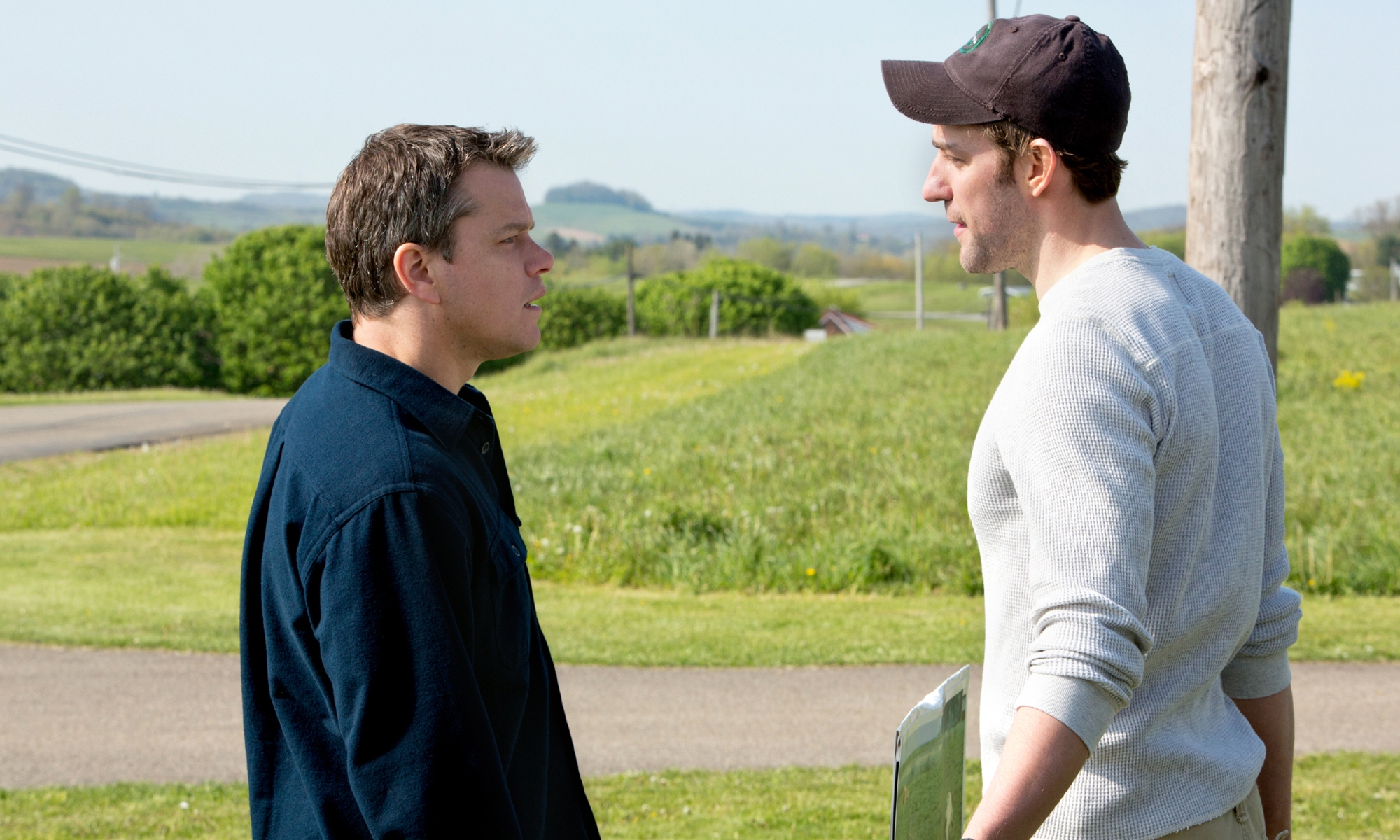
Matt Damon and John Krasinski are well aware that Promised Land is facing what Damon deems “an uphill climb.” The film, about a community confronting the rock-and-hard-place decision of whether to frack or not to frack—that is, whether to allow a major corporation to come in and drill for natural gas in exchange for millions of dollars and, potentially, the townspeople’s physical health—faces a marketing challenge that teeters on the same fine line Damon and Krasinski walked while writing its screenplay.

“It’s a minefield,” says Damon, mindful of the taint that can adhere to a movie thought of as “an issue movie.” “You can’t get too heavy-handed, and it can’t feel like it’s some polemic.”

And yet that hardly compares to the ups and downs he and Krasinski faced in getting the movie off the ground.

It all started with Krasinski, who wanted to write a screenplay about “some sort of abuse of power in…the green energy movement.” The actor, best known as Jim Halpert on The Office, had previously written and directed 2009’s Brief Interviews With Hideous Men and starred in Away We Go, written by Dave Eggers, who also consulted on the film. “I brought it to Dave because these are issues close to his heart, too,” Krasinski says. They hashed out characters and a story, set against the backdrop of the wind-farming industry. (Eggers has a “story by” credit.)

Krasinski then took the idea to Damon, who had just finished working with Krasinski’s wife, Emily Blunt, on The Adjustment Bureau, and was looking for a movie that would be his directorial debut. They decided to write it together. Damon, who hadn’t written a script since he collaborated with Ben Affleck on Good Will Hunting (he is also credited with writing 2002’s Gerry, a movie Damon says is mostly improvised), says he can never find the time. “It takes a lot of time to write. I’m so busy, and I do need a partner to write,” Damon confesses.

They hired a news reporter to find a story they could fictionalize. The reporter produced “mountains of research,” says Damon, which they used as the basis for the script. When they were done writing, he and Krasinski traveled to upstate New York to scout locations. There they met people who thoroughly debunked the narrative. “It was one of those situations where the reporter came back with the story we wanted to hear,” says Damon, who thought they had reached an impasse. “But after a few horrible days, I read it again, and I called John and said, ‘I love these characters!’ ”

So the cowriters transplanted the characters to a mountain in Alaska, and they set their story amidst salmon fisheries being poisoned by run-off from nearby copper mines.

But that just didn’t work. “To John’s credit, he wouldn’t give up,” says Damon. “I was thinking, ‘This is dead, he just doesn’t know it.’ ”

Krasinski saw a 60 Minutes segment called “The Shaleionaires” and was inspired to do a pass of the script on his own, this time about a community dealing with fracking. He brought the draft to Damon in Vancouver, where the actor was shooting Elysium, a visual-effects-heavy movie set to come out next summer. “I realized we had something much better than wind farming,” says Damon. “Because the stakes are so high. It’s not really a choice—between losing your family farm or not.”

When Damon and his family moved to Malibu to shoot We’ve Got a Zoo, Krasinski went to their house every weekend where they would hammer away at the script, empowered by their new subject matter.

At the end of 2011, Damon was doing press for Zoo and planning to direct Promised Land in the new year—until he had a change of heart. “I was done with all my work for the year and I looked at the reality: I just could not do it,” says Damon, who couldn’t imagine spending so much time away from his family again, this time to direct, which would mean longer hours and weeks in prep and post.

“It was like someone telling you Christmas is not happening this year,” recalls Krasinski.

And then a Christmas miracle occurred. Damon was heading to Florida for a much-needed vacation with his family. “It was that moment on the plane when they’ve told you to turn off your phone, and you’re surreptitiously sending emails,” says Damon, who got one out, with the script attached, to Gus Van Sant, who had directed Damon’s first script, Good Will Hunting.

By the time Damon landed, Van Sant had agreed to direct the film. “I like to joke that as a producer I clearly know what I’m doing: I fired myself and replaced myself with Gus,” Damon says.

The movie went ahead, but not without some measure of caution. In speaking about Promised Land, everyone involved had long stuck to talking points that portrayed the movie as being about a community that comes together in a crisis. “Once it came out that it was anti-fracking,” Krasinski says, “it’s hard to shake that until people see it.”

Q&A: Chris Terrio on Argo

This article appeared in the Dec. 12 issue of AwardsLine.

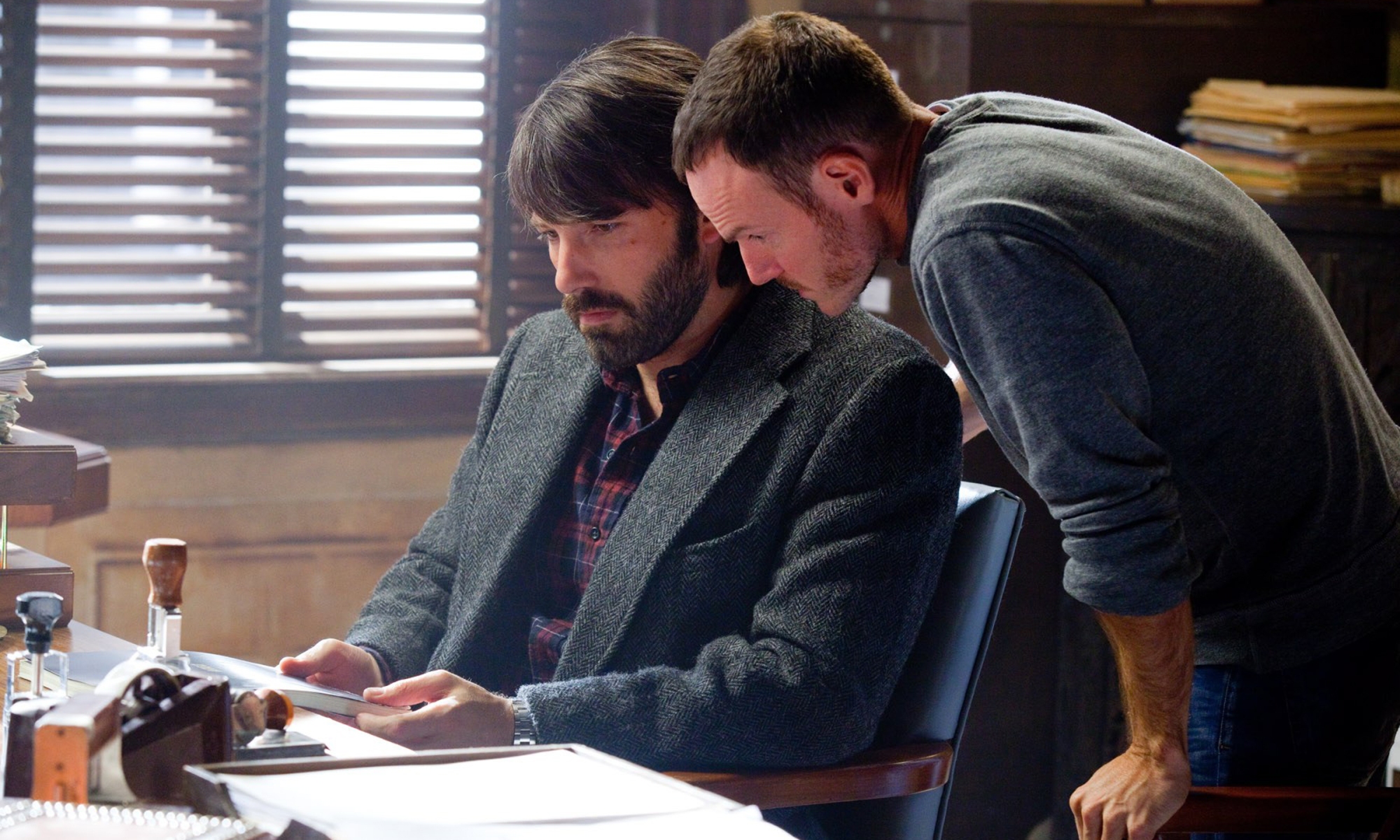
Hearing that an Oscar-winning screenwriter has just signed on to direct the highest-profile script of your career could be somewhat nervewracking. But for Argo’s Chris Terrio, working with director Ben Affleck was made easier because of Affleck’s writing background. “At the beginning, you’re slightly defensive, thinking, ‘The director’s going to come kidnap the baby and carry it away,’ but there was zero of that. From our first conversation, it was just us geeking out about how we could make every scene better,” Terrio recalls about working on the film. Terrio is enjoying the experience of watching audiences see his first major-studio project, all while learning the ropes of awards season as a serious writing contender. Terrio recently spoke with AwardsLine about the complexities of researching the script and what he learned from working with Affleck.

AWARDSLINE: Were you familiar at all with the Argo story when Smoke House’s Nina Wolarsky first called you about writing the script?

CHRIS TERRIO: Of course I knew something about the Iran hostage situation, and I had always been curious about it and had read various books, but no, I didn’t know anything about Argo. I had read Tim Weiner’s Legacy of Ashes: The History of the CIA, and that book briefly mentions it, but I think I read it without ever thinking too much about it. One of the few people in that book that comes off well is (Argo plot architect and CIA agent) Tony Mendez because that book is (about) a litany of mistakes that the CIA made; in fact that New York Times writer is not very popular at the CIA.

AWARDSLINE: You obviously started your research with Joshuah Bearman’s April 2007 Wired article, “The Great Escape,” but what other material did you consult for the script?

TERRIO: The Wired article, it’s short, and I credit Josh completely with the clash of worlds depicted in the movie, which is to say Hollywood and the CIA. But if you’re going to write a two-hour movie, there’s tons of research that you have to do that isn’t in the article. I spent probably the whole spring, and even longer, just circling and circling: Read every book that I could find on the 444 days, anything I could about Iran; looked at some Iranian movies from that period, ones made by expatriates. The Iran Hostage Crisis is the beginning of the 24-hour news cycle, so there’s an enormous amount of video footage that you can see at places like the Carter Center and the National Archives and the Paley Center in New York.

AWARDSLINE: How did you go about boiling it down and making sense of the multiple narratives and still feel like you were being true to the story?

TERRIO: Some of it is just instinct and trial and error. There were definitely moments where I worried that I wasn’t giving a comprehensive enough version of this moment in history. As American filmmakers, we can never tell a comprehensive story about the plight of people in Iran at that moment, but the film—without ever losing the forward momentum—lingers a bit to remind you that there are all these unresolved stories. I have to credit Ben with all that. Those stories could be scripted, like the Iranian housekeeper plot, or could just be a closeup of people waiting for their visas at the beginning of the film. Those closeups tell all kinds of stories: There’s a woman who’s wearing a mink stole and has put on makeup and is just sitting waiting for a visa. I look at that closeup, and I imagine her whole history—it’s just a two-second shot but I think at every margin of the story there are these little hints of stories that we’re not telling.

AWARDSLINE: How long did it take you to write the script?

TERRIO: The script was written in a matter of a few weeks after months and months of research, but I think that’s always the way with me. I need to circle something for a long time, and the characters are gradually showing up and taking their places. Finally, by the time I was ready to write, I knew. They had told me what they wanted to say, and I could sort of take dictation, which I know sounds a little crazy, but I’d imagine most writers would say that. You’re afraid every morning when you sit down that the characters aren’t going to show up for work, and sometimes they don’t, but when they do, you’re happy and you write fast.

AWARDSLINE: You’ve directed film and TV—did you pick up anything from Affleck while you were on the set of Argo?

TERRIO: The mood that Ben created. Ben is very easygoing, but that belies somebody who knows what he wants and knows how to get it. Ben’s ability to work with (cinematographer) Rodrigo (Prieto) and quickly get what he wants, know what he needs, and give himself options is a great thing that I picked up. He already is cutting the movie in his head when he’s making it. He immediately has an instinct about when it’s in the can and when it’s not.

AWARDSLINE: What’s it been like being a part of the awards-season machine so far?

TERRIO: I live in New York, so I’ve been at the margins of it, and I haven’t necessarily been in the belly of the beast yet, if it is a beast. It’s just been a rush for me to see people watching the movie and responding to it, but also to capture a little bit of that film-school excitement about movies.

Q&A: Tom Stoppard On Anna Karenina

Pete Hammond is Deadline’s awards columnist. This article appeared in the Dec. 12 issue of AwardsLine.

At age 75, Tom Stoppard is still at the top of his game, and still seeking new challenges in film, television, and stage. The legendary writer responsible for such original theatrical experiences as Rosencrantz and Guildenstern Are Dead, Arcadia, The Invention of Love, The Real Thing, and Coast of Utopia has also made his mark with a slew of memorable movies including Brazil, Empire of the Sun, Billy Bathgate, and his Oscar-winning script for Shakespeare in Love (cowritten with Marc Norman). Now he is partnering, so to speak, with Leo Tolstoy on a risky but thrilling new version of the Russian classic Anna Karenina. Though there are many film and TV versions already in existence, Stoppard was frightened by the prospect of following in their footsteps yet he embraced it.

AWARDSLINE: Why did you want to take on Anna Karenina? It’s a very ambitious project.

TOM STOPPARD: I had no thought about it until I was asked whether I would be interested in doing it with Joe Wright, and I was immediately interested in it. You don’t often get a proposal to do Tolstoy for a really interesting director—that’s easy to say yes to.

AWARDSLINE: Did you have any trepidation about adapting something that had been done so many times before?

STOPPARD: I probably shouldn’t tell you this, but the first thing I did was to watch all the other ones. (Laughs.) And I suspect in screenwriting class, they tell you not to do that, but I was tempted, and I fell. I watched Greta Garbo, and I watched Vivien Leigh, and I watched Sophie Marceau, and about three others. It was immediately clear that, in a sense, the best one was the BBC—it was hours and hours. So that made one think about what does one do (with) two hours? And I got to the thought that one should deal with the subject of love and not worry too much about local government, agriculture, or (Leo) Tolstoy’s other preoccupations with Levin (Domhnall Gleeson). Levin is the character who represents Tolstoy in many ways, and Joe and I talked about this a lot. And I said, “We should just try to make a movie where the word love just keeps dropping in, like a pebble into a pond, and deal with the way that love works.” I don’t mean love between lovers only; I’m talking about Anna’s love for her family—intense love in the novel. That was the guiding track for me.

AWARDSLINE: I talked to Joe Wright after I saw the film in Toronto, and he said he absolutely shot your script. But he also said that he came up with this theatrical device. Were you in on that decision initially?

STOPPARD: He called me up and said, “I’ve got to see you urgently.” This was a few weeks before we went into production, and he came to my flat with this big file, which turned out to contain the storyboards of a lot of the movie. There was a terrifying moment where he said, “I hope you like it, because if you don’t, we can’t do it.” So I felt I had to like it before I saw it, and I was just staggered by it. I was also worried by it, for obvious reasons. But as I turned the pages, I began to understand that it could be an extremely exciting piece of storytelling. When we got to the horse race, for example, I thought, “This is insane, but insanely brilliant!”

AWARDSLINE: In a play, you are going to have interaction with the actors—did you go on set or interact with the actors to talk about your point of view for the film?

STOPPARD: That all happened before there was a set. I was at rehearsals, but once we had done rehearsals, frankly, the writer really doesn’t have a function on the set. If the script is stabilized, then the writer becomes a celebrity tourist visiting the set, trying not to get in the way. It’s very good for the ego, to go visit a film set if you are the writer, because they give you a special chair, and tell you where you can sit to watch the monitor. They make you feel special, but at the same time, they make it perfectly plain that you are irrelevant! (Laughs.) I think that the one time you’re not needed is during production. You are needed again in post—I love to do postproduction. I am good at being shown something and counterpunching. I am in no way a director, but I’m a quite good critic.

AWARDSLINE: Once you got into postproduction, what kind of changes did you see?

STOPPARD: You always end up with too much, so it’s good to be part of the conversation about not just what you can omit, but how you are going to do the grammar of the omission, how you make things continue to work when there’s something missing. It’s your last chance to rewrite. Rewriting isn’t just about dialogue, it’s the order of the scenes, how you finish a scene, how you get into a scene. All these final decisions are best made when you’re there, watching. It’s really enjoyable, but you’ve got to be there at the director’s invitation. You can’t just barge in and say, “I’m the writer.” (Laughs.)

AWARDSLINE: Would you want to work with a director that did not allow you into that process?

STOPPARD: I don’t think I would, actually. It just doesn’t make any sense to me.

AWARDSLINE: Do you have a preference for movies or theater?

STOPPARD: I’ve never actually written an original (screenplay), so the theater is my only original work. I really enjoy great (film) adaptations—you’re given the story and the characters by somebody else. So it’s more like a collaborator, even if your collaborator is dead. The first job always is to deconstruct the piece that you’re working from, the novel, and I find that it’s really enjoyable because it’s a manageable job, it’s not actually a creative job. You can see what you really need and what you don’t.

Q&A: Mark Boal on Zero Dark Thirty

Thomas J. McLean is an AwardsLine contributor. This article appeared in the Dec. 12 issue of AwardsLine.

As both a journalist and a screenwriter, Mark Boal is no stranger to writing about modern soldiers and the wars they fight.

Zero Dark Thirty reunites Boal with director Kathryn Bigelow—both won Oscars for The Hurt Locker—to chronicle the hunt for Osama bin Laden. It’s a subject that made the movie infamous long before its release as pols and pundits accused the White House of trying to bolster its image by granting Boal and Bigelow improper access to classified information about the May 2011 raid that killed the Al Qaeda leader.

While Boal denies the charges—the released documents fail to prove improper access—the movie itself has at last emerged to defy political pigeonholing and throw a surprise shock into awards season. Eschewing policymakers and presidents, Zero Dark Thirty relies on first-hand accounts of events and focuses on CIA analyst Maya, who spends a decade obsessively hunting bin Laden. Like all the characters in the movie, Maya, played by Jessica Chastain, is based on a real person—though not so much so that anyone can identify the real agent.

Speaking with AwardsLine less than a day after Zero Dark Thirty first screened, Boal reflected on the intense process of putting together a complex film under such unusual pressures.

AWARDSLINE: You’ve been telling stories about today’s soldiers and modern wars. What do you find so attractive about these subjects?

MARK BOAL: Ever since 9/11, I found myself interested in chronicling the war and the war on terror and the way that this giant machinery was affecting individuals. As a screenwriter, I’m fascinated by people that put themselves at such great risk. And there’s so many inherently dramatic components—for example, the intelligence community—that make fertile ground for a dramatist.

AWARDSLINE: You were working on a movie about bin Laden’s 2001 escape into the caves of Afghanistan. How far had you gotten on that project and what kind of state was it in when bin Laden was reported killed?

BOAL: We were planning to shoot late that summer.

AWARDSLINE: What was your first thought about the movie when you heard he had been killed?

BOAL: I was thinking about friends I had lost on 9/11, to be honest with you. But eventually I came around and started thinking about it narratively, as a screenwriter, and it occurred to me that I had a lot of work to do and that I’d probably have to throw out years of work.

AWARDSLINE: How did you gather your first-hand accounts? Were you going through official channels or were you tracking down people on your own and using your own contacts?

BOAL: It was a combination of all three of those methods. I certainly went through official channels, the public-affairs offices of the relevant agencies, as any reporter would do. I also did independent reporting, and you just kind of follow your nose and you build what you know one interview at a time.

AWARDSLINE: How quickly did the script come together?

BOAL: I felt like I was working with a gun to my head because I felt a lot of competitive pressure to do it quickly. It was a couple or three months of writing, and another three months of research. I was researching while I was writing.

AWARDSLINE: How much did the script change through production?

BOAL: We shot the first draft, more or less, but I was always tweaking scenes on set. There were no conceptual revisions, really, but once I get a sense for an actor and how the dialogue sounds coming out of his or her mouth, I like to craft the character to what I perceive to be their strengths. Probably not a day went by when I didn’t churn out revisions of existing pages.

AWARDSLINE: A lot has been made in the media of the production getting assistance from the government in researching the movie. How did you approach the government and what kind of assistance did they provide?

BOAL: If you’re trying to do your homework, as I was, the first thing you do is you go directly to the offices that are set up and designed to work with reporters or book authors or screenwriters. That’s what their job is: Communicate the facts and the goals of whatever agency they work for. That relationship between people seeking information and government agencies sharing the information is one of the foundations of this system that we have. What was unusual in this case was we got caught up in an election year and our movie became a chew toy, a talking point in a presidential election campaign. There were all sorts of things that were said about the film that were just not true.

AWARDSLINE: How fictionalized is the Maya character and what are some of the challenges of writing this kind of character?

BOAL: It’s what screenwriters do all the time when they work from life. Part of what astonished me in my research is there were a lot of women involved in this hunt that played a big role, and I just wasn’t aware of that side of the CIA. I chose to tell the story through her eyes because that seemed to be to me the most dynamic and interesting way to do it. You’re also trying to dramatize events to tell a story most effectively. That doesn’t mean the events aren’t true, it just means you’re making them as dramatic as you possibly can. Then there were also things that I did to the character that I’m not going to discuss for obvious reasons to make sure that nobody would be able to watch the movie and draw a dotted line between a character in the film and somebody in real life.

AWARDSLINE: Was it a conscious choice to steer clear of putting politicians in the film except for brief glimpses of TV news reports?

BOAL: That was a creative choice. For better or worse, most of my writing life has been about people that work behind the scenes. I’m interested in finding extraordinary moments in otherwise normal people. Not to say there couldn’t be a great movie about the White House—I’m sure there will be some day, and somebody should write that movie. It just won’t be me.

Adapted Screenplay More Crowded Than Original This Season

Pete Hammond is Deadline’s awards columnist. This article appeared in the Dec. 12 issue of AwardsLine.

When it comes to the written word in this year’s Oscar race, it helps to have sources. While the original screenplay category has a few serious best picture contenders in Zero Dark Thirty, Django Unchained, The Impossible, Flight, The Master, and Amour, it is the adapted category where the action really is. The five top best picture contenders on most pundits’ list of predictions —Silver Linings Playbook (David O. Russell), Les Misérables (William Nicholson, Alain Boublil, Claude-Michel Schonberg, Herbert Kretzmer), Argo (Chris Terrio), Life of Pi (David Magee), and Lincoln (Tony Kushner)—are all competing against each other, making it one of the hottest races for adapted screenplay in years. It is proof positive that either Hollywood is lacking in great original ideas or the most promising material in terms of best picture candidates has come from another medium.

Director David O. Russell, center, with stars Bradley Cooper and Jennifer Lawrence on the set of Silver Linings Playbook,

It is actually a bit of a reversal of a recent trend where the best picture winner came from original screenplays. In fact, the last three films to take Oscar’s most prestigious prize—The Hurt Locker, The King’s Speech, and The Artist—were all original, reversing a previous eight-year trend in which the best picture winners were adapted in seven of those years (Crash’s 2005 shocker of an upset over Brokeback Mountain being the only exception). That, in turn, had reversed a trend in favor of original best picture winners when five of six at the end of the last century had triumphed over adaptations.

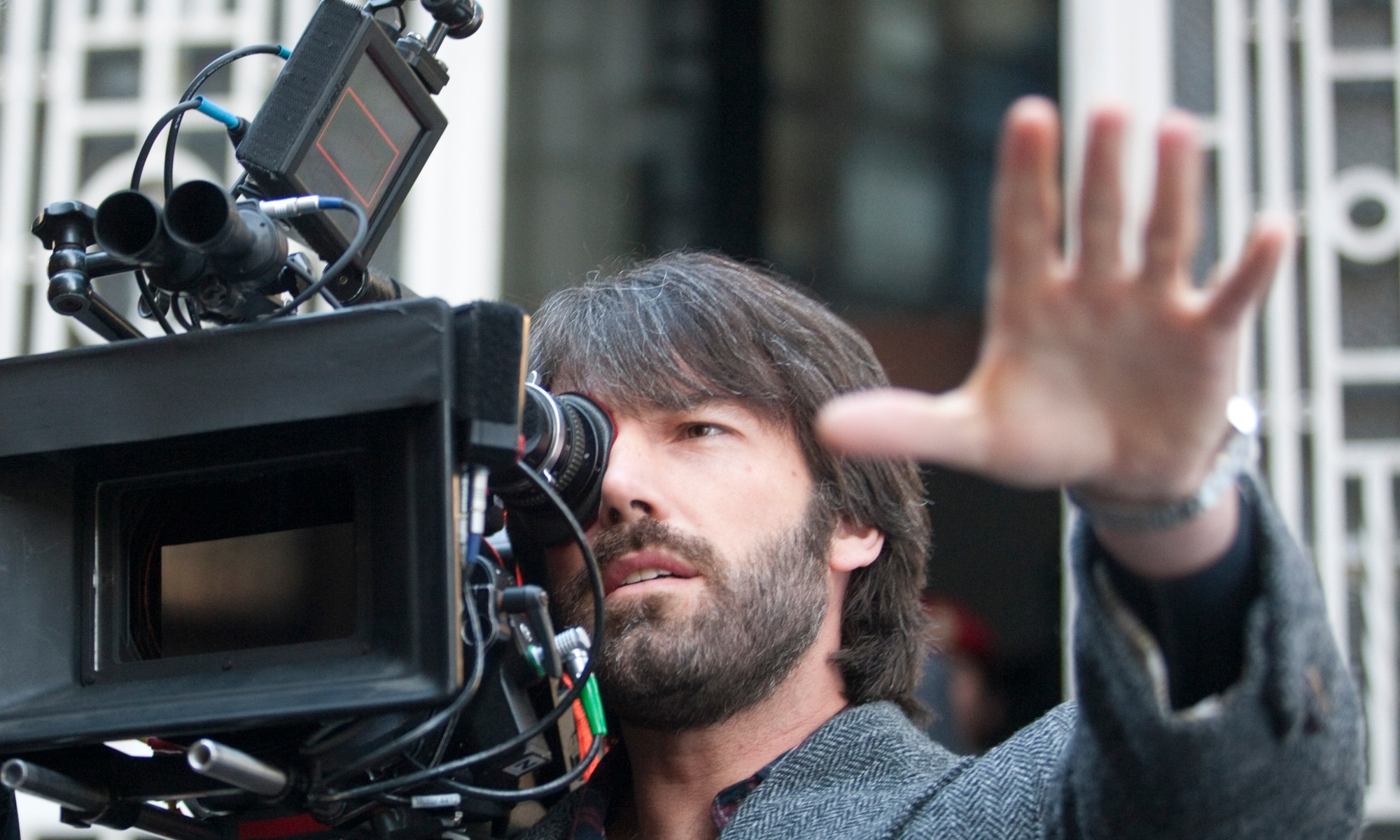
Ben Affleck, left, with Argo screenwriter Chris Terrio.

But from the looks of things, the pendulum could be swinging back, which is why writers are seeking out those hot properties to turn into movies. Bubbling under the top list of contenders for best adapted screenplay is an impressive group that includes Tom Stoppard’s take on Leo Tolstoy’s Anna Karenina; Stephen Chbosky’s adaptation of his own 1999 coming-of-age tale The Perks of Being a Wallflower; Ol Parker’s The Best Exotic Marigold Hotel; Ronald Harwood’s Quartet; French import Rust and Bone from Jacques Audiard and Thomas Bidegain; Richard Linklater’s indie hit Bernie; Ben Lewin’s The Sessions; Benh Zeitlin and Lucy Alibar’s Beasts of the Southern Wild; John McLaughlin’s Hitchcock; and a couple of studio tentpoles from big names, The Dark Knight Rises (Christopher Nolan, Jonathan Nolan) and The Hobbit: An Unexpected Journey (Peter Jackson, Fran Walsh, Phillipa Boyens, Guillermo del Toro). There is also Judd Apatow’s very personal original This Is 40,which is an adaptation only in the sense that it covers the further adventures of two characters from Knocked Up, so even Universal is advertising it as the “sort-of sequel.” It really should be in original where it would have a better shot. Adaptation should be only about just that, adaptations.

Leading the parade of originals are likely nominees Zero Dark Thirty, with a script shrouded in controversy from Hurt Locker Oscar winner Mark Boal; Paul Thomas Anderson’s highly ambitious The Master; Wes Anderson and Roman Coppola’s Moonrise Kingdom;Quentin Tarantino’s Django Unchained; John Gatins for Flight; Cannes Palme d’Or winner Amour from Michael Haneke; the emotional and gripping The Impossible by Sergio G. Sanchez; and the French box-office sensation The Intouchables from writer/directors Olivier Nakache and Eric Toledano. Under that top tier of contenders are such disparate films as Arbitrage (Nicholas Jarecki), End of Watch (David Ayer), Promised Land (Matt Damon and John Krasinski),and Martin McDonagh’s Seven Psychopaths, and there might even be a shout-out from the writing branch for Oscar show host Seth MacFarlane’s smash hit comedy, Ted (cowritten with Alec Sulkin and Wellesley Wild). Sometimes there is room for an animated movie to sneak in here, too, and this year’s most likely contender for that slot would be Disney’s clever Wreck-It Ralph from Phil Johnston and Jennifer Lee.

If you’re looking for clues for the likelihood of a nomination for Wreck-It Ralph or even many of the other contenders listed above don’t count on the nominees list from the Writers Guild of America, which will be announced on Jan. 3, a full week before the Oscar nominees are named. The WGA regularly bans animation scripts and a lot of indie projects not produced under guild jurisdiction. In recent years, this has led to a wide divide between the WGA nominees for original and adaptation than what the far more inclusive Academy comes up with. In 2009, only one WGA-nominated original screenplay, Milk,was also on Oscar’s list (it won, though). In 2010, though the two groups agreed on six of the 10 writing nominees in both categories, the eventual Oscar winner for original screenplay, David Seidler’s The King’s Speech,wasn’t even nominated for a WGA honor because it wasn’t made under the guild’s guidelines. Last year, a paltry four out of 10 nominees were on both Oscar and WGA lists. This chasm between the two organizations, despite shared membership, makes it increasingly difficult to predict Oscar nominees based on the preference of the guild, which is quite unlike the strong correlation between Oscar and other guilds like the PGA, DGA, and SAG.

Q&A: Ben Affleck on Argo

This article appeared in the Dec. 12 issue of AwardsLine.

After directing two successful features, Gone Baby Gone in 2007 and The Town in 2010, Ben Affleck has come into his own, perhaps finding greater creative success behind the camera than he ever has as an actor performing in front of it. In fact, the Oscar-winning screenwriter stands a good chance of earning another nom, this time for helming Argo, an almost unbelievable real-life story about how the CIA teamed up with Hollywood to rescue six diplomats stranded in Iran after the Shah’s fall. Affleck also stars in the film, and he’s clearly still passionate about acting. “The director part of me thought it would be too much trouble not to give the actor the part. I’d never hear the end of it,” he says about taking on the role of agent Tony Mendez. He recently spoke with AwardsLine about directing himself and the challenges of shooting the film’s pivotal embassy-takeover scenes.

AWARDSLINE: At the film’s DGA screening, you talked about how it was important for you to foster a bond among the six actors playing the houseguests in Argo. Can you talk a bit more about what that rehearsal process was like?

BEN AFFLECK: I wanted them to get to know one another better and just be more familiar and at ease around one another, and that could only be accomplished really with time exposure. I wanted them to know what it was like on a subconscious level to feel trapped and holed up in a place. So this idea that I came up with was to put them up someplace for a week inside the set. We dressed it and had everything that they would have when we shot: There were newspapers from the period, magazines from the period, and I put in movies from that period that I wanted them to watch, records and a record player—all kinds of things. I didn’t give them much instruction and said, “This is where you have to be,” because that was the circumstance under which the people were (living). They didn’t have any goals other than to sort of stay there and stay hidden. I didn’t know (what) would develop in the rehearsal process, but whatever happened, it was genuine, it was good. Ultimately, I don’t know what happened. It was part social experiment, part reality show with no cameras. (Then) we came, and we set them free. (Laughs.) I knew it was good because they didn’t seem to want to talk about what happened.

AWARDSLINE: Did they leave at night?

AFFLECK: No, they lived there! They slept there. It takes time to develop a sense of humor, shared world views. I just felt like putting them in the bag and shaking (it) up—you don’t know what the pattern of flour and chicken is going to be, but you know you’re going to get some good fried chicken.

AWARDSLINE: The script was completed before you signed on, but you ended up extending the opening sequence before production started. Were there other tweaks that you and screenwriter Chris Terrio worked on?

AFFLECK: There were all kinds of adjustments and back and forth, just work that goes on between a director and a writer. (As) a director who is a writer, I have respect for writers, so I’m less likely to step on an idea or a line. We were both really comfortable telling each other that things didn’t work if we didn’t think they worked.

AWARDSLINE: And Terrio was on set for a lot of the shoot, too, right?

AFFLECK: Yes. Initially I thought, I’m going to get this script and run with it, and do my thing, like I did with the other two movies I made. Then I talked to Chris, and he was so smart and insightful and had done all this research, and so I was like, “This guy would be a huge asset and a great writer, so let’s keep him on.” On my other two movies, stuff had to be rewritten, and I would go off into a corner and puzzle over it. It would take me forever, and I would stay up all weekend. It was so nice to be able to say, “Exactly what the agenda is of the State Department in this scene? Could you rewrite that scene?” and have him come back later with the answer. I felt like I was looking at the back of a test.

AWARDSLINE: How does it work when you’re directing yourself?

AFFLECK: Everyone has a different approach, but I like to shoot a lot of film anyway. I like to shoot until we have a relaxed environment on the set, and I try to schedule that. And I do the same thing for myself (as an actor) that I do for others. I get to the point where I feel relaxed, and then I just shoot a ton of material and make a lot of different choices. (I) try new things and give myself permission to fail and experiment because only that way can you get really successful. I don’t go back and look at the monitor between every take; I wait until I feel like we finally got it right: “Let me stop and look at that last one on the monitor.”

AWARDSLINE: In terms of the location shoots, were there other Middle Eastern locations that you considered?

AFFLECK: We scouted all over the place. There’s the competing concerns of creativity and budget, and that was a pretty close race with this movie. We scouted Jordan, we scouted a couple of countries in North Africa—this was before the Arab Spring. Jordan we would have been OK, but the truth is, it looked very Arab. Persia is very different from the Arab Middle East in terms of architecture and language. Even though we think of them as one big Middle Eastern area, in truth, Persia’s quite distinct. So we looked at Bulgaria, which also happens to be profoundly inexpensive, and then we looked at Turkey. That was the last place we went, and it was also the nicest place.

AWARDSLINE: What was the most difficult scene to pull off in terms of scheduling and budget constraints?

AFFLECK: The (embassy) takeover stuff in the beginning, where we had 2,500 extras, that was really hard to do in Istanbul. We could only afford so much, so it was hard to pay people enough so that they would come out there and work all day. Turkey’s growth rate was 8% last year—it’s not a developing country. You have to pay people real money. And we had to pick people up in buses at one in the morning, get there, get everyone in wardrobe, get them out in the street, give them signs, and teach them how to chant their slogans. In the extras’ holding area, I put our research on a loop, which is images of the actual revolution, so people could get a sense of the anger and the power of the whole thing. They were psyched; the extras got into it. So that was really fun. (But) it was cold, it was raining, (and) it was very hard to keep people around. Of course, it turned out somehow we didn’t have enough food, or we didn’t have as much food as we thought—there were all sorts of problems like that. Meanwhile, I’m worrying about the big shots with the cranes, and as we lose people, I keep making the big shots tighter and tighter. The other issue was that the people who were available to be around all day are the elderly; the younger people are working. So basically, we had a lot of folks who were over 65 in a student revolution. So they made up for it with passion. They were chanting, going nuts. It was ultimately exhilarating, fun, and thrilling and felt like we had a real partnership. I’ve been an extra in, I don’t know, 20 movies, so I feel like I know how it is. I’m trying to make people feel welcome and feel valued.

Q&A: Steven Spielberg on Lincoln

Mike Fleming Jr. is Deadline’s film editor. This article appeared in the Dec. 12 issue of AwardsLine.

Steven Spielberg would like to dispel a few rumors about the kind of set he ran for his latest film, Lincoln. Yes, it’s true that star Daniel Day-Lewis remained in character even when the cameras weren’t rolling, and his sole contact on the set was the director. However, Spielberg himself did not have his costume designer dress him in period-appropriate attire every day—he simply wore a jacket and tie. And although the director admits that there weren’t many visitors to the set, perhaps helping to create the perceived mystique, the intimate nature of the production stemmed more from a sense of pride and respect over its main character than anything else. “Lincoln has not been honored in a dramatic motion picture for 72 years,” says Spielberg, adding that Raymond Massey was the last actor to play the 16th president on the big screen. That attention to detail and reverence for his subject matter has paid off in boxoffice, earning more than $86 million domestically at press time, as well as plenty of Oscar talk. Spielberg recently took time to discuss how he got his first choice of actor for every part and how he and screenwriter Tony Kushner found the right angle to tell the story properly.

AWARDSLINE: It seems unusual that the most successful director in Hollywood would require as long a courtship as you waged to get Daniel Day-Lewis to play Lincoln. How did you finally convince him?

STEVEN SPIELBERG: Daniel had about six years to think about it from the first time I offered him not this Lincoln, not the Tony Kushner-written Lincoln, and not the Lincoln written from Doris (Kearns Goodwin’s) book, but an original Lincoln script that I developed. After turning me down to play the character, I don’t think he ever forgot our encounter. What really did the trick was when he read the Tony Kushner script, and I was able to get a take two, because my good buddy Leo DiCaprio simply called him up one day and said, “You need to reconsider this. Steven really wants you for this, and he’s not willing to make the movie without you.” So Daniel, based on Leo’s phone call to him, offered to read the Tony Kushner script, which he had never read, and also the Doris Kearns Goodwin script, which he had never read. That was the beginning, and I think that’s when the courtship was over. Once he read the script, then he really had to come to terms with the big decision he would eventually have to make, which was, “Can I, with honor, equip this character in a way I’ll be able to live with the rest of my life?”

AWARDSLINE: Have you ever put in as much time convincing an actor to make one of your movies?

SPIELBERG: Never. I’ve never gone on a campaign to get (an actor). I pretty much took no for an answer. It’s one of the few times in my entire life where I was not willing to accept that answer. When he eventually said he would play Abraham Lincoln, the only caveat was he asked me to wait a year. Some of that was because he was sorting out his physical location, where he was living, between Ireland and then eventually he was going to move back to New York, but a lot of it was I think he wanted to really go deep into his own research. And I needed that year too, even though I was ambitious enough to jump into the picture four months after he said yes. We spent a lot of time on the script, and it gave me a year to cast the picture, which means I got all of my first choices. No filmmaker ever gets their first choices consistently, but by waiting a year, I was able to wait for actors to free themselves up for this one.

AWARDSLINE: Describe that eureka moment, if you remember it, where you found that kernel that became this terrific movie?

SPIELBERG: We were trying to tackle the last three years of the president’s life, which is the experience that the senators and representatives had, and that the president and his cabinet had. They didn’t see the action; they weren’t in the battlefields. Lincoln visited the troops, but he didn’t do it with the frontline, except once, and we depict that at the end of our picture. This was going to be a story of his last three years, but the script was 550 pages long. For me, the most compelling part of that screenplay was a 65-page section, which was the struggle to pass the 13th Amendment that abolished slavery. That section is where I stood up and said, “That’s it, that’s our story, that’s our film.” There were so many bullet points in Lincoln’s life that actually the more we spread that out over 550 pages, the (more) superficial his character seemed to feel. Once we focused everything on two great issues—the passage of the 13th Amendment and the Civil War—everything got a lot more concentrated and a lot more focused.

AWARDSLINE: When you have a great actor like Daniel Day-Lewis, how hands-on do you get?

SPIELBERG: Very hands-on, which is what I do, and it’s also what Daniel requires. He is very collaborative. You talk to the directors who have directed him before, from Scorsese to P.T. Anderson—he is an extremely collaborative actor, and the director is his only point of contact on an entire production. We were there for each other from the very beginning, and we spent three and a half months in active conversation, from the smallest moments to large pieces of history.

AWARDSLINE: What was most important to you and Sally Field about the way Mary Todd Lincoln was conveyed?

SPIELBERG: We wanted to be fair. We’ve all read different accounts of Mary and what her condition might be defined as in modern medicine. We knew one thing that everyone could agree to, and that is that Mary was the engine of Lincoln’s ambition. Without Mary, Lincoln would have probably taken his losses. When he lost the senate to Stephen Douglas, he probably would never have imagined that he could go for the highest office in the land. It was Mary that supplied the motor that put Lincoln in a direction with his own destiny. He looked to her as a guiding force, a light, also as damaged goods. He knew when she was being rational and politically savvy, and when she was being emotionally irrational. He would just sit with her for hours and let her vent until she came out of a fog. In that sense, he had so many burdens during his presidency.

AWARDSLINE: I read that you addressed your actors by their character names throughout and retained a feeling of period all the way through. It almost sounds like a Method set. How and who did this help?

SPIELBERG: It helped me, principally, because I took this very seriously. We were playing with one of the most beloved—and mysterious—characters in American history. It doesn’t have anything to do with Method, it has to do with authenticity and having the actors come to work in the morning and feeling a bit like stepping back into time.

AWARDSLINE: You worked on this film for so long—have you ever had a project that’s taken this long for the pieces to fall into place the way they have here?

SPIELBERG: Schindler’s List took 12 years between the time Sid Sheinberg purchased the film rights to the book by Thomas Keneally in 1982, and I began shooting the film ’93, so that was 11 years. I bought the film rights to Team of Rivals: The Political Genius of Abraham Lincoln in 1999, which Doris was just beginning to write. So to answer your question, you’re right. This is the longest.

AWARDSLINE: You skipped releasing this movie during the election because you said you didn’t want this to be a political football. Now it comes out amidst these contentious partisan battles to stave off the debt cliff. What qualities about Lincoln would you most hope to convey to these folks who find it so hard to agree on anything?

SPIELBERG: Lincoln’s leadership is based on a number of precepts, but my favorite one is that he acted in the name—and for the good—of the people. In that sense, the two great things he did at the end of his life—to end slavery, peace for the Civil War—was for the good and in the name of the people. And he put people ahead of politics, although he was artful in using politics to be able to accomplish his task.

Q&A: Paul Thomas Anderson on The Master

Pete Hammond is Deadline’s awards columnist. This article appeared in the Dec. 12 issue of AwardsLine.

Paul Thomas Anderson is a genuine auteur, a writer/director who works when he wants, makes what he wants, and is considered now to be one of the film industry’s true talents. His list of films is small but significant: Hard Eight, Boogie Nights,and Magnolia to Punch Drunk Love, There Will Be Blood,and now The Master, just six films in 16 years but all winning wide critical acclaim. He has five Oscar nominations, mostly for screenplay, but he did score his first directing nod for There Will Be Blood. He hopes to continue the trend with The Master, though the film has polarized audiences, something that surprised Anderson but doesn’t necessarily disappoint him. How that translates into awards is anyone’s guess, but don’t say Paul Thomas Anderson is making movies you can easily dismiss.

AWARDSLINE: There have wildly different reactions to the movie. Is that something that you wanted?

PAUL THOMAS ANDERSON: It’s really interesting; it’s not something I expected. The final stretch of finishing a film, you find yourself in a kind of hypnosis that you made something that you understand and therefore everyone else will understand. And it’s an insane assumption, but it happens. And it’s temporary. I’m always surprised by the reactions, but this one in particular seems to have a real interesting messiness about people’s responses. I suppose the worst thing in the world would be pure ambivalence, and to have any attention paid to you is nice. Even if it’s negative.

AWARDSLINE: There are so many different themes in the film, but a lot of attention has been on the Scientology aspect. If anything, it’s the beginnings of that, but it’s not really Scientology as it is now. Was part of the attraction to the story the notion of people looking for some kind of connection?

ANDERSON: A lot of it, but those are the kinds of things that you discover after you’ve started writing. In many ways, it’s about trying to find ways to justify what I’m writing. Maybe you read something that got into your head a long time ago, and you find it coming back out of you. My dad came back from World War II, so there was an attraction to that era on a surface level in terms of cars and music. Anything that I was reading or learned about L. Ron Hubbard kind of tied into this era. It was very clear that (Scientology) was a result of a postwar hangover. And I read a line somewhere—I wish I could remember so I could give them credit—and it said something like, “Anytime is a good time for a spiritual movement to begin, but a particularly strong time is after a war.” It felt like a particularly good hook. It’s good for you as a writer when you get something like that to hang your hat on, to help guide you with what you’re doing.

AWARDSLINE: Are you still discovering things about this movie as you talk about it?

ANDERSON: I would like to think that there’s something in the human personality that resents things that are too clear. It’s impossible to walk into a movie and not have a plan, but it’s best when you’re executing a plan and your eyes open to a lot of other things that are there. It makes it interesting; it makes it fun to go to work every day. That’s why we didn’t do too much talking about what we were doing, except to really focus on the intense love affair and friendship between these two guys. On that note, I remember reading a great book called the Pacific War Diary by James J. Fahey. He talked about his absolute admiration for his masters and commanders, and when he would switch over to a different ship, how disappointed he was when he didn’t get a good master. It was hard for some fellows coming back from the war because they missed having someone telling them what to do. To suddenly be let loose and be of your own devices was incredibly difficult for a lot of guys. They really missed the comraderie and the kind of focus their lives had at sea.

AWARDSLINE: The symbolism of the ocean and the water is a big part of what you have in this film.

ANDERSON: That (opening) shot is never anything I could have imagined as a writer. I just want to know: Is it inside or outside and what are they saying to each other? Anything like that is a product of being on a boat and seeing that water, so beautiful and blue, and turning the camera on. Months and weeks later in the editing room, it just feels right to put it in there. Now in terms of it working for the story, it’s kind of self-explanatory. Freddie is so clearly more comfortable at sea than he is anywhere else and to use them as little chapter dividers or kind of transitional devices (makes sense). So much of our film is so claustrophobic and interior that having a breath of fresh air is nice, even as a palette cleanser.

AWARDSLINE: When you cast Joaquin Phoenix as Freddie Quell, did you get exactly what you thought you’d get or did you get more?

ANDERSON: The expectation is that any actor will give you everything, and even if they give you everything, perhaps that isn’t right for the film, no matter how hard they’re trying or their commitment is. But what he did was way beyond what I expected. The gulf between little black words on a white piece of paper and being on set in costume is huge! It’s this vast gulf, and he just filled it. I don’t even remember what I thought of Freddie Quell way back when I was writing him. I just know what he’s done now, and I wouldn’t have it any other way. It’s a pretty great performance; I’ve never seen anything quite like it. I love it!

AWARDSLINE: People are also pointing to Phoenix’s comments about awards season.

ANDERSON: I don’t think there’s an actor out there—and I know lots of them—that feels comfortable when performances get turned into sport. But that doesn’t take away from the excitement or privilege of winning an Academy Award. Actors can be competitive, they have that gene for sure, but my experience with actors is that they are actually incredibly generous people who have a skill and a job that they really like to do, which is playing make believe. They’re more comfortable when they get to be somebody else, and having to appear as themselves can be very uncomfortable.

Behind The Scenes On Life Of Pi

Paul Brownfield is an AwardsLine contributor. This article appeared in the Dec. 12 issue of AwardsLine.

The tank could hold some 1.7 million gallons of water, and it made waves you could surf on, says Suraj Sharma, the 17-year-old star who spent long hours in this fabricated ocean. The motion of the water could be programmed to affect the turbulence of troubled seas or a sudden calm, the swells only lapping at the makeshift raft on which sits a boy adrift in the middle of the Atlantic. He is alone with his thoughts—but not strictly alone, because the lifeboat to which his raft is attached is occupied by a Bengal tiger.

“I’ve never seen water done well in a movie, and I’m doing 3D. Water is the main show,” says director Ang Lee, discussing the challenges of adapting Yann Martel’s novel Life of Pi on open waters.

A boy loses his family in a violent shipwreck in Life of Pi.

To hear Lee talk about the torque machines and energy-dissolving technology that enabled him to choreograph the motion and shape of the waves is to begin to understand what he means when he says the ocean, in the story, represents “the visualization of Pi’s internal feelings.”

“To shoot in water,” Lee says, “either you go through suffering the ocean, and not much gets done, or you create something like a bathtub,” with the water bouncing back and forth through the frame.

Lee, an Academy Award winner for Brokeback Mountain, wanted neither of these things. He wanted an actual physical environment in which to portray an experience that ventures into magical realism.

Thematically, Life of Pi is a story that asks its readers to consider what is illusory and what is real—and whether a fine distinction matters. It is part picaresque narrative, part allegory. “We view the whole thing as a film about stories and storytelling. How stories get us through life,” says screenwriter David Magee.

But movie magic had to do some evolving before Life of Pi could hit theaters. Lee’s film follows a curious and adventuresome teenage boy, nicknamed Pi, whose family owns a zoo in Pondicherry, India, where the many exotic creatures include a Bengal tiger named Richard Parker.

From these idyllic beginnings, the story soon turns apocryphal if not Biblical: When the family decides to leave India and relocate the zoo to Canada, they all set sail on a cargo ship that capsizes in the middle of the Atlantic. The sole survivors are Pi and four animals, huddled on a lifeboat—a zebra, an orangutan, a hyena, and the tiger. Soon enough (see under: Darwin, Charles) the allegorical framework is made apparent: Man and beast must learn to coexist in a horizonless expanse otherwise known as the middle of the ocean.

Richard Parker, the Bengal (and digital) tiger with whom Pi shares his lifeboat.

In the book, as in the film, the story is told from the point of view of the adult Pi, now living in Canada. As played by Irrfan Khan, the adult Pi retells his spiritual, emotional, and physical coming-of-age quest to a writer who while traveling in India has heard of the story secondhand.

Lee, even after completing the film, concedes that “it’s very hard to articulate what it’s about.” He calls it a “provocation for your imagination,” which is necessarily elliptical, given that the essential logline is that the story revolves around a tiger and a boy learning to coexist in the middle of the Atlantic.

Producer Gil Netter says the novel had already been passed on by every major studio, including Fox, when Fox 2000 president Elizabeth Gabler signed on to the project in 2002. The consensus had been that it was too difficult to realize as a movie. Netter optioned the book with screenwriter Dean Georgaris (the idea being that Georgaris might adapt it)). Netter says he and Georgaris pitched Gabler on Pi’s transcendent themes.

The book was already selling itself as a literary sensation, winner of the Mann Booker Prize, which didn’t much solve the problem of just how to make it into a movie. The challenge perennially boiled down to three words: Boy. Tiger. Ocean. Along the way, other words and phrases would arise, like “recession” and “no star potential,” neither of which dissuaded Netter, the producer of such films as The Blind Side, Marley & Me, and Water for Elephants. All of those movies are often called “heartwarming” or “uplifting” or “family-oriented.” Netter saw the same potential for Life of Pi. In the end, he also credited “the dogged enthusiasm and determination” of Gabler and 20th Century Fox executive vp Victoria Rossellini.

Some of the directors who attached themselves to the project went further than others. M. Night Shyamalan signed on initially to write and direct, and years later Alfonso Cuaron (Children of Men) circled the film, but no one before Lee got as far as Jean-Pierre Jeunet, the distinctive French director of such films as Delicatessen and The City of Lost Children.

Jeunet completed a script, which Netter says was more of a fairy-tale interpretation. “He wanted to shoot on the ocean, with live animals,” Netter explains, speaking with a wry delight. “To say that the studio was a little nervous is an understatement.”

Existential themes permeate Life of Pi.

By 2008, seven years after the book’s film rights had first been optioned, Lee was immersed in flower power and hippiedom as he readied his 2009 film Taking Woodstock. Around that time, Lee says, he got a call about Life of Pi from Tom Rothman, then cochairman of Fox Filmed Entertainment.

“He said, ‘It’s a family movie,’ ” Lee recalls of their initial conversation. “I said, ‘What do you mean, family movie?’

“In a strange way, it’s like the book,” Lee continues. “Yann Martel told me he thought he wrote a philosophical book for adults. He didn’t know why teenagers connect to it. It looks like they might with the movie, too.”

Lee was in postproduction on Taking Woodstock, when Fox came back to him to direct Life of Pi. Admittedly, Lee says, the book haunted him, and the question of “how do you crack this thing?” began to take hold of his imagination, particularly the prospect of telling a story as a 3D experience. As Lee puts it, the question was, “How do you examine illusion within illusion? We all know movies are based on illusions—the image, this emotional ride. How do you do that while you’re examining the power of storytelling?

“I thought of 3D maybe adding another dimension,” Lee continues. “What doesn’t make sense could make sense. And I thought of the older Pi telling stories and having the first person going through the story while the third person (is) examining it, but they’re the same person.”

This was months before James Cameron’s Avatar hit the theaters and promptly advanced the cause of 3D beyond movie gimmickry and into the realm of storytelling art. “It’s very daunting,” Lee says of shooting 3D. “You cannot trust anything people tell you, because it could be wrong, because it’s so new. And the audience hasn’t had a relationship with it yet.”

According to producer Netter, “Fox was challenging us all to figure out how to make this a four-quadrant international family movie. In order for that to have a chance at working, it’s got to feel like an event. So in the discussions to figure out how to event-ize it came the 3D discussion, and then Ang was smart enough to come up with a philosophy of how he could approach doing that.”

Netter jokes that he referred to one particular room on the set of Life of Pi as the Beautiful Mind room—it was where Lee had meticulously diagrammed “completely from top to bottom, all the way around the room every single detail of fact that needed to be known,” Netter says, down to the changing pallor of Pi’s skin as he endures a life at sea and the gradual aging of the oars.

The Taiwanese-born Lee had not shot in his home country since making his 1994 film Eat Drink Man Woman. The Life of Pi production was based in an abandoned regional airport in Taichung, which was converted into soundstages with an international crew of 150, some of whom enrolled their kids in schools in Taiwan during the year they were making the movie.

“Last time I tried to bring the American independent way, like New York independent filmmaking, back to Taiwan,” says Lee, juxtaposing his location shoots 20 years ago for Eat Drink Man Woman with the mini-studio he created for Life of Pi. “I was there alone. I just tried to bring the method there. This time I brought Hollywood.”

Q&A: Wes Anderson On Moonrise Kingdom

This article appeared in the Dec. 12 issue of AwardsLine.

The deadpan, rhythmic pop-and-snap banter. The dysfunctional parents and rebellious teens. And that classical-funk soundtrack played against those doll-house sets. These are some of director Wes Anderson’s stylistic hallmarks, idiosyncrasies that point to the cinematic evolution of absurdist theater. “I certainly have often thought of Harold Pinter,” says the Houston, TX, native about his muses, which have also included J.D. Salinger and François Truffaut. “(Pinter’s) a writer who has always inspired me. Samuel Beckett maybe in a more distant way, but Beckett through Pinter is one. The sparseness and abstractness of Pinter has always been a real inspiration for me.”

But while a number of absurdists maintained cynical views toward humanity, Anderson couldn’t be more optimistic. No more is this apparent in his Cannes Film Festival-launched summer arthouse hit Moonrise Kingdom, which has earned $65 million worldwide. The tale about two lost, romantic adolescent souls whose lives are more together than their parents has charmed critics since its bow, and its momentum has continued to a Gotham Award best film win and five Indie Spirit nominations including feature, director, and screenplay.

AWARDSLINE: What was the genesis of this project?

WES ANDERSON: It was some years ago, and I wanted to make a story about my memory of falling in love at age 11, but also my memory of the fantasy that went with it: The desire for something bigger to happen and the desire to be living a fantasy life, which was a strong feeling for me at that age. Moonrise Kingdom is autobiographical in the sense that it’s very close to the experience that I envisioned for myself when I was the age of those characters. All of my films are filled with personal details, and a lot of those personal details are where the emotional connection comes into it.

AWARDSLINE: Is it easier for you to launch a production nowadays? Do you simply make a phone call to producers Scott Rudin and Steven Rales?

ANDERSON: Even if you have people like Steven and Scott supporting you, one still has to figure out the foreign-sales numbers and other factors, like who is in your cast and how much are we getting for various territories, which helps you figure out a reasonable budget number. While that’s happening, there’s another kind of preparation that needs to be done and that I like to do: There’s a thorough, rigid preparation for my movies. Plus, the biggest thing with Moonrise Kingdom, once there was a script: Who are the actors for these two kids? Because if we can’t find them, we don’t have a movie. So we set aside time to search.

AWARDSLINE: Expound on your filmmaking relationship with Scott Rudin.

ANDERSON: My hunch is that Scott does something different on every movie he works on, and he has very different relationships with moviemakers. On some movies he’s saying (to a director), “Here’s a book you have to do” and bringing the material. And on some movies, he is on the set every day giving feedback. On my movies, his role has been very consistent over the years. He’s my producer-ial adviser—he’s my key adviser along with Steven Rales—and Scott is a great script reader and analyst. He has a very good feeling for storytelling. The main thing he gives me is a bunch of criticism that I may or may not use and that may aggravate me, but always leaves me with something to do next. The best thing you can ask for is that your conversation with your collaborator continually results in making a project better. He’s also important when it comes to releasing a movie and how we’re going to handle it.

AWARDSLINE: Every awards season, you seem to be in the conversation. What’s your takeaway on the season?

ANDERSON: It’s great to get (Oscar) nominations; I have not gotten many. I’m not one of those guys (that) if you go to my office, you find a staggering number of trophies on the shelf. We got one for Darjeeling Limited at the Venice Film Festival called the Leoncino d’Oro. At first we thought we won the Golden Lion, but slowly realized, “Wait a second, this means the Lion Cub.” It turned out it’s an award given by school children in Venice. We took that home, and it was really small. That same year, we also got an award from the American Association of Retired Persons as their favorite film of the year, which was strange. We were honored by the youngest Italians and older Americans. I always find something like this very moving and a surprise.

AWARDSLINE: It goes without saying that your filmmaking style stands out. Would you ever change it up?

ANDERSON: What makes my movies like my other movies—all those different things I do that prompt someone to say, “Well, I think we know who did this one”—those things are like my handwriting to me. What I’m focusing on (in each movie) are those things that are different and that I’ve never tried before. I’m always directing a movie where I wrote a script with a collaborator. It’s something that I invented and feels automatic and natural to do in my handwriting. If I was adapting Dashiell Hammett, I might find myself working in ways that are less recognizable as my thing. I’m not positive about that. But at some point along the way, I don’t want to force myself to make my movies unlike my other ones. Instead, I want to force myself to make them as entertaining, personal, and moving as I can make them.