Diane Haithman is an AwardsLine contributor. This article appeared in the Feb. 13 issue of AwardsLine.
The set for an empty street—easy, right? Not when you’re working on the movie version of the hit stage musical Les Misérables for director Tom Hooper (2010’s Academy Award winner for The King’s Speech). Production designer Eve Stewart says Hooper was such a stickler for authenticity in re-creating 1832 Paris that, for the first few days, “there was an awful lot of horse poo about—real horse poo.” To avoid a rebellion on the part of cast and crew, real horse droppings were quickly replaced with fakes. By phone from London, Stewart talked about this and other challenges in creating just the right look for Rue de la Chanvrerie as described in Victor Hugo’s classic novel.
1) Buildings in 1832 Paris, the year of the June Rebellion depicted in the film, “were still very medieval, not like the Paris you see now,” says Stewart, who was able to find historic newspaper pictures to use as guides. Tall buildings lined streets so narrow that people could throw furniture out upper windows and quickly create a barricade. These buildings, constructed at London’s Pinewood Studios, are 40 to 50 feet high. “It was actually cheaper to build them that height than to do it by computer,” Stewart says. More modern Parisian streets were made wider, says Stewart, so revolutionaries could no longer block passage “with a couple of armchairs.”
2) The buildings are not only tall, they lean and sag in all directions. “What was really difficult for me was to persuade the usual perfectionist carpenters and plasterers to make everything crooked,” Stewart explains. “It was really important to have all the buildings look like exhausted, tired, stricken members of the community.” Stewart used mostly salvage wood and old doors to help create the downtrodden look.
3) The cobblestone street is wet after a summer storm, the backdrop for the dying Éponine’s big song, “A Little Fall of Rain.” Because songs were performed live, the roofs of buildings were carpeted to mute the “raindrops” falling from water machines hanging from grids on the studio ceiling. In fact, Stewart says, many design details, including horses’ hooves, carriage wheels, and beads, had to be “made rubbery” or coated to avoid clops, clacks, and clinks during live musical performances.
4) This sign for an ophthalmologist’s shop has a literal meaning as well as a symbolic one. Circa 1832, “making spectacles was quite a big business in Paris, especially in the backstreets. It was described in Hugo’s novel, so I was keen to get it in,” Stewart says. The eye also plays into an attempt to introduce a subtle religious motif throughout the film: “Quite often you’ll see a little cross, the eye of the Lord, individual bits and pieces to show the greater spirit of the Lord.”
5) Other signs of the times: As described in Hugo’s novel, Parisian streets were teeming with businesses that promoted their wares by hanging posters and graphics and even painting directly on plaster walls. As in the case of the sagging buildings, Stewart wanted a naturalistic imperfection, so she hired an 80-year-old English sign writer, Graham Prentice, to do the lettering, rather than a scenic artist. “I was very keen to get slightly wonky sign-writing,” Stewart says. “He’d walk around in his old Parisian overalls. It was part of the joy of that set. It was a little community. Carpenters and painters would take pride in their own buildings: ‘Ours was better.’ ”
Diane Haithman is an AwardsLine contributor. This article appeared in the Feb. 13 issue of AwardsLine.
The Anna Karenina design team had to switch gears fast when director Joe Wright decided to set Anna’s oppressive high-society world inside a theater instead of shooting on location in Moscow and St. Petersburg. Money talked; location shooting would have blasted the film’s modest $31 million budget. Production designers had only 12 weeks to create interior and exterior “locations” that could exist within the confines of a theater set. In this stylized approach, the movie audience is aware of the theater, but the movie characters are not. The walls around Anna become literal, not figurative. “A Rubik’s Cube is often how we described this film: You’d twist it and then, suddenly, you’d twist it again, and it would just fall apart in your mind,” says production designer Sarah Greenwood. “You’re not just making pretty pictures here; you are telling a very big story.” Greenwood and set decorator Katie Spencer talk about putting together the puzzle of the living room set for the Moscow home of Oblonsky, Anna’s brother.
1) This scale model of the Oblonsky house stands inside the larger Oblonsky living room set, which in turn stands inside the larger theater set. Designers liken the layers of interiors (and meaning) to Russian nesting dolls. Keira Knightley’s Anna and the children look like giants trapped inside the ornate small-scale house. Although she is visiting her brother’s family in Moscow, Anna, from St. Petersburg, still appears caged the way she is in her own austere home and loveless marriage.
2) Greenwood and Spencer designed this colorful, richly textured interior to contrast Anna’s life in St. Petersburg with her brother’s life in Moscow. Greenwood says that during this period, Moscow borrowed from the exotic Eastern style of the Ottoman Empire and was “rejoicing in its Russian-ness,” whereas design was more spare and Western in St. Petersburg. The chaotic scatter of pillows, musical instruments, and children’s toys also highlights the difference between the earthy, boisterous Oblonsky home and the passionless lifestyle of the Karenina family.
3) This little theater-in-a-box is a child’s toy, but also represents a scale model of the larger theater set. Inside the small theater, the stage is set for The Nutcracker ballet (a detail audiences might never notice, but that became a fun project for art department assistant Martha Parker). Another insider’s treat: The little blocks on the ministage are a miniature version of the medium-sized alphabet blocks Levin uses to propose to Kitty in a later scene. Completing the trio: On this set, up high and to the right, are several alphabet blocks in a larger size.
4) The designers call this gold chair and footstool “transition pieces” from the living room set to the theater’s backstage area, represented by the empty picture frames and painted flats stacked behind and alongside the chair. Light streams into the theater through a window piled with snow. In the movie, this prop-shop area is the theater’s basement, but the actual set was built on the same level as the rest of the theater spaces. The chair is draped with a 100-year-old real leopard skin rented for the production (law would prevent the use of a new fur from an endangered species). In late 19th-century Moscow, Spencer observes, there was no such thing as too much opulence, or too much gold leaf.
5) The doll fits into the story, but also pays homage to director Joe Wright’s upbringing. The English director’s parents founded Little Angel Theater, a puppet theater in Islington. “The doll she’s holding is a puppet, and that little puppet was made by Joe Wright’s mother,” says Spencer. “Keira (as Anna) also uses the puppet when she talks about when she was first married and how she believed in love.”
Diane Haithman is an AwardsLine contributor. This article appeared in the Feb. 13 issue of AwardsLine.
Production designer Dan Hennah—nominated for The Hobbit: An Unexpected Journey with set decorators Ra Vincent and Simon Bright—says that this set for hobbit Bilbo Baggins’ comfy parlor is one of few that did not require a CGI extension to accommodate both fantasy elements and the movie’s large band of characters, who tend to appear together in many scenes. And even the simplest of sets required finetuning to meet the demands of 3D. By phone from New Zealand, Hennah talked about this scene in which Bilbo (Martin Freeman) talks with Dwalin (Graham McTavish) as the dwarf slurps his way through Bilbo’s carefully hoarded food supply.
1) Bilbo’s parlor had to be built twice: Once in “hobbit scale” and once in a .76 “wizard scale” for Gandalf (Ian McKellen), so Gandalf would appear to be too tall for his surroundings, whereas for the hobbits it would be, as Goldilocks might have observed, “just right.” Hennah says the less dramatic difference in size between hobbits and dwarves was taken care of by casting: Most actors portraying dwarves are taller than Freeman.
2) Hobbits hate adventure, so Bilbo’s home is full of things that make him feel safe: A warm teapot, a full larder, his favorite books. “This is 60 years before The Lord of the Rings, when he was sort of an old guy who had accumulated a lot of stuff and was sort of untidy; this was more (for) a casual, homely bachelor,” Hennah says. For The Hobbit, Hennah’s team took advantage of the fact that New Zealand can boast more traditional craftspeople than a Renaissance Fair. “We had potters and glass blowers and pipe makers and book binders. New Zealand is a great place for alternative lifestyles, and that often translates into making something that you can sell,” he explains. The designers created their own fantasy era rooted in 17th-century England, but “once you make up the rules, you have to stick with them or you break the spell,” Hennah says.
3) That’s no rubber fish that Dwalin is noshing on: It’s the real deal, caught by one of the prop dressers who’d been out just that morning trying his luck in the local bay. “There were probably quite a few real fish, we were cooking them up” to use on set, Hennah says. Since dead fish are like houseguests (best if they don’t stay around too long), the crew kept plenty of ice on hand to keep them fresh.
4) Often books on sets have authentic bindings but blank pages. But Bilbo, Hennah says, “is sort of a learned chap” who loves to read, so his books can’t hide on the shelf. Plus he’s writing his own book, There and Back Again, using a quill pen. A calligrapher with quill expertise was called in to create the book pages. And the calligrapher worked overtime on a document used in another scene at Bilbo’s home, when he reads over the alarming contract he must sign before accompanying the dwarves on their dangerous quest to reclaim Lonely Mountain from the dragon.
5) The Hobbit was shot in 3D using a high-speed 48 frames per second (normal 2D speed is 24 fps). Some film critics thought the images created by the high-speed process were too sharp, making The Hobbit look more like a videogame than a feature film. Critical taste aside, Hennah says that extra clarity required more careful attention to items in the background or middle ground that would have appeared out of focus in regular 2D. Plus, 3D tends to desaturate colors, so everything had to be made in brighter colors than it appears.
Pete Hammond is Deadline’s awards columnist. This article appeared in the Feb. 6 issue of AwardsLine.
As the industry kicks into full awards mode, with one guild after another handing out trophies to whomever they consider the year’s best in any given field, it’s become increasingly clear this is a year like we have not seen in a while. Certainly every season we go through this ritual of watching the crème de la crème of the industry line up to get awards, but rarely have we seen as dense a field of top contenders, and especially deserving ones, as we have this year. The common denominator among most, if not all, of the contenders in Oscar’s 24 categories is how difficult it was in the first place to get any of these films made in a sequel-happy, franchise-loving, play-it-safe motion picture industry.
Daniel Day-Lewis, who stars in Lincoln,is the frontrunner in the best actor race.
For example, Steven Spielberg began talking about Lincoln with Doris Kearns Goodwin before she started writing the book and struggled for well over a decade to bring it to the screen, getting turned down by three studios in the process. And first-time feature filmmaker Benh Zeitlin went against all industry norms to make the unique and hard-to-define Beasts of the Southern Wild come to life. But no matter who the filmmaker is, the most often-heard mantra is stick to your core beliefs and vision and somehow an Oscar-worthy film can be willed into being. Even James Bond ran into trouble when MGM went bankrupt and a normal 2½-year process turned into twice that for Skyfall,which went on to win five Oscar nominations. It also got recognition as one of the year’s best pictures from the Producers Guild, as well it should, considering what its veteran producers went through to just to make it.
Of course, it doesn’t matter who you are or how many Oscars you have won, it is never easy. Life of Pi’sAng Lee worked a grueling five years before finally seeing his unusual and once-thought unfilmable film version of Yann Martel’s book get to the screen and earn $500 million-plus worldwide and counting. And 20th Century Fox had it in development for 10 years. “Everyone was nervous. The studio dropped me twice. It was a kid, water, a tiger, digital, 3D, Taiwan location, a philosophical movie, a film about someone adrift in water who wasn’t Tom Hanks,” Lee explains. It took him a solid year just to prep the digital water scenes before shooting any footage.
For a film on the opposite end of the scale, Silver Linings Playbook,which relies almost solely on its actors for its special effect, the journey was just as long and just as hard. It started with two late producer-directors Sydney Pollack and Anthony Minghella before eventually finding its way to David O. Russell, who wanted to make it five years ago, even before The Fighter, but found that the stars weren’t aligned yet. They eventually would be, but not before blood, sweat, and tears went into a shoot that in the end had to be accomplished in a remarkable 33 days for a 150-page script.
Kathryn Bigelow’s Zero Dark Thirty closely follows the real-life raid on Osama bin Laden’s hideout in Pakistan.
Or what about Kathryn Bigelow and Mark Boal’s Zero Dark Thirty, the movie that was developed about the hunt for Osama bin Laden? The filmmakers had to turn on a dime when bin Laden was killed, rewriting the concept and reporting the story at the same time it was being crafted. And Argo, a true declassified story about the amazing CIA mission to use Hollywood know-how to help rescue six American hostages stuck in the Canadian Embassy during the 1979 Iranian crisis, spent years in development as a George Clooney project but only finally found its way through Ben Affleck.
Then there’s Les Misérables, a true worldwide stage musical phenomenon that still took 27 years to get to the screen and went through hell to do it. Or Quentin Tarantino’s Django Unchained,which during a 130-day shoot saw its leading actors sidelined by emergency surgery when Christoph Waltz’s horse was bitten by a bee early on, and Waltz, thrown to the ground, had to have a pelvic operation. Then Jamie Foxx’s shoulder gave out, and he had to go into emergency surgery in the middle of production.
These select few, which made the immense effort required to see their films through, earned Oscar nominations for a job well done. These enormously talented film artists can still stand very proud that they got through it, made something great, and are headed to the Dolby Theater on Feb. 24. Some will get to the stage and some won’t, but this year in particular they all deserve to be called winners.
The French-language Amour follows a husband who must care for his ailing wife.
Amour (Sony Pictures Classics)
Producers: Margaret Ménégoz, Stefan Arndt, Veit Heiduschka, Michael Katz
Awards: 5 Oscar noms, Cannes Film Festival Palme d’Or winner, 4 European Film Awards (best actor, actress, director, film), 1 Golden Globe win (foreign language film), 4 BAFTA noms, 1 CCMA win (foreign language film), and an Indie Spirit nom (international film).
No simplicity in small sets: “It wasn’t a very fast shoot. It took nine weeks. Even though the film takes place over two hours in roughly the same room, it’s complicated to dress the set, not only to make it interesting but that it syncs in every scene. Our actors weren’t young people, and they need more time to learn the script,” Ménégoz says.
No business in geriatric scripts: “Michael’s critical and boxoffice success with The White Ribbon ($19.3 million) didn’t open doors to financers. A lot of them were afraid of Amour’s subject matter surrounding elderly, ill people. It’s a taboo subject. I was able to make the film at €8 million ($10.8 million), but the French were so afraid that they didn’t give me enough money; I had to go back to our German coproducer,” Ménégoz recalls.
Seriously, we really need you for this: “Jean-Louis Trintignant stopped making movies years ago, but he’s worked nearly every day in all the live theaters in France. He completed a tour of poetry readings, and he likes his work in the theater. He is an actor that likes to be in front of the audience—on the set of a film, they’re very far away. He loved Caché by Michael Haneke. I gave Jean-Louis the script for Amour, and he told me that he didn’t want to make any more films: ‘I’m too tired and old. I like the theater,’ he said. He read the script and liked it, especially that it was comprised of three main characters and took place from room to room. He thought the dialogue was very precise, but found it to be a sad script. ‘I won’t do the film,’ he said. So I talked to Jean-Louis three or four more times until he finally accepted. Emmanuelle Riva always wanted the part. She auditioned with other actresses, but she knew deeply in her heart and head that this was the part for her. It was obvious she was the best as she made the perfect couple with Jean-Louis,” Ménégoz says.—Anthony D’Alessandro
A big cast and multiple shooting locations made Argo a producing challenge.
Argo (Warner Bros.)
Producers: Grant Heslov, Ben Affleck, George Clooney
Awards: 7 Oscar noms, 7 BAFTA noms, 2 Golden Globe wins (director and drama), 2 CCMA wins (picture and director), 1 SAG Award (ensemble), PGA Zanuck Award, plus DGA and WGA noms.
Having a writer on the set: “On my other two movies, stuff had to be rewritten, and I would go off into a corner and kind of puzzle over it. It would take me forever, and I would stay up all weekend. (On Argo), it was so nice to be able to say to (screenwriter) Chris (Terrio), ‘I don’t think it’s clear exactly what the agenda is of the State Department in this scene. Could you rewrite that scene?’ and have him come back later with the answer. I felt like I was looking at the back of a test,” Affleck explains.
Scale and scope mean challenges: “(For) those big protest scenes in the beginning, we had 2,000 actors, and those days were really impossible days. We had bad weather, but just logistically speaking, to get 2,000 people to a set, ready to shoot, by 6 o’clock in the morning, all having to go through wardrobe that day because you don’t fit them the day before, takes military precision. Everything takes forever—just to reset for the shot and to get everybody turned around and get everybody looking in the right direction is a major effort,” Heslov says.
But it was still kinda fun: “It was cold, it was raining, it was very hard to keep people around and, of course, it turned out somehow we didn’t have enough food—there were all sorts of problems like that. Meanwhile, I’m worrying about, ‘OK, let’s do the big shots with the cranes,’ and as we lose people, I keep making the big shots tighter and tighter and tighter because I’m worried people are going to start just walking off the job. The other issue was that the people who were available to be around all day to come be extras in movies are the elderly. The younger people are working. This is supposed to be a student revolution; the students are in school. So basically we had a lot of folks who were over 65 in a student revolution. So they just made up for it with passion—chanting, going nuts. It was ultimately exhilarating, fun, and thrilling—it felt like it had a real partnership,” Affleck explains.
Connecting with extras in L.A.: “It was intense. People had these stories of, ‘I was there,’ ‘This is how we escaped,’ so it just got overwhelming. It was like simultaneously shooting extras and day players and (doing) research. Not only were we hearing it, but they were telling everyone in the crew, and people in the crew were really moved. Up until that time, they had looked at it just as a movie, and not something based on historical events that were incredibly traumatic. So the whole movie absorbed an extra level of seriousness just being around the Persian population of Los Angeles; the majority of them left right around the revolution,” Affleck recalls.—Christy Grosz
Beasts of the Southern Wild features a 6-year-old star who had never acted before
Beasts of the Southern Wild (Fox Searchlight)
Producers: Dan Janvey, Josh Penn, Michael Gottwald
Awards: 4 Oscar noms, 4 Cannes Film Festival awards (FIPRESCI, Golden Camera, Prix Regards Jeune, Ecumenical Jury), 2 Sundance Film Festival wins (Cinematography, Grand Jury Prize), 4 Indie Spirit noms, 1 CCMA (best young actor/actress for Quvenzhané Wallis), 1 BAFTA nom.
Epic demands: “We had to find a 6-year-old, and we wanted to make this film on an epic scale on a low budget,” producer Josh Penn revealed at the PGA Awards Breakfast Jan. 26. “Then we had to make these giant prehistoric beasts that we didn’t want to do via computer, but rather live beings, so we got these baby pigs. Then once you have baby pigs, how do you make them 15 feet tall? Plus, none of us had made a feature film before.”
Cherchez la femme: “We had a similar challenge to Ang Lee (on Life of Pi) in searching for a movie star who we could rest the entire movie upon her shoulders. It was like the Hugh Jackman kind of thing with Les Misérables where there was only one person who could play the part, and they were somewhere in the first through fourth grade of Louisiana. Literally, a friend of Quvenzhané Wallis’ mother saw fire in (Quvenzhané) and said to her mother, ‘Quvenzhané likes to play make-believe. Why don’t you bring her to this audition?’ She never thought of acting before. We saw 4,000 kids across Louisiana and thought someday, this girl would walk into our lives. If we didn’t find this girl, there was no reason to make this movie.”
Christoph Waltz, left, is nominated for Django Unchained. He was thrown from a horse during production.
Awards: 5 Oscar noms, 5 BAFTA noms, 2 Golden Globe wins (supporting actor Christoph Waltz, screenplay Quentin Tarantino).
Location, location: “Nothing was easy about this movie. It was challenging from day one: Getting going, scouting New Orleans and Mammoth Mountain, then building our location there and realizing that we had no snow. Then uprooting to Wyoming, and Quentin driving by an elk field and saying to our line producer and location manager, ‘I want to shoot there.’ Well, that’s a challenge—it’s a wildlife preserve! Quentin will look at you at any given moment and say, ‘I need this actor that I shot with three weeks ago, and I need him tomorrow,’ ” says Savone.
“He always knew when he saw two or three of us approaching, that it was something large like global warming that we had to deal with —like the time when we had to inform him that it’s not going to snow in Mammoth for the first time in 100 years,” adds Sher. “There were a lot of ‘Bring me the broomstick of the Wicked Witch of the West moments.’ But we had a joke among the three of us: ‘No’ is not an option.”
Addition and subtraction of actors: “We had huge movie stars wanting to do day-player parts, people we had to work a schedule around given the film’s logistics. However, every one of those actors are used to being No. 1 on the call sheet, rightly so, so everyone typically schedules around them. Because of everyone else’s schedule, snow, weather, and location, we couldn’t do that for everyone. Joseph Gordon-Levitt and Anthony LaPaglia went off to make other movies. The happy accident was that our schedule and Jonah Hill’s changed, making him available. Who ends up having Jonah Hill in one scene? We were so blessed, but we always knew the tail couldn’t wag the dog. Quentin needed to make the movie the way he needed to make it,” explains Sher.
Bee-stinging serendipity: “Christoph Waltz’s horse was stung by a bee during pre-pre-production, and Christoph was thrown and it was going to be a while before he could ride again. This is where the idea of the tooth wagon came from. Christoph suggested, ‘What if I rode a wagon?’ and Quentin and the late J. Michael Riva came up with the wagon, that magical tooth. It was heartbreaking when we lost Michael, and it was devastating for the film, the crew, and his family,” says Sher.—Anthony D’Alessandro
The live singing in Les Miserables meant everything from the sets to the costumes had to be modified to be quieter.
Les Misérables (Universal)
Producers: Cameron Mackintosh, Eric Fellner, Tim Bevan, Debra Hayward
Awards: 8 Oscar noms, 1 CCMA win (Anne Hathaway best supporting actress), 3 Golden Globes (best musical/comedy, supporting actress Hathaway, Hugh Jackman for lead actor in a comedy/musical), 1 SAG win (supporting actress Hathaway), and 1 DGA nom.
The Long Road: “I was originally going to do it 25 years ago after Les Misérables opened on Broadway and came close with Alan Parker. Over the years, we had inquiries, then in 2010, Eric Fellner (approached me); we’re Chelsea football fans, and we got to know each other socially. I like Working Title and they’re a very good company. Bill Nicholson started work on a screenplay. And then Tom (Hooper) rang up and asked to meet me. Being a complete film virgin I hardly knew anyone, and The King’s Speech was only just doing rounds at Sundance. Tom spoke passionately about how he would do it and that he felt it should be recorded live, and I felt passionately about that. That was the clincher, because Tom wanted to take what was a big leap in the dark. Les Misérables isn’t a normal musical; you need people who are comfortable telling a story through music. Tom Hooper was the man to do it. I’d been looking for directors over the years, and the fact that Tom came to me with a POV was the clincher,” Mackintosh explains.
No way, José: “There was a suggestion that it should be done in 3D, and I was very against it. Even though it’s my first film, I have joint final cut with Tom and Eric, and I represented all the music on behalf of Alain and Claude-Michel. It was a collaboration and couldn’t be any other way because I’d been so involved in the material for 30 years. This was the best way,” says Mackintosh.
Blowing up the stage: “The key challenge was finding the balance of reality, that it looked and felt authentic but at the same time it needed to be heightened. The style had to be similar to the style of the show. Gliding in and out of spoken word and singing so seamlessly that you didn’t realize they’re singing most of the time. Cinema is a medium of realism, and we had to find our brand of realism,” adds Mackintosh.
Making the impossible, possible: “This was one of the hardest films we’ve done. It’s a genre that’s challenging by its very nature—people aren’t used to going to see a musical in a movie theater. We also had to make sure that in adapting Les Misérables, we didn’t alienate fans, and having the original team of Claude-Michel Schönberg, Herbie Kretzmer, and Cameron Mackintosh, we were able to keep all the original DNA intact. Then, shooting a film with an appetite of $100 million for $60 million was interesting,” says Fellner.—Cari Lynn
Life of Pi was thought to be unfilmable until Ang Lee tackled the challenge.
Life of Pi (20th Century Fox)
Producers: Gil Netter, Ang Lee, David Womark
Awards: 11 Oscar noms, 1 Golden Globe win (best score for Mychael Danna), 2 CCMA wins (cinematography, visual effects), 9 BAFTA noms, DGA nom, WGA adapted screenplay nom.
Practical preplanning: “I didn’t know if could do this film. It was still waiting for me after Taking Woodstock. I began to think about it. It was unsolvable both on the economic and artistic sides: The two sides that will never meet, like Pi. Well, what if I had another dimension? And I thought 3D,” Lee said at the PGA Breakfast Jan. 26. “The only reasonable place to do this was Taiwan—I needed every resource from Hollywood. I brought my kids to school over there. It’s a long process. I did all the casting and previsualized the water section, all 70 minutes of it.”
Finding Pi: “Three thousand people auditioned for the part. It was crucial to find a 16-year-old Pi. There’s no Indian 16-year-old movie star. So I had to search for new faces. We have an army under casting director Avy Kaufman. We just asked every high school in India. Most of those who auditioned hadn’t done more than a school play, if that. After three rounds, we came down to 12. Suraj Sharma was one of them. Later, I found out, he didn’t go through the audition. He escorted his younger brother to the audition, and the casting director said, ‘What about you?’ When I met him, he looked like Pi. He’s the everyman. I felt his vibe in his soulful, deep eyes from my professional instinct. When I read him, it was heartbreaking. He started to cry when he told me one of the second stories (I gave him). It was heartwrenching. Halfway through (the audition process), he was the kid. So he anchors everything: The older and younger Pi, the whole picture around him. I was very lucky. He never acted before, and I had three months to drill him. We shot the movie in order so that he could lose weight,” adds Lee.
It took Steven Spielberg 12 years to get Lincoln made.
Lincoln (Disney-DreamWorks)
Producers: Kathleen Kennedy, Steven Spielberg
Awards: 12 Oscar noms, one Golden Globe win (best actor drama, Daniel Day-Lewis), two SAG wins (best actor Day-Lewis, supporting actor Tommy Lee Jones), three CCMA wins (actor, adapted screenplay, score), 10 BAFTA noms, DGA nom, WGA adapted screenplay nom.
No stone unturned: “On the surface, it looks like one goes out, buys Doris Kearns Goodwin’s book, hires the finest American playwright, gets Steven Spielberg, and just add a little water,” said Kennedy at the PGA Awards Breakfast Jan. 26. “When Tony Kushner’s 500-page script arrived, Steven called and said, ‘What are we going to do? I can’t make this!’ Tony asked, ‘Do you think we can do it as a miniseries?’ Whittling down the script was a laborious process and took years. It wasn’t until Steven recognized a suspense drama inside the legislation, and that isn’t something you walk into a studio and say, ‘Hey! Here’s a great idea!’ It was essentially 15 pages of Doris’ book, but the philosophical idea behind Lincoln having the foresight to bring people into his cabinet who didn’t agree with him was the foundation of the story.”
Getting everyone on the same page: “We had an extraordinary reading in Cooperstown, NY. Doris pulled together an illustrious group of people to read the script for the first time. We knew there were many historians that wrote different accounts of Lincoln and had several different interpretations,” adds Kennedy. “Those fascinated with the voice of Lincoln; details like that we had to extrapolate. I think Tony read 300 books before he wrote this script. He read many details that came from The New York Times. When those debates went on with the 13th amendment, much of what Thaddeus is saying goes right down to ‘nincompoop.’ ”
Determined casting: “Daniel said no a lot to the role. But it was an exercise in tenacity on Steven’s part. Daniel inhabits that role. His process for determining what he’s going to do next is a long one. Playing Lincoln was something he wasn’t going to come to easily. When he said yes, it was around War Horse. We had 150 speaking parts that we wanted to cast. Thank God for the Internet. It allows directors and producers to get into a room and look at a wide variety of talent. We had the benefit of Tony Kushner who had amazing relationships with amazing actors in New York. We had these big boards in front of us with faces of real people. We knew it was going to be hard to keep track of the Democrats and the Republicans and knowing that the Democrats are what the Republicans use to be, and whether they were from the north or the south, when the vote took place, keeping track of who you saw before, all of that was a quite a jigsaw puzzle,” explains Kennedy.
Silver Linings Playbook was in development with Sydney Pollack and Anthony Minghella before finding its way to David O. Russell.
Silver Linings Playbook (The Weinstein Co.)
Producers: Bruce Cohen, Donna Gigliotti, Jonathan Gordon
Awards: 8 Oscar noms, 4 CCMA wins (acting ensemble, actor in a comedy for Bradley Cooper, actress in a comedy for Jennifer Lawrence, best comedy), 1 Golden Globe win (best actress in a comedy/musical), 1 SAG win (best film actress), 5 Indie Spirit noms, WGA adapted screenplay nom.
Synthesizing: “Getting the tone right was a challenge,” says Cohen. “The script that David O. Russell had written and the movie we fell in love with was an intense family drama and romantic comedy. Those types of films are very hard to do. It’s hard to market them and assemble them.”
Timing: “Making this movie in 33 days was a Herculean undertaking, and the script was 152 pages long. That’s a challenging schedule for any movie, let alone a script that is that long—40-45 days would have been ideal,” says Gordon.
Falling stars: “When we received the greenlight from the Weinstein Co., as a producer you typically take the money and say, ‘OK, here’s the start date.’ But Mark Wahlberg (who was to play Pat Jr.) had Contraband. We would have been backed into Thanksgiving 2011, and we couldn’t go beyond that date in terms of shooting given our budget constraints. It would have meant we pushed into the New Year in terms of shooting. Then Anne Hathaway (who was to play Tiffany) had this crazy Dark Knight schedule. They would get her for this huge period of time, and then she would drop in and out of that schedule,” explains Gigliotti.
The right faces at the right time: “Casting was the biggest challenge and getting the right actors in these roles. By comparison to the other films that are nominated, we had a pretty small budget, and it’s not as though we had a lot of money to spend in terms of cast. We had to have actors that were recognizable in order to make the numbers work—that’s for the business side. The challenge for the creative side is to find actors who could inhabit those characters and be authentic. Bradley Cooper is a big movie star in terms of The Hangover. That’s a plus on the business side, but then one needed to evaluate whether he was right for the role. That’s a total tribute to David O. Russell since he understood Bradley’s depth and how he could get that performance. Jennifer Lawrence was a different kettle of fish. She was in the middle of Hunger Games. We didn’t know it was going to be so behemoth. She did the Skype interview; we showed it to Harvey Weinstein, who is fearless when it comes to these things. He took one look and said, ‘Cast this girl! She’s unbelievable!’ I don’t know if we would have made this movie if Bob De Niro said no. We didn’t have a lot of money. How do we get Bob De Niro and not pay him a fortune? It came down to David. It’s really a potent thing when David and his actors connect. Jacki Weaver was the casting director’s idea. Jacki was in a production of Uncle Vanya in Washington, D.C. One look at her eyes and Cooper’s eyes and you think they were connected. You believed she could have been Bradley’s mother,” says Gigliotti.—Anthony D’Alessandro
The real story that Zero Dark Thirty tells was unfolding as Mark Boal was writing his script.
Zero Dark Thirty (Sony Pictures)
Producers: Kathryn Bigelow, Mark Boal, Megan Ellison
Awards: 5 Oscar noms, 1 Golden Globe win (best dramatic actress for Jessica Chastain), 2 CCMA wins (actress, editing), 5 BAFTA noms, DGA nom, WGA original screenplay nom.
Everywhere at once: “This is not a $45 million movie; this is an $85 million movie. There’s over 100 different sets in this movie, we filmed on three continents with helicopters and special effects and (covering) a 10-year time period and 100 speaking parts and a giant action sequence, and at times we were shooting like a TV schedule—five pages a day. Part of the challenge was getting this much scope—we filmed in Pakistan, we filmed in India, we filmed in Jordan, we filmed in Washington, we filmed in the U.K. Part of the challenge was getting this much scope on the screen, and we could really do that because Kathryn had a vision for how to do it, and because she shoots it and it’s done and we can move on. There’s not a lot of second-guessing going on,” says Boal.
No fear of Babel: “I like going to these places where there isn’t a lot of film infrastructure. Jordan has absolutely none. India has some. Of course there’s a big film industry there, but it wasn’t really geared to making a movie about an American CIA team hunting a terrorist, for any number of reasons. It’s hard to shoot action in India—very, very, very hard. You can’t do aerial photograph; there’s a million permits if you want to take a gun out,” adds Boal.
Red tape: “These are hard movies to get made. Negotiating with those governments, moving equipment in and out, dealing with security issues, dealing with the secrecy issues, dealing with the press, dealing with government pressure and investigations from our government. We were under investigation by Republicans since the day we started this movie for just trying to get information. That’s not easy to have hanging over your head when you’re simultaneously trying to arrange for the use of three military Black Hawks from a foreign government. It gets complicated pretty quickly,” adds the screenwriter-producer.
Worst-case scenario—production or post-release:“The politics is pretty tough, I will say. I would take the logistical challenge of trying to find a 40-ton crane in Jordan over dealing with Washington any day of the week,” Boal says.—Paul Brownfield
Pete Hammond is Deadline’s awards columnist. This article appeared in the Feb. 13 issue of AwardsLine.
This year the big question hasn’t been exactly who Academy of Motion Picture Arts and Sciences members are going to vote for, it has been instead whether they can figure out how to vote at all.
With the advent of online voting for the first time in Academy history, the path during the nomination balloting hasn’t been a smooth one for many voters. Some found that the Academy’s security steps, necessary to avoid hackers, have also kept voters out, forcing them to make repeated attempts at getting their ballot completed.
Although all the guilds and other voting groups have moved full force into the world of online voting, the Academy went through a slow, methodical process before finally settling on Everyone Counts, a company known for working with the U.S. government in a similar capacity. Unlike most industry groups, the Academy is a prime target for infiltration by cyber terrorists who would like nothing more than to gain access to vote totals and embarrass the high-profile Oscar process, which in 85 years has never been compromised.
But keeping voting hacker-proof caused its own set of issues, when in November the Academy had to extend its registration period after member complaints. After that, AMPAS also backed down and agreed to send an old-fashioned paper ballot to any member who had paid their dues but hadn’t bothered or didn’t know how to register for online voting. All along, the Academy offered paper ballots as an alternative but initially had required a one-time registration for those as well—something longtime members used to getting ballots in the mail automatically didn’t realize.
Many voters said they were able to vote online with no problems, but a large and very vocal group complained that they were locked out of the system and had to spend valuable time trying to vote over the course of two or three days.
Although the Academy sent out repeated email reminders, provided a ’round-the-clock phone number for member support, and set up kiosks in the lobby of its Beverly Hills headquarters, some members experienced great frustration. However, as president Hawk Koch told me on the morning of the Oscar nominations, the turnout was still the largest the Academy had seen for nominations in several years. But he also said nothing was perfect on a first try. And before final voting began on Feb. 8 (ballots are due back on Feb. 19), the Academy sent members a detailed—some might say too complex—guidebook on how to accomplish online voting. The Academy also sent out emails offering the option of a paper ballot to anyone who wants one. From my admittedly nonscientific sample survey, a lot of members took them up on the offer by the deadline of Feb. 1.
For those determined to enter the brave new world of electronic Oscar voting, the Academy told them they will need four things: 1) A voter identification number; 2) A voting password (not to be confused with their member password and one that must contain a mix of letters, numbers, and a special character); 3) A security code; and 4) A telephone where voters will receive their special code by text after entering their VIN and password.
The Academy’s E Voter Guide then takes the voter step by step into how to actually cast their ballot once they have successfully logged into the system in the first place. Some members told me it took them two or three tries after getting locked out for a 24-hour period to actually finish the task during nominations. If you try a password too many times, and it doesn’t work, you have to call the Academy support line to get a new one.
Certainly Academy officials, who took great care before embarking on this new adventure for Oscar, are hoping this will get easier with time. It took the Screen Actors Guild seven years before they were comfortable that it was running smoothly enough to eliminate paper ballots. The Academy is dealing with a membership that might not be so tech savvy. But for an organization that is such a tempting target for hackers, it is not an easy task, and the option of paper ballots will probably be around for a long time. “Please tell them, just send me a paper ballot. I’m begging,” one Oscar-nominated longtime member told me.
The bottom line is, if you want to vote, you will be able to vote. “What I can say is, we will not jeopardize the integrity of the Oscar ballot. We will make sure that everybody can vote,” Koch told me.
Pete Hammond is Deadline’s awards columnist. This article appeared in the Feb. 13 issue of AwardsLine.
Many have said 2012 has been the most remarkable year for movies in the Oscar race in a very long time. The dense list of quality contenders makes for quite a race, and it’s somewhat reminiscent of another legendary year for cinema a half-century ago.
Peter O’Toole in Lawrence of Arabia.
The year 1962 was an embarrassment of riches, and in many ways, just an embarrassment for the Academy. Yes, they did include the year’s two best films, To Kill a Mockingbird and (eventual winner) Lawrence of Arabia,in the best picture lineup and both have endured as certified classics. Both were worthy. But then the Academy padded out the remaining three spots with popular studio offerings like The Longest Day, The Music Man,and most egregiously, the bloated Marlon Brando remake of Mutiny on the Bounty. OK, these films might have been decent entertainment, but were they the best the Academy could do 50 years ago? Hardly.
Just consider the films that didn’t make the cut: Blake Edwards’ Days of Wine and Roses; John Frankenheimer’s The Manchurian Candidate, Birdman of Alcatraz,and All Fall Down;Arthur Penn’s The Miracle Worker;Robert Aldrich’s What Ever Happened to Baby Jane?; Otto Preminger’s Advise & Consent;Stanley Kubrick’s Lolita;John Ford’s The Man Who Shot Liberty Valance; David Miller’s Lonely Are the Brave—and this is just a partial list! Was it because all these films were in black and white? Well, so were Mockingbird and Longest Day, so that doesn’t explain it. Were they too challenging when compared to the populist films that made the cut instead? The point is, we are still seeing, experiencing, and talking about most of the best picture also-rans today. They have stood the test of time, a feat perhaps greater than ever being nominated for a best picture Oscar.
The Music Man earned a best picture nomination, but like Argo, Les Miserables, and Zero Dark Thirty, it failed to earn a best director nom.
It is interesting to note that, just as the Academy has done this year in failing to nominate the directors of best picture nominees Argo, Les Misérables, and Zero Dark Thirty, the Academy’s directors branch of 1962 was just as prickly and contrarian in ignoring the directors of three best picture nominees (Longest Day, Mutiny,and Music Man) in favor of smaller entries like David and Lisa, The Miracle Worker,and the foreign language Italian film Divorce Italian Style, which like this year’s Austrian/French Amour also nabbed nominations for acting and writing, winning for the latter just as Amour could do. The directors of those best picture also-rans were every bit as worthy of the nomination they didn’t get (Frankenheimer’s three 1962 classics should have gotten him a nod just based on volume alone). Some things never change. And, quite frankly, considering the advanced age of some Academy members, many of the same people are still doing the voting.
The year 1962 was also when James Bond was introduced to the movies in Dr. No starring Sean Connery, still one of the best of the Bonds, yet it didn’t merit a single nomination back then. In fact, Bond has been consistently ignored throughout the past 50 years, with just a handful of technical nominations and awards. A half-century from the time Bond was introduced, it seemed like it was all going to change this year with Skyfall,which was poised to become the first Bond ever to earn a best picture nom. It didn’t happen, just like it didn’t happen 50 years ago. At least the Academy has been guilted into a special tribute to recognize this most successful—and brilliant—of all movie franchises.
Beyond best picture, which did at least go to a very deserving winner in David Lean’s Lawrence of Arabia, the acting races across the board were gut-wrenching cliffhangers. I can’t recall the four categories to ever be so competitive as they were that year. For best actor, try to choose among Gregory Peck in To Kill a Mockingbird, Peter O’Toole in Lawrence of Arabia, Jack Lemmon in Days of Wine and Roses, Marcello Mastroianni in Divorce Italian Style,and Burt Lancaster in Birdman of Alcatraz. If it weren’t for Peck’s iconic Atticus Finch, which deservedly won, certainly O’Toole would have triumphed the first time out for his glorious T.E. Lawrence instead of going zero for eight and becoming Oscar’s most losing actor (thank God they finally gave him an honorary award).
Best actress was an imposing quintet with Bette Davis in a shocking comeback role, Lee Remick as a drunk, Geraldine Page as a fading film star, Katharine Hepburn doing Eugene O’Neill, and the winner, Anne Bancroft, training the blind Helen Keller. Pre-Oscar bets from Hollywood experts were on each and every one to prevail. There were duo Oscar upsets in the supporting races, too. Virtually everyone thought Lawrence’sOmar Sharif would win, but he was upstaged by a career nod to Sweet Bird of Youth’sEd Begley. And in supporting actress, it was Angela Lansbury as Laurence Harvey’s conspiratorial and chilling mother in The Manchurian Candidate who was seen as a sure thing, only to be passed over for 16-year-old Patty Duke as Helen Keller in The Miracle Worker. It was the criminally overlooked Lansbury’s to lose—and she did, never getting another shot. Oscar fans are still smarting, though Duke’s performance still holds up.
Sometimes Oscar races leave lasting scars. It’s about what could have been. And in a year as good as 2012 was, will we still be arguing the outcome 50 years from now just like we still do about ’62?
Pete Hammond is Deadline’s awards columnist. This article appeared in the Feb. 13 issue of AwardsLine.
Oscar telecast producers Craig Zadan and Neil Meron know their stuff when it comes to putting on a show. With huge musical successes in movies (Chicago, Hairspray, Footloose), TV (The Music Man, Cinderella), and Broadway (Promises Promises, How to Succeed in Business Without Really Trying), they have the chops to pull off the film industry’s biggest night of the year, though it has sometimes proved a pitfall for other producers. It can be challenging when the Academy mandates that valuable airtime goes to all 24 categories, including sound mixers, makeup and hairstylists, and producers of documentary short subjects, to name a few. But that doesn’t faze this veteran producing pair who say they started assembling the show’s elements from the day they got the job in late August.
Oscar telecast producers Craig Zadan and Neil Meron say they have been working on the show since they were appointed in August.
“We certainly are going to be celebrating the nominees and winners like a regular Oscar show, but they are fitting into the design of the show that we’ve created, so there’s going to be an enormous amount of entertainment,” Zadan says, pointing to the 50 years of James Bond tribute they have announced, which won’t be a reunion of the actors who played 007 despite rampant media speculation. “It’s something else, something very unique and very exciting but no, we’re not getting the Bonds together.”
Among other entertainment spots planned is a tribute to the movie musicals of the past decade, including this year’s best picture contender Les Misérables, Dreamgirls (I hear with Jennifer Hudson performing), and the producers’ own best picture champ, Chicago. And singing on an Oscar show for the first time in 36 years will be Barbra Streisand. My bet is she’ll sing “The Way We Were” in honor of its late composer Marvin Hamlisch, though the producers are not offering specifics on that one.
Both producers say they’re eagerly anticipating seeing first-time host Seth MacFarlane take the stage. “He has great charm. He embodies kind of a post-millennium host in that tradition of Johnny Carson, Bob Hope, and Billy Crystal. He is the next step in terms of making the show current,” Meron says about the reason why the Family Guy and Ted creator got the job.
In fact, MacFarlane’s oversized teddy bear Ted has already confirmed an appearance on the telecast alongside his costar Mark Wahlberg. In addition to being a first-time host, MacFarlane is a first-time nominee as cowriter of Ted’s main title song, “Everybody Needs a Best Friend.” Norah Jones will sing it on the show, as the producers have also decided to bring back the tradition of having all five nominated tunes sung live. Among them, pop superstar Adele will be singing the hit nominee “Skyfall” and performing on television for the first time since she swept the Grammys a year ago.
Don Mischer, 15-time Emmy winner and a producer of the Oscars for the past two years, is returning to direct. “If you can put entertainment around the awards and maintain the dignity of the Academy, or put some humor and a little bit of irreverence around it, you can make it more entertaining, and it makes for a better show. I think (Zadan and Meron) are really on track to do that,” Mischer says.
Family Guy and Ted creator Seth MacFarlane will host the Oscars for the first time this year.
Academy president Hawk Koch, who hired the producing pair, says they have gotten rid of a lot of what he calls “shoe leather.” “We are going to present all the categories, but between Craig and Neil and I, we have found a way to move it along,” he says.
There’s added pressure this year because of the well-reviewed performance of Golden Globes hosts Tina Fey and Amy Poehler, which help push ratings up 24% compared to last year. The Academy certainly does not want to come up short in comparisons with that NBC show.
As for MacFarlane, he has a good attitude even though reviews of his “performance” hosting the Academy nominations announcement with Emma Stone were decidedly mixed. Some Academy members thought he went too far with his jokes, others thought it wasn’t appropriate to mock nominees just as they were becoming known for the first time. “It’s a ruthless bit of scrutiny you’re under, so I’m not going to think about that. I’m just worrying about making it as funny as it can be and as fun as it can be,” MacFarlane said shortly after the nomination announcement.
For Zadan and Meron, however, it’s all about putting on the best show possible. In preparation, Meron says he watched 40 previous Oscar telecasts. He has great respect for the producers and what they tried to do. “What I learned is that (past) producers of the show really took chances and shook things up all through the course of Oscar history,” he explains. “It really is a great tradition to be a part of.”
In honor of the 85th Academy Awards, AwardsLine is spotlighting memorable moments and winners from the last eight decades. This is the final installment, Part 3: The Directors.
Frank Capra, 1939: The 11th Academy Awards took place Feb. 23, 1939, in downtown Los Angeles’ Biltmore Hotel. Although no specific emcee steered the ship, the evening began with a rendition of “The Star-Spangled Banner,” and Basil Rathbone introduced Frank Capra as president of the Academy. Just days before, Capra had threatened to resign and boycott the ceremony in an effort to get the studios to recognize the Screen Directors Guild. He ended up prevailing over Motion Picture Producers Association president Joe Schenck—going so far as to follow him to Santa Anita Racetrack after Schenck missed a scheduled meeting. Capra’s film You Can’t Take It With You won picture and directing prizes; Spencer Tracy (Boys Town) and Bette Davis (Jezebel) won lead acting prizes; and supporting honors went to Walter Brennan for Kentucky and Fay Bainter for Jezebel.
“My third Oscar for best directing left me so stunned, I remember little of my ‘thank you’ mumblings. The rest of the program was a blur. But when Jimmy Roosevelt opened the best picture envelope and broke the suspense with, “And the best picture of the year is You Can’t Take It With You!”, my poor numbed brain tail-spinned into total amnesia.
“The crazy events of the past week: Chasing Joe Schenck to the racetrack; the strike vote, my resignation and boycott of the Academy; the last-minute producers’ agreement that called them off, that put the Directors Guild in business; the whole wonderful Academy Banquet that climaxed in my third best director and my second best picture Oscars—these were the events that simply reaffirmed a lifelong belief: Everything that happens to me happens for the best.”—Frank Capra on his Oscar wins, from his 1971 autobiography The Name Above the Title. His previous wins were for 1934’s It Happened One Night and 1936’s Mr. Deeds Goes to Town.
William Wyler, 1960: The 32nd Academy Awards took place April 4, 1960, at the Pantages Theater in Hollywood and was hosted by Bob Hope. MGM’s Ben-Hur won 11 of the 12 Oscars for which it was nominated, including picture and director for William Wyler, lead actor for Charlton Heston, and supporting actor for Hugh Griffith. It was the second year in a row that the Culver City studio took home best picture after previously winning for Gigi, and Ben-Hur broke the record of most Oscars in a single evening. Lead actress honors went to Simone Signoret—the first actress to win for a foreign film—for Room at the Top, while the supporting Oscar was awarded to Shelley Winters for The Diary of Anne Frank.
“My deepest appreciation to Sam Zimbalist and Joe Vogel for their confidence, and to my fellow members of the Academy for this [raising the Oscar]. Thank you.”—William Wyler (left, with John Wayne) earned his third career Oscar for directing Ben-Hur. His previous directing wins were for 1942’s Mrs. Miniver and 1946’s The Best Years of Our Lives.
Billy Wilder, 1961: The 33rd Academy Awards took place April 17, 1961, at the Santa Monica Civic Auditorium, with the ever-present Bob Hope serving as emcee. It was the first time the show had taken place outside of Los Angeles or Hollywood in three decades. The ceremony also marked the beginning of ABC’s half-century association with the Oscars, with ABC winning broadcast rights to the show. Billy Wilder won picture and director Oscars for The Apartment, though neither of his nominated actors, Shirley MacLaine nor Jack Lemmon, earned trophies. Best actor was Burt Lancaster, and supporting actress was Shirley Jones, both for Elmer Gantry; lead actress went to Elizabeth Taylor for Butterfield 8; and supporting actor was Peter Ustinov for Spartacus.
“Thank you so much, you lovely discerning people. Thank you.”—Billy Wilder accepting his directing trophy for The Apartment, which earned a total of five Oscars that night. Wilder also won the Irving G. Thalberg Memorial Award in 1987 at the 60th Academy Awards.
Warren Beatty, 1982: The 54th Academy Awards were held March 29, 1982, at the Dorothy Chandler Pavilion, hosted by Johnny Carson, who had held the reins since 1979. The two major prizes were split, with Chariots of Fire earning best picture and Warren Beatty winning for directing Reds, a film that some thought would win both awards. Henry Fonda won best actor for On Golden Pond, though he was too frail to attend the ceremony; Katharine Hepburn won her fourth Oscar for her lead in the same film; John Gielgud won a supporting trophy for Arthur; and Maureen Stapleton won for her supporting role in Reds. After thanking two other nominees, Jack Nicholson and Diane Keaton, in his acceptance speech, Beatty turned his attention to the studio executives who greenlit his film.
“I do want to name Mr. Barry Diller who runs Paramount, Mr. Dick Zimbert who’s been very kind to me, Mr. Frank Mancuso, and Mr. Charles Bluhdorn who runs Gulf + Western and God knows what else. And I want to say to you gentlemen that no matter how much we might have liked to have strangled each other from time to time, I think that your decision, taken in the great capitalistic tower of Gulf + Western, to finance a 3½-hour romance which attempts to reveal for the first time just something of the beginnings of American socialism and American communism, reflects credit not only upon you, I think it reflects credit upon Hollywood and the movie business wherever that is. And I think that it reflects more particular credit on the freedom of expression that we have in our American society and the lack of censorship that we have from the government or the people who put up the money. Thanks.”—Warren Beatty accepting his directing trophy for Reds. He also took home the Irving G. Thalberg Memorial Award in 1999.
Sydney Pollack, 1986: The 58th Academy Awards took place March 24, 1986, at the Dorothy Chandler Pavilion, with Jane Fonda, Alan Alda, and Robin Williams serving as hosts. Sydney Pollack’s Out of Africa won seven Oscars out of 11 total nominations, a virtual sweep, although neither of its nominated leads—Meryl Streep nor Robert Redford—won for their roles. Lead actor honors went to William Hurt for The Kiss of the Spider Woman, and lead actress was Geraldine Page for The Trip to Bountiful. Don Ameche earned the supporting actor Oscar for Cocoon, while Anjelica Huston took home a supporting actress trophy for Prizzi’s Honor.
“Thank you very much. Frank Price made this film possible. He had the courage when it mattered the most and was easy to say no. I knew it was impossible to get a screenplay from this material, so I didn’t try; Kurt Luedtke didn’t know it was impossible and so he did it. David Rayfiel kept us honest. Meryl, Bob, Klaus, and Malick brought those characters to life and made an incredible world. All of us being helped all the time by Terry Clegg who kept us going. I had a team of editors who locked themselves in a room with me seven days a week, 12 hours a day and behaved as though nothing else in the world existed. John Barry made it all sing. Karen Blixen lived that life and turned it into art and taught a generation a new way to write prose. My wife, Claire, gave me more encouragement than I have any right to have, put up with more, was more tolerant. I’m indebted to all of them. I can’t leave this podium without saying, I could not have made this film without Meryl Streep. She is astounding personally, professionally, in all ways, and I can’t thank her enough. Thank you.”—Sydney Pollack accepting his directing Oscar for Out of Africa, for which he won a second producing trophy that same evening when the film was named best picture.
“There were wonderful films represented and great actors that evening. Bobby De Niro was up for The Deer Hunter,Warren Beatty for Heaven Can Wait,Gary Busey for TheBuddy Holly Story, and Laurence Olivier for TheBoys From Brazil, and I was the frontrunner according to Vegas odds and everything else. It seemed to be a moment between two Vietnam films, one being Deer Hunter and the other being our film, Coming Home.
A couple days before, I flew in from New York. Two seats away from me was Laurence Olivier. He was just recovering from prostate cancer. He had very thick glasses, as he could hardly see, and had arthritis that was so severe (that) when he stood up to put his coat on; he needed the help of his son Richard. It was very sad for me because I had seen Olivier play kings and do a magnificent job. I was really attentive to his entire career, and in his generation, he was the great actor who inspired and created dreams for other actors. So he was the man. Then I saw him in this state.
Then the night before the Oscars, I got a phone call at home. ‘Hello, Jon, this is Larry Olivier.’ I said to myself, ‘Oh, my God, I didn’t know what to call him!’ It was Lord Olivier. I explained my real attentiveness to all his work and the kindness of his call, and he called to say how wonderful my performance was. Can you imagine? That was a big deal.
Now, I go the Oscars and I’m sitting there with the nerves of that event. I had a little something prepared to say if it came my way, and all of a sudden Cary Grant introduces the lifetime achievement award, and it’s going to Laurence Olivier. There I am, part of this focus of that evening and even the center of that focus in some way because the best actor award is one of the big ones. So Cary Grant comes on stage and introduces very beautifully, as he does in his charming style, his friend, Larry Olivier.
And Larry Olivier walks out on stage. And he has no glasses. And he’s standing erect. And he gives a speech that is prepared, like a piece of poetry: A brilliant, beautiful speech of gratitude to the Academy, and to the business and to the art of filmmaking and his career. It was like watching a great sports moment. I’m thinking, ‘Oh, my God!’ He’s like a tightrope walker. I know the guy can’t move his arms. I know he can’t see. I know he’s in a debilitated state, but look what he’s doing. As I’m watching him, the people who are running the show saw my response immediately. I was very moved by him. And then as he started doing his speech, I was overwhelmed because no one comes that prepared in some sense. He was showing us not only through his career, but through his appearance, how to handle that moment in the spotlight. They cut from his speech to my response, back and forth. Finally, when he finished, I went ‘Phew!’ It was like watching an impossible act happen, and when he concluded with such a gracious speech, finishing with a perfect manner and words, it was ‘Bravo!’ for all that it meant.
When they finally announced my name, the first thing I said graciously and profoundly is that I was overwhelmed by listening to that great man speak. Sometimes, when they replay my Oscar acceptance, they play back that moment when I’m moved by Olivier as though it was my response to getting the Oscar. But it wasn’t. My response to getting the Oscar was to put my head down and say, ‘OK.’ I took a real long pause and made my way to the stage eventually. I didn’t have that kind of emotion coming off the announcement of my name. It was quite a stirring moment.
My real focus was on Olivier. It took away from me a little bit, so I was a little bit more comfortable, and it put my award in perspective in some fashion. It was a great thing to see the great man in that moment and to know all the things that I knew about him. I wasn’t so moved by receiving the Oscar. I was moved by it, but the emotion of that evening was invested in watching Olivier take the stage.”—As told to Anthony D’Alessandro
Anthony D’Alessandro is Managing Editor of AwardsLine.
This year’s crop of contenders—a doc tune, a musical melody, a jazz ditty, and an Indian lullaby—are similar to the genres that the category has recognized in recent years. Pop-radio songs, which arguably have been sparse over the last 10 years with the exception of the Beyoncé-performed Dreamgirls song “Listen” and Eminem’s Oscar winner “Lose Yourself” from 8 Mile, marked their return this year with Adele’s James Bond ballad “Skyfall.” A glance at this year’s best song nominees:
J Ralph wrote “Before My Time” for Chasing Ice, which details the melting of the polar ice caps.
“Before My Time” |Chasing Ice
Music and lyrics by J. Ralph
Where it’s heard in the film: End credits
Backstory: Looking to bring emotion to glacial meltdown, J. Ralph, who scored the Oscar-winning docs The Cove and Man on Wire, enlisted the breathy vocals of Scarlett Johansson and the touching high notes of violinist Joshua Bell. “As the song plays over the final sequence of the film,” Ralph says, “I wanted to create a transportive, hypnotic experience where the audience could absorb all they had seen, as if Scarlett is singing to each person individually. The song explores the dialogue between mankind and nature and the perception of time. In the end, no one is bigger than Mother Nature.”
Odds: Given the Academy’s penchant for songs that earnestly jibe with a film’s sensibility, don’t count out “Before My Time” just because it’s tagged to the end of a documentary. Just six years ago, the Academy gave an Oscar to Melissa Etheridge’s call-to-action environmental song “I Need to Wake Up” from An Inconvenient Truth.
Oscarcast host Seth MacFarlane is nominated for the song he wrote for Ted.
“Everybody Needs a Best Friend” |Ted
Music by Walter Murphy; lyrics by Seth MacFarlane
Where it’s heard in the film: Opening credits
Backstory: “I had always wanted to have a song upfront in a showy way (in Ted)and have lamented the recent trend of putting credits at the end of the movie,” MacFarlane says. “It seems like a little old-fashioned showmanship gets lost when that happens. Walter Murphy remains one of the few composers I know who can write a catchy melody and keep it new.”
Odds: The chances of this song winning aren’t impossible. If anything, since 2000 voters have lauded adorable jazzy songs like Randy Newman’s Pixar two-fister “We Belong Together” from Toy Story 3 and “If I Didn’t Have You” from Monsters, Inc. It’s reminiscent of a Rat Pack standard, a genre MacFarlane knows best, having crooned such tunes on Family Guy and his big-band album Music Is Better Than Words.
Mychael Danna won a Golden Globe for Pi’s Lullaby.
“Pi’s Lullaby” |Life of Pi
Music by Mychael Danna; lyrics by Bombay Jayashri
Where it’s heard in the film: Opening credits
Backstory: “Ang Lee’s thought was to have the film start in this children’s paradise, in a zoo—the place where Pi sprang from. It’s beautiful, literally enclosed with these marvelous animals and a mother’s love. And the best way to get this across was with a lullaby. Jayashri’s an established south Indian classical singer, and if I was an Indian boy, I would like my mother to have her voice,” Danna says.
Odds: Very good given the Academy’s embrace of world-music tunes such as “Jai Ho” from Slumdog Millionaire and “Al Otro Lado del Rio” from The Motorcycle Diaries, but Fox knows the types of niche tunes that sound sweet to voters’ ears: between 2007-09, the studio’s indie arm Fox Searchlight swept this category each year with songs from Once, Slumdog,and Crazy Heart.
Adele’s opening-credits song for Skyfall marks the return of pop music to the original song category.
“Skyfall” |Skyfall
Music and lyrics by Adele Adkins and Paul Epworth
Where it’s heard in the film: Opening credits
Backstory: Adele and her “Rolling in the Deep” song scribe Epworth spent months tweaking “Skyfall” in order to hit its dynamic gravity. Rather than go with a romantic tone like other 007 ballads, the duo opted to reflect the film’s death and rebirth narrative in their song. And that homage to Monty Norman’s famous four-note Bond theme? Clearly intentional.
Odds: Even though this is the first Bond song nomination in 31 years (the last being Bill Conti and Mick Leeson’s “For Your Eyes Only”), 007 ballads are typically bridesmaids, and the Academy has been deaf to Top 40 tunes. However, Adele’s bluesy alto and the song’s hypnotic melody are sublime.
“Suddenly” was written specifically for the big-screen adaptation of Les Misérables.
“Suddenly” |Les Misérables
Music by Claude-Michel Schönberg; lyrics by Herbert Kretzmer and Alain Boublil
Where it’s heard in the film: Jean Valjean rescues Fantine’s daughter Cosette from the Thenardiers.
Backstory: Director Tom Hooper requested the song from the musical’s original lyricist and composers after reading the passage in Victor Hugo’s novel. “We called the song ‘Suddenly’ because Valjean suddenly discovers the world is not all bad, it’s not about revenge and hatred,” explains Boublil.
Odds: A number of original tunes from Broadway big-screen adaptations have been recognized over the last decade, i.e. 2006 when three Dreamgirls songs made the category. However, the last one to win was 16 years ago: Andrew Lloyd Webber’s “You Must Love Me” from Evita. Nonetheless, it’s always better to have the original songwriters on the case, which is what team Les Mis did correctly.
In honor of the 85th Academy Awards, AwardsLine is spotlighting memorable moments and winners from the last eight decades. This is Part 2: Actors & Actresses. Part 3 will be The Directors.
Sidney Poitier, 1964: Academy Award winner Jack Lemmon hosted the 36th Academy Awards, which took place April 13, 1964, at the Santa Monica Civic Auditorium. Though the Academy still rarely awards comedies, best picture and director honors went to Tony Richardson’s Tom Jones. Hud claimed two of the acting trophies, for lead actress Patricia Neal and supporting actor Melvyn Douglas, while Sidney Poitier was best actor for Lilies of the Field and Margaret Rutherford was supporting actress for The V.I.P.s. Among the acting winners, only Poitier was on hand to accept his statuette at the ceremony.
“Because it is a long journey to this moment, I am naturally indebted to countless numbers of people, principally among whom are Ralph Nelson, James Poe, William Barrett, Martin Baum, and of course, the members of the Academy. For all of them, all I can say is a very special thank you.”—Sidney Poitier accepting his first Oscar for Lilies of the Field. He won a second honorary Oscar in 2001.
Barbra Streisand, 1969: The 41st Academy Awards took place April 14, 1969, at the Dorothy Chandler Pavilion, with a group of 10 hosts that included Ingrid Bergman, Sidney Poitier, and Burt Lancaster. The best picture Oscar went to Oliver!, and its director Carol Reed also took home a statuette. Cliff Robertson won the lead actor trophy for Charly, but the actress category was a tie—the second in Oscar history—between Katharine Hepburn for Lion in Winter and Barbra Streisand for Funny Girl. It was the first Oscar for Streisand, and Hepburn’s third— director Anthony Harvey accepted for Hepburn, who was not in attendance.
“Hello, gorgeous. And I’m very honored to be in such magnificent company as Katharine Hepburn. And gee whiz, it’s kind of a wild feeling… Somebody once asked me if I was happy. And I said, ‘Are you kidding? I would be miserable if I was happy.’ And I’d like to thank all the members of the Academy for making me really miserable. Thank you.”—Barbra Streisand accepting her first lead actress Oscar for Funny Girl. She earned her second in 1976 for writing “Evergreen (Love Theme From A Star Is Born)” with Paul Williams.
Tatum O’Neal, 1974: The 46th Academy Awards took place at the Dorothy Chandler Pavilion on April 2, 1974, and was hosted by John Huston, Diana Ross, Burt Reynolds, and David Niven. Not only did three-time winner Katharine Hepburn make her very first appearance at the ceremony, but a first-timer, Tatum O’Neal, became the youngest Oscar winner in history that evening. Ten-year-old O’Neal earned a supporting actress trophy for playing opposite her father, Ryan, in Paper Moon. Her costar Madeline Kahn was nominated in the same category, along with another young star Linda Blair (The Exorcist), Candy Clark (American Graffiti), and Sylvia Sidney (Summer Wishes, Winter Dreams). Jack Lemmon earned a lead actor Oscar for Save the Tiger, and Glenda Jackson was best actress for A Touch of Class. The picture and director trophies went to George Roy Hill’s The Sting. It was also the year of the infamous streaker…
“All I really want to thank is my director Peter Bogdanovich and my father. Thank you.”—Tatum O’Neal, whose grandfather accompanied her to the stage, accepting her first Oscar for her supporting role in Paper Moon.
Tom Hanks, 1994: The 66th Academy Awards took place March 21, 1994, at the Dorothy Chandler Pavilion and was hosted by Whoopi Goldberg, the first African-American to host an Oscar telecast alone. All four of the year’s acting trophies went to first-timers, too. Holly Hunter and Anna Paquin earned lead and supporting actress honors for The Piano, while Tommy Lee Jones won supporting actor for The Fugitive. But the most moving speech of the night came from Tom Hanks, who won best actor for playing a man with AIDS in Philadelphia. Not only did he pay touching tribute to his wife and costars in the speech, he thanked a teacher and classmate who inspired him in the role. Steven Spielberg won his first directing trophy for Schindler’s List, which also gave him a second Oscar that night when it also took home best picture.
“I would not be standing here if it weren’t for two very important men in my life: Mr. Rawley Farnsworth—who was my high-school drama teacher, who taught me to act well the part, there all the glory lies—and one of my classmates under Mr. Farnsworth, Mr. John Gilkerson. I mention their names because they are two of the finest gay Americans, two wonderful men that I had the good fortune to be associated with, to fall under their inspiration at such a young age. I wish my babies could have the same sort of teacher, the same sort of friends.
“And there lies my dilemma here tonight. I know that my work in this case is magnified by the fact that the streets of heaven are too crowded with angels. We know their names. They number a thousand for each one of the red ribbons that we wear here tonight. They finally rest in the warm embrace of the gracious creator of us all—a healing embrace that cools their fevers, that clears their skin, and allows their eyes to see the simple, self-evident, common-sense truth that is made manifest by the benevolent creator of us all and was written down on paper by wise men, tolerant men, in the city of Philadelphia 200 years ago. God bless you all. God have mercy on us all. And God bless America.”—Tom Hanks accepting his first best actor Oscar for Philadelphia. He won his second Oscar the following year for Forrest Gump.
Jessica Tandy, 1999: First-time Oscar emcee Billy Crystal hosted the 62nd Academy Awards, which took place March 26, 1990, at the Dorothy Chandler Pavilion. And when the independent feature Driving Miss Daisy took home best picture without a directing nomination for Bruce Beresford, the Oscar-prognosticating rulebooks were forever altered. The film won a total of four trophies that night, including best actress for Jessica Tandy. Daniel Day-Lewis took home best actor for My Left Foot, and directing honors went to Oliver Stone for Born on the Fourth of July. Supporting honors went to Brenda Fricker for My Left Foot and Denzel Washington for Glory.
“I never expected in a million years that I would ever be in this position. It’s a miracle. And I thank my lucky stars and Richard and Lili Zanuck, who had the faith to give me this wonderful chance. And also, most especially, to that forgotten man, my director Bruce Beresford. The cast that was with me, which made a wonderful, happy family. It was a pleasure to go to work with them all each day. And to Sam Cohn, who takes such good care of me. Thank you, the Academy, and all of you. I am on cloud nine!”—Jessica Tandy in accepting her first and only best actress Oscar for Driving Miss Daisy.
Ari Karpel and David Mermelstein are AwardsLine contributors
From the homemade, unpolished qualities of 5 Broken Cameras and The Gatekeepers to the journalism of How To Survive A Plague and the investigations of The Invisible War and Searching For Sugar Man, this year’s documentary feature nominees traverse challenging and rewarding territory. Here’s a look at the films from which voters must choose.
5 Broken Cameras
The homemade quality that permeates 5 Broken Cameras is its greatest strength. For what this plainspoken documentary lacks in polish, it makes up for in heartfelt emotion. The film centers on the life of its filmmaker, Emad Burnat, a Palestinian resident of Bil’in, a village in the occupied West Bank near the Israeli border. It opens with the birth of Burnat’s son Gibreel in 2005. Then, paralleling the first few years of Gibreel’s life, the film charts the hardships endured by the village as it copes with the erection of a barrier, built by Israel, that separates Bil’in from its olives groves.
“I just started to film and document my people’s nonviolent struggles in the village in 2005,” Burnat says, speaking recently by phone from Bil’in. “I decided to take part with my camera. I used it for many purposes. I was the only one in my village with a camera. I used it to protect myself and to spread the news to TV. I wanted to make this not like any other documentary. I was filming for more than five years, and then I decided to start the editing.”
Soon the nonviolent protests in Bil’in attracted sympathetic outsiders, including Israeli peace activists, one of whom, Guy Davidi, was also a filmmaker. Over time, Burnat and Davidi got to know and trust each other, resulting in a collaboration that produced this film.
“Of course, I wanted to say something political,” Davidi explains, speaking by phone from Tel Aviv. “But my real message was an emotional journey. In order to change opinions, you have to go through an emotional experience. You may do it through art. If you’re open emotionally to experiences, then you’re shocked and change your ideas. I’m looking to build motivation for change. There are a lot of ideas in the film. And you see how the Israeli side is reacting in a violent, aggressive way to this movement. You see how the government is treating a modest, friendly movement. And yet those Palestinians who are protesting are criticized by other elements in Palestinian society. Both of us, Emad and me, took big risks to do this film.”
Explaining his motivations not just to make this film, but also to do so by working with an Israeli, Burnat says: “People are suffering. Children are growing up here in a very bad situation, not a normal situation. We are the only people in the world who live under an occupation. I want my children to grow up in my home as others do in the world. I want them to have freedom and justice.”
Burnat’s big ambitions for this film might have seemed unrealistic before its Oscar nomination, but now this documentary’s reach has clearly widened. “I hope for this movie to go out and reach every house in the world,” Burnat says. “People can get to know more about our lives and about reality and truth. This is my personal story. I was suffering with my family. I made it very real. This is our life here. I didn’t want to make it like other documentaries, talking about violence and politics. I want people to see the reality. And they will be touched by seeing this story and feel very close to it. We are all human. I wanted to make it so everybody in the world can think together and make change together.”
—David Mermelstein
The Gatekeepers
Dror Moreh’s documentary The Gatekeepers isn’t fancy. But it is sobering. In fact, the director’s unsentimental examination of Israel’s ongoing Palestinian problem gains force because of its simplicity—it’s essentially six talking heads (all the living former heads of Shin Bet, Israel’s internal security service) and some elegant reenactments.
Those six men live up to their billing as stoic sentinels of Israel’s precarious security, and Moreh’s achievement is to get them to speak straightforwardly, if sometimes cautiously, about Israel’s untenable occupation of Palestinian territory.
“I wanted to make a movie from the most prominent people who were dealing with the conflict,” Moreh says. “If there’s someone who understands this situation, it’s them. They dealt with the terrorists. If there’s someone who knows about this situation, it’s them.”
The hard part, obviously, was getting security chiefs who made their careers in the covert world to open up in front of the camera. But Moreh had a strategy. “When you are trying to get to these people, it’s not like they have a club where they all sit around drinking whiskey and smoking cigars,” he says. “But I knew that getting one was the key—because if the first one says no, you’ve failed. If the first one says yes, you have a chance.”
That approach worked, though it wasn’t always easy. His toughest “get” was Avraham Shalom—Moreh calls him “the old man”—who ran Shin Bet from 1981 to 1986 and was forced to resign over allegations that he ordered the summary execution of two terrorists following a bus hijacking in April 1984. “He never spoke before—especially after the bus incident, where he gave the order to kill those guys,” Moreh says. “The first interview I did with him—and he said yes only after three meetings—it was like banging my head against the wall. He answered only ‘yes,’ ‘no,’ ‘OK,’ like that. In the second interview, he was more open. Before the third interview, I told him he had to speak about the bus incident. He said, ‘I will see.’ And in the movie, you see me prod him. It was the toughest interview of my life. I was sweating like you wouldn’t believe. When he’s angry, that’s very hard. And you see his look in the movie. It’s really not easy. The confrontation between us is much more fierce than you see in the movie. But after the movie came out, he told me it should have been more harsh on the politicians.”
Moreh says his documentary will resonate with American audiences for various reasons, most obviously because of the historically close ties between the U.S. and Israel. But there are other, more recent, points of tangency, he maintains. “I think there is something parallel in America—the questions of torture and drone assassination,” he says. “Issues raised in my film are relevant to public debate in America—whether such things are morally acceptable. Where are the boundaries? And does it lead to a better future? The strategic question in The Gatekeepers is: What can we do to prevent the next attack? Israel has dealt with this for a long time, and now America is dealing with it. So The Gatekeepers is very relevant to the American people.”
—David Mermelstein
How To Survive A Plague
David France became a journalist because of the AIDS crisis. “I thought maybe I could find answers,” he recalls of the early, desperate days of the epidemic, when he cut his teeth as a science reporter for the weekly gay newspaper The New York Native, in 1982. France was a witness to the dawn of AIDS activism at a time filled with rage and fear, when members of ACT UP (the AIDS Coalition to Unleash Power) and its spinoff TAG (the Treatment Action Group) rattled the cages of the political and medical establishments. “There had been this hard-and-fast rule that you don’t discuss anything about your findings until after peer-review publication,” says France.
Thirty years later, his film How To Survive A Plague, nominated for an Independent Spirit Award and an Academy Award, revisits the small group of people who succeeded in getting drugs approved more quickly—work that helped to transform AIDS from a death sentence into a livable condition. “It’s an unknown story, really.”
Unknown, that is, beyond those present at the time. But even they rarely discuss it. “No one really spoke of it after ’96,” says France, who continued writing about science and went on to become an editor at New York magazine. All the while he held onto the notion that someday he would make a “big project” that would give context to those years. He started off with some magazine articles. “I was surprised by how little people knew about (what had happened),” he says of young readers, gay and straight, whom he heard from across the country. “They were shocked by the herculean effort, the grassroots mobilizing it took to get the system to respond; that gays and lesbians were so disenfranchised; that we weren’t always just talking about marriage.” Those ideas can be empowering to a younger generation, to learn that just a short time ago a group of people were fighting, France says, to be treated as human beings.
His mission articulated, France began gathering video. He remembered that there would be as many as five video cameras present at every ACT UP meeting and demonstration. When he got ahold of one tape, he’d scan it for passing shots of other people with video cameras and track those people down. “That’s how I found more footage.” In fact, he says, “That’s how I got coverage.”
The term “found footage” doesn’t quite do justice to the wealth of video France amassed. “People were using their footage to create important pieces along the way, whether they were art pieces, gay TV journalism for public access cable,” he explains. “Some of it was shot to be brought back to meetings to show what (subgroups) had accomplished.” Often cameras were present as a check on police brutality.
The footage allowed France to craft the film entirely without narration and with relatively few talking heads. Watching How to Survive a Plague feels much like watching the issues unfold in real life, as if you were there.
“There was no way to tell the story without acknowledging the camera,” France says. “The camera itself was a main character in the history.”
—Ari Karpel
The Invisible War
Kirby Dick is a master muckraker. His first Academy Award nomination was for his 2004 documentary Twist of Faith, which exposed the hypocrisy of the Catholic Church in the face of increasing accusations of child sexual abuse by priests. Dick’s next doc, This Film Is Not Yet Rated, took on a less far-reaching but perhaps no less mysterious monolith of an organization, the Motion Picture Association of America, and its highly secretive ratings board. He then had a crack at Republican politicians who vote against gay rights but who, according to Dick’s 2009 film Outrage, are themselves secretly gay.
Now, with The Invisible War, Dick and Amy Ziering have turned their lens on the U.S. armed forces and the scores of women and men who have been sexually assaulted by officers or fellow service members, and whose lives have been destroyed by the systematic negation of their accusations. The film has earned Dick his second Academy nomination, but more importantly, it is having significant impact on the policies and culture of the Army, Navy, Air Force, and Marines.
Last April, before the film was released in theaters, Secretary of Defense Leon Panetta viewed it and promptly executed a shift in policy. He took away commanders’ power to decide whether to prosecute their service members for rape. It’s a massive accomplishment, and yet it doesn’t go anywhere near resolving the issue, a limitation Dick forthrightly acknowledges. “One year of changes is not going to address the problem,” he says. “Panetta did not take it out of the chain of command, so there is still a conflict of interest.” Dick says that putting the issue in the hands of investigators and prosecutors who are trained to handle these things would be the “single most important thing they could do.”
In the meantime, the film has placed increasing pressure on Congress and the Department of Defense to address a problem that is truly staggering in its scope—it’s estimated that half a million women have been sexually assaulted in the military. The film has become the reference point for this issue in the military and Congress. “We’ve had four-star generals tell us that this film told them more than all their briefings in 40 years of service,” says Dick. “Chiefs of staff are using lines right out of the film.”
Dick says that Ziering was instrumental in convincing nearly 50 abused women, and one man, to tell their stories on camera. The result is a shocking collection of accounts. “These interviews were emotionally devastating for us, and equally enraging,” he says. “What the audience feels is what we felt.”
The emotional effect has not been lost on those with the power to change things. “I thought they were going to try to discredit the survivors,” says Dick, who knows from experience that large institutions typically respond to criticism with a closing of ranks. “They tend to react with a powerful P.R. counterattack, but they didn’t because the film made such a powerful case that it’s across the force, in all branches. The people at the top really do care about their soldiers, airmen, and marines.”
He can’t help but conclude: “It moved them.”
—Ari Karpel
Searching For Sugar Man
In 2006, Malik Bendjelloul quit his job as a reporter for a weekly arts and culture television show in Sweden to embark on a six-month-long backpacking trek around the world, camera in tow, in search of new stories. He came upon a goldmine of a tale in South Africa.
Back in the early 1970s, when South Africa was under apartheid rule, there was one singer-songwriter whose folk-rock protest music captivated and inspired a white, liberal audience yearning for a new way to live. Rodriguez was the singer’s name. He was an American whose career had failed in the States. But in South Africa, his 1970 album, Cold Fact, was bigger than the Beatles’ Abbey Road.
Still, no one knew anything about Rodriguez. Rumors swirled that he had killed himself on stage. By some accounts he had set himself on fire; others said he shot himself in the head. Either way, it was a gruesome tragedy and it drove Steven Segerman, a Capetown record-store owner known as “Sugar Man,” for one of Rodriguez’s best-known songs, to spend a decade searching for the true story of Rodriguez.
He found more than he’d bargained for. It turned out Rodriguez was alive and well and living in a ramshackle old house in Detroit, oblivious to the legendary renown he had achieved halfway around the world. And he had never seen a cent of the royalties for his South African success.
This is the story that Bendjelloul recounts in Searching For Sugar Man, his documentary that won the Audience Award and a Special Jury Prize at Sundance, the PGA Award, and has BAFTA and Oscar noms for best documentary feature. Bendjelloul tells it pretty much as he learned it, from beginning to end, from rumor to fact, from mystery to revelation. “It’s just beautiful,” he says. “It’s like a Cinderella story, a true Cinderella story, about a man who lives life as a construction worker in Detroit and doesn’t know he’s bigger than the Rolling Stones halfway around the world.”
As the film details, Sugar Man eventually tracked down Rodriguez via the Internet. He told the musician of his success and brought him to South Africa to perform for his ecstatic fans. Since the film came out, Rodriguez’s career has been fully resuscitated. He has appeared on Leno and Letterman, and he’s about to begin a tour of South Africa, one Bendjelloul hopes doesn’t keep the singer from attending the Oscars.
“I was aiming for people to engage on an emotional level, not just cerebrally feel for him,” says Bendjelloul. The emotion of the fans, and of Rodriguez, is palpable in the film. Rodriguez is living the life he’s long been meant to lead, that of a musician singing his truth. “His life is changing,” Bendjelloul says of the 70-year-old musician, “but only in an abstract way. He’s always going to live in that house.”
Bendjelloul finds inspiration in that for his own work. Having made Searching For Sugar Man on a shoestring, he intends to continue that way of working. “I think the key is to try to keep it small enough to be in control, to do what you want to do. Not having people tell you what to do.”
To that end, Bendjelloul says, “I may go travel for six months again.” After all, the world is full of extraordinary stories.

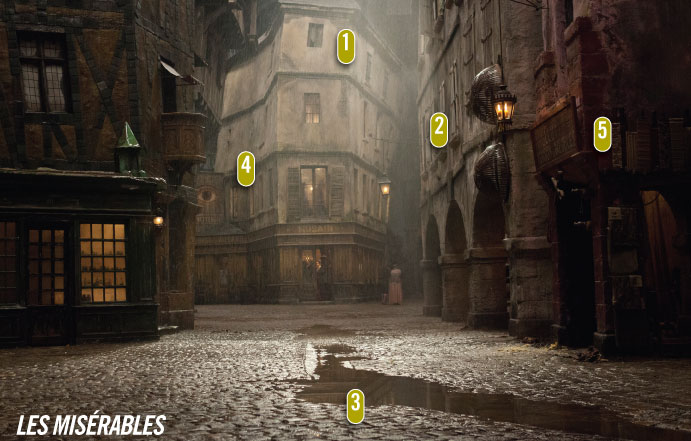

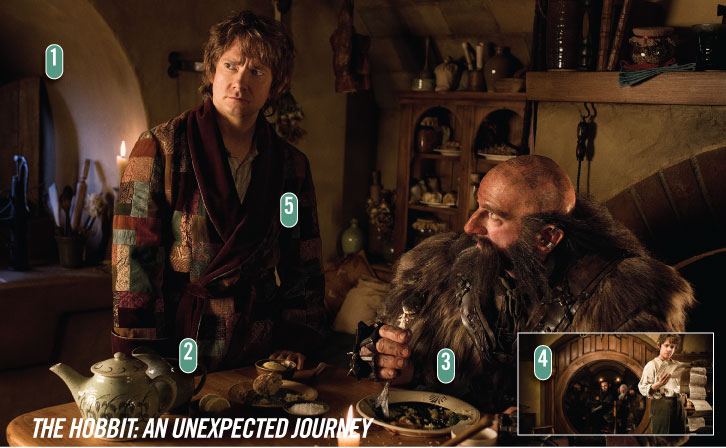
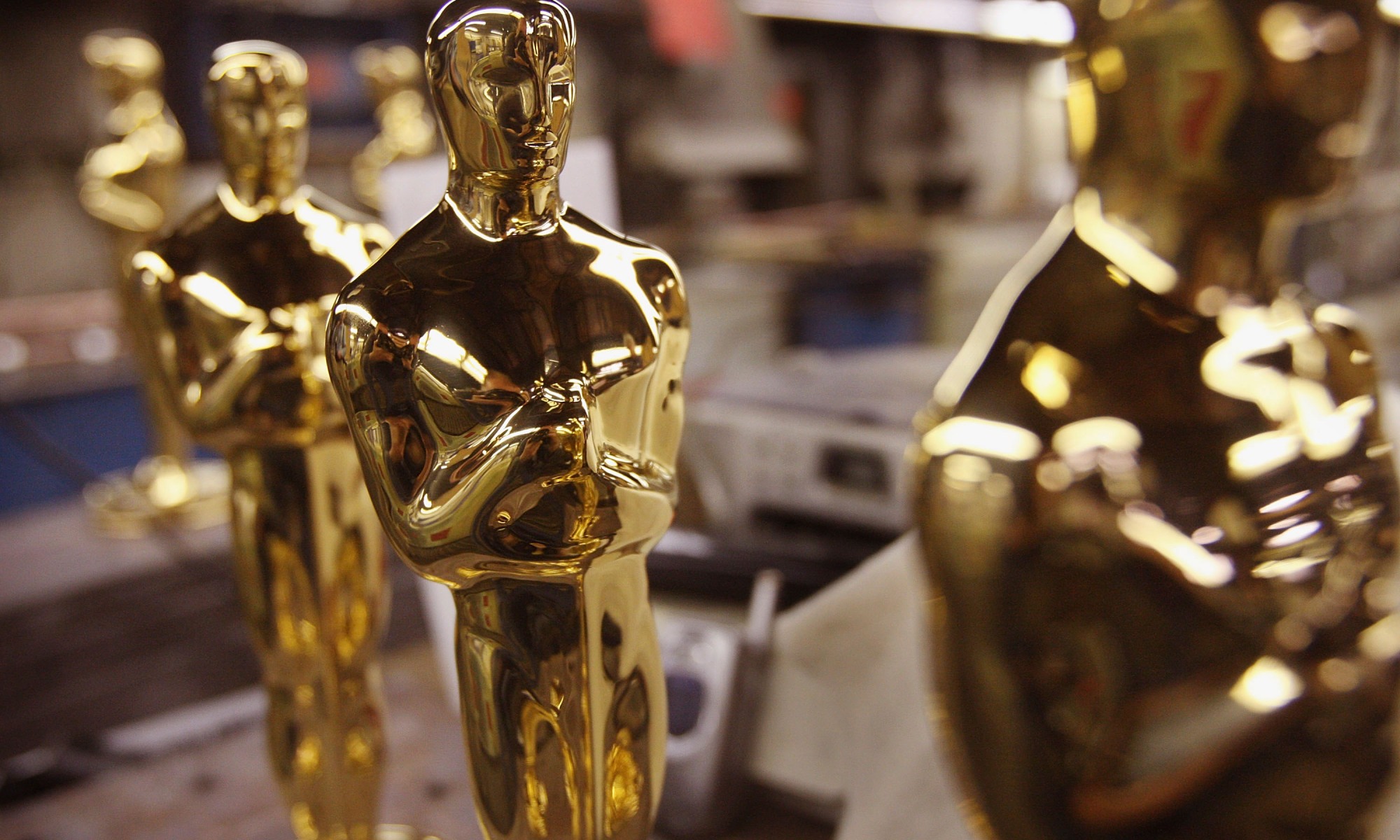
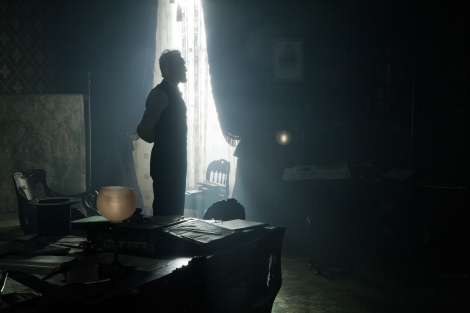
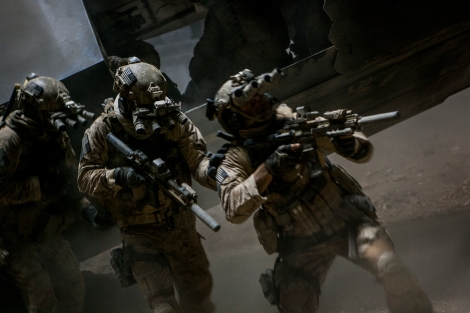
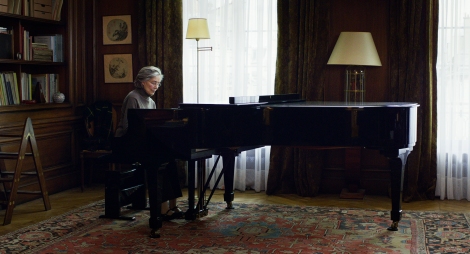
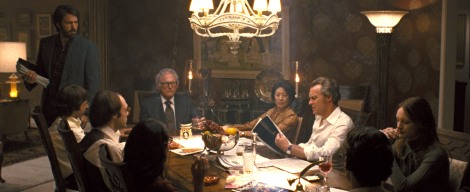
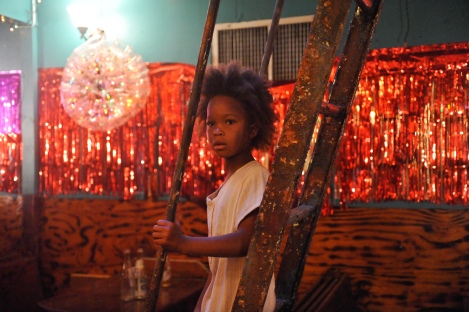
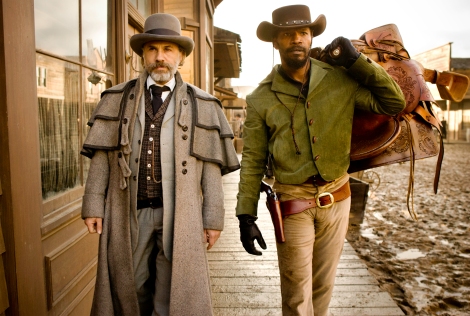
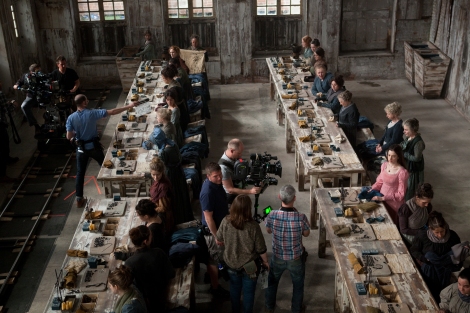

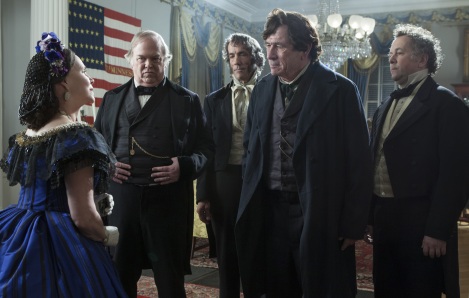
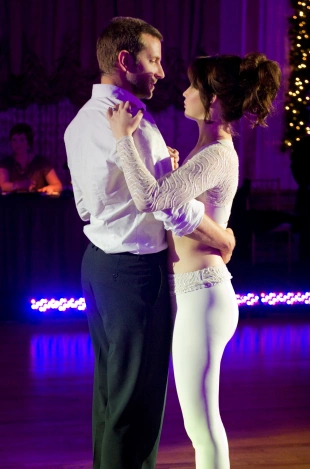
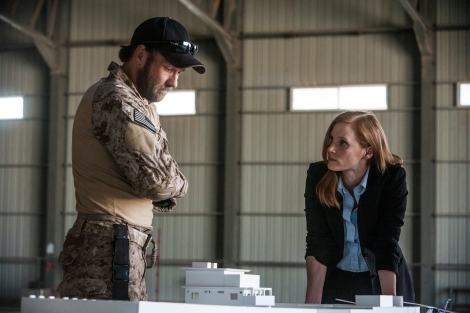


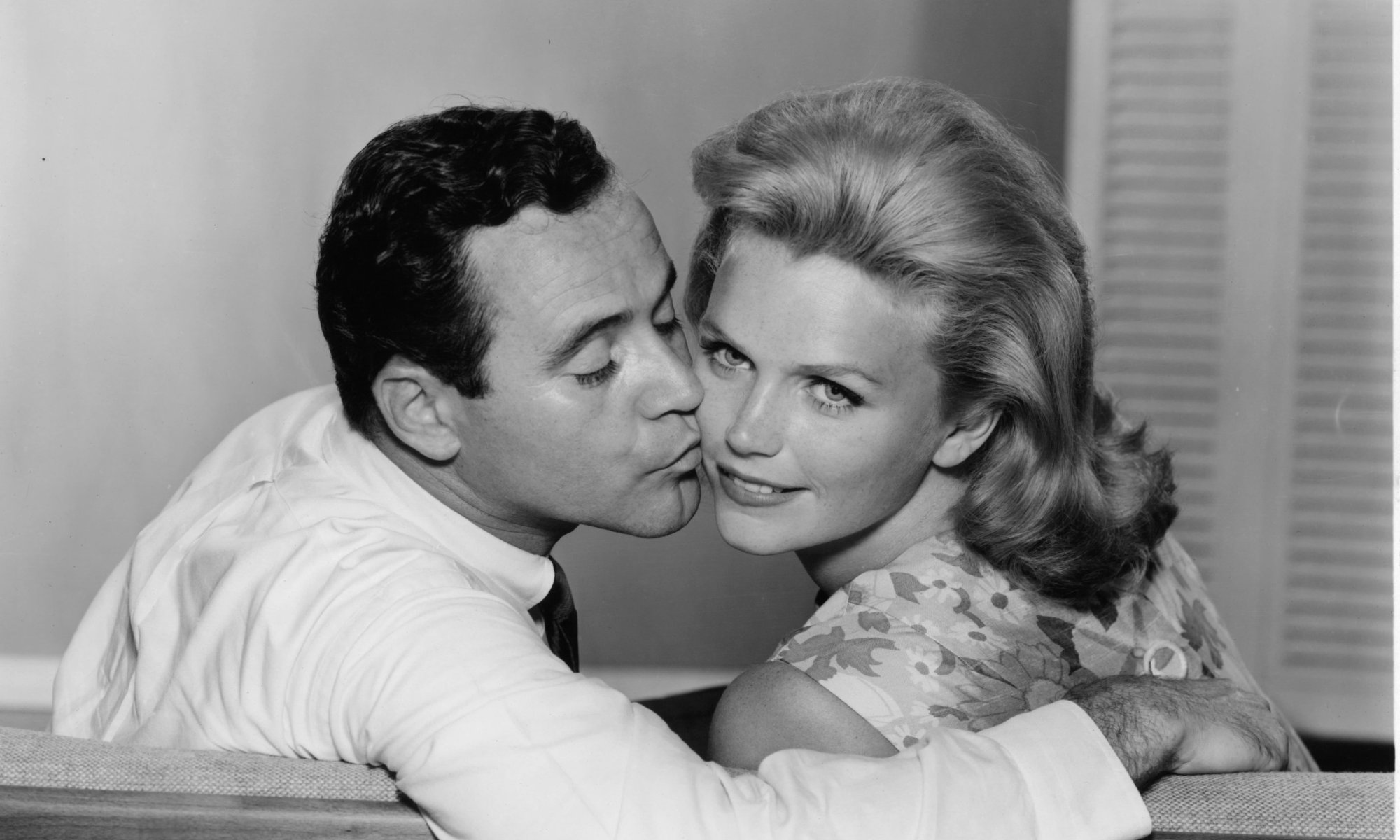
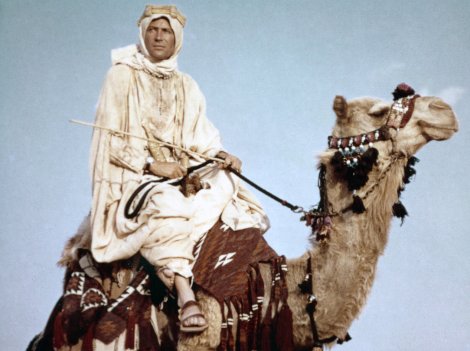
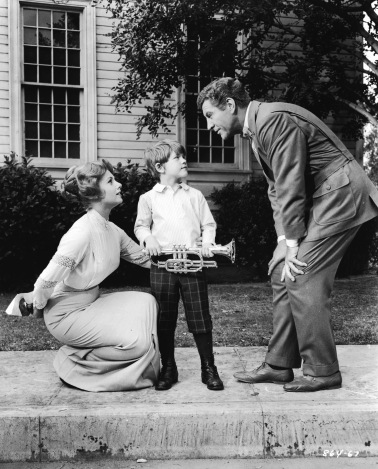
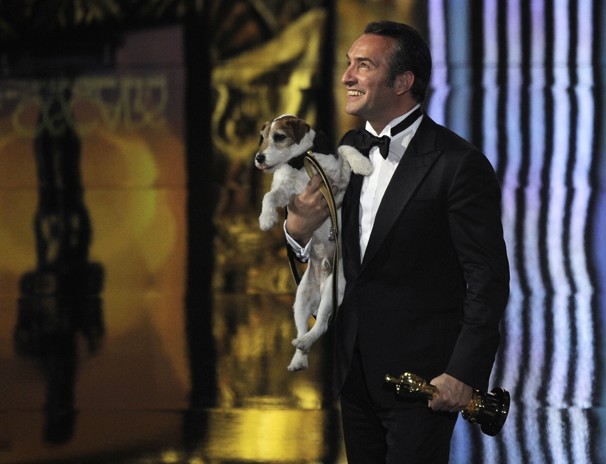
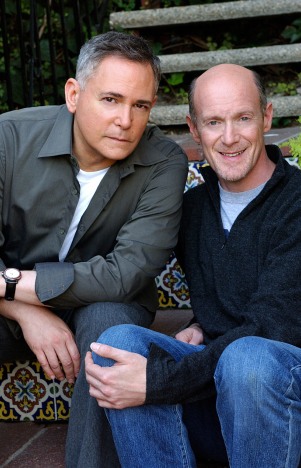
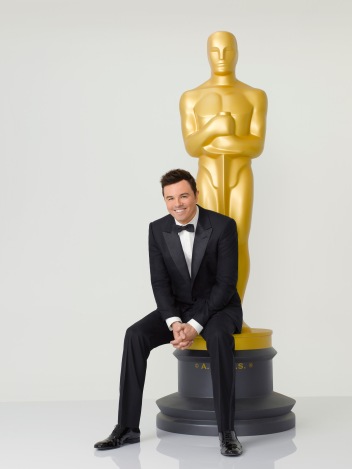
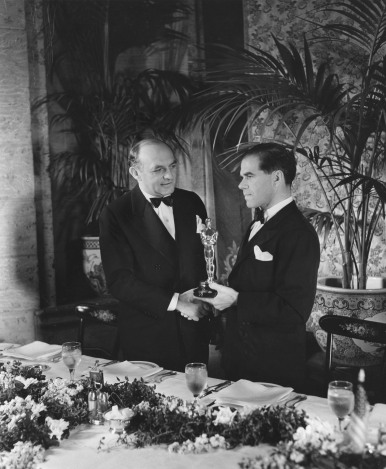
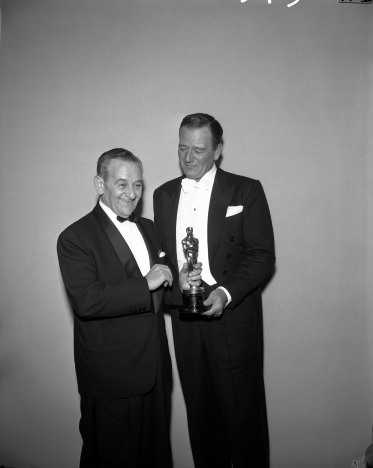
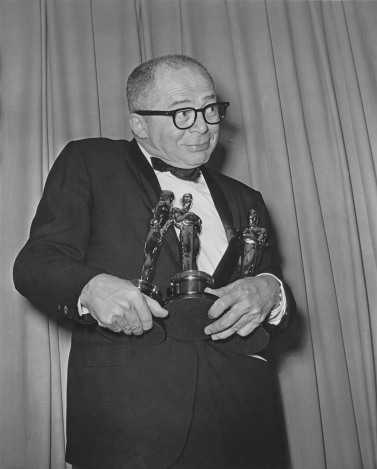
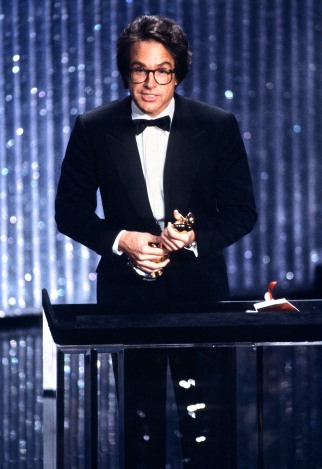
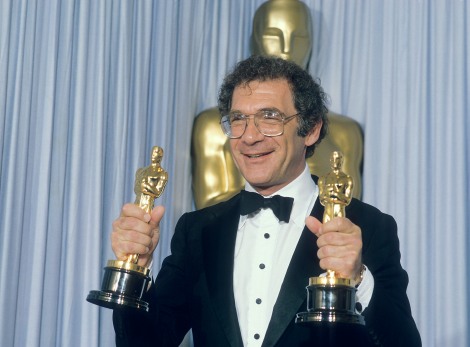
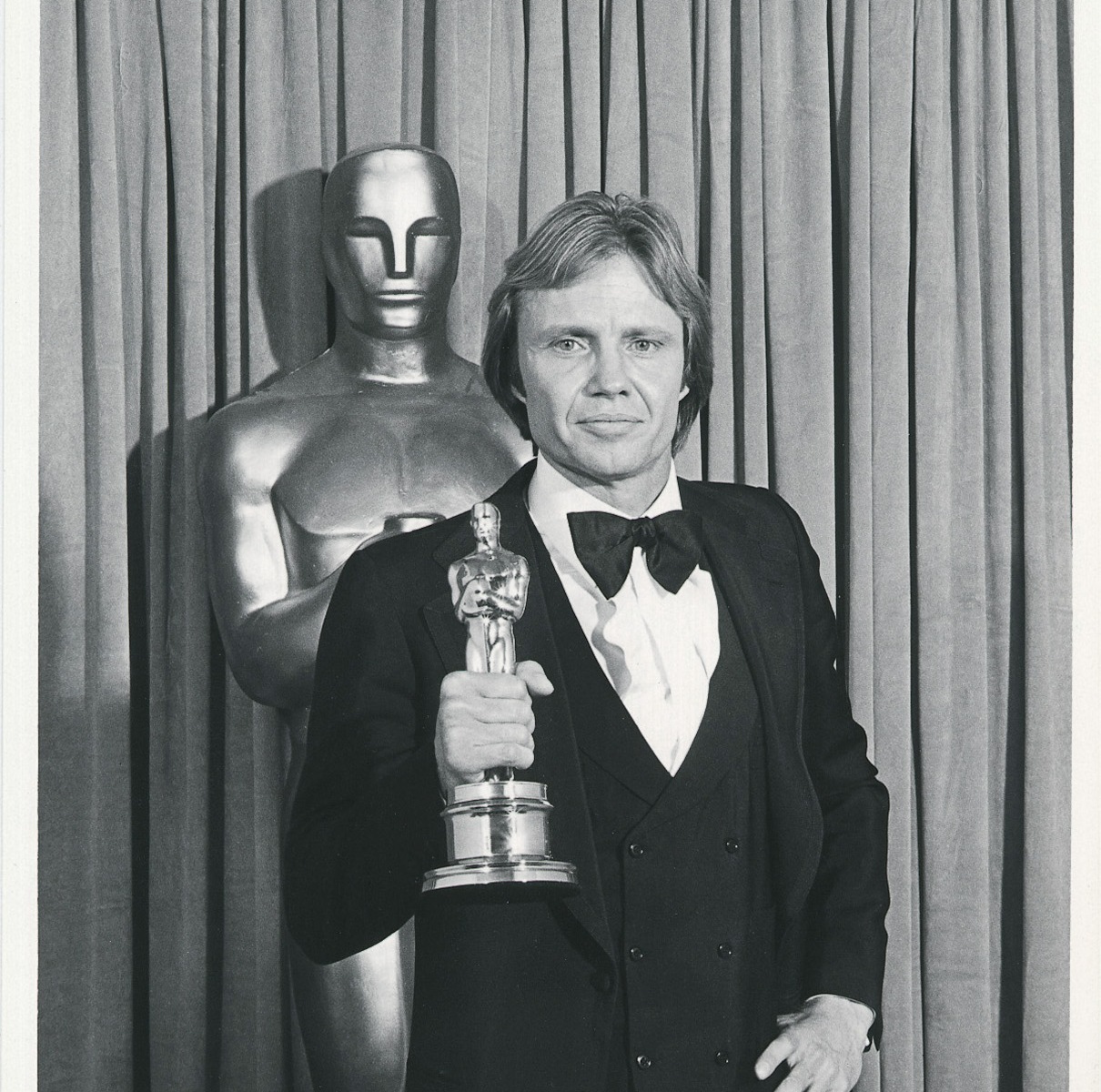
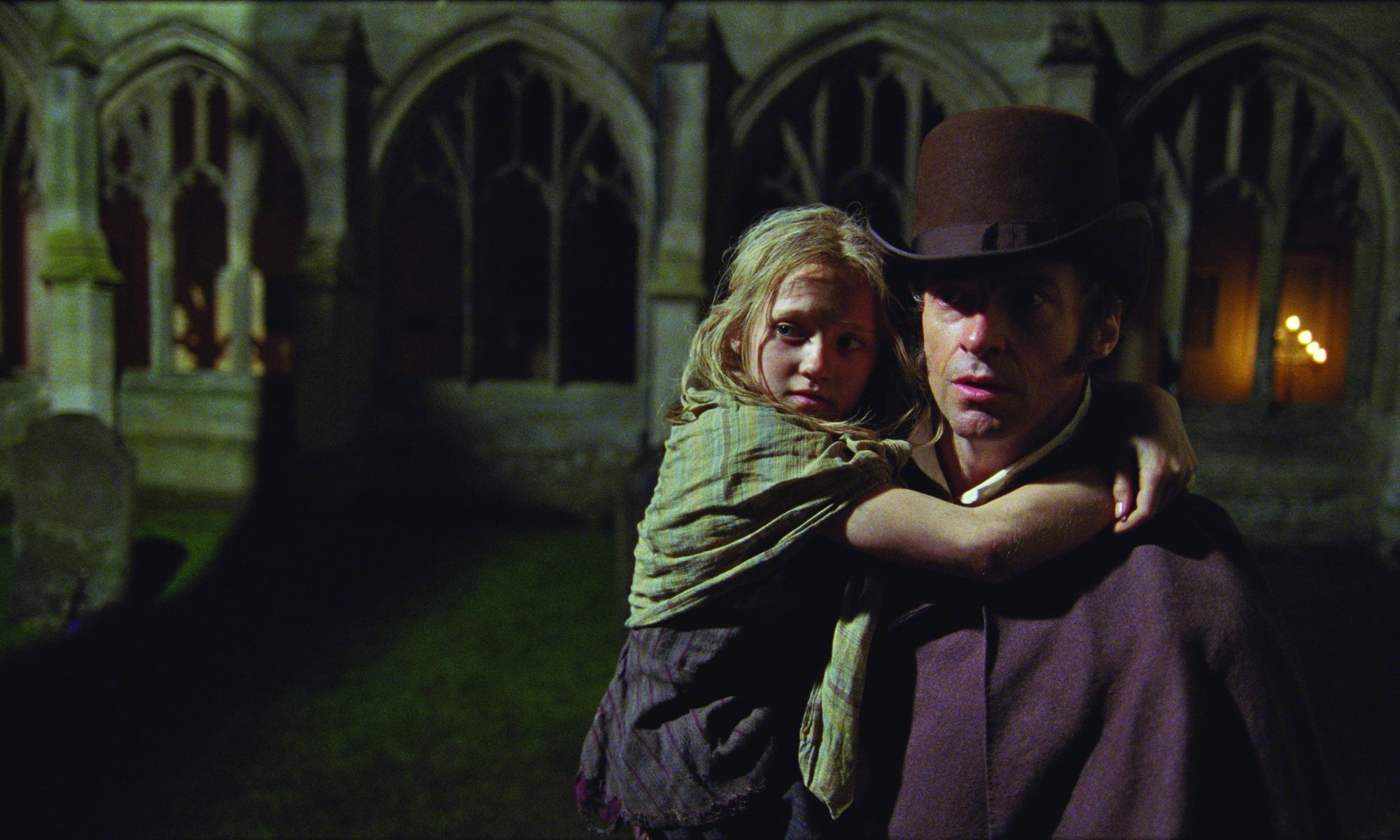
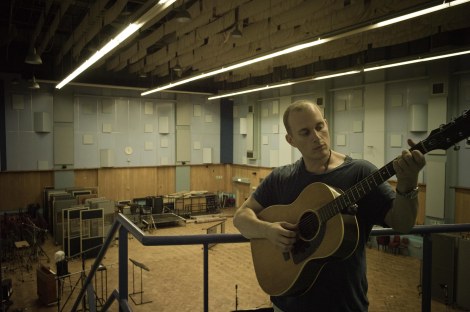
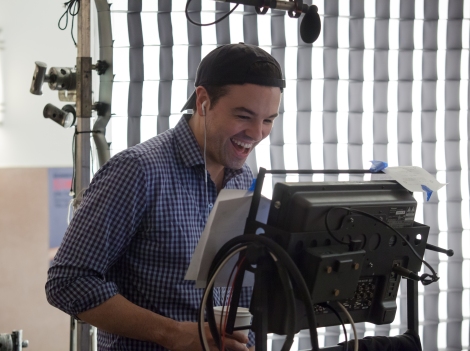
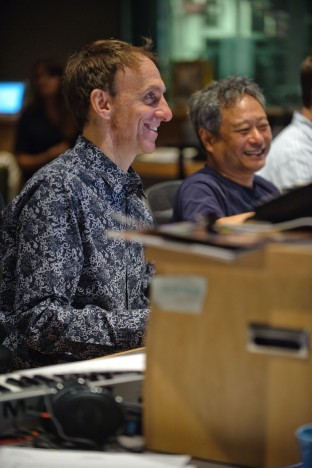
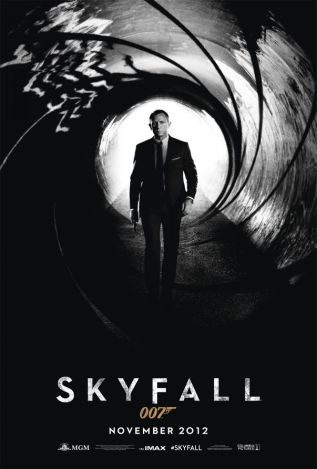
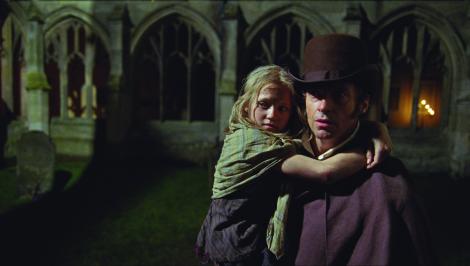
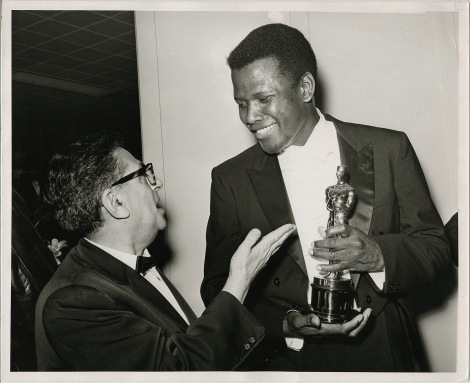
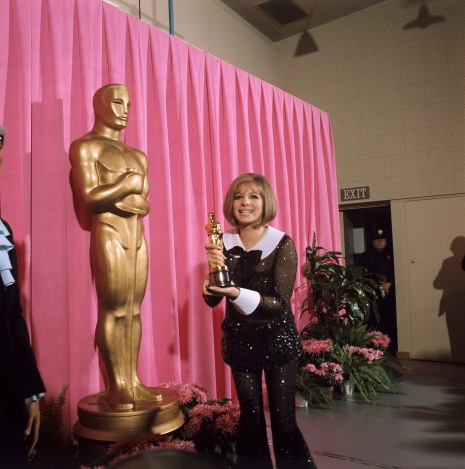
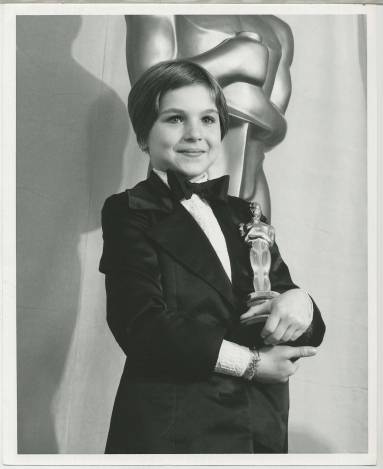
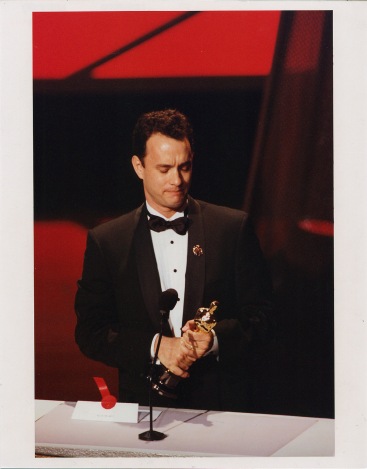
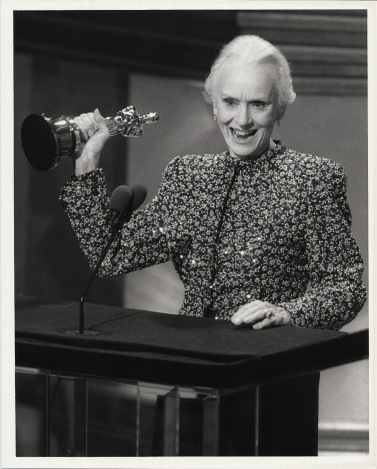
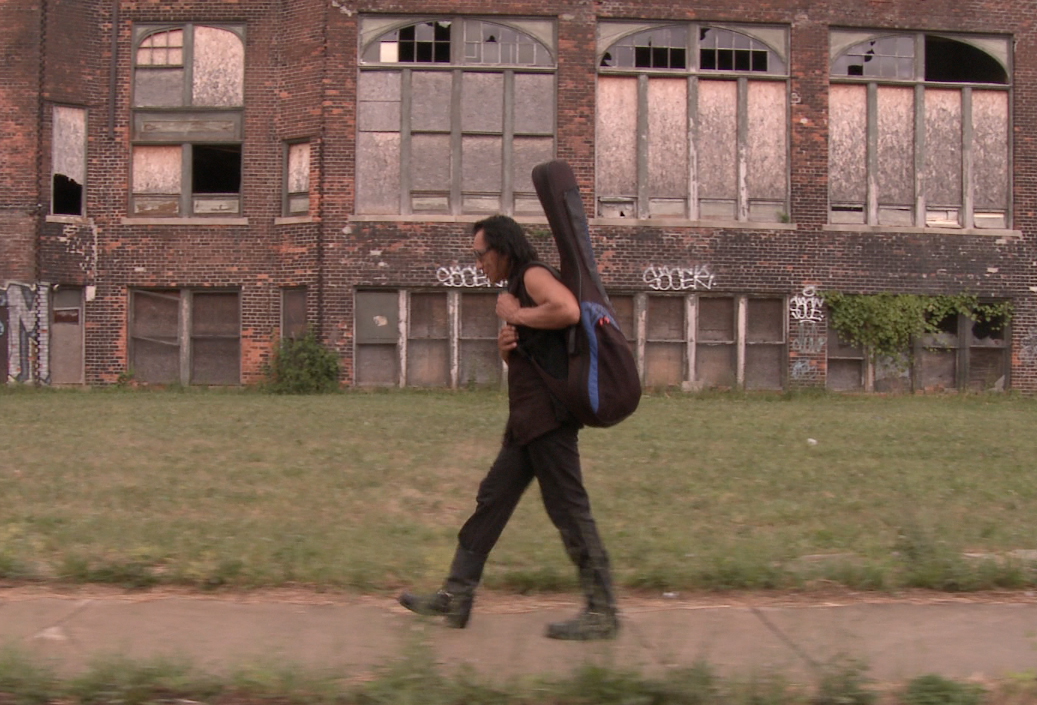

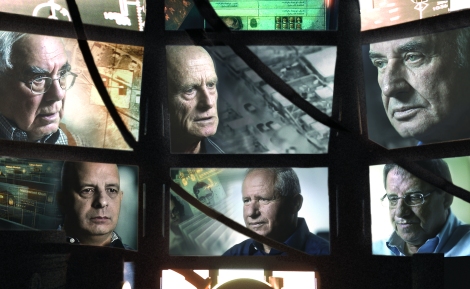
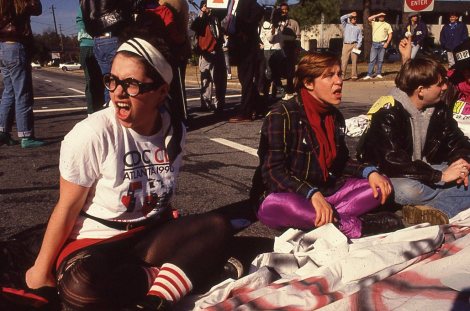
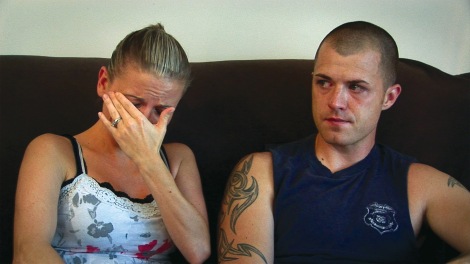
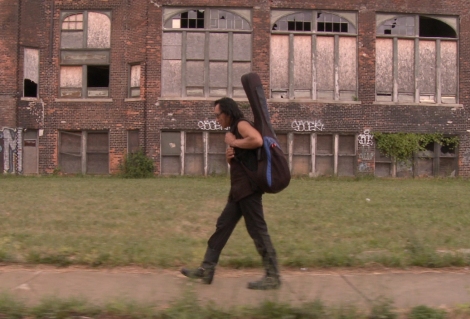
 Awardsline