Pete Hammond is Deadline’s awards columnist. This article appeared in the Dec. 12 issue of AwardsLine.
Tom Hooper has had a distinguished career in television for more than a decade, earning an Emmy in 2006 for Elizabeth I and nominations for Prime Suspect 6 (2003) and John Adams (2008). But his feature-film career consisted of only two small films—Red Dust (2004)and the critically acclaimed but little-seen The Damned United (2009)—before he hit the mother lode with The King’s Speech in 2010, winning both the DGA Award and the Academy Award for best director on his very first time out. Now, defying the odds again, Hooper is back with the movie version of the worldwide musical smash, Les Misérables. This overnight film-business success at age 40 is among those top-tier contenders who could take it all again for finding a way—after producers have spent a quarter-century trying—to make Les Mis sing on screen as powerfully as it did on the stage.
AWARDSLINE: I was talking to Hugh Jackman about the audition process, and he said at that point you weren’t even involved. When did you get involved?
TOM HOOPER: I was involved. I didn’t want everyone to think the film was going to happen until I worked out how I was going to cast it. People always wanted to make the film regardless, but I needed to have the right cast. We needed actors that could sing at this level. The audition back in May of last year was huge—it was an extraordinary moment. That’s when I knew I had a movie. I’d go so far to say, the movie wouldn’t exist without Hugh Jackman. There was no second choice; I still don’t have a second choice. (He’s) an extraordinary actor and singer, with extraordinary musical-theater training. He had a great moral compass, very fitting for this very spiritual man. When he sang, he accessed an acting I had never seen in film. The singing really opens up new possibilities for these actors—possibilities you can’t do with normal dialogue. The sheer power of singing
AWARDSLINE: I can’t remember the last time I’ve seen a musical film with the singing done live, which Jackman said is 99.9% live. It gives it so much more power. I imagine that was still a risk on your part.
HOOPER: There were a lot of people telling me it wasn’t a good idea, that less of it should be done live. But I said the film wouldn’t have happened without Hugh Jackman, and I thought the film wouldn’t have happened if it were not done live. I love the movie musical, (but) there’s something slightly distancing about it. There’s a lack of fundamental realism or naturalism. It’s one thing for the musical to be light or comedic, but this is all about emotion. I thought if we did it live, it would make it much more real. Once you do it live, it becomes a completely different medium.
AWARDSLINE: You used the original book in helping you craft this.
HOOPER: It’s what I used for inspiration—it’s a truly brilliant work. One of the things I got from it was a great line: “It was the second white apparition which he had encountered.” The first taught him virtue, the second taught about love.
AWARDSLINE: What was the biggest challenge of doing a film of this scale?
HOOPER: I think one of the challenges that’s less obvious is doing it with the live piano, not a pre-recorded track. Each scene was a one-off event. You couldn’t cut the scene because of the tempo of the piano or the singing of the actor. I had to preserve the integrity of each scene and make sure I had all the camera coverage I needed to cut shots from each scene. Each time I shot with at least three cameras, up to six cameras. Each scene was a unique event.
AWARDSLINE: I didn’t know Russell Crowe could sing.
HOOPER: He actually started in musical theater; that was his original passion. He’s so passionate about singing, he said, “Tom, the rest of my life, whenever I am starting on a movie, I’m going to be wishing I was starting Les Misérables all over again.” He trained for six months for the demands of live singing.
AWARDSLINE: What was it like having the original creators of the musical available?
HOOPER: So exciting! Every change I made was with them, like the new song (“Suddenly”) was with them. The fans will recognize the original DNA.
AWARDSLINE: I know you had the world offered to you after The King’s Speech won best picture. Was this the obvious followup for you?
HOOPER: The secret thing I was doing during The King’s Speech was reading the (Victor Hugo) book on the planes back and forth. I explored it very thoroughly. For me, to choose a movie, you have to fall in love with it. It’s not an easy musical to adapt, but I got very addicted to the music. The brilliant thing about The King’s Speech was how it made people feel; the best reward was how it touched people. I want to work in an emotional place, a story with song, music. I also thought I should use some of that success to take a little risk and take myself somewhere new.
Paul Brownfield is an AwardsLine contributor. This article appeared in the Dec. 12 issue of AwardsLine.
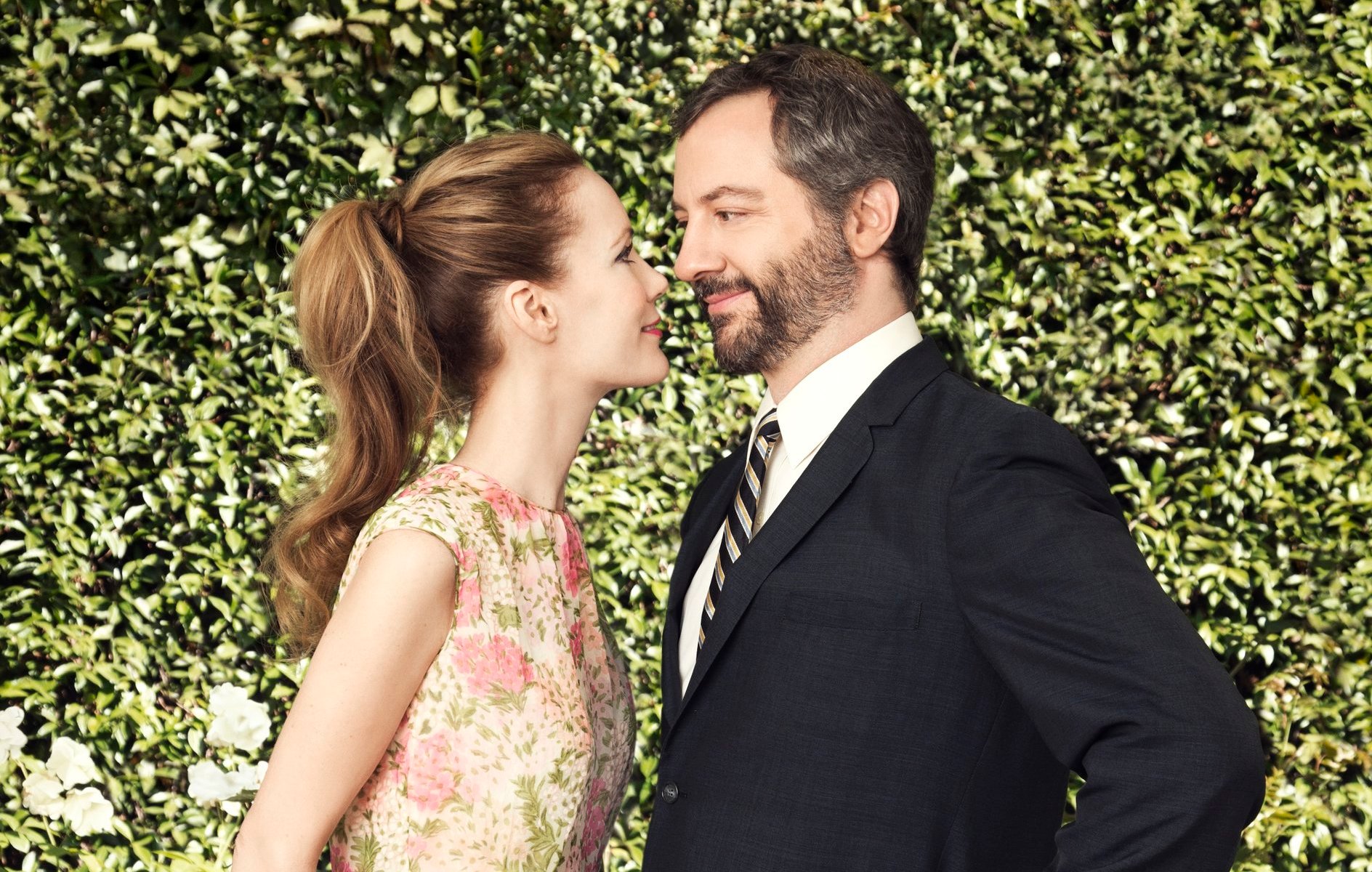
The first scene in Judd Apatow’s dramatic comedy about marriage, This Is 40, is the only love scene. Pete (Paul Rudd) and Debbie (Leslie Mann) are having birthday sex in the shower, but what Debbie doesn’t know is that Pete has popped a Viagra. Thrusting is soon followed by tumult.
First seen in Knocked Up, Pete and Debbie functioned in that film as “the ghosts of Christmas future” for the two main characters, played by Seth Rogen and Katherine Heigl. But This Is 40 doesn’t pick up where Knocked Up left off, it starts afresh.
Let us assume the Viagra shower episode hasn’t happened in the real-life marriage of Apatow and Mann. But both the writer/director, edging into more mature terrain, and his actress wife, truly starring in a major Hollywood film for the first time, are aware that they’ve made something that feels, anyway, like an autobiographical film. In the time before making This Is 40, Apatow went back and watched, among others, Ingmar Bergman’s Scenes From a Marriage, “which had more humor in it than one would expect,” he says.
AWARDSLINE:Early in the movie, Pete and Debbie go away for a romantic weekend to get away from domestic and work stresses and reconnect as a couple. I think they have sex but they mostly do platonic things, like get stoned and order off the room-service menu. I’m curious what each of you thinks that says about marriage and long-term relationships.
JUDD APATOW: Well, I intended it to look like they had sex. If Paul Rudd had agreed to show me his behind, maybe that would have been clearer. The intention of it is to show that everybody has too many things they’re juggling. Between their marriages, work, all the kid stuff, it is very stressful and time-consuming, in addition to their extended families and health issues. Sometimes you need to get away for a few weeks just to figure out who you are again.
LESLIE MANN: But originally we had (Pete) taking Viagra.
APATOW: There was a funny shot where she sees him try to sneak the Viagra, and she just gives a look like, “Oh, God.”
AWARDSLINE: There’s another scene where Debbie catches Pete in the bathroom at home, playing Scrabble on his iPad, and says to him, “Why are you always trying to escape?” That seemed like a crucial line in the film.
APATOW: I’m a big fan of Men Are From Mars, Women Are From Venus. They talk about how men like to go to their caves, and women are always trying to get men out of their caves. That’s always my excuse for my escape. And it probably is just that I’m exhausted, and it’s fun to read the Huffington Post for 12 minutes on the toilet. Leslie will track how long I’ve been in the bathroom based on my Tweets. She’ll say, “I know you’re not going to the bathroom, you’re Tweeting.” She never opens the door. I think the second I hit the toilet, she signs on to Twitter to see if I’m really doing what I’m saying I’m doing. But I think everybody does that. There’s no guy who’s seen this movie that doesn’t say that they escape into the bathroom. I just think it’s a natural thing. Do you think women don’t do that, honey? They don’t feel the bathroom is a place to escape?
MANN: Um.
APATOW: To catch a breath?
MANN: I don’t think so.
APATOW: Where do you catch your breath?
MANN: We don’t. We’re women. We’re stronger than you are.
AWARDSLINE: Judd, The New Yorker once described your process for scriptwriting as involving a mostly male “Bucket Brigade of actors, writers, and directors” punching up each other’s scripts. Did that happen here?
APATOW: Not really on this one. Some movies are more of a joke fest, so it’s helpful to have a lot of input. Some movies survive just based on how funny each individual joke is, but because this is a more intimate movie, it really started with this idea and a year of Leslie and I talking about it and what our feelings were at this time of our lives. So I would tell Leslie some of the story I was thinking about, and then she would comment on that and pitch me ideas for scenes based on what she was going through. That’s how I outline. I just list hundreds of scene ideas, and then slowly the actual plot starts revealing itself.
AWARDSLINE: Did you workshop the script or show it around?
APATOW: The first person to read it is Leslie because we talk a lot about it. Leslie doesn’t like reading the early, really crappy drafts, so I tell her how it’s going and talk through the scenes with her. Then when I feel like it’s pretty decent, I give her the script. I’m also well aware that if she doesn’t like it, we’re not making the movie. So that’s actually the only scary read for me. Then I’ll get her notes and do a pass, and I do give it to a ton of people, which makes Leslie very nervous. I’m always just sending the script to people, and a lot of friends who are the writers I most admire read it. James Brooks read it, and Eric Roth, and Jake Kasdan, and Adam McKay. I send it around and say, “Am I crazy? Does this make sense at all, what we’re trying to do here?” And they’re very, very supportive and insightful and helpful.
AWARDSLINE: How long did it take to get from first draft to a shooting draft?
APATOW: Very short. I only finished the script because we were about to start shooting. So I drafted the script in December of 2010, and we shot in the summer of 2011. But we started doing rehearsals and table reads about five weeks after I finished the rough, vomit pass. Very early Leslie and Paul’ll come in, and we all talk and play and see how we feel and what’s missing.
AWARDSLINE: Since this film is somewhat close to your personal lives and is such a family affair, did it feel different when you started shooting?
MANN: I feel like Judd always protects me from anything that would stress me out in that way, so it’s only about being creative, which is stressful enough. But he kind of shields me from all of the little things, the business things. He creates a really safe place for us to be just creative. So I didn’t think about, “Oh, wow, this is however much money the budget was.” (To Apatow) How much was the budget? See, I don’t even know. So I didn’t worry about that. I think he may have been worrying about that but didn’t say anything about it. He’s just really snotty and having stress allergies.
AWARDSLINE: Did you feel as though you were crossing a line, putting your own family life on film?
MANN: I don’t see it that way. I know that there are certain things that are kind of pulled directly from our lives. Like, we don’t have wifi in the house.
AWARDSLINE: Really?
MANN: We have it in my bedroom, but don’t write that because (our daughter) Maude doesn’t know. But most of it, emotionally, I feel like it’s true, and what a woman goes through and what a man goes through at that stage of life feels really honest. But I think that’s pretty universal. So I didn’t feel like I was exposing this really personal thing about myself. I just felt like I’m playing a character and this is different from my life, but the same emotionally, you know? Does that make sense?
AWARDSLINE: You mentioned your daughter Maude. Both your kids act in your movies. Did that feel risky this time, to expose them to more scrutiny? I guess in this era of social media that isn’t the big deal it once was.
MANN: It’s weird because they haven’t been able to see the movies. I mean, Maude just recently saw some of Knocked Up, right?
APATOW: She fell asleep at the halfway point, which was very insulting to us.
MANN: Their friends don’t see the movies, and they just go to school every day, so they don’t really know what they’ve done. It kind of doesn’t affect them in their lives at all. But now that Maude is almost 15, it’s probably a little bit different.
AWARDSLINE: And she has a big part in the film.
MANN: And she’s really good in it. And I think that can’t hurt her. I don’t know, we’re very protective of them, and we’re just going to do our best. I hope that it doesn’t hurt them in some way.
APATOW: We think of it more like a singer-songwriter. You write about what you care about, and you share that with people. And hopefully that makes it OK because you are doing it with a positive intention. When people do that in their music and in movies, I always really appreciate it. I think it is what we liked about Annie Hall. We all knew that they dated. We didn’t think it was like that exactly, but we knew that something had inspired it.
David Mermelstein is an AwardsLine contributor. This article appeared in the Dec. 12 issue of AwardsLine.
Fairly or not, European films are widely considered more serious than their American counterparts. Certainly the movies eligible for the best foreign film Oscar this year fit the mold. Several make struggle a central theme, doing so in varied but consistently engaging ways.
Pablo Larrain’s No, from Chile, examines the 1988 plebiscite forced on General Augusto Pinochet, the result of which marked the beginning of the end of his dictatorship. In the film, a gifted marketing executive, Rene (Gael Garcia Bernal), must choose between middle-class comforts and his conscience—a choice complicated by his family’s ties to leftist politics. His boss (Alfredo Castro), who is firmly in league with the pro-Pinochet forces, plays Mephistopheles in this situation, reminding Rene, in no uncertain terms, that the creature comforts he enjoys are by no means guaranteed. Complicating matters are Rene’s shaky relationship with his politically engaged wife, Veronica (Antonia Zegers), from whom he is already separated. All of which leads to the film’s central question: What price bravery?
Denmark’s official Oscar submission is A Royal Affair, which transports viewers to the 18th century.
Chen Kaige’s Caught in the Web, China’s contender this year, essentially flips the individual-versus-society question as it examines the struggles faced by Ye Lanqiu (Gao Yuanyuan), a mild and attractive executive assistant who is given a grim prognosis of advanced lymphatic cancer. That dire news triggers a chain of events in which the stunned secretary acts rudely on a public bus, and her behavior, captured on a young reporter’s cell phone, creates a cause célèbre, catapulting her to national vilification as “Miss Sunglasses.” This double blow of fate and ostracism is compelling, but Chen is more concerned with turning the lens around, from the individual onto Chinese society. There, he suggests, obsession with technology has reduced public empathy to everyone’s detriment.
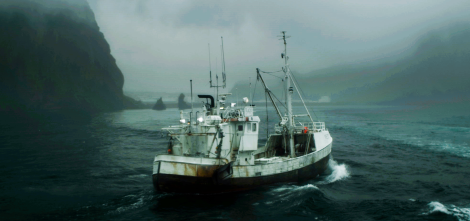
Iceland’s The Deep is based on the true story of a fisherman who survives a shipwreck.
Based on real incident, The Deep, from Icelandic filmmaker Baltasar Kormakur, relates the incredible story of a simple but happy fisherman named Gulli (Olafur Darri Olafsson) who finds himself the sole survivor of a sinking ship. Battling nature and the guilt he feels at being unable to save his crewmates, he makes an improbable bid for survival, defying long odds and swimming to safety. Yet doubts confront him once he does, with people—especially those in authority—refusing to believe his death-defying accomplishment. Then, after confirmation of his experience, he is subjected to medical tests, in hopes of finding a scientific basis for his fortitude and good fortune, so unwilling is the establishment to accept extraordinary actions from such an ordinary man.
Struggles of a strictly private nature lie at the heart of Michael Haneke’s Amour, a French-language film flying the Austrian flag. Centering almost entirely on an aged couple (Jean-Louis Trintignant and Emmanuelle Riva) who must suddenly come to grips with infirmity and—by implication—mortality. Though the much-lauded and singular Haneke would not seem an obvious choice for such a picture, his utter lack of sentimentality pierces the essence of what it means to grow old. Here, Riva must contend with the ravages of a stroke while Trintignant watches his life partner disintegrate before him, powerless to do much more than offer limp comforts.
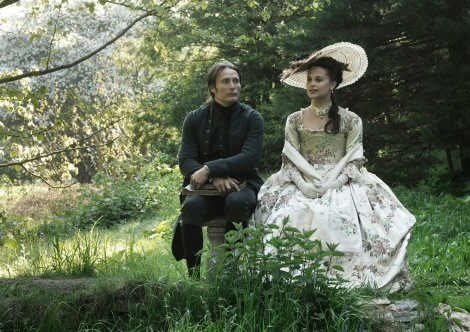
Transporting viewers to 18th-century Denmark, Nikolaj Arcel’s A Royal Affair uses a historical romance between King Christian VII’s wife, Caroline Mathilde (Alicia Vikander), and the king’s physician-cum-chancellor, Johann Streunsee (Mads Mikkelsen), to explore the challenges facing enlightened nobles attempting to improve a backward nation. Beneath the rustle of damask and flickering candlelight, Arcel asks eternal questions regarding a nation’s leaders and their responsibilities—questions made all the more pointed when the populace is too ignorant to embrace its own interests. This particular tale did not end well for those involved, their struggles and sacrifices made apparently in vain. But history takes the long view, which Arcel clearly appreciates in his touching coda.
Said Ould Khelifa’s Zabana! also takes a page from history to appreciate the short life of the Algerian freedom fighter Ahmed Zabana, whose execution helped bring about Algeria’s war of independence from France. And though Australia’s entry for an Oscar this year, Lore, is fictional, its German-language story is grounded in a historical subject that film lovers never seem to tire of: World War II and its consequences. In this case, the protagonist is teenage girl whose parents were ardent Nazis.
Such films as these aren’t are always shortlisted, let alone award winners, of course. Last year’s outstanding A Separation, from Iran, delved deeply into matters of perception and truth, but on an intimate scale. Still, the Academy clearly has a soft spot for foreign films that tackle big issues in which struggle figures prominently. Haneke’s The White Ribbon (2009), from Germany, is a perfect example, with its implicit societal indictment. And so is Florian Henckel von Donnersmarck’s The Lives of Others (2006), also from Germany. Both contend with man’s eternal battle to come to terms with both himself and the society in which he lives. And these are struggles to which we can all relate.
Pete Hammond is Deadline’s awards columnist. This article appeared in the Dec. 12 issue of AwardsLine.
The release of the documentary short list of 15 finalists on Dec. 3 was seen as a litmus test for new rules that opened up the process to the entire peer group and, in theory, would make it easier for more popular docs to make the cut. It was thought these basic rule changes would discourage the proliferation of faux docs (TV docs trying to pass themselves off as features) that started taking over the category and lessen the number of entries. But, in fact, this year saw those TV docs finding ways to skirt the new rules, so the number of overall entries increased. This put a tremendous burden on the already overworked branch members who now found they had as many as 80 docs at one time dropped in their mailboxes.
Chasing Ice documents the melting of the polar ice caps.
The result? Mixed. Although a number of better-known and critically acclaimed docs made the top 15, there were still those HBO docs like Ethel that made the cut even though its TV airdate has come and gone. Yet high-profile, acclaimed theatrical docs like West of Memphis (which had Hobbit heavyweights Peter Jackson and Fran Walsh backing it), The Central Park Five (from awards magnate Ken Burns), and Diana Vreeland: The Eye Has to Travel were snubbed.
Nevertheless, prominent members of the doc branch seem to think the experiment, though not perfect, is starting to work. Academy governor Michael Moore spearheaded many of the changes because he thought a major overhaul was necessary to bring credibility back to the documentary process of the Academy. “(It) seems to be turning out to be a really good thing. I’m now very optimistic about it,” Moore told me at the Governors Awards. Here is a brief snapshot of the contenders.
AI WEIWEI: NEVER SORRY
A look at Chinese artist and activist Ai Weiwei as he works on new projects and exhibitions, despite interference from the government. It’s a definite contender.
BULLY
The Weinstein Co.’s doc covers a compelling subject in a personal way: Teens being bullied. It made its point effectively, leapfrogging it to frontrunner status for much of the year. Its timely themes could take it to the winner’s circle.
CHASING ICE
A National Geographic photographer chronicles the changing condition of the Arctic glaciers. At 74 minutes, it’s quick and beautiful, but it might not be complex enough.
DETROPIA
Using Detroit as a metaphor, this intriguing doc explores the loss of U.S. manufacturing. As timely as it gets, this one could strike a chord with voters, but its relatively low profile might hold it back.
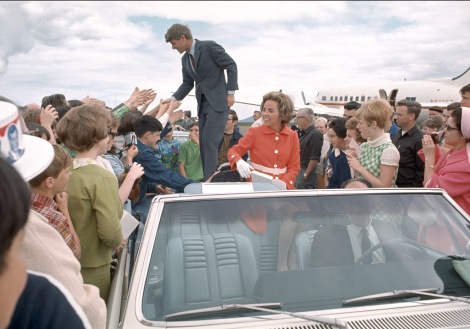
Ethel looks at the life of Ethel Kennedy, who raised her children alone after her husband, Bobby, was assassinated.
ETHEL
A look at the life and times of Ethel Kennedy, who had to raise 11 kids on her own after the 1968 assassination of her husband, Robert F. Kennedy. The TV imprimatur (it’s already aired) could diminish its chances as the Academy tries to move exclusively toward theatrical docs.
5 BROKEN CAMERAS
Over the course of five years, a quiet Palestinian farmer uses several cameras to record his peaceful protests against the aggression of the Israeli army.
THE GATEKEEPERS
This eye-opening doc about six former heads of Shin Bet, Israel’s Secret Service agency, and the men charged with the fight on terror has been a major contender since its debut at the Telluride Film Festival, despite being a series of talking-head segments. But what talk!
THE HOUSE I LIVE IN
Executive producer Brad Pitt got behind this one early, and it raises the question about the effectiveness of the war on drugs in the U.S. A strong contender to make the final five despite limited theatrical play.
HOW TO SURVIVE A PLAGUE
Winner of the New York Film Critics Circle’s best first film, this film is a story of two groups who managed to turn things around for AIDS victims, offering hope, humanity, and street smarts in dealing with the deadly disease.
THE IMPOSTER
This absolutely riveting story revolves around a young Frenchman who knocks on the door of a Texas family and says he is their long-lost son, missing for three years. One of 2012’s higher profile entries, this one could gain traction, particularly if it gets some love from critics’ groups.
THE INVISIBLE WAR
A look into the rape of soldiers in the U.S. military, a situation that is rampant according to this compelling doc from Kirby Dick (This Film Is Not Yet Rated). This one has a lot of support with the Academy actors/activists branch.
MEA MAXIMA CULPA: SILENCE IN THE HOUSE OF GOD
The subject of pedophilia in the Catholic Church is given first-rate treatment by prolific Oscar-winning documentarian Alex Gibney (Taxi to the Dark Side). Gibney is always a contender when he is on his game, and he is definitely on it here.
SEARCHING FOR SUGAR MAN
Chronicles the fall and rise of a musician who never quite made the big leagues, but manages to make up for it 30 years later when he is suddenly “rediscovered” by a film crew.
THIS IS NOT A FILM
Jailed Iranian director Jafar Panahi shows a day in his life in prison as he tries to find freedom again. The Iranians, who won best foreign film last year for A Separation, refused to enter a film this year for political reasons. A nomination for this penetrating doc could make up for that loss.
THE WAITING ROOM
A look inside at what goes on in a typical American hospital. Paddy Chayefsky wasn’t far off in his fictional 1971 classic, The Hospital, but this one could be long shot as it doesn’t offer a whole lot of originality but is highly watchable anyway.
Diane Haithman is an AwardsLine contributor. This article appeared in the Dec. 12 issue of AwardsLine.
On a Saturday morning in early December, Weinstein Co. chief operating officer David Glasser was facing a very busy day: A noon screening of his company’s critically acclaimed Silver Linings Playbook, followed by a 3 p.m. screening of Weinstein’s Christmas Day release Django Unchained, then an evening at the Academy of Motion Picture Arts & Sciences’ fourth annual Governors Awards. Until the Feb. 24 Oscar ceremony, “Saturdays and Sundays are not my own,” the executive jokes.
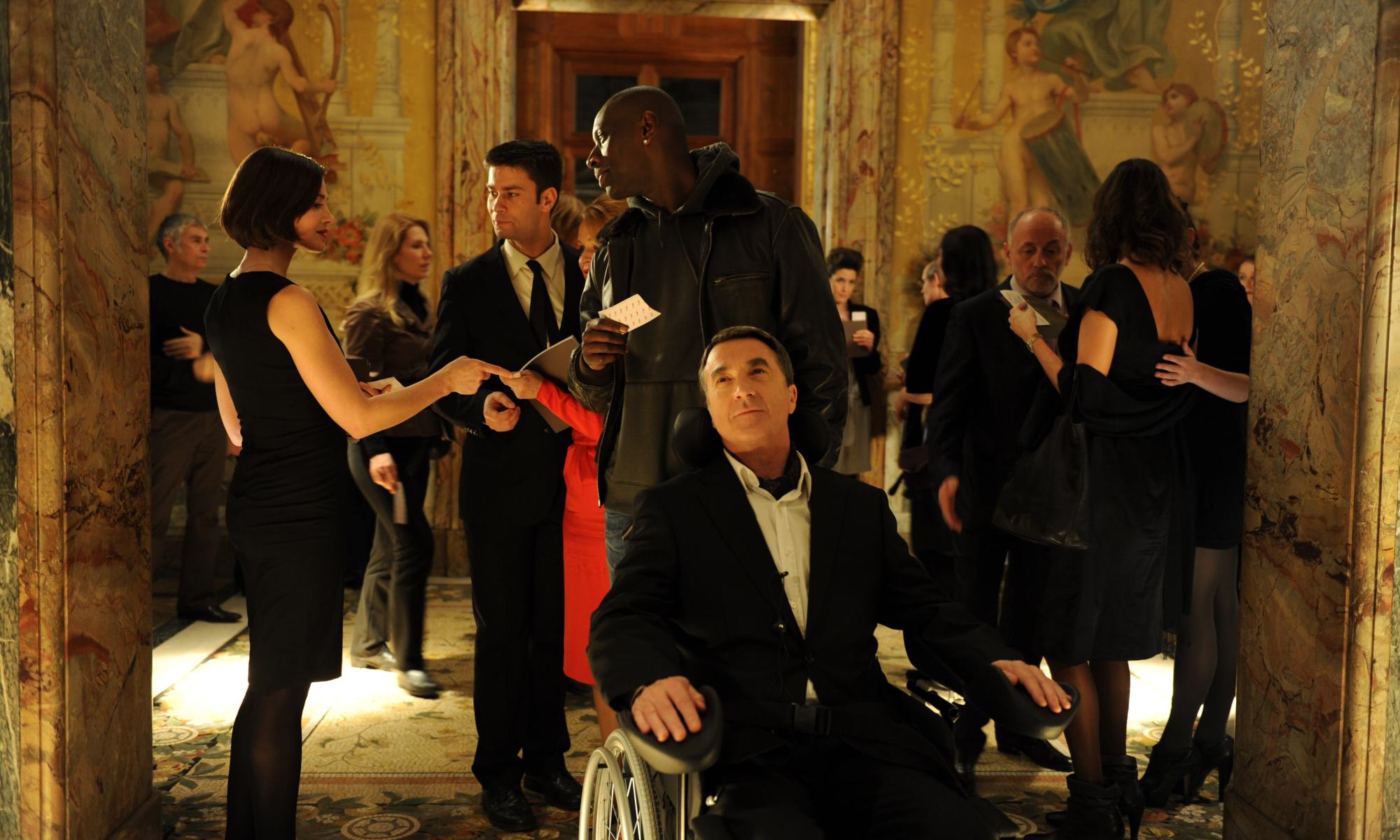
François Cluzet, left, and Omar Sy in The Intouchables.
But in between such big events involving big movies, it somehow seemed fitting that Glasser would carve out a little chunk of time to talk about a small but equally important film executive-produced by the Weinstein Co.: The Intouchables.
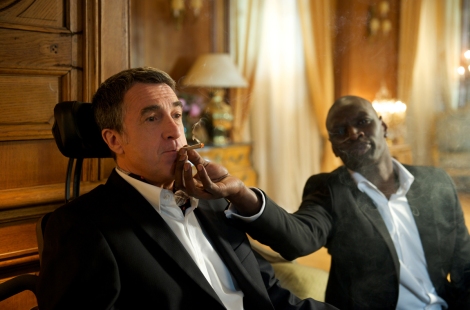
This $2 million French film, based on the true story about the bond between a wealthy quadriplegic (played by François Cluzet) and the fun-loving younger man from a housing project (Omar Sy) he hires to take care of him, has earned more than $400 million at the boxoffice worldwide and is the official French entry for the foreign-language film Oscar.
In fact, Harvey Weinstein and his team like The Intouchables so much that they are producing an English-language remake with a different cast in the United States. Glasser predicts the script will be completed within the next two or three months, and the film will be produced in 2013 for planned release in 2014.
Because The Intouchables (that’s French for “untouchables”) is being entered in the foreign-language category, it is not in the running to repeat the Weinstein Co.’s 2012 best picture win for another French film, The Artist. Still, the company seems to have high hopes: The Intouchables was among the first DVD screeners to be shipped out to Academy members in early October.
Glasser says the foreign-language category was more appropriate than a best picture entry for this film. “Look, with The Artist we were much more involved. This was their movie,” Glasser says, referring to writer/directors Eric Toledano and Olivier Nakache and the producing team of Nicolas Duval-Adassovsky, Yann Zenou, and Laurent Zeitoun. “And it wasn’t like (the Weinstein Co.’s 2011 winner) The King’s Speech, where we had made it. When they put it in as France’s foreign-language film, we were fine with that. It felt like a natural fit for the movie.”
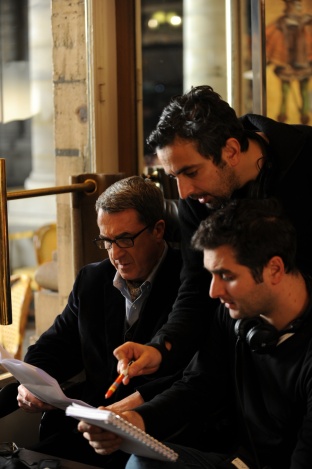
Writers and codirectors writer/directors Eric Toledano, center, and Olivier Nakache, right, on the set with François Cluzet
While the submission category is different, The Intouchables, like The Artist, was discovered by Harvey Weinstein in unfinished form. In the case of The Artist, Weinstein flew to France to see a rough cut of the film before it was presented at the Cannes Film Festival. In the case of The Intouchables, as codirector Toledano describes it, a Weinstein Co. representative was in the crowd of potential film distributors in Cannes who saw an eight-minute trailer for the unfinished film about six months before its release in France.
“(The Weinstein representative) asked us to show it to Harvey Weinstein, and we were so excited, obviously,” Toledano says. “When Harvey saw the trailer, he said, ‘I want to see the movie.’ The movie was not finished. One month later, (when) we had the first edit of two hours, he decided to come to London, where we showed him the movie. And he decided to buy it, which was wonderful for us.”
This process is typical for Weinstein, Glasser says. “A lot of times we buy something at script phase, or we’ll see a little footage and buy it,” he says. “We bought Iron Lady that way,” Glasser adds, referring to the film that netted Meryl Streep a best actress Oscar in 2012 for her portrayal of British Prime Minister Margaret Thatcher.
And what did the Weinstein Co. see that made them want to bet on The Intouchables? “We love French movies, as I guess you know—we bought four this year alone (including) Haute Cuisine, “ Glasser says. “In eight minutes you felt that kind of magical, warm, very honest relationship between these two guys.”
Adds Glasser, “I think in a marketplace of $100 million, big picture, big studio movies, we’re in that nice, perfect place for great cinema, great stories. They could be a $2 million movie or a $40 million movie. You bring something nice to the marketplace. And there’s a little less competition.”
The filmmakers were inspired by the documentary A la Vie, a la Mort, about the close relationship of Philippe Pozzo di Borgo, who became a quadriplegic after a paragliding accident, and his assistant Abdel, who hails from a housing project. In the movie, the Algerian-born Abdel is re-created as the Senegal-born Oriss to make the role appropriate for actor Sy, 34, who has played roles in other films for the two directors.
Cluzet met and studied the behavior of the real Philippe, but Sy did not meet the real Abdel until after the film was completed. Toledano says the real Philippe was willing to speak about his situation, but the real-life Abdel was less trusting. “He was so suspicious that we wanted to do a movie about his life,” Toledano says. “At first, he wanted to stay far away from everything. He expected to see the movie, but that’s all he wanted to do.”
Plus, Toledano adds, while he admires the real Abdel, he’s just not as funny as Omar Sy. “I don’t think the public could love him as they do Omar.”
Sy, who honed his performing chops as a comedian, also preferred not to meet Abdel, whom he finally encountered on the night of the film’s premiere. “It was important for me to keep space for me to create,” Sy says. He adds that, because he is a comedian and does impressions, it would have been all to too easy for him to fall into doing an impression of Abdel rather than creating his own character.
The opposite is true of Philippe, Toledano observes. “Philippe Borgo, he is a very smart guy, very highbrow. It was really important for the actor to make a meeting, because Philippe has a special look. When Omar came with us to the meeting, he said something very interesting: ‘He can catch you with his eyes.’ ” That was also Toledano and Nakache’s first direction to Cluzet: “He has nothing but his brain, nothing to express his feelings but his eyes. You have to act this movie with your eyes,” Toledano says.
The directors and Sy acknowledge there are currently several movies getting Oscar buzz that deal with characters with severe physical handicaps, including The Sessions and the French-Belgian film Rust and Bone, starring Marion Cotillard as an aquatic animal trainer who loses her legs in an accident. All three believe that there’s something in the global zeitgeist of bad news and a struggling economy that makes today’s audience want to cheer for the underdog.
Nevertheless, Toledano and Nakache believe the key to The Intouchables’ success is that it’s a comedy, more inspired by American buddy movies than tales of overcoming disability. “We made this movie because of the story between two men,” Nakache says. “For us it’s an amazing story, we never expected such a huge tsunami. The thing is, if this movie changes one person, inspires the life of one person, we have achieved our goal.”
Pete Hammond is Deadline’s awards columnist. This article appeared in the Dec. 12 issue of AwardsLine.
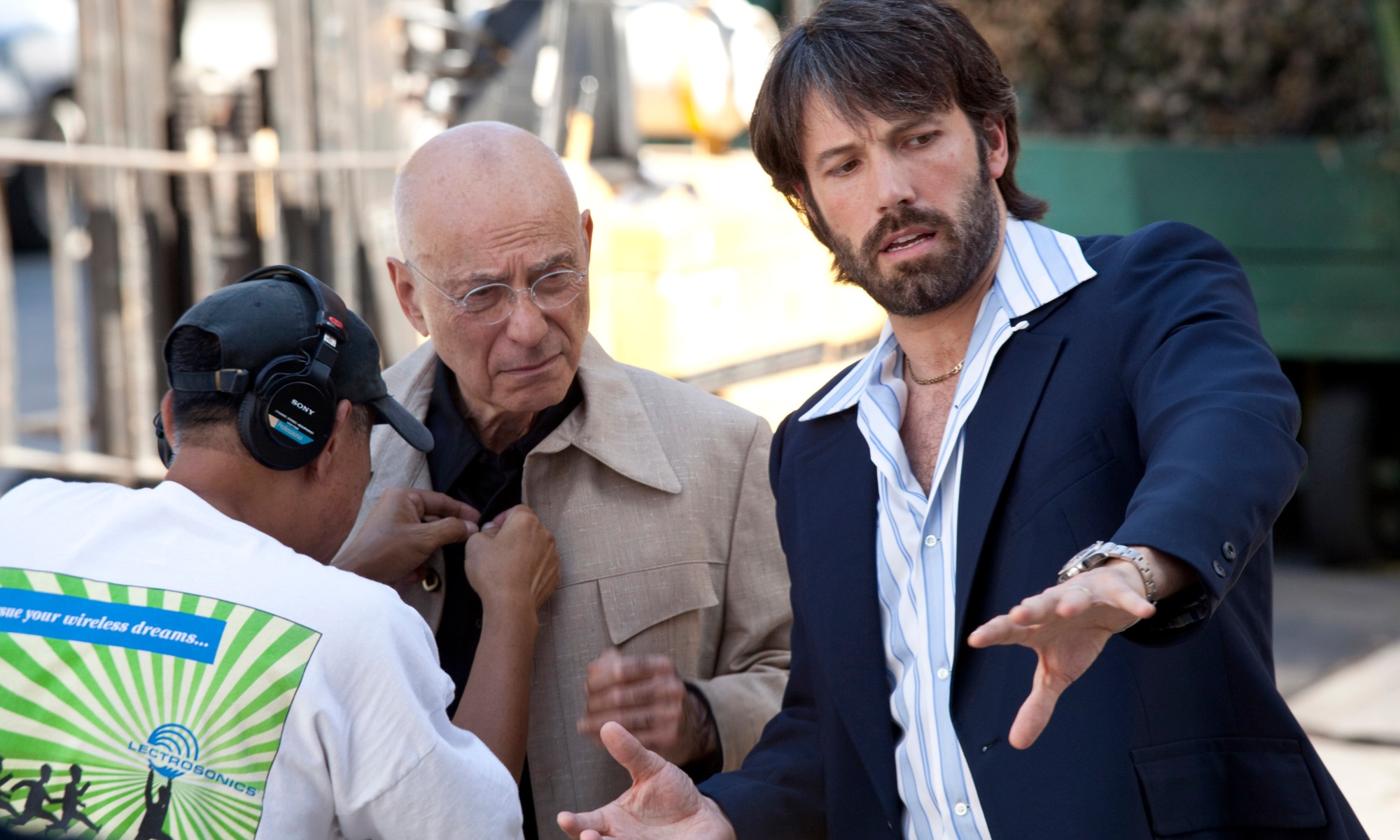
If you are getting a sense of déjà vu from this year’s director race, you aren’t far off. Several past Oscar winners in the category are back competing for another go at the gold. Even one of the frontrunner-newcomers, Argo’s Ben Affleck,is a past winner in the original screenplay category (Good Will Hunting),as is two-time directing nominee Quentin Tarantino (Pulp Fiction, Inglourious Basterds) going for a third try with Django Unchained. Two of the best director winners in the past three years, Kathryn Bigelow (The Hurt Locker) and Tom Hooper (The
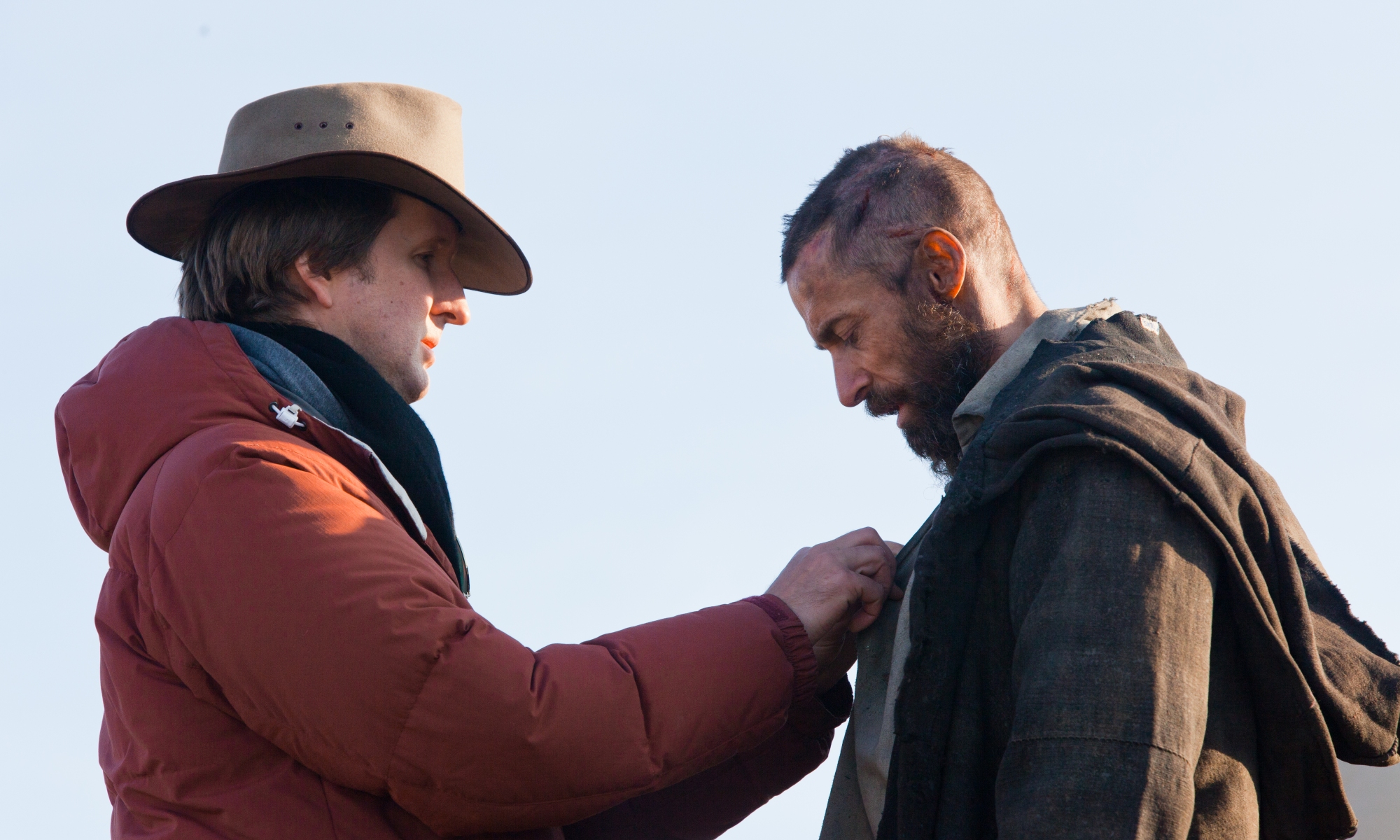
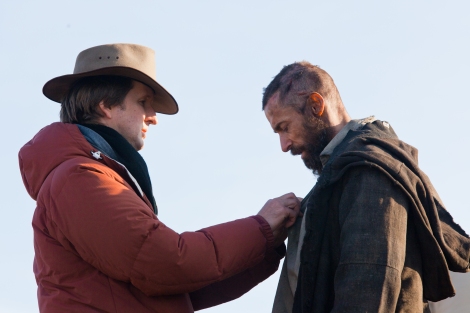
Director Tom Hooper, left, and Hugh Jackman on the set of Les Misérables.
King’s Speech), are already back in the thick of the race trying for a matching Oscar for their followup film, a rare feat if either one can pull it off. Then there are the likes of Steven Spielberg, Ang Lee, Peter Jackson, Robert Zemeckis, and Sam Mendes—all past winners attempting to make room for another Oscar on their mantel. Some prominent past nominees are also back trying for a first win including Paul Thomas Anderson, David O. Russell, and Gus Van Sant. And could this be the year Christopher Nolan finally gets some love from his peers in the small Academy directing branch with his final Batman flick, The Dark Knight Rises? Here’s a rundown of the top contenders for best director.
BEN AFFLECK | ARGO
Early in his career, Affleck took home an Oscar with cowriter and star Matt Damon for Good Will Hunting in the original screenplay category. But after an up-and-down career as a leading man, he found new respect behind the camera with his first two directorial efforts—Gone Baby Gone and The Town—winning critical acclaim and comparisions to Clint Eastwood. With Argo, in which he also plays the lead role, he has cemented his reputation as a directing force and has been a frontrunner in the category since the film’s debut at the Telluride Film Festival. But can he keep up the momentum all the way to February?
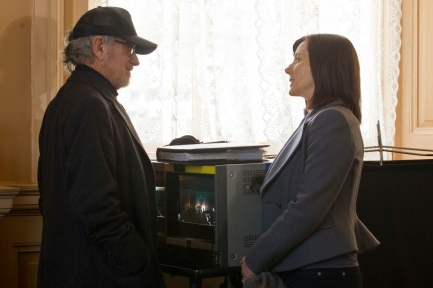
Director Steven Spielberg, left, and producer Kathleen Kennedy on the set of Lincoln.
STEVEN SPIELBERG | LINCOLN
A two-time winner (Schindler’s List, Saving Private Ryan) and six-time nominee in this category, Spielberg has an Oscar track record that seems almost modest considering his remarkable career. Many think he is still deserving of more. His long-gestating and critically acclaimed Lincoln, a film that almost didn’t happen and one he told me recently he felt “might not have been in the stars for me,” has come triumphantly to the screen and made him another formidable contender for the big prize.
TOM HOOPER | LES MISÉRABLES
Although he already had an Emmy win for Elizabeth I and another nomination for John Adams, British director Hooper was not well-known outside of England when it came to feature films. After a little success with The Damned United, he hit paydirt and won the director Oscar on his first nomination for The King’s Speech just two years ago. With numerous projects to choose from, he has now followed it up with the movie version of the smash musical Les Misérables and instantly stakes a claim for another nomination and possible second win in just two years. But will voters think it is too much, too fast?
Director Ang Lee tackled both 3D and digital effects for the first time in his career with Life of Pi.
ANG LEE | LIFE OF PI
A previous winner in this category for Brokeback Mountain (2005),Lee has another statuette for his foreign-language film winner Crouching Tiger, Hidden Dragon. The virtually unfilmable bestselling book Life of Pi took its toll on a number of directors who attempted to bring it to screen until Lee finally cracked a way to do it and moved the art and science of film one step forward with his dazzling visuals. Fellow directors seem to be awestruck by what he has accomplished, and that should assure him yet another nomination if the movie gods are smiling on him this season.
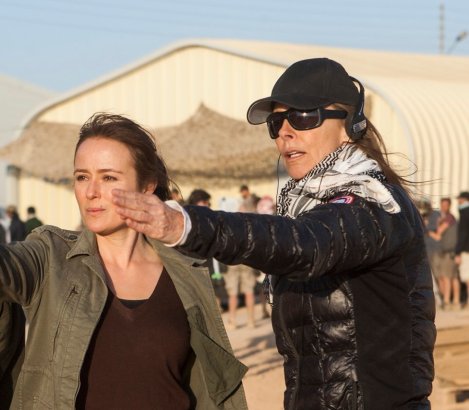
Director Kathryn Bigelow, right, and Jennifer Ehle on the set of Zero Dark Thirty.
KATHRYN BIGELOW | ZERO DARK THIRTY
Just three years after becoming the first woman ever to win the best director Oscar for her Iraq war film, The Hurt Locker, Bigelow, an action-movie veteran, proved she still had the stuff to make provocative, controversial cinema with this film about the hunt for Osama bin Laden. Bigelow and writer Mark Boal started working on the film when bin Laden was still alive and eluding capture, reversing course and turning it into a look at how the world’s number-one fugitive was captured when the news broke. It’s a towering achievement, but considering it took 80 years for Bigelow to become the first woman to win the director Oscar, could it only take three for her to become the second?
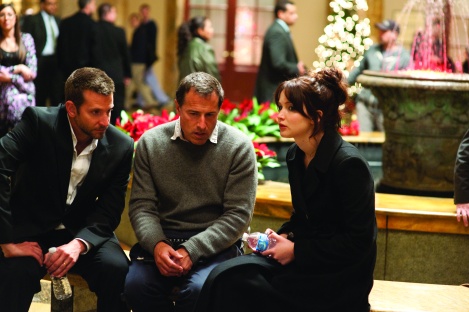
Director David O. Russell, center, with stars Bradley Cooper and Jennifer Lawrence on the set of Silver Linings Playbook,
DAVID O. RUSSELL | SILVER LININGS PLAYBOOK
A director who always seems more comfortable working in the indie world, David O. Russell encountered some tough times in recent years before finding The Fighter and scoring a knockout punch that landed him in this category for the first time in 2010. Now, just two years later, he is in a strong position to go for the win with this quirky, touching comedy-drama that was the sensation of the Toronto Film Festival and winner of the audience award over Argo. But against epic competition, can Russell be driving the little engine that could or is the Oscar just not in his own playbook this time around?
ROBERT ZEMECKIS | FLIGHT
After 12 years of trying to convince the industry that motion-capture animation was the future, Zemeckis, a past winner for Forrest Gump (1994), returned to his roots and delivers a winning human drama about a pilot battling his own demons even as he accomplished a heroic act in crash-landing a plane and saving most of the passengers. Deferring his own salary and bringing this ambitious adult drama in for just $30 million, Zemeckis could find himself back in the race.
MICHAEL HANEKE | AMOUR
Although Haneke is likely to be a frontrunner in the foreign-language race for his Cannes Film Festival Palme d’Or winner, the film itself is eliciting such powerful response that he could also find himself with nominations for his original screenplay and directing. Certainly nominations for directors of foreign-language films are not unprecedented, and Haneke could be the latest if the film’s subject matter about the problems of an aging couple isn’t just too hard for voters to watch.
J.A. BAYONA | THE IMPOSSIBLE
In only his second film, this Spanish director skillfully navigates the big-scale effects of re-creating the 2004 Indian Ocean tsunami along with the powerful human drama of a family separated by tragedy and trying to survive in almost unthinkable circumstances. It’s an impressive balancing act, marking the arrival of a major new talent. But will this smaller release get swamped by higher-profile titles?
PAUL THOMAS ANDERSON | THE MASTER
Although opinion on the film is wildly mixed, with filmgoers in and out of the industry either loving it or hating it, this is a category where the ambitious film, shot in 65mm at a time when no one is using the classic format, could impress Anderson’s colleagues for sheer audacity and filmmaking skill alone. And with only a single previous nomination in this category (2007’s There Will Be Blood) Anderson seems underappreciated.
QUENTIN TARANTINO | DJANGO UNCHAINED
Tarantino is a directorial maverick who always seems to deliver the goods, but will the ultraviolent western throwback just be too much of a good thing at nearly three hours? Early word is he knocks it out of the park again.
PETER JACKSON | THE HOBBIT
The Academy honored Jackson for his triumphant Lord of the Rings trilogy with Return of the King in 2003, so it’s unlikely they will go there again so soon, and especially for what is the first of another three films.
CHRISTOPHER NOLAN | THE DARK KNIGHT RISES
The Aurora tragedy seemed to unfairly taint this film’s awards chances from the beginning, and the directors’ branch has never embraced the great Nolan, so should we expect them to start now?
WES ANDERSON | MOONRISE KINGDOM
This Cannes Film Festival opener became Anderson’s second biggest hit and an indie breakout, but Oscar recognition seems more likely for Anderson in original screenplay.
SAM MENDES | SKYFALL
This Oscar winner (American Beauty)is the most important director ever to take on the 50-year-old James Bond franchise, and the critics and audiences loved it. It’s the most successful and acclaimed Bond film of all and long overdue for a win, but Oscar voters just don’t seem to get it, do they?
JOE WRIGHT | ANNA KARENINA
Using a bold theatrical framing device, Wright took a big chance in making this Leo Tolstoy classic seem fresh again, but opinion on whether he succeeded was divided and likely will hurt his chances to gain his first director nomination.
BENH ZEITLIN | BEASTS OF THE SOUTHERN WILD
The darling of the Sundance Film Festival, this daringly original indie sensation has plenty of admirers, but competition is just as fierce as those beasts.
GUS VAN SANT | THE PROMISED LAND
Directors love Van Sant, who has been nominated twice before (Good Will Hunting, Milk), but his film is the last to be released in 2012 and might not be seen widely enough to break through.
DUSTIN HOFFMAN | QUARTET
Can a two-time Oscar-winning actor break through as a director with a behind-the-camera debut at the young age of 75? The film is right up Oscar’s alley, but unlikely to be a contender here even though Hoffman did a terrific job.
SACHA GERVASI | HITCHCOCK
The great Hitchcock himself had trouble in this category and never won despite five nominations—including a final one for Psycho, the subject of this film within a film—so wouldn’t it be ironic if Gervasi were able to pull off a win? Despite Gervasi doing a fine job in his narrative directorial debut, don’t count on it.
Cari Lynn is an AwardsLine contributor. This article appeared in the Dec. 5 issue of AwardsLine.
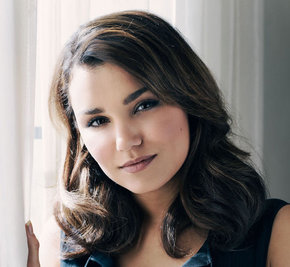
If Samantha Barks is a name that’s new, that’s because Les Misérables is the first film for this Isle of Man native, who plays Éponine, the unlikely martyr who sings of unrequited love in one of the most well-known songs, “On My Own.” Barks, 22, got her start at 17 years old, on the U.K. reality show, I’d Do Anything, where singers auditioned for a revival of the musical Oliver!. Fortuitously, one of the judges was Cameron Mackintosh, the original producer of Les Mis, who’d go on to coproduce the film.
AWARDSLINE: You’re the only member of the starring cast to have also played your role on stage. How did this all come about for you?
SAMANTHA BARKS: After I’d Do Anything, I was lucky to get some fantastic (stage) jobs, the first one being Sally Bowles in Cabaret. A few years later, I got a call that Cameron would like to see me for Éponine. As a musical-theater girl, who’d sing a one-woman show of Les Mis in front of my mirror, just to get to audition was exciting! And then, on my opening night of Les Mis (in the West End), Cameron announced that he’d selected me to sing as Éponine at the 25th anniversary at The 02. After (a year in Les Mis), I ended up playing Nancy in Oliver!, which is where it all began, and it was there that Cameron announced on stage, during curtain call, that I would be playing Éponine in the film. I’d been auditioning for about 15 weeks on the buildup to that, but it was the most unique way in the world you could find out you’ve got a role.
AWARDSLINE: Fifteen weeks seems like a long audition….
BARKS: It was a very exciting process actually, to be able to work with Tom Hooper. At first, it was trying out different ways of doing the songs, because I knew the role from a theatrical sense, but it was to see if I could translate it into the film world. I learned a lot just from those auditions. Then I started going in with Eddie Redmayne (who plays Marius) and Amanda Seyfried (who plays Cosette), and that was mind-blowing, wondering what they were going to be like, because I’d never really met people like that. But they were so nervous, that’s what struck me. Amanda was nervous, and I was like, “But you’re a big movie star.” But this was a world that was new to all of us—none of us have ever sang live on film. We were all there to support each other.
AWARDSLINE: What was the most challenging part of taking this role from stage to film?
BARKS: The biggest challenge was that it’s never been done like this before, so there was no right way to do it. We sang with these earpieces in—so when the audience is hearing this orchestrated version of “On My Own,” all I heard is a little, tinny piano in one ear. The piano is on set and following you, but you’re setting the tempos, and you had to picture how to create this. It was scary—but also a great leveler. You’ve got Russell Crowe and Hugh Jackman and Anne Hathaway, and they’ve done so many films, but no one’s ever done this. And I’ve done many a theater show, but I’ve never done this. We all had something to learn off each other. But we sang each song through with each take, which is rare in film because it’s usually 10 seconds here, 10 seconds there, but what was nice is that you were really able to build in the way that you would be able to on stage. It had such an organic feeling of theater, and that’s why I think people are reacting to it the way they’ve reacted to it on stage, because what you’re getting is a throughline that is true and real.
AWARDSLINE: Did you do any special vocal training for the film?
BARKS: I’m used to singing the material day in, day out, but the difference in bringing it on to screen is that your intimate moments can be so much more intimate. You can talk in a whisper, whereas a stage whisper still has to be so exaggerated. The quieter you go, the more vocal control it takes, but it then allows you to have those payoffs, those bigger moments, it allows you to go on that journey. On stage, even when you’re dying, you’ve got to project, everyone’s got to hear your words crystal clear. But on film, you’re watching a young girl dying in the arms of the man she loves, and you’re right there with them.
AWARDSLINE: You sing more than one song in the rain. How do you maintain your voice live?
BARKS: I think we did about 15 takes of “On My Own.” There was a rain machine with freezing cold rain over my head. When you do a musical, eight shows a week for a year, you have to maintain a stamina and be so disciplined. It’s like being an athlete. Your voice is a muscle, so you have to make sure your diet is good—you can’t have anything that will make you, well, phlegmy. So no dairy before you sing, nothing spicy. You drink so much water, you steam. You’ve really got to look after yourself. We did vocal warmups all day long. Being in a (stage) show, you have to be warm for about three hours a day, but for this, you’d have to be warm and have your vocal pickup at five in the morning, even though you were still singing at 10 the last night. All day, every day, you have to be in your most perfect vocal condition, because that take of “On My Own” might be the one that is shown in cinemas all around the world. Yes, you’re in soaking rain and you’re crying and your nose is drippy and you’ve got so much to contend with—that was the big challenge. Hugh Jackman had waves crashing over him! It’s because of that that you can watch it, and it makes you even more proud because you know what you had to put yourself through to get this. All the things we did for our characters all seem worth it now.
This article appeared in the Dec. 5 issue of AwardsLine.
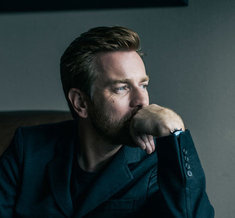
Ewan McGregor has played a lot of different kinds of roles since he first rose to prominence in 1996’s Trainspotting, but there’s one that has eluded his grasp: parenthood. In the December release The Impossible, the real-life father of four plays a man whose family is torn apart by the 2004 Indian Ocean tsunami. He struggles to keep his two young sons safe amidst the chaos while searching feverishly for his wife, played by Naomi Watts, and eldest son, played by Tom Holland. Though it’s the third film he’s appeared in this year after Haywire and Salmon Fishing in the Yemen, McGregor doesn’t take much time off. He recently spoke with AwardsLine from the set of August: Osage County, which is currently shooting in Bartlesville, OK.
AWARDSLINE: How did you first hear about The Impossible?
EWAN MCGREGOR: I heard about it through my agent, and I knew about J.A. Bayona and his film The Orphanage, although I don’t think I’d seen it until I’d read the script for The Impossible. I knew Naomi was attached—I’ve worked with Naomi before—and, yes, after reading the script I was left with no doubt. I didn’t know at the time that it was a true story, but there was something very honest and true about the writing. Another one of the main draws for me was that it was the first time in my career that I explored parenthood, although I’ve been a dad for a long time. I must’ve had some kids in films before, but not many, and I’ve never made a film that’s really about that relationship between you and your kids.
AWARDSLINE: How did the script read to you? There’s not a lot of dialogue, so I’m wondering what it was like going through the script the first time.
MCGREGOR: It had a very strong structure. It could have been written in a much more chaotic way—we fly back and forth and back and forth between all of the family’s experiences. I thought it even played against the chaos. (The structure) also started building up the tension about if they were going to find each other. I didn’t feel like it was spare of dialogue. Really good writers don’t feel the need to explain everything with lots of dialogue, I find.
AWARDSLINE: Were you able to spend any time with Maria Belon’s husband, your character in the film, before you started shooting?
MCGREGOR: I spoke to him on the telephone while I was shooting Salmon Fishing in the Yemen, a few days before I was due in Thailand, so I didn’t get a chance to meet him (before shooting). It’s a funny thing—the real family is Spanish, and because we weren’t playing them as Spanish, I felt like I was sort of free to create him. The whole family came out to visit the set, and when I met him, I thought, Oh, I’m not too far away. It was the writing I guess. The path through the film for me is that he really holds it together, he doesn’t allow himself to collapse until the bus station scene where he does allow himself the luxury to fall apart for a minute.
AWARDSLINE: Did you do any other research for the role?
MCGREGOR: We worked from an amazing documentary Channel 4 in Britain made called Tsunami: Caught on Camera, which was made using all the footage from (tourists’) cameras intercut with interviews with six or seven people who were there. It’s brutal and it’s devastating, and I watched it only twice, no, three times. I tried to go back to it, and I couldn’t. The art department had a great deal of research—photographs of hospitals and coastline shots, hotels, and then of the temples where the bodies were taken. There just reached a point once we started filming that—I mean, we’re spending all day trying to re-create this tragic event, and then we’re surrounded by a Thai crew, most of whom were affected by it and lost people there. All the hotels that we were staying in had been hit by the tsunami, so you’d be in bed at night thinking, Well, who was in this room and did they survive? I would concentrate on getting it right at work, but I couldn’t plunge myself into the horror of it because you can’t sustain that.
AWARDSLINE: You spend most of your time on screen with Oaklee Pendergast and Samuel Joslin, the young actors who play your sons in the film. How were they to work with?
MCGREGOR: They were just absolutely brilliant little guys, and I was always very careful with them. They had a child minder who was also a drama teacher for them, so he would prepare them for the scenes they were going to play, but I’m always very wary of how children are dealt with on movie sets. I said right up front that I wouldn’t involve them in anything that would actually frighten them or play any games with them just to get a desired effect on camera. So we worked quite hard with them. In some of the scenes where we had to huddle and cry—that doesn’t just happen on its own accord. We worked on that, I remember, for about a week or maybe more before we started shooting. And then when we did shoot, they were told quite clearly that when we were was on set, I was their dad. They knew I was their pretend dad, but still whenever I’d arrive on set, they’d run up and go, “Dad! Dad!” I’d send pictures back home to my kids: “Here’s my other family, my secret family in Thailand.” (Laughs.)
This article appeared in the Dec. 5 issue of AwardsLine.
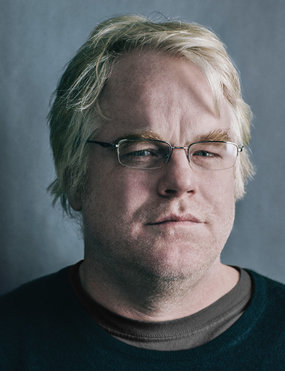
Philip Seymour Hoffman is a theatrical director, a film producer, and a board member of the Labyrinth Theater Company. But above all, he’s an actor, and a relentlessly inquisitive one. Much like the cult leader, Lancaster Dodd, he plays in Paul Thomas Anderson’s The Master, Hoffman is continually deconstructing flawed souls on the stage and screen: An accused pedophiliac priest (Doubt), the suicidal Willy Loman (Broadway’s Death of a Salesman), and Truman Capote (Capote) are among the many. Meryl Streep once told the New York Times about her Doubt costar: “One of the most important keys to acting is curiosity. I am curious to the point of being nosy, and I think Philip is the same. What that means is you want to devour lives. You’re eager to put on their shoes and wear their clothes and have them become a part of you. All people contain mystery, and when you act, you want to plumb that mystery until everything is known to you.” In The Master, Hoffman imbues the puzzling depths of his guru with a warm, paternal nuance while exposing Dodd’s violent, drunken underbelly. Of utmost importance for Hoffman was syncing with the dramatic rhythms of Joaquin Phoenix’s delinquent Freddie Quell, who is not only his protégé, but his doppelganger as well.
AWARDSLINE: How did Paul prepare you for the role?
PHILIP SEYMOUR HOFFMAN: It doesn’t work that way, where Paul prepares you. He’s a writer, so he’s writing all the time. The screenplay was an amalgamation of many things he was writing through the years and then eventually, he had a screenplay. He sent it to me four years out from shooting it. I was part of a development process with him of the story and the character. He had a plan and knew what he was going to do, but I was the guy he was bouncing it off of for a while because I was going to play Lancaster. So that’s how I prepared for the part, talking about and ruminating about it. It was a journey we both took together; it’s just that his job was a lot bigger than mine.
AWARDSLINE: How did Lancaster Dodd change between drafts? Because when we meet him and Freddie, they’re at turning points in their lives.
HOFFMAN: The character didn’t change so much, it was more what to put in, what to take out, what to concentrate on. Early on in the development, these two men always had a relationship where they were polar opposites but mirror images of each other. That was something that was making itself known, and there was a love story in that. That the idea—that the turning points in your life are so profound; they mean so much that they’re almost not real. They become these memories or dreams when something is so epic in your life. Or a person you met that’s changed your life so much, you don’t see them anymore. They become mythical. So if any changes happened, it happened inside that paradigm. Those were the themes. And then what was buttressing all of this was the venue which was the early ’50s; based on a Scientology-like movement, based on an L. Ron Hubbard kind of guy from that time. Anytime we got too far away from the core relationship of these two men, and their journey and what they were going to do to each other, and how they were ultimately going to reveal each other—which is the most profound thing—it was no good. The more detailed we were about the movement, the script got away from itself.
AWARDSLINE: How does Paul work with his actors?Does he know exactly what he wants, or does he give you the breadth to do what you want?
HOFFMAN: It’s very clear that he knows what he wants. You see his movies and the details in his movies are astounding, and that’s good for us. You know you’re being taken care of as an actor because the detail around you is so great. He wants the actor to do their job. He has a real respect for actors. If someone can act well, that means a lot to Paul. He holds that very high, and he doesn’t want to get in the way of that. He only says what he feels he needs to say, but ultimately he has said everything before we start shooting. He’s very good at casting. He has an energy about him on set. No, he’s not a micromanager when it comes to the acting. I think the one thing about Paul is that he’s not predictable. The only thing that’s predictable is don’t try to predict him. He might shoot a scene that you thought would take forever, and it goes quick. Then there’s a scene that you thought was small, and he shoots for two days. He’s going to go where the bigger stuff is happening.
AWARDSLINE: The audience reaction to The Master has been divided. Why is that?
HOFFMAN: I really don’t know, to be honest. I think it’s divided a lot of critics.This one really baffles me, because I think the movie is full of emotion and feeling from beginning to end, like Paul always is. I don’t know how you watch the movie and feel distant and cold, as opposed to those who are taken away with it. It’s all heart and primal, gut feeling. It’s all need, love, aching, and craving from the beginning to the end. People have a lot of opinions about the movement: “Is it based on Scientology?” Or people have an opinion about the characters or how Joaquin is as a person. People project all over this more than any film I’ve ever done. (Laughs.) I hear people say things, and I’m like, “Wow! That’s not even something that crossed my mind in making this movie!” I think that’s what it comes down to: The movie allows you to project on it. There’s stuff going on in The Master that one reacts to, that one distances themselves from. I think people take themselves out of it, because there’s something about the movie they don’t want to be involved with. That’s my gut feeling.
Pete Hammond is Deadline’s awards columnist. This article appeared in the Dec. 5 issue of AwardsLine.
This year’s most anticipated Tommy Lee Jones performance was expected to be in his long-awaited return to the Men in Black franchise, but that actually turned out to be his least interesting part. The reliable veteran star, who won his one and only Oscar nearly two decades ago for chasing Harrison Ford in The Fugitive, has enjoyed a year full of unexpected acting pleasures. After MIB3, he starred in a rare summer adult comedy opposite Meryl Streep and won praise in Hope Springs as a long-married man whose wife wants to add sexual sparks to their relationship. He could earn a Golden Globe nom for best actor in a comedy or musical for that film, plus a second supporting actor nom for his sensationally entertaining turn as Senator Thaddeus Stevens in Steven Spielberg’s Lincoln. That one has also brought him back as a frontrunner in the Oscar race, too. These are good times for Jones, who as usual is focused on the work and rather blasé about all the awards buzz.
AWARDSLINE: What appealed to you about playing Thaddeus Stevens?
TOMMY LEE JONES: Steven (Spielberg) sent me the screenplay, asked if I would read it and consider the part of Thaddeus Stevens. I read the screenplay, loved it, and was fascinated with Stevens. I called him back and said, “This is a very fine undertaking, and it would be my good luck if I had a chance to work on it.”
AWARDSLINE: Were you aware of Stevens in any way before you started researching the role?
JONES: I knew that there was a radical abolitionist in Congress in 1865 named Thaddeus Stevens—that’s about all I knew. But I was fascinated to learn the details of his life and become more aware of what it took to pass that amendment.
AWARDSLINE: What surprised you about Stevens when you got deeper into the research?
JONES: There were a lot of surprises about Thaddeus Stevens that are not in this movie. I wasn’t so much surprised but very interested to learn that he was to some degree a professional radical. His early years in Congress were dedicated to defeating the Masons. His idea was that they shouldn’t be in government because their loyalty would be divided, that they would be more loyal to their cult. And that leaves George Washington right out, buddy. (Laughs.) But he made a lot of political hay, battling this specter of Masonry. He worked very hard to run a railroad through western Pennsylvania, a place where you wouldn’t put a railroad, unless you owned an iron mill, and thought you could make some money if you no longer had to haul your product out with wagons and mules. So he had some pork-belly campaigns on his own behalf. I learned that he was an inveterate gambler. He loved to bet on horses. He even bet on his own elections! He bet on himself to win his own elections and made money doing it! (Laughs.) And that housekeeper wasn’t the only woman in his life. There are a lot of fascinating things about Stevens that aren’t necessarily relevant to the movie, but help you make decisions when you’re deciding what to do as you play a character. This makes the character fuller.
AWARDSLINE: How did you prepare to play him? The wig was interesting.
JONES: Preposterous wig! We hired a wig maker and told him not to do too good a job. If you look at pictures of Stevens, it is a ridiculous wig.
AWARDSLINE: Was there a rehearsal process?
JONES: The first thing you do is rehearse the blocking. When you know where you’re going to be, then you can go back to a trailer or a dressing room and adjust your prep to the physical reality. The actors I was working with didn’t really require a lot of rehearsal. They were thoroughly prepared and knew what they were going to do and how they were going to do it. All we had to do was just adjust to where we were going to do it. And these kinds of actors are adjustable.
AWARDSLINE: What is it like working opposite Daniel Day-Lewis when he just becomes Lincoln?
JONES: His Lincoln is believable and embodies all the characteristics that we admire about Lincoln. I was relieved—gratified, is the only word—to see Lincoln as a real country boy. Not just a bumpkin, but a guy from the country. He’s not real comfortable in town. A brilliant lawyer, self-educated, (an) insightful poet—a man capable of unthinkable self-sacrifice. To see all that rendered real, as opposed to the Lincoln on the penny or the Lincoln on the monument—none of those Lincolns. We’re talking about a real man here.
AWARDSLINE: What was it like to work with Steven Spielberg?
JONES: He’s been part of movies that I’ve worked on. I’ve never been one of his actors, in a movie that he directed. I was very pleased to see him have so much fun. He was very happy on that set. All of the tasks that arise in the course of making a film were a joy to him. None of it was confusing to him or frustrating. You always worry, but he was always, from where I stood, having fun, and that’s so important.
AWARDSLINE: Do you learn from the directors that you work with, things that you want to do on your own movies?
JONES: Every one of them. You are either learning what to do or what not to do. You’re either learning how to do it or how not to do it. And that’s all good.
AWARDSLINE: You’re directing a new film, aren’t you?
JONES: Homesmen. It’s about events that surround the Homestead Act, the middle of the 19th century, and in the Nebraska Territory. Right now, we are scheduled to start shooting on March 17. That might be adjusted a little bit, one way or the other. I need some partially melted snow, and I need some grass. So you have to pick just the right window and get lucky.
AWARDSLINE: What makes you want to take on a role these days?
What’s the key ingredient?
JONES: You look for a good screenplay, a good director—you’re pretty well assured he’ll be prepared—a good cast. Personally, I look for an exotic, happy, wonderful location that my wife and daughter and son will want to visit, so they’ll want to come see me. And you look for a good business deal. There’s a lot of factors that come into play.
Pete Hammond is Deadline’s awards columnist. This article appeared in the Dec. 5 issue of AwardsLine.
After being stuck in the rut of doing a series of high-paying major studio romantic comedies, Matthew McConaughey made a smart career switch and has been winning acclaim for one risky role after another in the last year. Beginning with his successful turn as The Lincoln Lawyer, the actor whose most significant recent awards talk had been as People Magazine’s Sexiest Man Alive suddenly turned out a surprising run of varied roles in disparate, edgy indie movies. There was his prosecutor in Bernie. Then there was a well-received pair of performances in Lee Daniels’ southern potboiler The Paperboy and Jeff Nichols’ Mud that were both in the official competition in Cannes in May. Now he’s been nominated for two Independent Spirit Awards for his leading role in William Friedkin’s NC-17 Killer Joe and supporting turn as the veteran male stripper in Steven Soderbergh’s Magic Mike, a summertime hit that is also getting lots of Oscar buzz. When I talked to him recently, he looked gaunt and pale after losing 38 pounds to play an AIDS victim in his next project, The Dallas Buyers Club. McConaughey has clearly taken his career in fascinating new directions.
AWARDSLINE: You have been having a hell of a year. Really, one movie after another, and I don’t think you’ve stopped working. Have you had a day off?
MATTHEW MCCONAUGHEY: Not many. I did five (films) in a row—the most I’ve ever done in a year were three. I remember telling my now wife, then girlfriend, that I’ve never had less than a month and a half to prepare. It scares the hell out of me. And she was like, “We’ll work it out.” I only had two weeks between a couple of them, and it (worked) out really well. Your mechanics are lubricated, you’re kind of flowing. The hard part is just dismissing the last character and moving into the next one. Each one scared me in a different way, and I hadn’t been scared in a while. But it’s that good kind of fear.
They’re all sort of outlaws, all guys living on the fringe—characters that aren’t really pandering to any certain social norms or civilized laws. I liked them all. Also, they didn’t placate to that three-act narrative structure. I enjoy when characters are moving forward, even if it’s doomed for wrong. Maybe they’re going backward, but they think they’re moving forward in their own mind. You know, there’s Dallas (from Magic Mike)—you could argue that he’s delusionally optimistic. (Laughs.)
AWARDSLINE: I heard that you committed to Magic Mike without even seeing the script.
MCCONAUGHEY: I’d never gotten a call from Steven (Soderbergh) before, and he pitched the project, and within 10 minutes I was on my knees laughing. I love a story where you’re going to pull the curtain back on a subculture like this. It’s quite an intriguing carny world. I was laughing with him, and so I said yes. Then I asked him a couple of questions. I said, “Give me a line of direction. Give me some point to take off from.” He took a long pause, and he said, “Well, you really can’t go wrong.” I was like, “That’s a great first thing to hear from a director!” Five minutes into the conversation, I’m like, “Give me one thing that’s a little more specific.” He goes, “This guy Dallas, he’s connected to the UFOs, man!” He’d blown the roof right off, and he basically said to me, “Fly, boy! Go for it!”
AWARDSLINE: In the original script, there was no dancing for your character.
MCCONAUGHEY: Steven said to me, “It’s not in the script now, but I think it would be a really good idea if Dallas danced in the end of the film.” I started to get really nervous at the proposition, and I started to break a little bit of a sweat. And I was like, “Absolutely, Steven!” I knew if I didn’t do it, I would regret it. I was pretty secure that I was never going to take it up as a real-life profession. And I was almost as sure that another male-stripper film wasn’t going to come across my desk, so I better go get it. (Laughs.)
AWARDSLINE: Forget the stripper part of it, you weren’t really known as a dancer.
MCCONAUGHEY: I think I can keep a rhythm to a beat, but there are quite a few people who would argue with me.
AWARDSLINE: But this must have been a challenge for you. You’re wearing a thong, and you’ve got to dance—the film obviously had a choreographer teaching you.
MCCONAUGHEY: We had two of them. Channing (Tatum) knew these girls that he had worked with, and they were dynamite, and I took as much time of theirs as I could get. But leading up to our performances, I didn’t know where to start. I saw Channing dance, and I went, “OK, I’m not doing hip-hop. I got to find my guise. What’s Dallas’ dance?” After about two weeks, I was going through old playlists and trying to find (a song). I heard “Calling Dr. Love,” and I called Steven and said, “I think this is Dallas’ song.” And you know how Steven is. You don’t really get a big reply like, “Absolutely!” What you get is a phone call the next day from the music supervisor going, “That song has been cleared.” So now, I call up the choreographers and say, “Where do we start?” Then it became clear. Dallas’ dance would be the most lascivious, challenging, predatory, fetished—and not quick moves. Slow, long—water moccasin was my animal.
AWARDSLINE: So why do you think this film connected so directly with its audience?
MCCONAUGHEY: First of all, pun intended, but let’s just look at the low-hanging fruit. (Laughs.) It’s obvious. I mean, let’s not intellectualize this. Just on selling skin alone, Warner Bros. will say “Ha! I see a trailer!” Then you have Soderbergh directing it; this is going to have something to it. He’s going to shape it a certain way, and it’s going to be about more than just that. You have Channing Tatum, who I think is averaging to be about a $40 million man for the last four films, or something like that—that doesn’t hurt. The marketing campaign by Warner Bros. was very good. They specifically went for women and really tried to (frame) it as an event night. The presales for the dates were really high because women were treating it like a Sex and the City night.
Cari Lynn is an AwardsLine contributor. This article appeared in the Dec. 5 issue of AwardsLine.
From the first time Brit Eddie Redmayne saw the musical Les Misérables at 9 years old, he knew he wanted to be a part of it—only his sights were set on the role of the young street kid, Gavroche. Little did Redmayne know he’d grow up to be the leading love interest and French rebel, Marius Pontmercy. Although he’s a relative newcomer to musicals, Redmayne has an impressive lineup of stage, film, and TV credits both in the U.S. and England, including his lead role in last year’s My Week With Marilyn, and a 2010 supporting actor Tony for Red. But it’s his role in the highly-anticipated Les Mis that has critics buzzing about Oscar—not bad for someone who casually says he’s always enjoyed singing.
AWARDSLINE: You’d worked with director Tom Hooper before?
EDDIE REDMAYNE: I first met Tom on an audition for the HBO miniseries Elizabeth I (which Hooper directed), and he asked, “Eddie, have you ever ridden a horse?” To which I said, “Yes.” Cut to two weeks later, Helen Mirren is playing Elizabeth and there are 47 stunt horsemen behind me and I have spurs attached to my feet, and I’m like, “At what point do I admit having never ridden a horse in my life?” They call action, and I almost kill myself! Tom shouts, “You’re a bloody liar, Redmayne!” And it’s taken about seven years for him to consider employing me again. There are moments in (Les Mis) where I’m on a horse, and that’s basically Tom getting me back!
AWARDSLINE: What was the audition process like for Les Mis?
REDMAYNE: I’d heard (Les Mis) was happening, and I was filming (2011’s Hick), playing this Texan, meth-addict cowboy with a limp, and we were doing a night shoot. So I was in a Winnebago in the middle of nowhere and had a couple of hours, so I recorded myself a capella on my iPhone and sent it to my agents to let them know that I also sing because I didn’t think they were particularly aware of that. From then, it became what I can only describe as American Idol. The last audition was with (among others) Tom Hooper, Cameron Mackintosh (the original Les Mis producer), Alain Boublil (original lyricist), Claude-Michel Schönberg (original composer). Everyone went through that—Hugh (Jackman), Russell (Crowe), Amanda (Seyfried); it meant that when we arrived on set, we were bound by the fact that we’d all really worked hard to get the part. No one had just coasted in.
AWARDSLINE: How did you prepare for this role?
REDMAYNE: I’ve always loved singing. What’s so wonderful about our job is that once I got that part, I got to work with this extraordinary singing teacher in London, Mark Meylan, who put me into a full-on, physical vocal workout for the next few months to get myself to a place where I could sing “Empty Chairs at Empty Tables” back to back 20 to 30 times.
AWARDSLINE: You’d sing the entire song for each take?
REDMAYNE: Yes, but I was very lucky because “Empty Chairs at Empty Tables” was just me in a room. It was a closed set. It was very quiet. It’s exactly the way I like to work on something so emotional, and this song is about extraordinary survivor’s guilt. I would ask Tom to keep the camera rolling, so we would do a take then go straight into another. We did about seven takes, and Tom said, “I think we got it,” but I was like, “No, no, no, we have to keep doing this until there’s blood coming out of my eyeballs.” I’m never particularly happy with my work when I see it, and I just knew that if I’d given it every ounce I had then I couldn’t flagellate myself too much later. So I ended up doing about 25 takes, and interestingly, Tom said the take he used was the last one.
AWARDSLINE: Is it true that, technically, you weren’t the only Marius on set?
REDMAYNE: A lot of the (men playing students in the barricade) had been in the London production of Les Mis, and you know they’ve witnessed the musical sung so many times, so there was an apprehension about that, and after a few days I’d realized that seven of them had played Marius. Obviously, that made me mildly terrified, but they were incredibly generous, and it was wonderful to be able to talk with them about how they interpreted things or about moments I was struggling with. It became a dialogue, and you felt a camaraderie.
AWARDSLINE: You’ve had a lot of stage and film experience, was this different than anything you’ve done before?
REDMAYNE: It felt like the accumulation of all of that, like I had to use all I’ve learned and try to accrue it into one specific scenario. And the idea you had to train your voice to sing loudly, but then there was the intimacy of a close-up—you could give it that belt, but you didn’t want the camera to be looking down your tonsils. Also, I learned how you could draw an audience in with stillness, and I realized there are parts of songs that could be stronger if done sort of half-spoken. What’s amazing is that it felt new to everyone. Hugh was obviously the extraordinary protagonist, but it felt more like an ensemble than anything I’ve ever done because we were all asking each other for advice and all helping each other. The musical is about riot and war, and it’s starring Wolverine and Gladiator, and yet we’re all walking around (doing odd-sounding vocal warmups and facial exercises). The poor production teams had to get lifetime supplies of honey and lemon and humidifiers.





 Awardsline