Q&A: Anthony Hopkins On Hitchcock

David Mermelstein is an AwardsLine contributor

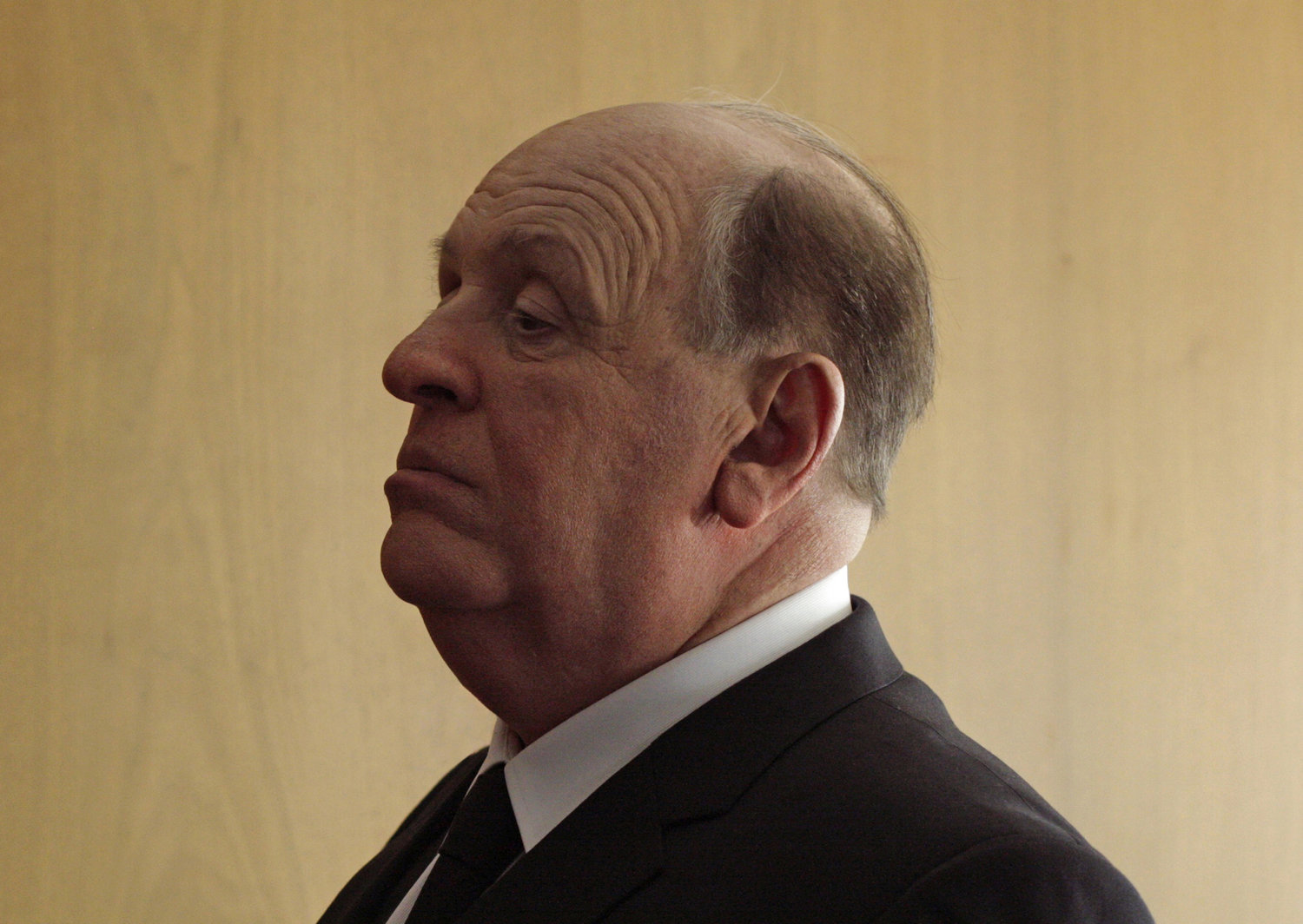
When we think of Anthony Hopkins, psychopaths naturally spring to mind. After all, the Welsh actor won an Oscar in 1992 for playing Hannibal Lecter in The Silence of the Lambs, a career-defining role. But, of course, there’s much more to Sir Anthony than just playing brilliant fictional villains. He’s also displayed a knack for portraying complicated historical figures. In addition to playing Hitler (on TV) and William Bligh, the actor has earned Oscar nominations for playing the lead in Oliver Stone’s Nixon (1995) and John Quincy Adams in Steven Spielberg’s Amistad (1997). Now, Hopkins has assumed the role of Alfred Hitchcock in Sacha Gervasi’s Hitchcock, which chronicles the development and making of Psycho.

AWARDSLINE: What attracted you to playing Hitchcock?

ANTHONY HOPKINS: The project originally came to me eight years. I met the two producers and thought, Yes, it’s interesting. But who wants to see a film about Alfred Hitchcock? Plus, I didn’t want to put on weight, having just gotten fit. So it never happened. But then it came back around. Sacha Gervasi now had it, and he had such passion and blatant enthusiasm for it. He had no experience directing actors, and I thought that would be a challenge. So I decided to just jump in.

AWARDSLINE: Was it difficult acting in a fat suit?

HOPKINS: Hitchcock wasn’t as heavy when he directed Psycho as he was later. We did some tests to get it right. No one wanted me to disappear behind a lot of makeup. They did it from the chin. My jawbone is completely different from his, so it went from my chin to my neck, and then I had the costume. I spent about an hour and half in makeup each day. I also shaved my head, because I’m quite gray, and Hitchcock used dye—that awful red dye. And then, once you get into the mask, I’m not Alfred Hitchcock; I’m Anthony Hopkins playing the guy. So I used what I could. I wouldn’t go on the set till I was completely dressed. I wouldn’t go on in jeans, even in rehearsal. If you’re going to rehearse a scene, become the character. I wanted to feel the illusion of what I was trying to do, and that’s what I did.

AWARDSLINE: You did an enormous amount with your eyes in this role. Was that a conscious choice?

HOPKINS: Yes, it was. I have blue eyes, so I wore contact lenses, because Hitchcock had hazel eyes. The camera has to see behind the lens. I can’t really describe it. Acting is about listening to the other person. You get a great actor like Helen Mirren, and they do the work, and you listen. So when Richard Portnow as Barney Balaban talks harshly to me, it’s just glaring back that I do. Acting is about listening and reacting. John Wayne was right: Acting is just reacting. You don’t have to do much—as long as you stay out of the way of others. That’s why it works.

AWARDSLINE: Hitchcock is a revered figure in cinema, but this film clearly explores his dark side. Why did that appeal to you?

HOPKINS: It’s not so much dark as it’s the complex side of any personality. Hitchcock was such a master of putting on screen things that made you uneasy. Somebody once asked him what frightened him most, and he said the police. He came from a poor background. I think he understood those fears. He hated the thought of sudden violence. He was always wanting to be in control. And his films reflect that at any moment it can happen—your life is in control and then bam. He had such simpatico with the audience. And he was such a romantic, trapped in that obese body but appreciating beautiful women. We gather from biographies that he and his wife had a business arrangement, but we don’t know. He wasn’t an easy man. Janet Leigh said she had fun going to his house because he was such a practical joker. Once an actress told him that this was her best side, and he responded by saying, “My dear, you’re sitting on your best side.” He told Tony Perkins, “Don’t worry about motivation, my camera will tell you what to do.” Tony Perkins asked if he could chew candy on set, and Hitchcock said, “You can do whatever you like, my boy.” Everyone liked working with him. He didn’t say much as a director, but he was clear and supportive.

AWARDSLINE: You also portrayed Richard Nixon. Is there a thrill to playing someone historically important—and how do you refrain from dipping into caricature?

HOPKINS: Nixon is very much like Hitchcock. Both suffered from insecurities, and I know about insecurities and fears. So I understood Hitchcock at an instinctual level. He felt like an outsider, and so do I. I have a little bit of insight into that, so I like playing those characters.

AWARDSLINE: You won an Oscar more than 20 years ago. How did that change your career?

HOPKINS: It didn’t change anything at all. I remember the night I won the Oscar. I thought, Now I don’t have to do anymore. But then you wake up the next morning, and the Oscar is there, and you have to ask, “Now what do I do?” It can be a curse—some actors never work again after winning—but I don’t think about it. I just continue to do my job and get on with it.
Q&A: Walter Parkes On Flight

This article appeared in the Dec. 19 issue of AwardsLine.

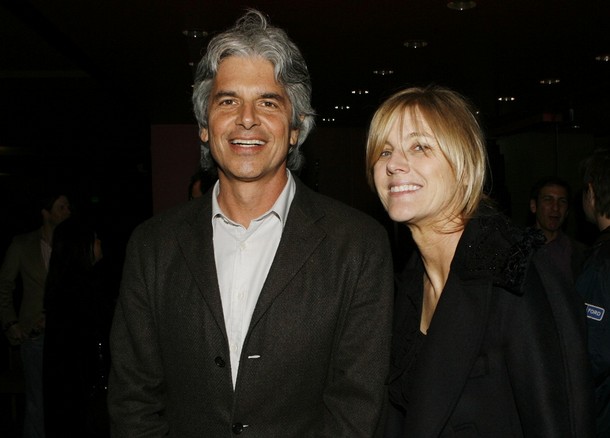
When Walter Parkes and his wife and partner Laurie MacDonald read the first 40 pages of John Gatins’ script for Flight in 2006, the adult drama about a substance-abusing airline pilot piqued their interest. The dark, character-driven story hearkened back to the type of films the major studios used to make on a regular basis. Neither Parkes nor MacDonald envisioned a high-wattage actor like Denzel Washington taking on the role—not only was Washington way out of the price range of a film that needed to be made on a modest budget, their main character worked in a field with few African-American pilots. Nevertheless, once the script made its way to Washington’s agent, the late Ed Limato, the actor read it and was hooked, according to Parkes. “The excellence of a project is no longer enough to get it made: It’s a combination of the quality of the material, the quality of the people making it, and, honestly, the financial circumstance under which the movie is made,” says Parkes, who points out that Washington’s enthusiasm (and, well, severe price cut) helped push Flight to the finish line. Parkes recently spoke with AwardsLine about how it all came together.

AWARDSLINE: Hindsight says that Flight was a great project to take on, but did doing a midrange-budget adult drama give you pause when it first came across your desk?

PARKES: It’s been so long that the business was slightly different then. We first got involved with the project in 2006. John Gatins sent us 40 pages, the only 40 pages he’d written of the project, which only really took us to the crash and the immediate aftermath. While it wasn’t exactly clear where the movie was going, the quality of the writing and the strength of that premise were enticing enough that we felt that, if the script was completed correctly, it would attract terrific elements. And at the end of the day, that is necessary to get a movie like that made. We’re talking 2006, before the (financial crisis) and the way it affected Hollywood. You know, there were many independent labels then—Paramount Vantage would have been a good place for this—but over the course of the development, they pretty much stopped being in business, as did many of the specialty labels of other studios. All that meant was that it was less of a sure bet that the project would get made, regardless of the quality of the script. It really put it upon us to meet certain other criteria—mainly, get really amazing people to do it for very little money. (Laughs.)

AWARDSLINE: So how did you get those amazing people to participate?

PARKES: I wish we could take credit for a lot of it, and we really can’t. Sometimes your job is to keep a project afloat and in the consciousness of the studio, long enough for the right elements to become attached. We worked with John for the better part of 2006 and 2007, and there was a draft, a good draft. There had been conversations with different actors and certain actors chasing it, but there wasn’t the kind of explosive combination that would ignite it as a movie to be made. That really happened because Denzel Washington’s agent, (the late) Ed Limato, had read it and took it upon himself to call me and Laurie and say, “This would be extraordinary for Denzel.” We said, “Great, if he’d be interested…” And about six weeks later, I got another call from Ed saying Denzel read it and he loves it, and he’d love to sit down and talk. So Laurie and I flew to New York, and we had lunch with Denzel. We sat down and Denzel said, “Well, I’m in.” And I said, “Denzel, we don’t really have a director yet.” And he said, “We’ll get a great director.” And I said, “The studio hasn’t said that they’re making the movie,” and he said, “I understand.” And I said, “Denzel, it’s not that kind of movie where everybody’s going to get paid their full rate,” and he said, “It’s a great role, though; it’s a great movie. Let’s see if it can get done.” But still we went through probably a good year having different conversations with different directors. There was a moment there where John Gatins himself was being considered as the director, and Denzel was open to it, but I think for that role he felt that he needed a more experienced hand behind the camera. But it was all done in the very positive way of, “How can we make this work?” I had never thought that Bob would do this small of a movie, (but) it suddenly began to make sense because he’s a pilot, and he was inspired by the screenplay. Once that happened, it felt like we were finally going to make the movie. Even so, there were still fairly stringent financial circumstances that had to be met in order for the movie to be officially greenlit. But, luckily, a director as masterful and experienced as Bob can make a movie like Flight for the price that we made it for.

AWARDSLINE: Did you go in knowing that this needed to be in that $30 million dollar range long before anybody was attached?

PARKES: It’s not our first time at the rodeo. It was not a conventionally commercial project, so the studio would only feel comfortable if we spent “x” on it. It’s not a bad way of approaching interesting and unique material, which was an approach we used at DreamWorks: Use your professional experience to make a best guess (about) a break-even scenario and see if the movie could be made properly under this financial circumstance. Then if you exceed (expectations), the movie is wildly profitable and successful for everybody involved.

AWARDSLINE: The film also walks a careful line in tone with having a somewhat unlikable protagonist. Did you have a lot of discussions with John Gatins about maintaining that balance?

PARKES: There’s an aspect of the character of Whip as portrayed by Denzel that was absolutely on the page: He was charming; he was high functioning; and he had, even on the page, the kind of competence and swagger that we look to in our heroes. So the fact that all of that in a person that was self-destructive, selfish, and teetering out of control just made it more interesting. We were even less concerned once Denzel was cast, because Denzel has pure charisma—no matter how dark he goes, as proven by Training Day, somehow the audience never loses connection with him. I also don’t think I have ever seen him portray fear like this, portray a man who is much smaller than his circumstances. There’s a scene where we’re inside the big meeting with Carr, the owner of the airline, and they’re all talking about, “Is he going to jail?” Through the glass, you can see Denzel, and his knees are together, and he’s in this suit, and his head is frozen down on a magazine that he’s turning the pages of. It’s what you do when just don’t know what you’re supposed to be doing. That kind of vulnerability is just extraordinary.

Q&A: Kathleen Kennedy On Lincoln

This article appeared in the Dec. 19 issue of AwardsLine.

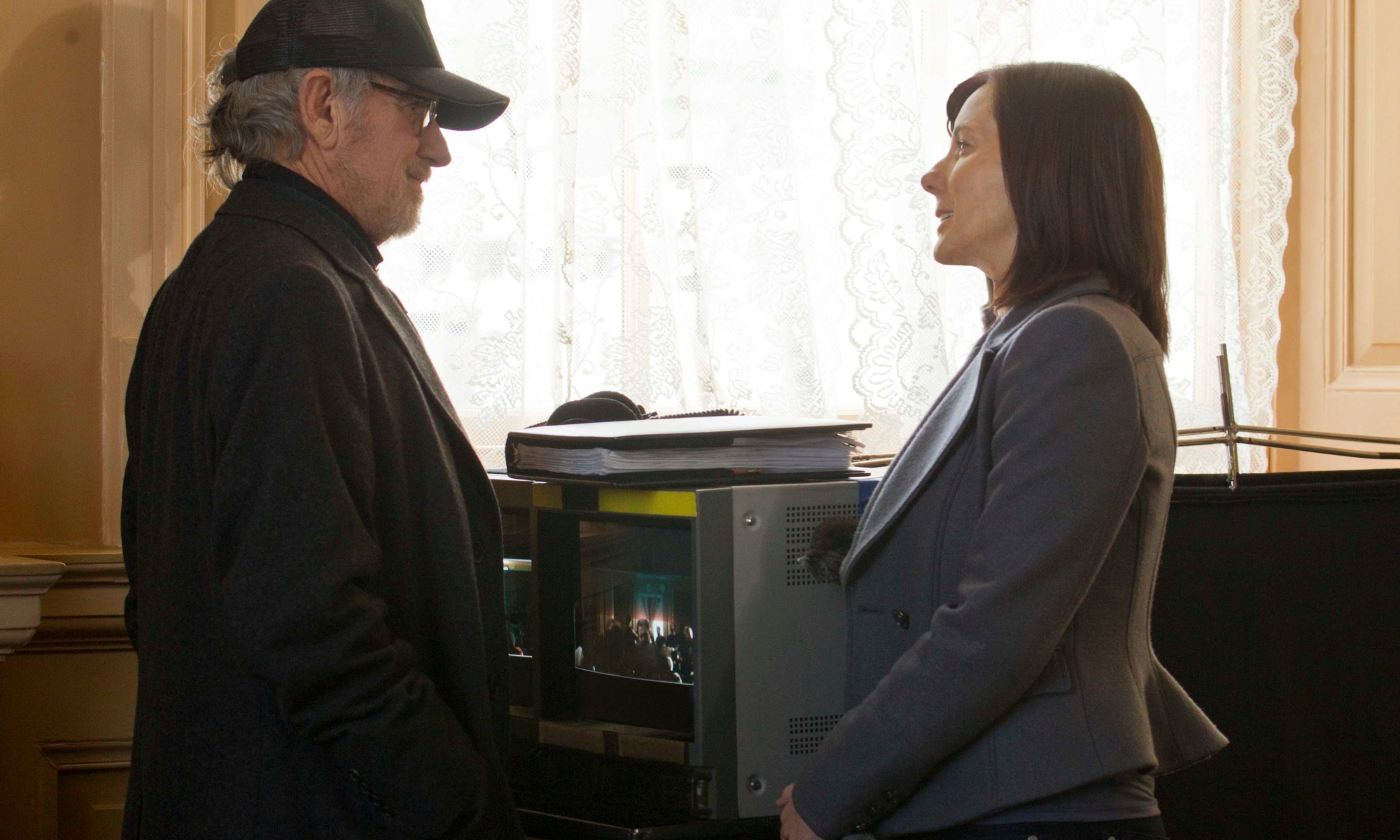
Kathleen Kennedy has worked with Steven Spielberg for more than 30 years, producing boxoffice successes and critical hits in equal measure. But she says that in all that time, one biographical topic came up consistently in their development discussions: “The subject of Lincoln was something that always fascinated both of us,” she says, noting that their current release took 13 years and multiple iterations to make it to theaters. “We were both really surprised that there hadn’t been more done in cinema (on Lincoln) over the years.” With a script from Tony Kushner, their complex—and occasionally humorous—portrayal of the 16th president’s efforts to pass the 13th amendment in the months before his assassination has already hit $100 million domestically and earned seven Golden Globe nominations. Kennedy recently spoke with AwardsLine about Lincoln’s languid path to production and her new role as president of LucasFilm.

AWARDSLINE: Every film has its own set of rules, but what consistently surprises you or keeps you interested when you’re starting a new project?

KATHLEEN KENNEDY: My tastes tend to be eclectic, so if I’m working on something that’s a small budget where the challenge is in all the nuances of trying to literally get it made, that presents its own set of challenges; if I’m making a big effects-driven studio picture, then it’s really more of managing all the moving parts. For something like Lincoln, we knew that this was going to be a difficult movie to get made, even if Steven Spielberg was directing it. And as you can see on the screen, we had many different partners just in trying to get the movie financed.

AWARDSLINE: Can you explain how that all came together?

KENNEDY: In this day and age, you say that you’re doing a movie about Abraham Lincoln, and nobody necessarily sees the opportunity for making lots of money—it’s not like doing Jurassic Park. So that’s something we knew going in, and we began to explore the options of who might step in and share the risk of making the film. It ended up taking almost a year before we put together the necessary partners. Stacey Snider was very involved at DreamWorks in really pulling most of that together while we were making War Horse. And when we came back, we went immediately into prepping Lincoln. I had already had many conversations with everybody in Virginia about being able to use the government buildings in Richmond while they were out of session. That, I knew early on, was going to dictate our shooting schedule. That gave us a goal in terms of knowing when we had to have the financial partners in place.

AWARDSLINE: Was there ever any other actor during this 13-year process of getting Lincoln made that you considered for the title role?

KENNEDY: It’s been in the press that we had conversations with Liam Neeson—this is after Daniel (Day-Lewis) had turned the movie down the first time. And once Tony (Kushner) wrote the script, and Daniel had a chance to read that draft, that’s when he turned around and committed to the project. But the only serious conversation we had with any other actor was with Liam.

AWARDSLINE: A lot has been written about Steven’s almost Method approach to working with the actors on set. Can you talk a little bit about that aspect?

KENNEDY: What was really going on was that Steven recognized very early that this was going to be a movie where it was all about what was going on in front of the camera. It was a movie that was focused predominantly on performances. He didn’t want an environment where there was a lot of chit-chat and conversations going on about what was happening behind the camera or just the kind of socializing that tends to go on when you’ve got a lot of down time. And this was a movie where there was virtually no downtime. There was always focused discussion on what was going on within the scene and within the performances, and conversations with the actors because we have in excess of 149 speaking parts (with) fairly complicated wardrobe and hair and makeup. Steven wanted to know as soon as the actors were ready and on the set, (so) he would be ready to start shooting and take full advantage of the time he had. What’s really interesting about any movie I’ve done with Steven (is) we usually adopt a kind of attitude depending on what the movie is. The closest experience I’ve had was working with Clint Eastwood. I’ve made a couple of movies with Clint, and he runs a set in a similar way. In large part, that comes from the fact that he is an actor, and it’s always the most important thing to Clint that when the actor arrives on the set, things are immediately quiet, and the focus turns to those performances. And that’s exactly what Steven did on this set.

AWARDSLINE: You’re stepping into the role of president of LucasFilm at a time when it’s being acquired by Disney. How will that affect your producing duties? You have a lot of work on your plate.

KENNEDY: (Laughs.) Yeah, it’s a lot on my plate, but it’s been fantastic. I consider it such an honor that George (Lucas) came to me after all these years and asked me if I would take over the company and ensure that his legacy continued. There’s going to be a lot that looks really fun and interesting, and it will still utilize many of the skills that I use as a producer. I don’t envision that a lot will change that dramatically. Many of the movies that I did with Steven over the years involved carrying through a lot of other areas of the business of making movies, and that’s something that I’ll probably end up doing more of. But I’m finding out what the job is right now.

Live Singing Challenged Les Mis Production Designers

Cari Lynn is an AwardsLine contributor. This article appeared in the Dec. 19 issue of AwardsLine.

It’s not likely that any of the 60 million theatergoers who saw the musical Les Misérables would have thought the stage production limiting, but they weren’t charged with taking the longest-running musical, set in 1800s France, and blowing it out to larger-than-life size. In what was described by Working Title producers as a “deceptively difficult” adaptation, director Tom Hooper assembled a team that included his longtime production designer Eve Stewart and veteran costume designer Paco Delgado to create a factually accurate world, sprinkled with the magic and fantasy of the beloved musical.

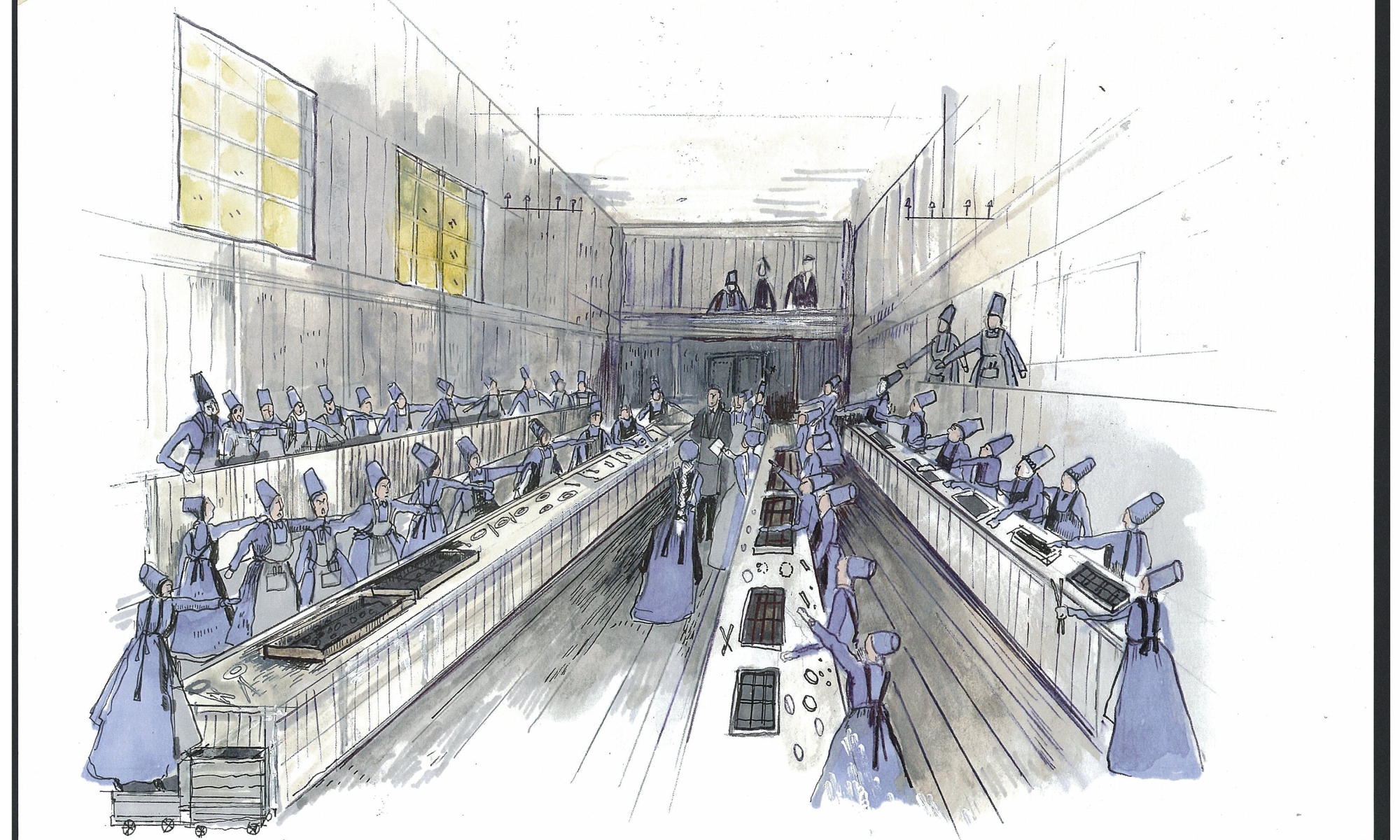
Fantine was dressed in pink to contrast the other factory workers in drab blue.

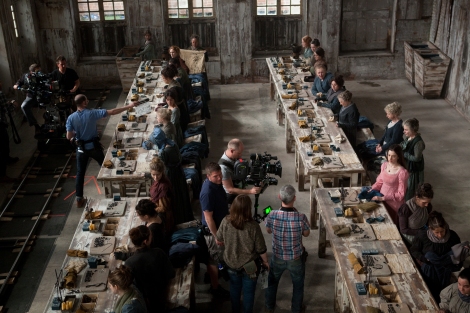
But what no one on the team knew going in was that all singing (and the film is 99% singing) would be shot live. This posed interesting challenges for determining locations, given sound considerations and the desire to use very little CGI. “But,” says Stewart, who was nominated for an Oscar for Hooper’s The King’s Speech, as well as 1999’s Topsy-Turvy, “new ideas are usually the best ones,” so the constraints didn’t narrow her scope as she scouted locations for 20 weeks. She eventually settled on a pristine mountain range in the south of France; the Portsmouth Historic Dockyard in England (where the HMS Victory is moored); an 18th-century rope factory in Kent (the timbers of which were so old that the crew was barred from lighting candles, so imitation flickering lights had to be used); the Old Royal Naval College in Greenwich; the River Avon in Bath; as well as a set crafted at Pinewood Studios in London. In each location, Stewart’s crew had to eliminate squeaky floorboards and door hinges, and horses had to be fitted with rubberized hooves. The only location Stewart didn’t have to adapt was Boughton House in Northamptonshire, which dates back to the 17th century and is dubbed the “English Versailles,” where the wedding scene was filmed.

As their inspiration, both Stewart and Delgado went “by the book”—as in, Victor Hugo’s 1862 tome, Les Misérables. “The novel is a recording of how people lived,” Delgado says, “what they ate, what kind of china they ate the food on, what kind of clothes they wore, what color the clothes were.” Both he and Stewart scoured flea markets and secondhand stores in France and Spain to purchase authentic clothing and furnishings.

While both studied the artwork of the period—Stewart cites the French artist Gustave Doré, while Delgado drew from Delcroix, Goya, and Ingres—the goal was far from creating a rose-colored world. “Tom has an amazing level of detail, and he wanted to show the levels of poverty and degradation in Paris at that time,” Delgado explains.

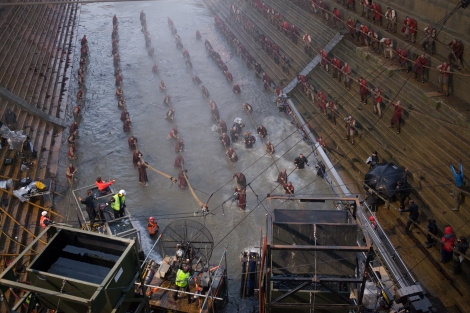
Cold water and an epic scale made shooting the shipyard scene difficult.

For the set, Stewart incorporated elements of a shipyard, bringing in nine tons of seaweed along with sacks of mackerel and hake that arrived straight from the wharf at 2 a.m. every day so that even the smell was authentic. “Everything with Tom is factual realism,” Stewart says, “and then, after that’s established, we can amplify and tweak upward.”

While the team tried to use as many authentic pieces and landmarks as possible, Stewart spent nearly a month re-creating the 40-foot-tall Elephant of the Bastille (Napoleon’s monument that no longer stands but was immortalized in Hugo’s book), carved from polystyrene.

Because a portion of the team came from a theater background, the set was initially outlined by building theatrical models, which is not commonly done on film. “You never know where Tom is going to film,” Stewart says, “so the buildings had to be (functional) with 360-degree stairs so the cast could run around.” Stewart also took care to craft the buildings with crooked, warped lines, evoking the age and an element of destruction.

Delgado—who had previously worked with Tom Hooper on a Captain Morgan TV ad, and was the costume designer for the Oscar-nominated Biutiful and Pedro Almodovar’s Bad Education and The Skin I Live In—had to “mar” his designs, creating 1,500 new costumes (out of a total of more than 2,000), which he then set about destroying with mud, grease, and blowtorches. “Paris was so poverty-stricken at that time,” Delgado explains, “and there was an amazing secondhand market where clothes were sold and resold and resold again until they were rags. It shocked me to learn that most poor people didn’t have any shoes.”

Delgado also wanted to tap into what he calls “the psychological atmosphere” of the time. “This is about the history of France, but also about the history of the Western world, and it was a big responsibility to create this world, but I also had to remember I was doing a musical with drama, and I needed to have color and fantasy.” One of the most poignant examples was the factory scene, where Delgado dressed Fantine (Anne Hathaway) in pink to contrast against all the other workers in drab blue. “In the book, Fantine is coquettish and beautiful and had some views of the petty-minded society, so I wanted this dress to belong to her lost past. It was all embroidered and had a level of craftsmanship that would make Fantine appear as an outsider among the rest of the women.”

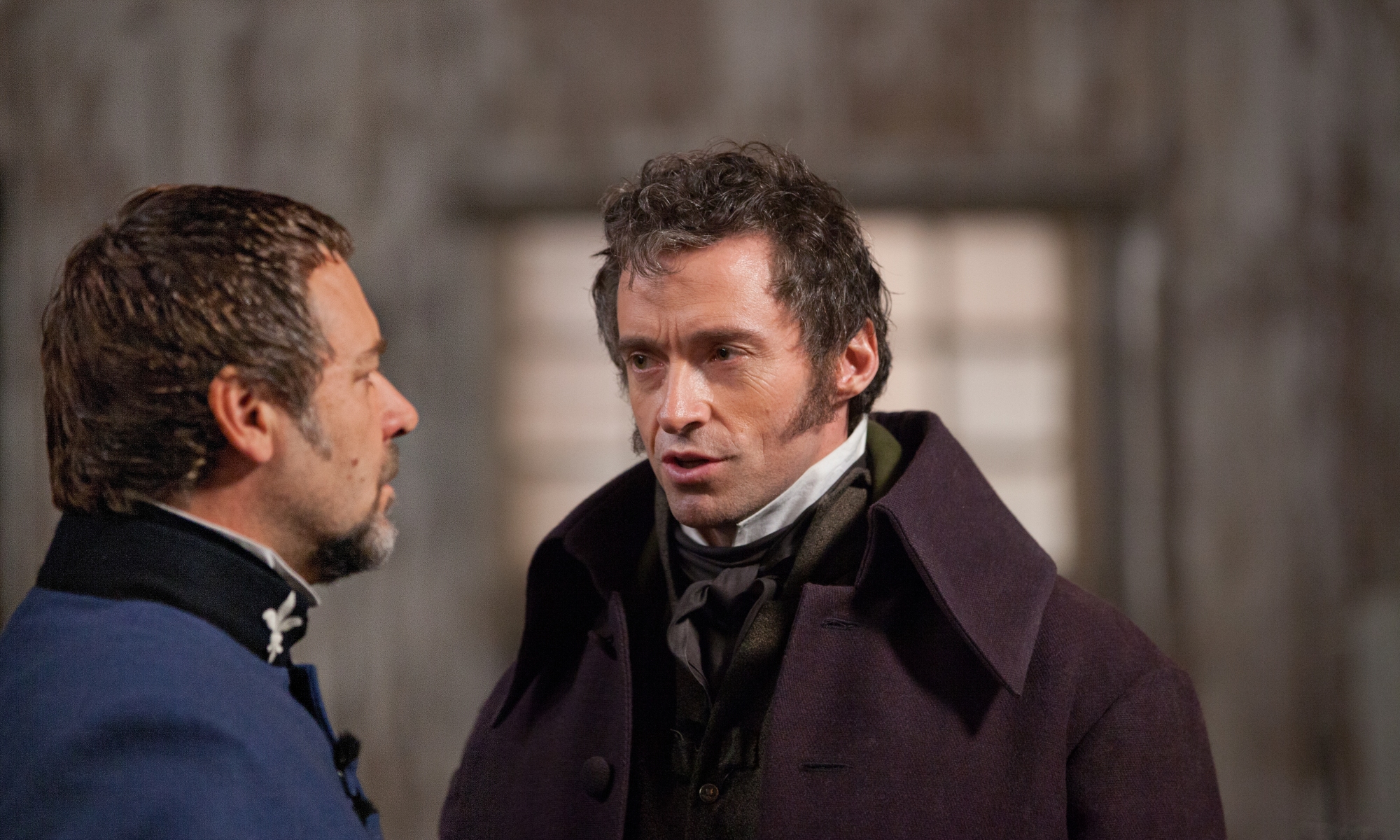
Hooper and Delgado discussed a leitmotif, so Delgado evoked the colors of the French flag throughout, using blue costumes in the early factory scene, then red for the revolution, and then moving to white for the wedding and nunnery scenes. Delgado also altered the clothes to reflect the characters’ states, airbrushing shadows onto Fantine’s dress to enhance her wasted frame as she grew close to death, and then moving to the opposite extreme of padding Jean Valjean’s (Hugh Jackman) suits as his wealth and standing grew.

“This is our job,” says Delgado, “to try to interpret personalities and characters.”

Behind The Scenes On Zero Dark Thirty

Thomas J. McLean is an AwardsLine contributor. This article appeared in the Dec. 19 issue of AwardsLine.

Fast and furious is perhaps the best way to describe the making of Zero Dark Thirty, something Jessica Chastain found out the day after attending last year’s Oscar ceremony.

“I flew 25 hours to Chandigarh, India. I got off the plane and I called in, just kind of joking, ‘I’m here guys, ready to go!’ ” Chastain recalls. “And they said, ‘OK, come on in!’ I didn’t go through hair and makeup—nothing. They put me in a robe, they sent me to a market, I had no idea what time of day it was, and they just started shooting. And it was like that from the get-go.”

Rarely are movies put together as rapidly and with as much timeliness as Zero Dark Thirty, which recounts the decade-long hunt for Osama bin Laden and culminates in the May 1, 2011, U.S. Navy SEAL raid that killed the 9/11 terrorist leader.

Kathryn Bigelow's Zero Dark Thirty closely follows the real-life raid on Osama bin Laden's hideout in Pakistan.
Kathryn Bigelow’s Zero Dark Thirty closely follows the real-life raid on Osama bin Laden’s hideout in Pakistan.

Director Kathryn Bigelow, who became the first woman to earn the best director Oscar for 2008’s Iraq War drama The Hurt Locker, says the story was too compelling to not do. “I suppose there were certainly a lot of options out there, which I was grateful for, but I really felt that this was the story to tell,” she says. “It’s a mystery, it’s a story that was out there, and I think has touched many, many, many lives the world over, and I felt it was a great opportunity to tackle this.”

Bigelow also relished the chance to continue working with Mark Boal, who wrote the Oscar-winning screenplay for The Hurt Locker and tapped into his experience as a journalist to uncover and write the story behind the raid. “I appreciate the scope and the challenges that he writes into his screenplays,” Bigelow says.

Boal and Bigelow originally planned to shoot a movie about bin Laden eluding capture in the mountains of Tora Bora in 2001, and were close to starting principal photography when the al Qaeda leader was killed in Abbottabad, Pakistan.

Starting from scratch, Boal dove into researching the events that lead to the raid. Working with the public-affairs offices of various government agencies as well as tapping into contacts he had accumulated as a journalist covering America’s post-9/11 wars and the veterans who fight them, Boal assembled the script quickly from first-hand accounts.

The energy Boal put into the script was perfect for Bigelow. “He was certainly reporting this story as it was unfolding, and there’s a kind of urgency and timeliness to that,” she says. “And at the same time, I think we both felt a responsibility to tell it in a certain way, to tell it responsibly, and to be faithful to the research.”

Backing the production was producer Megan Ellison, who funded the movie through her Annapurna Pictures shingle. Bigelow says Ellison was tremendously supportive of the project and the filmmakers’ desire to get it right. “We were fortunate that she agreed to finance the movie and enable us to retain creative control,” she says.

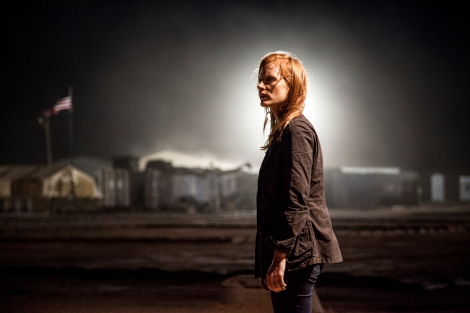
Jessica Chastain stars as a relentless CIA agent pursuing bin Laden in Zero Dark Thirty.

The script ended up with more than 120 speaking roles and 112 sets, with the lead role of Maya—a CIA analyst who unapologetically and obsessively tracks down bin Laden in order to kill him—requiring an actress who could portray steely resolve while navigating the labyrinthine world and linguistic gymnastics of real-life espionage.

Chastain, a first-time Oscar nominee for The Help, was Bigelow’s first choice for the role. “I just felt that her intensity, her focus, her innate intelligence was something that would give the character an incredible amount of credibility,” she says.

Among the keys for getting into Maya’s head was learning the reality of life as a CIA analyst—including the importance of status in that world, which is essential to Maya’s character arc. “Maya is at the very bottom end of it and as she actually starts to fight back against it, she claims her own status to get people to listen to her,” Chastain says.

The intensity of shooting on a very tight schedule in such distant places as Jordan and India also informed Chastain’s take on Maya. “Being a woman in that part of the world, it changes your energy and your physicality,” says Chastain. “It desexualizes you because you don’t want to be seen as a woman.”

Among the most challenging scenes were the realistic portrayals of torture, including a sequence in which Dan, a CIA interrogator played by Jason Clarke, waterboards a suspected al Qaeda informant.

“As an actor, I was relieved that Mark and Kathryn were telling the whole story. These things happened,” says Clarke. “We shot it quite quickly. It was set up in an environment that was as realistic as possible. (With) the other actor, we established the bond we needed to trust each other.”

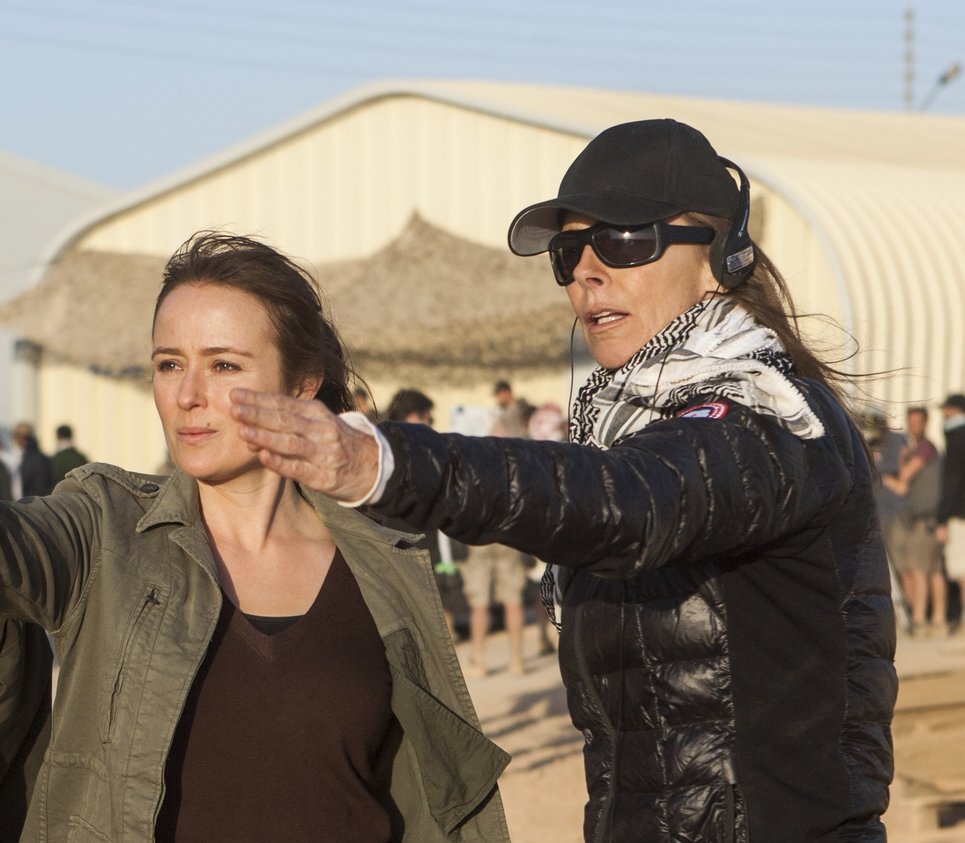
The logistics were a big and satisfying challenge for Bigelow to tackle. “We were shooting on and prepping on two continents simultaneously, in India and in Jordan, and we had to choreograph the entire raid early in preproduction, which meant you had to have figured out that whole section of the movie, which is arguably the most difficult to shoot, when you’re probably eight weeks out,” she says.

For the raid sequence that is the climax of the movie, the production re-created bin Laden’s Pakistan compound as completely as possible. The model had to not only look as accurate as possible, it had to accommodate the shoot—including having a strong enough foundation to withstand the rotor wash from the Black Hawk helicopters that were going to hover over it, says Bigelow.

“That had to all be choreographed—all of our shots, everything about that structure, how we were going to shoot it—well before we started principal photography and well before we were to shoot the raid in the first place, which was not going to be shot until mid to late April,” says Bigelow.

From the start, the subject matter drew unexpected political attention, with pundits and pols assigning partisan motives to the movie before it even had a script and inaccurately reporting that the production was given inappropriate access to classified material.

Even with the film finished, the political reactions are unexpected. “People seem to be misreading the film as advocating torture, which is just preposterous,” Boal says. “If you actually look at the film, we show the torture not yielding information and not preventing an attack—that information is coughed up over a civilized lunch. I guess this is par for the course of making something that touches people’s political turf.”

Q&A: Jeff Skoll And Jim Berk On Participant Media

Mike Fleming Jr. is Deadline’s film editor. This article appeared in the Dec. 19 issue of AwardsLine.

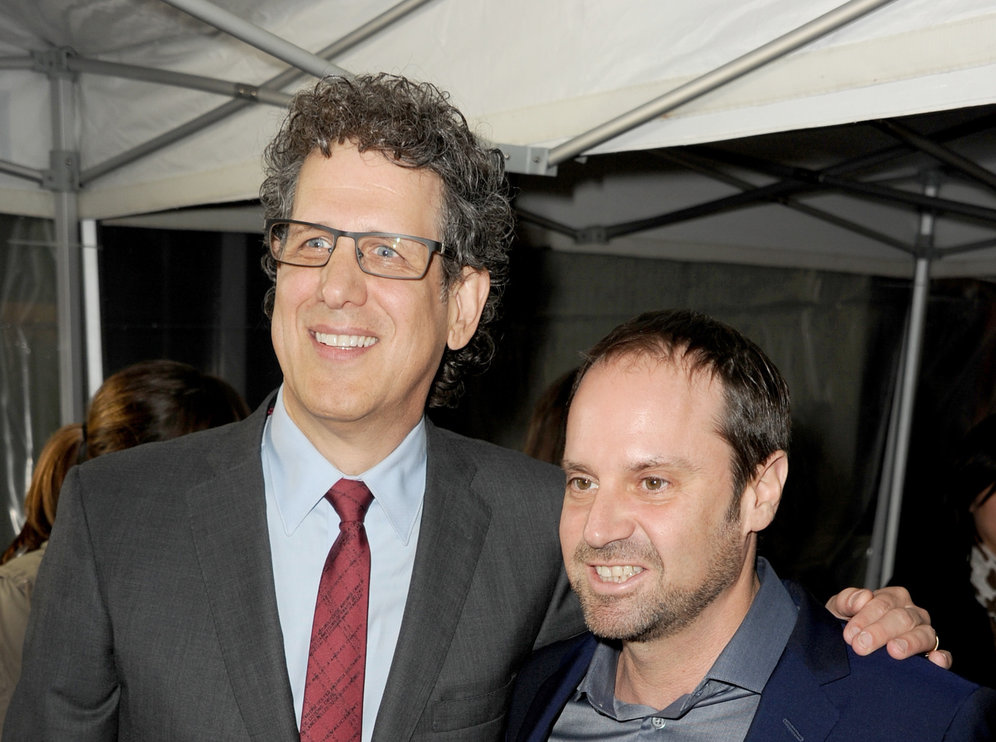
While it’s typical for film directors to build their careers on their mastery of particular genres and themes, few producers approach their work with a specific angle. But Participant Media’s founder and chairman Jeff Skoll and CEO Jim Berk are taking the road not taken by many studios when it comes to shepherding great cinema: Financing and developing socially conscious films geared toward adults, titles that are bolstered by their advocacy campaigns. Following Skoll’s success as eBay’s first president and full-time employee, Participant enabled his dream to create stories that would enlighten viewers to the globe’s most daunting issues. Berk, the former CEO and president of Hard Rock Café, continues to extend Participant’s financial arm and its brand with TakePart.com, a social-action website. Skoll has served as executive producer on 41 films that have collectively received a total of five Oscars and 22 noms, and this year Participant is back in the awards conversation with three contenders: Lincoln, Promised Land, and The Best Exotic Marigold Hotel.

AWARDSLINE: When Participant gets involved in a movie, what sort of input do you seek out? Do you consider yourselves to be creative producers?

JEFF SKOLL: It depends on the film. In some cases, it’s our idea, it’s our development. In a film like Contagion or Waiting for Superman, they all started with an idea on the blackboard, and at that point you bring in the people. And then there’s some like Lincoln where you really defer to the creative.

JIM BERK: And then there are others like Best Exotic Marigold Hotel or The Help. We were involved in the early days of investing, when the script was in early form, and so we were part of that process all the way through. Where we were able to really play an active role in Lincoln was in positioning the marketplace around ingenious folks that would be useful in putting this film into the zeitgeist.

AWARDSLINE: Jeff, you made your fortune when eBay went public, and then you devoted yourself to using your money as a force for change and exposing global issues. What initially led you to see Hollywood as an effective outlet for something like this?

SKOLL: Well, it started as a kid. I read a lot of books that made the future world seem like a scary place with terrible weapons, diseases, and wars. I wanted to be a writer to tell stories that would get people interested in the issues that affect us all, but I didn’t want to make a living as one, so I decided to get to a point where I could afford to write these stories, so I became an entrepreneur. And lo and behold with eBay, all of a sudden I had far more resources than I ever would have dreamed of, and a light bulb went off that I didn’t necessarily have to write the stories myself—I could find writers to do that, and I could get those stories in film and TV and other forms of media. That’s how Participant was born. And in 2003, I went around L.A. with the idea, trying to understand if anybody had done this before, and if so, how? Most people were pretty skeptical about an outsider coming in to tell stories and make movies in Hollywood. But I would ask everybody that I was talking to, whether it was a writer or a director or an agent or a banker in the film industry, what they were proud of over the course of their career, and invariably, it turned out to be a project about an issue that they cared about.

Alan Horn, who was president of Warner Bros. at the time, understood the concept immediately. We made our first three movies with them: Good Night and Good Luck, Syriana, and North Country. Those films broke through with the idea of what we were trying to do and the fact that I wasn’t just trying to write checks but was trying to make a difference with the films.

AWARDSLINE: Let’s look at the Participant films that are in the Oscar conversation. What swayed you in each case to want to be involved? We’ll start with Promised Land.

BERK: When Matt (Damon) and John (Krasinki’s) draft came into us midway through the process, the setting was about a few issues that were the primary focus of the company. We’ve done four films with Matt—he’s a partner that we really are attracted to. We looked for three things: Commercial reliability, social relevance, and quality. Given the cast and the distributor in place as part of the whole package—and the issues looked impactful to small towns—it became a perfect film for us to be involved in. The issue comes first. There has to be a tangible issue that affects millions today where the film can make a difference for those people. It’s not our role to tell people what to think, but it’s to put these issues into the zeitgeist and give them information to think about it. So when we look at material, the purpose is ultimately a role of peace and sustainability, but it has to be done around empowering people with information and ways to get involved. Whether they choose the left or the right or somewhere in between, we have to trust that they’re fully empowered, and they’ll make the right decisions.

AWARDSLINE: From that same vantage point, what about Lincoln? You’re looking back at a period in history. How did this fit into your criteria to get involved in this?

SKOLL: It’s really about a divided country and leadership to get through it: Civic engagements, dealing with complex issues, and getting to a point where you can actually move things forward. (When) I read the script, and the book beforehand, it made it seem, even a few years ago, (like) such a resonant issue in this country.

BERK: When we had the opportunity to become involved with this, the election and these surrounding issues were really setting this particular story’s tone. It’s pretty unique when you think about how we’re having this conversation today with a lame-duck congress that’s struggling with a very large issue and the president needing to reach out across his own party in order to carve out a deal that would allow the country to move forward. Obviously, it’s not at the same impact in terms of the specific task at hand as maybe President Lincoln saw, but, nevertheless, it’s pretty weird how it’s actually duplicating something that exists today.

Q&A: Hugh Jackman On Les Miserables

Pete Hammond is Deadline’s awards columnist. This article appeared in the Dec. 19 issue of AwardsLine.

Hugh Jackman has carved out an image as a major movie star who can easily switch gears from action to drama to comedy and all things in between. But until now the man who made Wolverine a household name has never done a movie musical. That’s a bit surprising since Jackman also happens to be a classically trained musical star outside of movies. He’s starred in stage classics like Oklahoma!, won a Tony on Broadway as Peter Allen in The Boy From Oz, an Emmy for hosting the Tonys, and worldwide recognition for his singing and dancing as host of the Oscars. He recently did a one-man musical show on Broadway, and that’s one of the reasons he says he is even in Les Misérables and making his long-overdue debut as star of a musical on the big screen.

AWARDSLINE: Would you consider this to be one of the toughest screen roles you’ve done?

JACKMAN: For sure. There is not an element that really wasn’t the toughest. One of the reasons I did the Broadway show was to make sure I was vocally fit to not only sing it, but sing it all day long, wake up the next day, and have another 12 hours of it. I put on 29 pounds from beginning to end. Tom (Hooper) told me, “I want people to worry, I want your friends to think you’re sick.” The physicality, the emotional (aspect) acting-wise, was tough.

AWARDSLINE: You rarely see musicals of this size anymore.

JACKMAN: That’s true. It’s a big risk. I’m not surprised it’s taken 27 years to get there.

AWARDSLINE:Despite the fact that the actors in the film are very well-known and talented, I understand everybody auditioned for it.

JACKMAN: Everybody, and by the way, when I auditioned Tom wasn’t signed to the movie, but there looked like there was going to be a clash between The Wolverine and this. I rang up Tom and told him I really wanted to do this part. He said I’d be a perfect shot, but (that) he wasn’t even signed on to it but was thinking about it. I asked him if I could audition for him anyway, in case he would sign on to the film. I sang him three songs, and he just sat there for a few minutes and gave me feedback. I could see the director in him. Three hours passed, and I had to put my hand up and tell him, “Tom, I have to put my kids to sleep.” So I auditioned very early on, and everyone auditioned. 99% of what is shot is live, just the beginning with the water (was not) because you couldn’t put microphones in that much water.

AWARDSLINE:I can’t remember another movie musical that did it on this scale—is it helpful to you as an actor to be able to do that?

JACKMAN: Especially for Les Mis. It’s so emotional, and as an actor you have some freedom to go with how you are feeling at the time—to have that restrained by a performance you did three months ago would have been hell. I think it made a huge impact. If Simon Hayes doesn’t win an Oscar for the sound design, I don’t know who will. What he pulled off is phenomenal. It feels like thought; it doesn’t feel like song.

AWARDSLINE:There is one new song in the film that you sing called “Suddenly.” How did they decide to that?

JACKMAN: That was Tom’s idea. Victor Hugo writes about two lightning bolts of realization: First is the virtue and the second is the lightning bolt of love. Tom was like, “This is one of the greatest moments I have ever seen on film, and we don’t have a song for it. This is ridiculous.” They (songwriters Alain Boublil and Claude-Michel Schönberg) knew my abilities with my voice, and they wrote the song for me. It was a pinch-yourself moment.

AWARDSLINE: Les Mis has been so phenomenally successful for the last three decades—what is it about this show and movie that connects with audiences?

JACKMAN: It’s a really spiritual book, in a nonreligious way: “To love another person is to see the face of God.” We can live tough lives, but the human spirit is stronger, seemingly, than anything. There is redemption, hope, and love. This book brings this out. All different forms of heartbreak, but beyond all that there is hope, there is love. There is beauty and bliss. Even though the title doesn’t make it sound like a romantic comedy, in the end it is. There is something for everybody in it.

AWARDSLINE: When you watch yourself for the first time, are you nervous going in?

JACKMAN: I’m more nervous than I have ever been in my life. It’s tough to watch a movie (you’re in)—you put everything into it, you want everything to work, and you never know until you see it all together. In a musical, those feelings are tripled because you have a lot of elements that have to come together. Watching myself on screen for the first time is a little bit difficult, but watching myself sing on the screen is double the anxiety. In the end, I rationalize it because the nerves are the care and passion I had for the project. It becomes a bit like a baby. I would love to do more movie musicals. Maybe next time I’ll do a little more dancing.

Q&A: Scott Rudin On Moonrise Kingdom

This article appeared in the Dec. 19 issue of AwardsLine.

With a long list of collaborators that includes some of the most sought-after writers and producers in the business, Scott Rudin is no stranger to awards season. He’s earned best picture nominations for the last two years running, for The Social Network and True Grit in 2011 and Extremely Loud and Incredibly Close last year. He won his only Oscar in 2008 for No Country For Old Men—a year in which his other film, There Will Be Blood, earned a nom for picture—and this year he earned the career distinction of having received all four major entertainment statuettes when he added a Grammy for The Book of Mormon soundtrack. In 2012, Rudin also saw the release of his fifth feature film with director Wes Anderson, the boxoffice hit Moonrise Kingdom. The film premiered at the Cannes Film Festival and has gone on to win a Gotham Award for best film and earn five Independent Spirit Award nominations. Their creatively and financially lucrative partnership continues for Anderson’s 2014 followup, The Grand Budapest Hotel, which reunites much of the same cast and crew from Moonrise, including star Bill Murray and financier Steven M. Rales of Indian Paintbrush. The very busy producer recently spoke with AwardsLine about the film’s success.

AWARDSLINE: You always have a fairly heavy workload for a producer. How do you maintain the quality and still give everything the attention it needs?

SCOTT RUDIN: I have no idea other than there’s no alternative. Honestly.

AWARDSLINE: Wes Anderson said in his AwardsLine interview that he really relies on you in terms of helping shape the material. What kind of feedback did you give him for Moonrise Kingdom?

RUDIN: It’s always, is the story coming across the way he wants it to? Does it have the shape of a narrative in the beginning, the middle, and the end? And are the events landing in a sequence that continues to build on the one before it?

AWARDSLINE: This story is more personal than some of his previous films—does that factor into the feedback you give him?

RUDIN: That’s true, but I didn’t know that when we were working on it. That was never a factor. I would only ever respond to it as a story he wanted to tell. However much of it was personal or not was kind of beside the point of making it into a movie.

AWARDSLINE: Does he usually pitch the story to you, and then you help shape it from there? Or does it depend on the film?

RUDIN: We’ve been in the process for five or six movies, and it tends to be the same on every movie. Sometimes there’s more script when he shows it, and sometimes he does much less—and we work from a lot of conversations.

AWARDSLINE: For this film, what was your role in terms of getting it to the right studio and making sure that the right budget was there?

RUDIN: Steve Rales and Indian Paintbrush financed it, and they’ve done the last few movies, and we always hope to have them on everything. They’ve been fantastic; Steve’s been an incredible supporter of Wes’. Then we talked to a handful of people, and Focus liked it a lot and chased it very hard.

AWARDSLINE: You’re also generally very involved in the marketing of the films that you produce. What were some of the challenges for this particular film?

RUDIN: Realistically, it’s always hard when you make a movie that’s fundamentally about kids for adults. It’s  hard to make them work, although this one has worked at a really extraordinary level. But that’s always difficult: How do you make people aware of who the adult cast is without making them feel that the adults are the center of it? Because the adults are really part of the ensemble, but the subject of the movie is the two kids. You don’t want to make it misleading, but at the same time you want to
make it appealing.

AWARDSLINE: And obviously it worked. Why do you think that the film did so well at the boxoffice?

RUDIN: People really respond to what it’s about. It’s a very specific (story), but because it’s so sophisticated, it’s also quite universal.

AWARDSLINE: And it’s been generating awards talk since Cannes.

RUDIN: Well, his movies are executed at such a high level that it becomes an inevitable conversation.

AWARDSLINE: This one in particular has been called more accessible—is that why Moonrise Kingdom is getting that kind of attention?

RUDIN: I think so. And Wes now has made a lot of movies, and he’s a filmmaker with a very loyal fan base.

AWARDSLINE: In terms of your career, you always emphasize that you’re attracted to story not genre, but it seems like you’re also attracted to filmmakers who have a very distinct voice, like Wes Anderson, like David Fincher, the Coen brothers, and Matt Stone and Trey Parker. How do you preserve those voices and serve the project?

RUDIN: I don’t know. I think the job is trying to get the filmmakers to make the movie they want to make.

AWARDSLINE: There’s been a lot of talk about the midrange budget, studio, adult drama—like Flight—connecting at the boxoffice. Has something shifted in the business that makes it more attractive for a studio to take a risk on a film like that?

RUDIN: They’re hard to get done, but they actually can really work. Any movie in which the movie stars work for free, that’s always a big draw. (Laughs.)

Behind The Scenes On The Hobbit: An Unexpected Journey

Thomas J. McLean is an AwardsLine contributor. This article appeared in the Dec. 19 issue of AwardsLine.

Nearly 10 years after The Lord of the Rings trilogy wrapped its record-breaking run with a best picture Oscar and more than $3 billion in worldwide ticket sales, director Peter Jackson has done the last thing he expected: He got the band back together for
The Hobbit: An Unexpected Journey.

“I came away from Lord of the Rings with 266 days of shooting three movies and thought I’d never do that again in my life,” says Jackson. “Then we sat down at the first production meeting on The Hobbit, and I flipped to the last page of the schedule, and it was 266 days! It was exactly the same length of time! And I just said, ‘I cannot believe I find myself back at this place again.’ ”

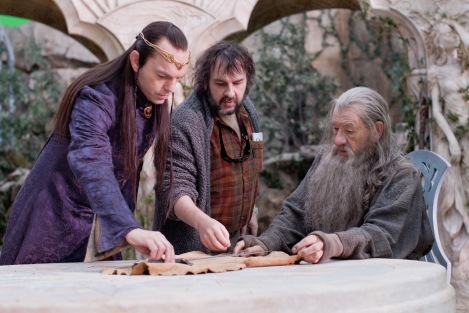
From left: Hugo Weaving, Peter Jackson, and Ian McKellen on the set of The Hobbit: An Unexpected Journey.

The first in a new trilogy adapting the first book in J.R.R. Tolkien’s classic Middle Earth mythology, Jackson and his crew’s steady hand on The Hobbit offers reassuring creative continuity while pushing the technical envelope by adding stereoscopic 3D and, most controversially, shooting at 48 frames per second.

But much like Bilbo Baggins’ own journey, the 10-year road to making The Hobbit followed—a wandering path on its way to the screen. Originally pitched to Miramax in 1995 as a standalone film that could lead into The Lord of the Rings, The Hobbit rights were split between the Saul Zaentz Company and MGM, and a fix was not possible at the time, Jackson says.

Those issues remained even after the Rings trilogy was completed in 2003, though Warner Bros. tapped Jackson and cowriters and producers Fran Walsh and Philippa Boyens a few years later to develop the film anyway in the hopes that a deal would be reached.

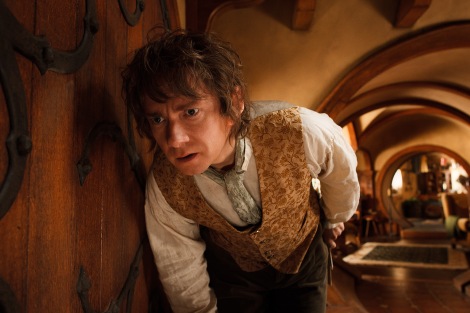
Martin Freeman plays the young Bilbo Baggins in The Hobbit: An Unexpected Journey.

“We would have worked on it for probably two years without a green light, which was a bit soul-destroying really because if you’re committing to something you want to know it’s happening,” says Jackson.

On the creative end, adapting The Hobbit proved a very different animal, says Boyens. Often thought of as a children’s book, The Hobbit also is very episodic, features a lot of characters, and has a tone that darkens considerably as it progresses.

Thinking a different sensibility would freshen up things, Jackson ceded the director’s chair to Guillermo del Toro. “We thought it would be interesting to have another director come onboard with a different sensibility, for the same reasons as they use different directors on Bond movies,” he says.

But with MGM in bankruptcy and no rights deal in sight, del Toro exited in 2010, prompting Jackson to take back the reins. “We felt a responsibility as producers and also, having developed the project with Guillermo, we had come to realize that his could be a really cool movie,” Jackson says.

Trolls enjoying a campfire in The Hobbit: An Unexpected Journey.

Boyens says they started over on the script to tailor it both for Jackson and the cast, which includes returning members Ian McKellen, Andy Serkis, Cate Blanchett, and Hugo Weaving alongside newcomers like Martin Freeman as Bilbo. Of del Toro’s version, Boyens says the biggest change is the portrayal of Bilbo.

“It shifted and changed into someone who, rather than being slightly younger and more innocent in the world, once had a sense of longing for adventure and has lost it and become fussy and fusty,” she says.

That led Jackson to Freeman. “We needed a dramatic actor because it is ultimately a dramatic role, but Bilbo Baggins is a much funnier character than Frodo was,” says Jackson. “There’s very few dramatic actors who can do comedy very well, but Martin seemed to possess the perfect qualities.”

Reuniting almost all of the crew from Rings gave Jackson, Boyens, and Walsh freedom to focus on the creative side, with first assistant director Carolynne Cunningham and unit production manager Zane Weiner stepping up to add producer duties and handle logistics.

“Peter’s got so much to worry about with directing that he relies on other people to sort out some of the other problems for him,” says Cunningham.

Drawing on material published in the appendix of The Return of the King, in addition to the dense text of The Hobbit itself, the project expanded from the original two-film adaptation to a trilogy. Boyens says this was entirely a creative decision and came from structuring the story to work onscreen. “It was really about what we would not be able to tell, what we’d have to leave out of the story,” she says.

Shooting at a high frame rate is something Jackson says has intrigued him for a long time, and he liked the look of the footage he made at 60 frames per second for Universal Studios’ King Kong theme-park ride. Early reaction has been split, however, earning accolades for its remarkable clarity and criticisms for the video-like quality of motion.

“It’s certainly different, and people are accustomed, obviously, to 24 frames being the look of film,” says Jackson. “But at the same time, do you also say that we achieved technical perfection in 1927? I mean, with all the technology that exists today, with all the ability we have to shoot 4K images and to project at high frame rates with these huge screens, the sound systems, do we settle for the 1927 standards, or do we say, ‘How can we use this technology to enhance the cinemagoing experience?’ ”

The frame rate had little effect on the 2,176 visual effects shots, says visual effects supervisor Joe Letteri. “There’s more work to be done, but a lot of what we do is independent of the frame rate,” he says.

The switch to 3D meant effects previously done with miniatures had to be done digitally, and advancements in technology meant nothing could be reused from earlier films. The main beneficiary was Gollum, who was completely rebuilt using new techniques to create anatomically correct musculature and more detail without changing the character’s look.

“The amount of detail in Gollum’s eye is more than what we had in his entire body on the first film,” says Letteri.

Technology also made it easier for Andy Serkis to reprise the role. Where he had to perform scenes multiple times for the original both on set and in controlled motion-capture environments, new motion-capture techniques allowed him just to play the character on set with Freeman.

“We played that scene out in its entirety every time we shot it, and it’s a 13-minute scene,” says Serkis. “It’s like a theater piece really, and we just explored it and mined it for everything that it was worth, and Peter shot it from lots of different angles.”

While Gollum has only one scene in the trilogy, Serkis took on additional responsibility as second-unit director. “Pete wanted me to be there because I’ve been through the experience of working on The Lord of the Rings trilogy and understand the rhythm and pace and stamina involved in keeping performance up during those films,” he says.

With all three films shot back to back, Jackson and crew are finishing The Hobbit: The Desolation of Smaug for next December, and the concluding The Hobbit: There and Back Again for July 2014.

Jackson says he thinks making the trilogies in reverse order will make for a better, more cohesive six-film series in the end. “I think we got a much better unity shooting The Hobbit after The Lord of the Rings, ironically.”

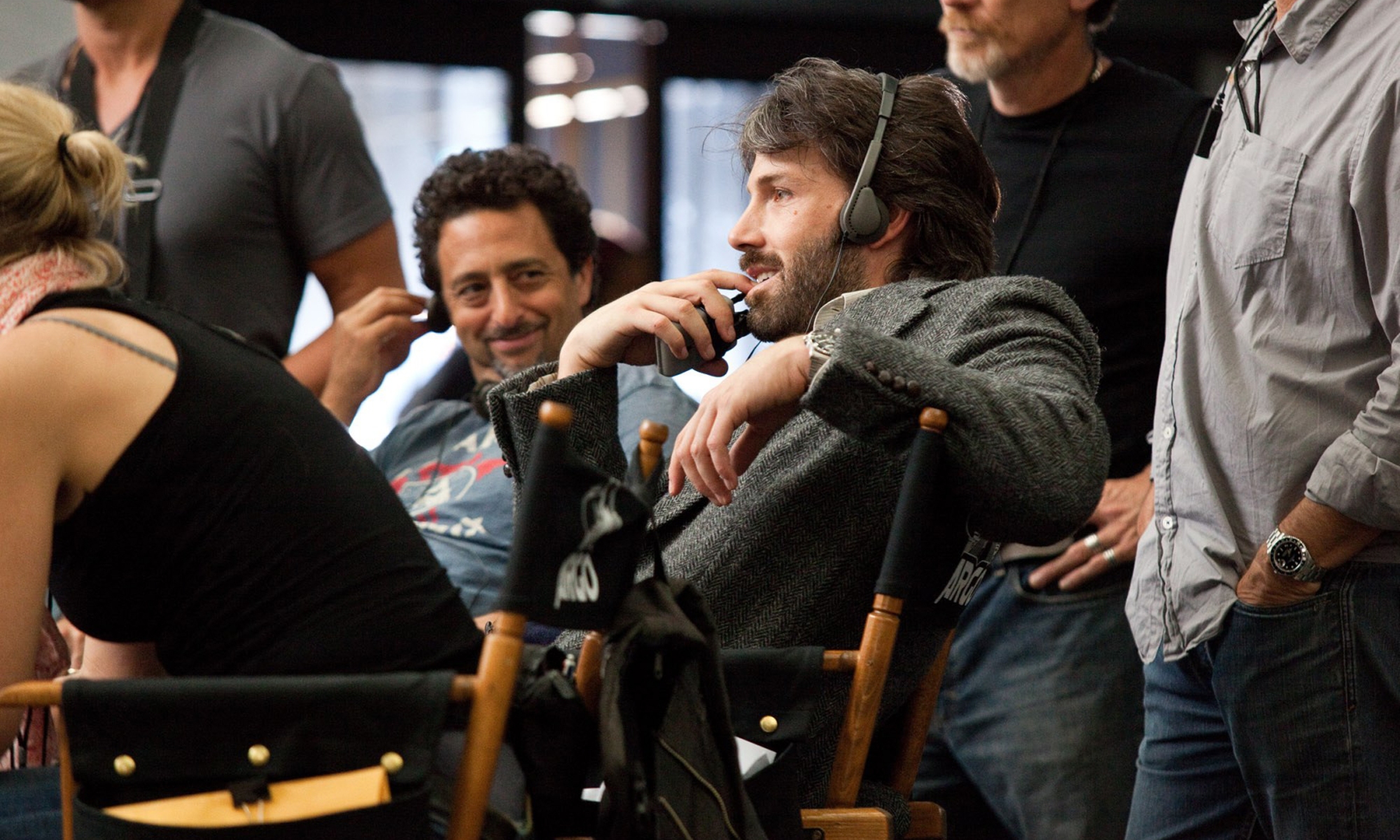
Q&A: Grant Heslov On Argo

This article appeared in the Dec. 19 issue of AwardsLine.

Having a script that everyone loves doesn’t always ensure the quickest path to production. Just ask Argo producer Grant Heslov of Smokehouse Pictures. Five years ago, Heslov and producing partner George Clooney hired screenwriter Chris Terrio to turn Joshuah Bearman’s April 2007 Wired article, “The Great Escape,” into a script. The previously classified true story of the CIA’s collaboration with two Hollywood insiders in setting up a fake production company and turning six trapped diplomats into a fake film crew as a way to smuggle them out of Iran was a riveting read in first-draft script form. Nevertheless, scheduling proved an issue for years until the script made its way through Warner Bros. to Ben Affleck, who was eager to make Argo his next project. With the boxoffice hit and festival-circuit favorite firmly entrenched in the awards conversation, Heslov took time from the set of his next project, August: Osage County, to talk about arriving at the right budget number and why Smokehouse is always involved in the marketing of its films.

AWARDSLINE: It took Argo about five years to make it to the screen. Was it just a matter of scheduling for you or were there other roadblocks that were holding things up?

GRANT HESLOV: We found it about five years ago, and we developed it, and it was one of a few films that we had that we felt were ready to go. But George (Clooney) and I just hadn’t had time to get it made or figure out what we were going to do with it. When we were shooting The Ides of March, we heard that Ben (Affleck) was interested, so we got together with him, and that’s how that ball started rolling.

AWARDSLINE: How concerned were you about dramatizing some of the real events in order to make them work for a film?

HESLOV: You know, we weren’t. George and I have done a bunch of films that are based on the truth, and (for) this one, we felt like as long as we stayed within the spirit of the story, the things we did to add drama—and there aren’t that many, when you really look at it—we didn’t have any problem with that.

AWARDSLINE: There’s always haggling with the studio and the director over what that budget number is going to be. Do you go in with a number that you know you can’t go under and have the film still work? How does that process work for you?

HESLOV: We know how much we can make the movie for, have a gut feeling. (But) it’s not just how much do you think you can make the movie for but how much do you think the movie can make. There’s a lot that goes into it, and we’re not cavalier about it, we really think. For instance, a film like Good Night and Good Luck, you make that for $7 million because you know it’s a black-and-white film, and it’s not an easy sell. If you make it for $7 million, then everybody can have a chance to make a little bit of money, and you get to make the film you want to make.  But on a film like Argo—it’s period, there’s a lot of locations, and there’s a big cast. You have a gut feeling about the number and you go, “Look, we know we can’t make it for anything less than this, and if we can make it for more than this, then that would be great.” Then getting to the haggling with the studio over what the number is, it’s never as much as you want, but they usually come up a little, and you go down a little, and find someplace in the middle.

AWARDSLINE: How involved are you as a production company in marketing the films that Smokehouse produces?

HESLOV: We’re incredibly involved. If you asked the studio, they’d probably say we’re too involved. But look, George has been involved in the release of tons and tons of movies. Even when he’s an actor in the film, he still has to sign off on everything. So he has years of experience, and I’ve learned from him that you just have to be on top of all the marketing stuff. We have very strong opinions about the way that the films that we work on are sold. The studios, as they should, want to extract every dollar out of that opening weekend. But at the same time, for us (a film) is what lives on with us forever, as a one-sheet on our wall, as part of a legacy that we’re trying to put together. You want to have stuff that you feel good about in the way the film was marketed, and you also want to make sure that you’re selling the film that people are actually going to want to go see, because that can backfire on you. We’re very involved.

AWARDSLINE: Did you think that Argo would be tough to market?

HESLOV: Yes. It’s got an odd title, and it’s a very hard film to sell. On one hand, it’s a real nail-biter thriller and on the other hand, there’s a lot of comedic moments in it, but it’s not a comedy. If you sell it as a comedy, people are going to be disappointed. So it was tricky, but the studio did a great job. We’re really happy with what they did with it.

AWARDSLINE: Is it tough to balance the rigors of promoting a film while you’re on location with a high-profile film like August: Osage County?

HESLOV: It’s not really hard… We premiered at the London Film Festival, and we couldn’t be a part of that because we couldn’t leave. There were certain screenings that I wish George and I could have been at. You know, you make a movie and you’re proud of it, and you want to share those moments with your collaborators. But in terms of the actual work that has to be done, everything I do is practically on the phone anyway, so not so bad. (Laughs.)

Do Precursor Awards Really Predict Oscar Fortunes?

Pete Hammond is Deadline’s awards columnist. This article appeared in the Dec. 19 issue of AwardsLine.

With freshly minted nominations from the Golden Globes, Critics Choice Movie Awards, SAG, AFI, and a slew of critics groups chiming in every day, there are many voices trying to influence the race for Oscar’s best picture of 2012. But does it matter, or is all of this just a lot of white noise as far as Academy voters are concerned?

The effect all this has is an even bigger question this year than in the past because of the earlier timetable the Academy of Motion Picture Arts & Sciences introduced for voting coupled with the new online electronic voting options. With ballots going out Dec. 17 and due back Jan. 3 (essentially right in the heart of the holidays) and a big rush for members to see the major contenders, which are mostly November and December openings, the influence factor of other awards could be more significant than ever, if only to get voters to focus on key films these

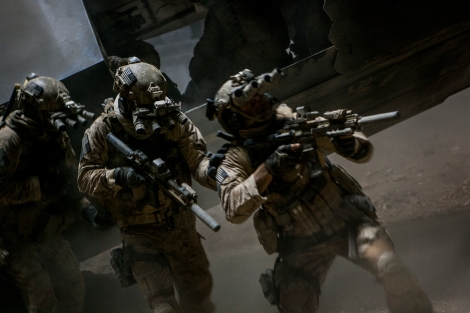
In the darkest hour of the night, elite Navy SEALs raid Osama bin Laden's compound in Zero Dark Thirty.
In the darkest hour of the night, elite Navy SEALs raid Osama bin Laden’s compound in Zero Dark Thirty.

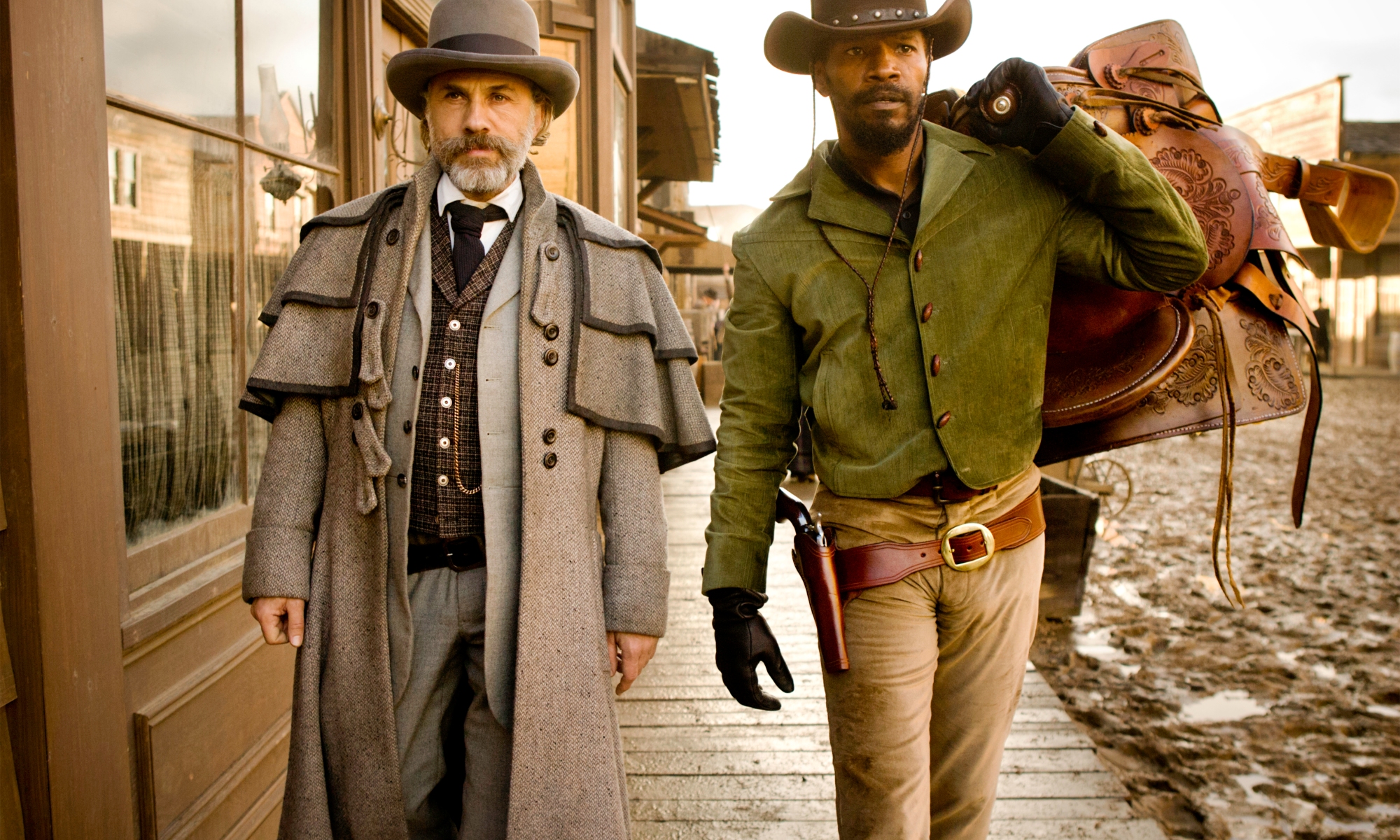
groups are singling out. My own survey of Academy members indicates that as late as the second week in December, many had not yet seen most of the films pundits are saying will be the major players in the best picture race. By forcing an earlier vote on their members, the Academy is putting enormous pressure on them to see these films and make a judgment of Oscarworthiness. My guess is this means this will be another year, like 2011, when nine or 10 pictures will be nominated (it can be anywhere from five to 10), as there seems to be a dedicated but smaller constituency so far for a number of movies, rather than an obvious frontrunner. Argo, Life of Pi, Lincoln, Zero Dark Thirty, Les Misérables, and Silver Linings Playbook are consensus titles that have popped up in significant ways on most of the important lists so far, including SAG. SAG is the first glimpse of the race from a guild and often mirrors Academy tastes—as do the PGA, DGA, and WGA along with below-the-line guilds—making it the most important barometer. But we have to put an asterisk next to it this year because Pi is not actorcentric and most members of the SAG nominating committee likely did not see Quentin Tarantino’s bloody homage to spaghetti westerns, Django Unchained,simply because the Christmas Day release was not ready in time and DVD screeners could not be sent. It was AWOL at SAG, but its strong showing with AFI, the Golden Globes, and Critics Choice, despite limited screening opportunities, means it also belongs with those aforementioned six other films in an unprecedented 7-pack of genuine contenders, all of whom have shots at the prize depending on the way the wind blows in the next few weeks.

Daniel Day-Lewis is considered a frontrunner for his role as the 16th president in Lincoln.

With best picture nominations likely for those seven, and a longer period of six weeks instead of four between Oscar nominations on Jan. 10 and the show on Feb. 24 ,the postnom period is going to be more crucial than ever. It is where the race can really be won by the savviest of campaigns and, more importantly, momentum. In the Oscar race, it’s not where you start, it’s where you finish, and each film has a chance to build—or in the case of October release Argo, rebuild—that frontrunning status. This is where smart campaign moves can make all the difference. With restrictive rules governing postnom parties, Q&As, etc., getting your film noticed is key. Lincoln’s Dec. 19 command screening for the entire U.S. Senate is the kind of thing that smells “important” and can have an effect in swaying Oscar votes, if not those in the Senate. “Who knew we would be the last thing they see before jumping off the fiscal cliff?” Steven Spielberg told me at a Lincoln party last week.

In addition to the key seven, don’t discount Michael Haneke’s Cannes Palme d’Or winner Amour,which is also Austria’s official entry for foreign-language film. Although it’s not common, there are several examples of foreign films making the best picture cut including The Emigrants, Cries and Whispers, Life Is Beautiful,and Il Postino. Sony Pictures Classics is making a big play not only for foreign film but acting, directing, writing, and best picture recognition for this extraordinary movie. The problem is many voters don’t seem to be aware it is eligible in those other categories,even if it becomes a foreign-language nominee. This one could be a wild card in the picture race, and even for Haneke as director, even though that field is incredibly crowded. In fact, it’s the directors’ race that will be the one to watch for clues on which of these films has the mojo to go all the way. With only five possible nominations and so many truly viable contenders, someone is getting cut. But who among Ben Affleck, Quentin Tarantino, Ang Lee, Spielberg, Kathryn Bigelow, Tom Hooper, and David O. Russell, not to mention Haneke, will be in or out, even as their picture gets nominated?

On top of these films, there is still hope for the likes of The Master, Flight, Moonrise Kingdom, Beasts of the Southern Wild, a recent surge for May’s The Best Exotic Marigold Hotel, and even hope of a first-ever best picture nomination for James Bond with Skyfall.

It’s anybody’s game right now but who will triumph in the end? This thing is just getting started.

Rise Of The Guardians Taps Soprano For Original Song

David Mermelstein is an AwardsLine contributor. This article appeared in the Dec. 19 issue of AwardsLine.

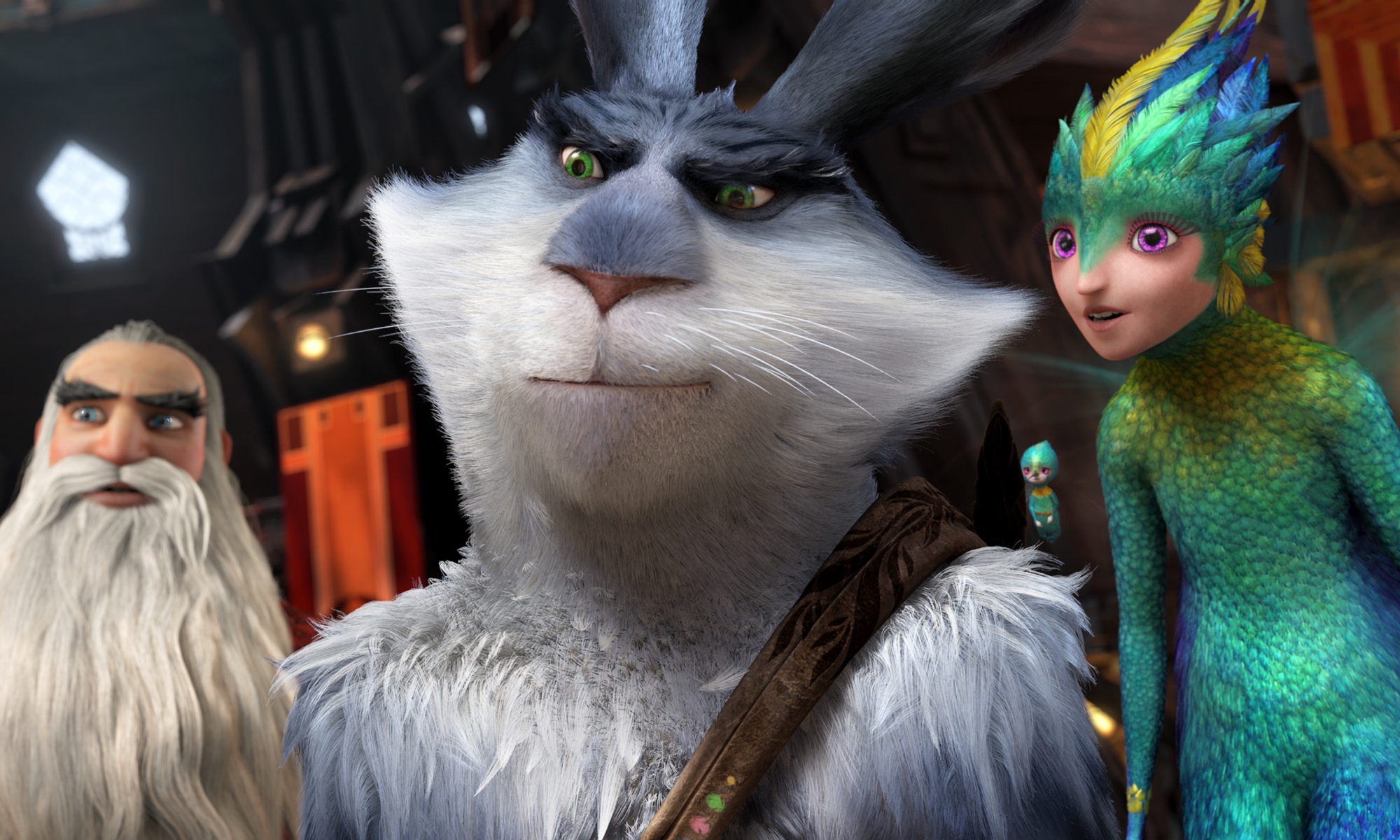
It’s not unusual to have big names in popular music sing end-title songs for major movies. Opera singers, though, don’t generally roll that way. But nobody ever said they can’t. Which is why Alexandre Desplat, who composed the music for Rise of the Guardians, decided to approach soprano Renée Fleming about singing “Still Dream,” which uses the melody he wrote for the picture’s main theme and lyrics by the film’s screenwriter, David Lindsay-Abaire.

“It covers two octaves,” Desplat says of the song. “The music is very orchestral; the melody, very lyrical. So it really made sense to ask Renée Fleming, who is the greatest soprano alive. And she said yes right away. It was a suggestion that could have been rejected, but it was right—though I can’t remember the last time a soprano sang an end-title song.”

“It’s really an aria he composed,” Fleming says. “It’s got a huge range and is quite demanding melodically—very instrumental. So it was challenge for me, but it’s so beautiful. Alexandre has an extraordinary melodic gift. I’d never met him before this, but I was familiar with his work, because he’s done so many wonderful scores.”

Their collaboration went smoothly despite no prior history, though they didn’t actually meet until a specially arranged recording session in New York that followed the full score’s recording in London. “We went back and forth about key and range on the phone and email,” Fleming recalls. “He did several rewrites, but I wasn’t the only one making requests. This all came together in a very short period of time. I couldn’t be there in London, but he was with me in New York.”

Fleming got the lyrics only after Desplat had already sent the music. “I was under a mountain of deadlines when they called,” Lindsay-Abaire says. “But I couldn’t say no. Alexandre was very set that he wanted the song to revisit and rearticulate the score’s themes. He didn’t want to just tack something onto the end. And in that way, it felt very organic to the movie that was already there. We took the ‘believe theme’—where the little boy believes in Jack Frost for the first time—and it was like, ‘Oh, our work is halfway done.’ He wanted the song to have the same sweep and epic quality the film has. It’s not the standard ‘stick a pop song at the end of a movie.’ It embraces the wonder of childhood and boils it down.”