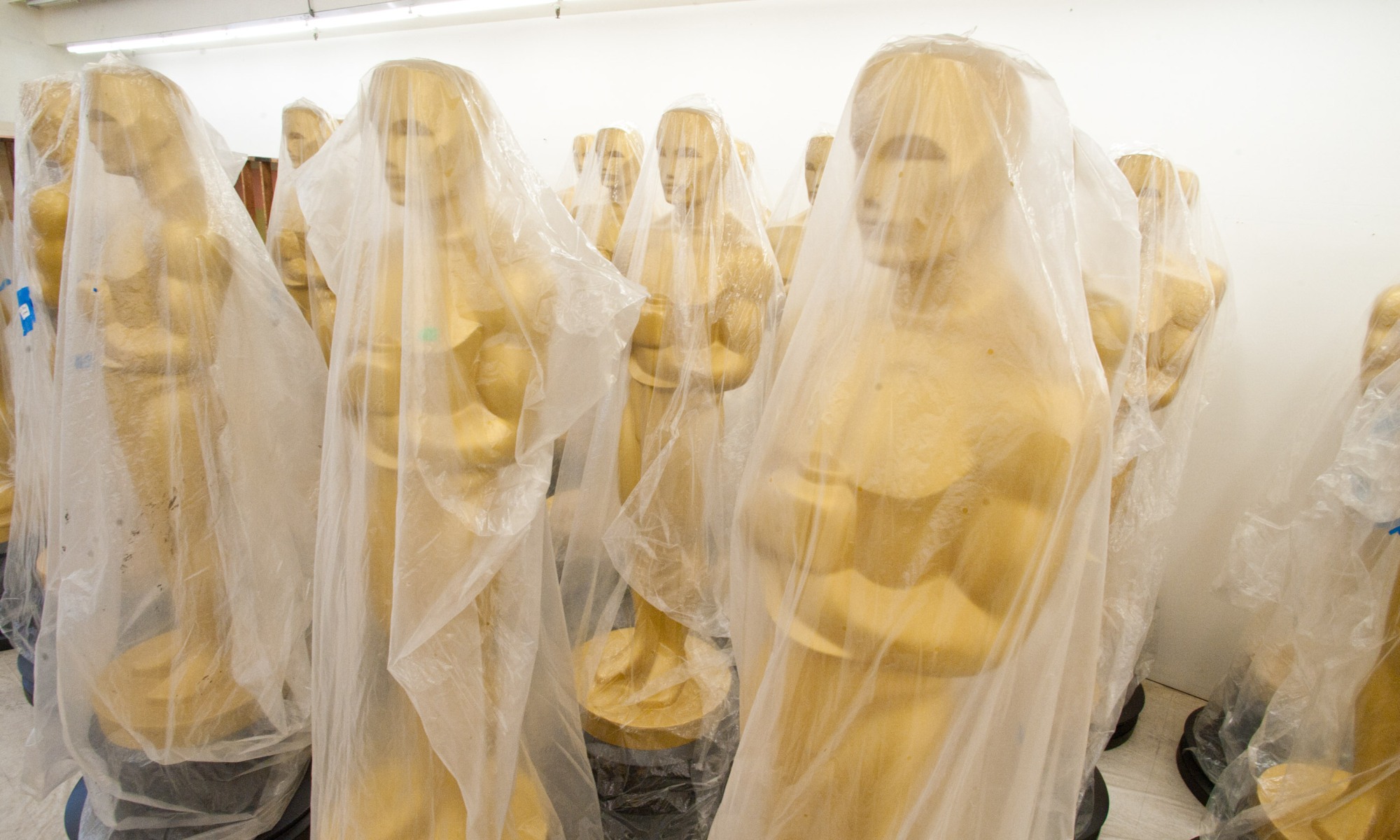
The Best Picture Contenders, Part 1

The first in a three-part series in which AwardsLine breaks down all nine of the best picture contenders. This article appeared in the Jan. 30 issue of AwardsLine.
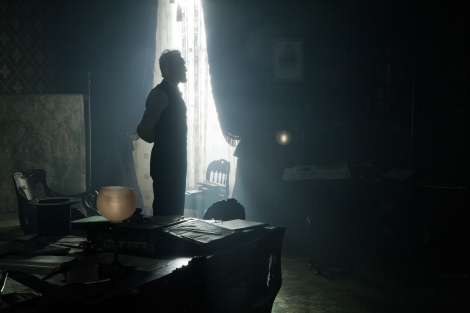
LINCOLN
Lincoln leads in Oscar nominations among every other film in contention with 12.

Lincoln

What the Academy says: 12 nominations (Picture: Kathleen Kennedy, Steven Spielberg; Directing: Steven Spielberg; Lead Actor: Daniel Day-Lewis; Supporting Actor: Tommy Lee Jones; Supporting Actress: Sally Field; Adapted Screenplay: Tony Kushner; Cinematography: Janusz Kaminski; Original Score: John Williams; Film Editing: Michael Kahn; Production Design: Rick Carter, Jim Erickson; Costume Design: Joanna Johnston; Sound Mixing: Andy Nelson, Gary Rydstrom, Ronald Judkins)

What the public says: $168.0M domestic boxoffice; $14.5M international (as of Feb. 1)

What Pete Hammond says: From the announcement that Steven Spielberg was going to direct Lincoln, this one had the hallmarks of a film that defines what the Oscars are all about. The fact that it was not an easy road for the iconic director and his screenwriter, Tony Kushner, only adds to the gravitas of the whole project. And with Daniel Day-Lewis scooping up best actor awards left and right—plus a sterling cast of supporting players led by nominees Tommy Lee Jones and Sally Field—this one smells like a winner. With a leading 12 nominations, Lincoln is also in a good place statistically because usually it is a positive sign when a film lands the most nominations. In terms of ambition, scope, and achievement, Lincoln has been the one to beat all season long. Unfortunately, expected victories at some of the earlier awards shows, like the Golden Globes and Critics Choice Movie Awards, didn’t happen (although Bill Clinton’s ringing endorsement at the Globes couldn’t have hurt). Nevertheless, the guilds might bring it back full force. Or not. Still, if you had to design an Oscar movie from scratch, it would probably be this one.

What other awards say: 1 best dramatic actor Golden Globe for Daniel Day-Lewis; 3 CCMA wins for actor, adapted screenplay, and score; 10 BAFTA noms, including film, lead actor, supporting actor, and supporting actress; 2 SAG wins for lead actor Day-Lewis and supporting Tommy Lee Jones; and other guild noms from the DGA and WGA.

What the critics say: “This is politics as it is really played, yet few writers have found a way to make it as compelling as Kushner does here. That success owes in part to the extensive character-actor ensemble Spielberg and casting director Avy Kaufman have enlisted, repaying them with dramatic roles for not only Lincoln’s entire cabinet, but more than a dozen key allies and opponents of the 13th amendment.”—Peter Debruge, Variety

What the producer says: “What’s wonderful about Lincoln is that it’s a reflection of the political process, and it’s not an attempt to show which political party is better, rather recognize the scene of the political process,” Kathleen Kennedy says. “Nowadays, ‘politician’ has become a bad word, and politicians should be lauded because our political process works. You can see that the process is working. (In Lincoln), you recognize what the founding principles are behind this political process and how it defines us and how we get things done or shouldn’t get things done. That’s why politicians on either side, Democrats and Republicans, are going to see themselves in this—by talking to one another, stepping across the party lines and identifying what’s good for the country. That’s why they’re engaged in what this movie is about.”

What the filmmaker says: “I never saw it as a biopic. I sometimes refer to it as a Lincoln portrait, meaning that it was one painting out of many that could have been drawn over the years of the president’s life, but had I done the entire presidency, had I done his entire life, that would have qualified as a biopic. I don’t believe this is a biopic,” Spielberg explains.

Life of Pi deals with issues of faith and existence.

Life of Pi

What the Academy says: 11 nominations (Picture: Gil Netter, Ang Lee, David Womark; Directing: Ang Lee; Adapted Screenplay: David Magee; Cinematography: Claudio Miranda; Film Editing: Tim Squyres; Sound Editing: Eugene Gearty, Philip Stockton; Sound Mixing: Ron Bartlett, Doug Hemphill, Drew Kunin; Visual Effects: Bill Westenhofer, Guillaume Rocheron, Erik De Boer, Donald Elliott; Original Score: Mychael Danna; Original Song: “Pi’s Lullaby,” music by Mychael Danna, lyrics by Bombay Jayashri; Production Design: David Gropman, Anna Pinnock)

What the public says: $104.0M domestic boxoffice; $421.3M international (as of Feb. 1)

What Pete Hammond says: Ang Lee’s ambitious adaptation of Yann Martel’s bestseller Life of Pi certainly seemed to resonate with the Academy. The book—an extraordinary story of a boy and a tiger fighting for survival while stranded at sea—was once thought unfilmable and went through several directors in the process until Lee finally cracked the code of how to bring to the screen. Even more impressive is the fact that none of the film’s 11 noms were for acting, making this, along with 2003’s big winner Lord of the Rings: The Return of the King, the most nominated film to do it without the help of the actors branch. This triumph immediately took Pi from the outer fringes of leading contenders and put it in a position to really go for it. “Slow and steady” is how one Fox publicist put it, and, just for the technical achievement alone, it can’t be counted out of the running, although its best chances are in the below-the-line area and possibly for Lee.

What other awards say: 9 BAFTA noms, including film, screenplay, and director; 2 CCMA wins for visual effects and cinematography; 1 Golden Globe for Mychael Danna’s score; plus guild nominations from DGA and WGA.

What the critics say: “The movie does for water and the sea what Lawrence of Arabia did for sand and desert, and one thinks of what Alfred Hitchcock, who used 3D so imaginatively in his 1954 film of Dial M for Murder, might have done on his wartime Lifeboat had he been given such technical facilities.”—Philip French, The Observer

What the producer says: “It’s in keeping with the kinds of movies that I personally am interested in making,” says Gil Netter. “Most of my movies are all positive, they hopefully are putting something good into the world, they’re about something, there is a spirituality available to people if they want to read that into the material. These are all important things in the films that I want to make. This movie stoked all those things in strong terms.”

What the filmmaker says: “3D is very daunting. You cannot trust anything people tell you, because it could be wrong, because it’s so new,” Lee explains. “And the audience hasn’t had a relationship with that yet. There’s no regulation, there’s no set of mind to watch it yet. People think, ‘Ah, it’s like tricks.’ I think it’s time that people show respect to the medium as an artistic form.”
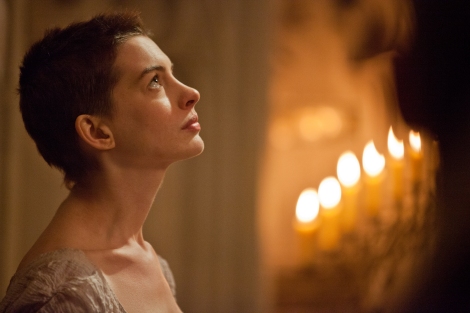
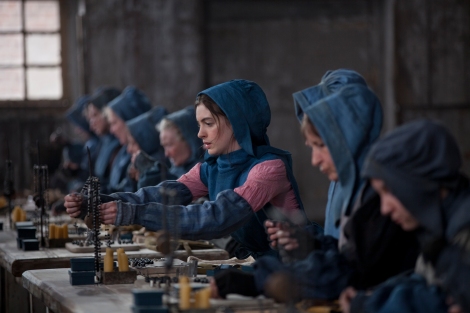
Anne Hathaway as Fantine in Les Misérables.

Les Misérables

What the Academy says:  8 nominations (Picture: Tim Bevan, Eric Fellner, Debra Hayward, Cameron Mackintosh; Lead Actor: Hugh Jackman; Supporting Actress: Anne Hathaway; Production Design: Eve Stewart, Anna Lynch-Robinson; Costume Design: Paco Delgado; Sound Mixing: Andy Nelson, Mark Paterson,  Simon Hayes; Makeup & Hairstyling: Lisa Westcott, Julie Dartnell; Original Song: “Suddenly,” music by Claude-Michel Schönberg, lyrics by Herbert Kretzmer, Alain Boublil)

What the public says: $138.7M domestic boxoffice; $175.7M international (as of Feb. 1)

What Pete Hammond says: Many thought this movie-musical adaptation of the long-running stage phenomenon would be the one to take it all based on the early ecstatic response to screenings over the Thanksgiving weekend and the fact that the cast sings live in the film. It is the kind of big-scale movie-musical that has won throughout Oscar history (though not in at least a decade), which added to the inevitability of a possible Les Mis triumph. But despite a nod from the DGA, the lack of a best director Oscar nomination for Tom Hooper and nothing from his native BAFTA dampened the film’s overall chances. Include the lack of a writing and editing nomination, and you have to go all the way back to 1931’s Grand Hotel to find a best picture winner that didn’t have at least one of those nominations. Its triumph at the Golden Globes certainly kept it in the race to fight another day, and its strong presence at PGA, SAG, and DGA was nothing to sneeze at, but a best picture win at this point has to be considered a long shot by conventional wisdom standards.

What other awards say: 3 Golden Globes for best musical/comedy film, best musical/comedy actor for Hugh Jackman, and a supporting actress trophy for Anne Hathaway; 4 SAG noms for ensemble, actor, supporting actress, and stunt ensemble; 1 CCMA for Hathaway; 9 BAFTA noms, including best film, best British film, plus noms for Jackman and Hathaway; and a supporting actress SAG Award for Hathaway.

What the critics say: “What helps make Les Misérables so vibrant and thrilling onscreen is Hooper’s daring decision to have his actors sing live. No mouthing the words to prerecorded songs. The actors wore earpieces to hear a piano give them tempo. A 70-piece orchestra was added later to bring out the beauty and thunder in the score, by Claude-Michel Schönberg, Alain Boublil, and Herbert Kretzmer. The risk pays off. The singing isn’t slick. It sometimes sounds raw and roughed-up, which is all to the good. It sure as hell brings out the best in the actors.”—Peter Travers, Rolling Stone

What the producer says: “This was one of the hardest films we’ve done,” says Eric Fellner. “It’s a genre that’s challenging by its very nature—people aren’t used to going to see a musical in a movie theater. Also, no one has ever done a live musical from beginning to end with no prerecorded music. We also had to make sure that in adapting Les Misérables, we didn’t alienate fans, and (in) having the original team, we were able to keep all the original DNA intact.”

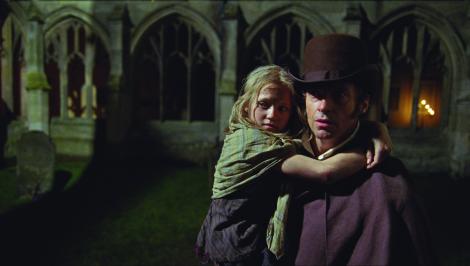
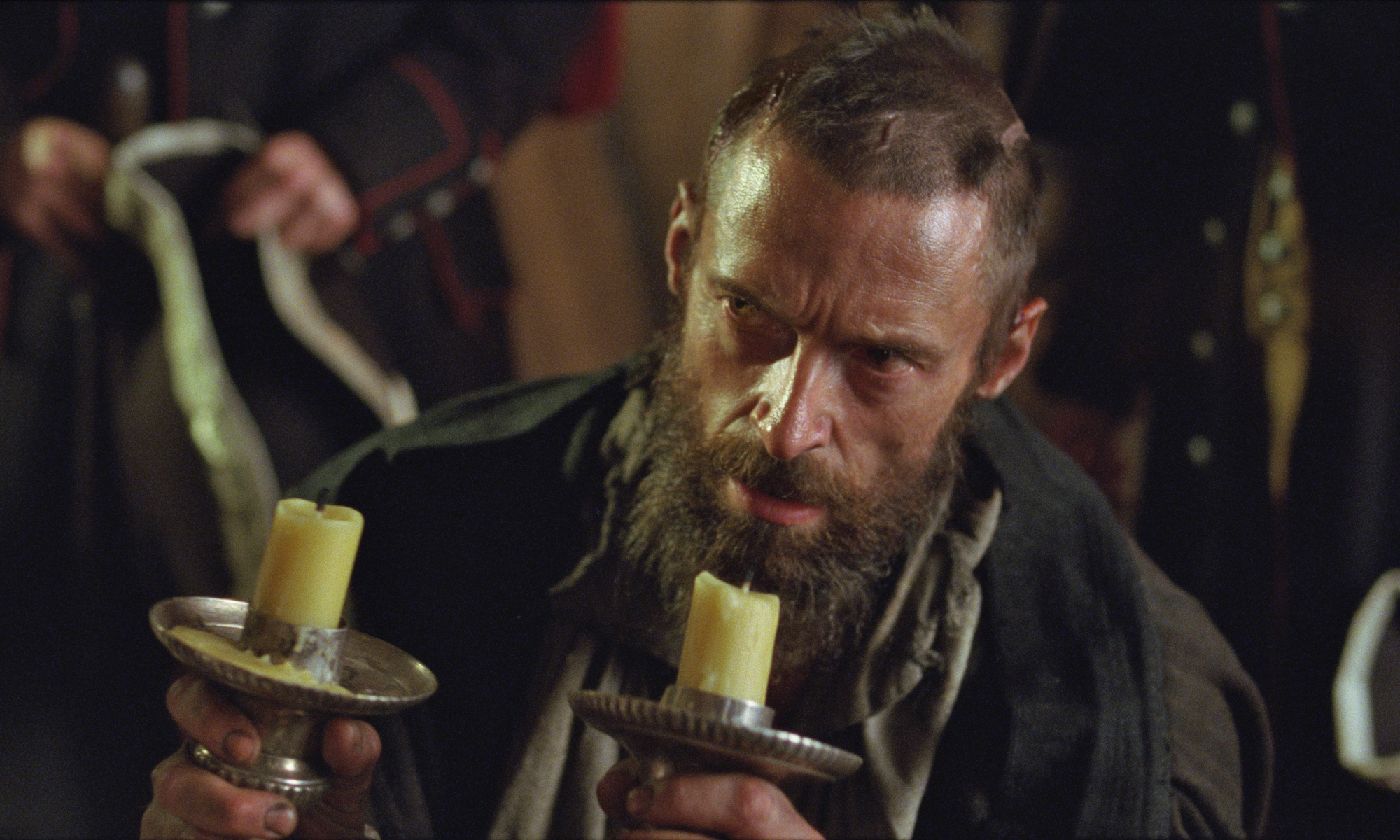
What the filmmaker says: “There’s a moment where Jean Valjean achieves a kind of happiness where he sees that he’s done his only job in this life, which is to look after his girl, Cosette,” Hooper told Deadline Hollywood’s Mike Fleming Jr. “The moment offers us this feeling that one can transcend death, that there’s a way of coping with it that makes it meaningful. There’s a way of dealing with that moment that we’re all going to face and that will actually be a beautiful end. There’s something in that which is the secret as to why the musical’s been such a phenomenon. And we’re lucky that this film is tapping into that old-fashioned word, catharsis. It takes you to that place of suffering in your life, in your head, whether it’s the suffering of yourself, or the suffering of others, or suffering to come, and it has a way of processing it, so that you actually feel better about it by the end of the story.”
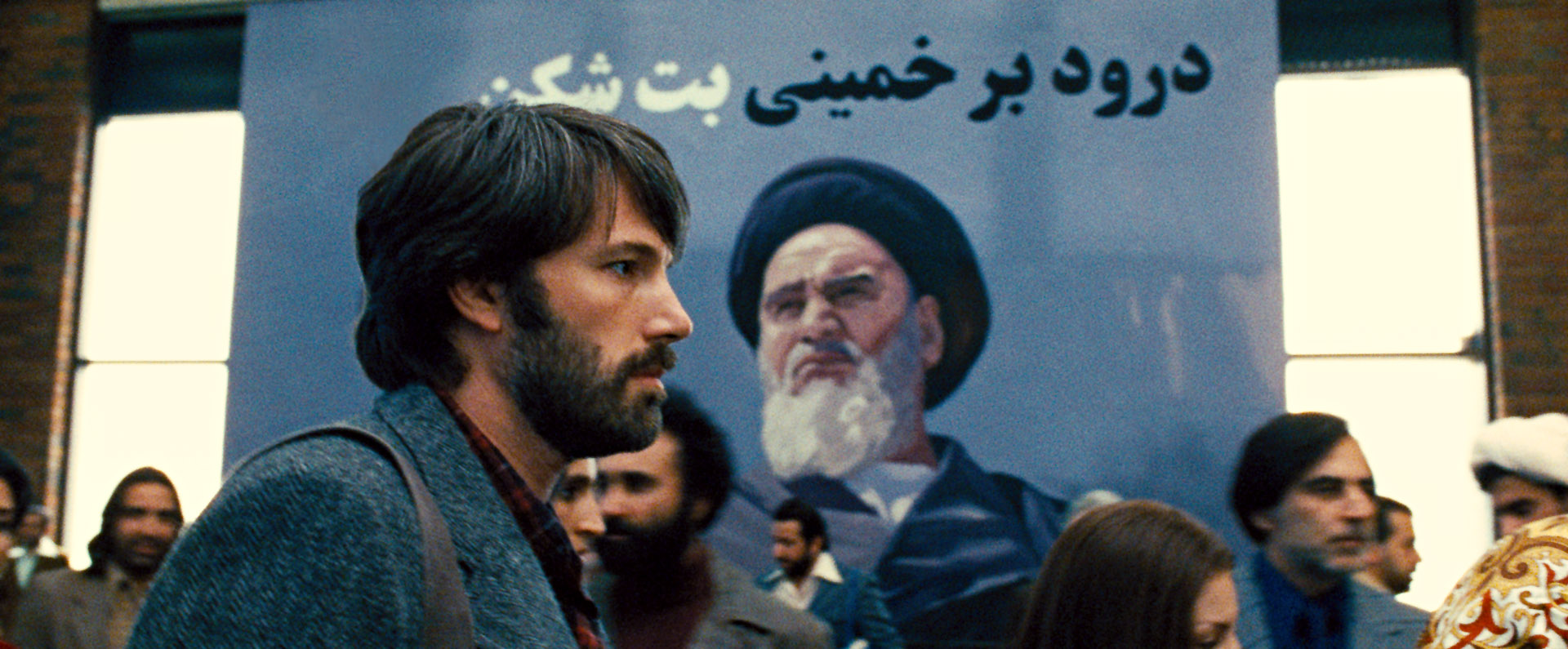
Anything Goes In This Year’s Oscar Race

Pete Hammond is Deadline’s awards columnist. This article appeared in the Jan. 30 issue of AwardsLine.

With less than a month to go, the stage is set for one of the strangest Oscar showdowns in memory. Certainly the season started with some clear favorites emerging, like Argo at Telluride, Silver Linings Playbook at Toronto, then Lincoln just after the election, followed by Life Of Pi. I thought Paramount’s Flight also might emerge as a major best picture contender around this time, but when critics awards and early nominations for Globes and CCMAs started coming in, it was clear this was mainly just a play for Denzel Washington and John Gatins’ original screenplay. At Christmas time, we got Zero Dark Thirty, Django Unchained, and the hotly anticipated Les Misérables to complete our seven-pack of best picture contenders. What many weren’t anticipating was that two small indie films that made a splash earlier in the year were also going to come in. Beasts Of The Southern Wild managed to hold on to all that momentum from its Sundance debut a year ago, and then Amour took Cannes by storm, winning the Palme d’Or and later travelling on the fall film circuit to Telluride and Toronto. That both were able to cash in that early 2012 awards goodwill and still make Oscar’s list was impressive, especially in the face of one of the most competitive and rich races for the ultimate prize in many years.

So what do we have? It’s as free-wheelin’ a race for Oscar as it can possibly be. Usually at this point, there are one or two strong contenders left in the hunt. Not this year. An argument can be made that, depending where the momentum shifts in the next month, it is almost anyone’s race, at least for best picture. But that also extends to some of the acting races (well, maybe not for you, Daniel Day-Lewis and Anne Hathaway) and even director, which has been turned on its head by the directors branch, who went their own way in snubbing DGA nominees Ben Affleck, Kathryn Bigelow, and Tom Hooper in favor of smaller films from Michael Haneke, Benh Zeitlin, and David O. Russell. At the very least, the directors have upended the race and made it a lot more interesting and less conventional. It is entirely conceivable that the guilds, which most closely reflect the Academy’s sensibilities, will further upend the race. In a year when so many movies are top quality and have their own unique constituencies supporting them, a split vote could produce some very nervous moments on Oscar night and some very unexpected results. Could a popular movie like Argo actually emerge as the best picture champ without winning any other Oscars?

It’s possible—not likely, but possible. Will the directing and picture categories split? Possible. Could Argo win DGA, Life Of Pi win best director at the Oscars, and Lincoln take home best picture? Who knows? It is a year where anything, and I mean anything, can happen.

And then there is the question of the earlier nominating period and online voting. The Academy assured me, perhaps because of all the publicity about snafus in the new voting system, that more members voted this time around than ever before. Will that continue through to the finals, especially now that there is a longer period, six weeks instead of four, between nominations and the Oscar show? Will the method of voting continue to be the story and could it affect the outcome in a razor-thin margin race like this one promises to be?

It has indeed been a rollercoaster ride for Oscar in his 85th year, and I have a feeling he’s got a few more surprises in store for us before this is all over.

Behind The Scenes On Les Miserables

Cari Lynn is an AwardsLine contributor. This article appeared in the Jan. 2 issue of AwardsLine.

When producers Eric Fellner and Tim Bevan of Working Title Films became guardians of the longest-running musical in history, they knew they were dealing with precious—and risky—material. Les Misérables, after all, has played in more than 40 countries and has been seen by more than 60 million theatergoers. But Fellner and Bevan were well aware that musicals adapted for the screen are tough sells at the boxoffice.

Anne Hathaway is the doomed Fantine in Les Misérables.

Over the decades, there had been numerous failed attempts at a Les Mis film adaptation, with Oscar-nominated director Alan Parker (Fame) coming close in the 1980s (he went on to direct the film adaptation Evita in 1996). “No one could unlock the key of how to do it,” explains lyricist Alain Boublil, who cowrote Les Misérables the musical with composer Claude-Michel Schönberg. But it was a series of fortuitous events that caused Working Title to think now might be the right time to make a film work: On Britain’s Got Talent, Susan Boyle breathed new life into the Les Mis song “I Dreamed a Dream,” not only creating a chart-topping hit from the musical for the first time, but also sparking a resurgence at the theater boxoffice. Plus, the original producer and musical-theater legend Cameron Mackintosh was planning Les Mis’ 25th anniversary concert at London’s 02 Arena, casting Nick Jonas as Marius, which would broaden the appeal to a whole new generation. “The collision of these events reopened the possibility of, yes, we could do the film,” Mackintosh says.
The Hollywood Foreign Press and Screen Actors Guild wholeheartedly agreed that the gamble paid off, bestowing four Golden Globe nominations (including best comedy or musical, Hugh Jackman for best actor, Anne Hathaway for supporting actress, and best original song), and four SAG Award nominations (including the coveted ensemble award, Hugh Jackman for best actor, Anne Hathaway for supporting actress, and stunt ensemble).

The original composers of Les Misérables wrote a new original song, "Suddenly," for Hugh Jackman to perform in the film.
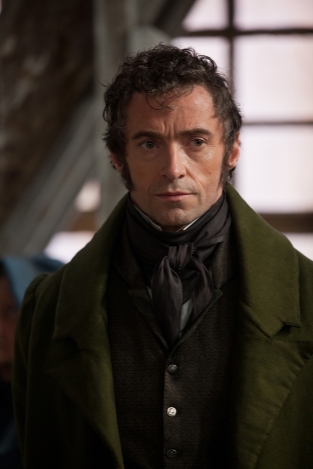
Jean Valjean reinvents himself as a businessman, but still is pursued relentlessly.

Nevertheless, the phenomenon of Les Mis began humbly in 1978 when Boublil and Schönberg, two pop-song writers living in France, decided to collaborate on a story based on Victor Hugo’s 1862 tome. “We were caught by the virus of musicals, and in France there were no musicals, so we invented how one should be,” explains Schönberg. “I wanted to write a proper operatic score with a big subject and not songs that were linked.” Their stage production wasn’t long-lived, but a concept album made its way to Mackintosh, who was then producing Cats, and who immediately recognized the potential. With English translation by James Fenton and completed by Herbert Kretzmer, Mackintosh premiered Les Mis on the London stage in 1985, where it’s continuously run ever since.
When Working Title Films (Four Weddings and a Funeral, The Big Lebowski, Elizabeth: The Golden Age), which has a production deal with Universal, approached Mackintosh, everyone hoped this collaboration would stick. Working Title agreed that the original team of Schönberg, Boublil, and Kretzmer would remain intact, but screenwriter William Nicholson (Gladiator, Elizabeth: The Golden Age) was brought in to do an adaptation.
It was Nicholson who happened to mention the topic to director Tom Hooper while they were working together on another project, and Hooper rallied for a meeting with Mackintosh. Hooper at the helm didn’t seem the most logical choice—The King’s Speech hadn’t yet been released, and Hooper admits lacking musical credits. “I had not even directed a pop video,” he says. Although, he maintains he did have some musical experience. “At 10 years old, I was cast in two musicals, and through that, I discovered a love of musicals. I also learned I wasn’t a good actor, so I was glad to get that out of way.”
Just as Hooper had no musical experience, Mackintosh had no film experience, but they soon discovered they were on the same page. “When Tom and I first met, he spoke passionately about how he would do a film, and he felt it should be recorded live,” says Mackintosh. “I felt passionately about that, too. This was the clincher because Tom wanted to take what was a big leap in the dark.” In his musicals, Mackintosh had a penchant for bringing in directors with limited musical experience, such as Sam Mendes and Trevor Nunn. Moreover, Hooper had directed the HBO miniseries John Adams, which Mackintosh had admired for its large scale and gritty realism. “I’d been looking for directors over the years, and Tom came to me with a point of view, and I thought, This is the man to do it.” Working Title agreed and didn’t bother showing the script to any other director.

"Suddenly" was written specifically for the big-screen adaptation of Les Misérables.
“Suddenly” was written specifically for the big-screen adaptation of Les Misérables.

Over a year passed since the first meeting, and by this time, Hooper had won the Oscar for The King’s Speech. “I felt mightily relieved when Tom still wanted to do Les Misérables,” says Mackintosh. “We all met in New York, and Tom saw the chemistry between Alain, Claude-Michel, and myself—we go back 30 years.” This meeting inspired Hooper to pull the dialogue from the film, even though Nicholson’s adaptation had moved him to tears, and instead, do a complete version of the musical.
“Everyone was quite excited to go the braver route of honoring the way the musical was created,” says Hooper. “Musicals are a great game of consequence, of cause and effect, and so much would have to be thrown away to do it in a split form—you might risk losing the very thing that made it a success.”
Hooper put the original team to work modifying the score and composing a new song, “Suddenly.” “I don’t think Claude-Michel and Alain expected to be so involved,” says Hooper. “It was so exciting to realize I was literally re-creating the conditions under which the original creators are reunited. Fans would see that any changes had been done with the original creators’ input.”
The entire team was involved in all casting decisions as well, which included rigorous auditions for every actor. “Almost everyone cast was from the theater,” explains Mackintosh. “I had seen Sacha (Baron Cohen) and Helena (Bonham Carter) in Sweeney Todd, Hugh (Jackman) and I did Oklahoma!, and Russell (Crowe) I knew from when he left grammar school, and I saw him in musicals in Australia. I’d known Anne (Hathaway) personally for many years, and knew she was born into Les Mis [Ed. note: Her mother had performed the role of Fantine]. What Tom needed were people who were so comfortable in singing that they could reinterpret the songs with acting. This wouldn’t have worked with just straight actors.”

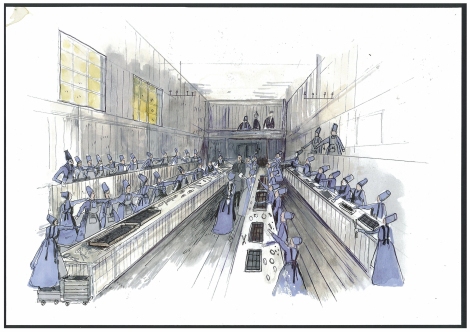
A sketch of the factory where Fantine (Anne Hathaway) works for Jean Valjean (Hugh Jackman) in Les Misérables.

For Mackintosh, the most challenging aspect was finding the balance between heightened drama, while still preserving authenticity. “It needed to seem real but with an element of style,” he says. “The style had to be similar to that of the musical, where we’re gliding in and out of spoken word and singing so seamlessly that you don’t realize they’re singing most of the time. Cinema is a medium of realism, and we had to find our brand of realism.” At one point, it was suggested to do the film in 3D, but Mackintosh vetoed that. “I felt it was already in 3D—we didn’t have to impose it.”
The live singing posed significant technical challenges, and each department had to work carefully together, creating, for example, costumes that didn’t rustle and floorboards that didn’t make any sound. “Nobody had done this before,” explains Schönberg, “and each department had to have the best people to make it work: The best musicians, the best conductor, to put music on the voices, it must be perfectly in sync.”
After several weeks of rehearsals, the 12-week shoot commenced, filming in historical locations throughout France and England and at Pinewood Studios outside of London.
The entire cast went through the ringer—almost literally in some scenes, with water from the cold Portsmouth channel pouring in over them. “The actors I chose were the kind who come unbelievably prepared,” says Hooper. “By the time we got to the shoot, they had already done more than I’d asked them to. They were conscientious, incredibly sensible, and lived like monks, or at least like opera singers. I promise you, it’s not anywhere near easy what they’ve done.”
The cast also benefitted by having the original team on set. “It was such a treat for us because Alain and Claude-Michel were there every day,” says Eddie Redmayne, who plays Marius, “and you got to ask them where something came from, or, if you did a reinterpretation of something, ‘Do you think that holds?’ ” Colm Wilkinson, who originated the role of Valjean both in London and on Broadway, had a cameo playing the kindly bishop, and many of the smaller roles went to actors from various companies of the musical.
“It was an amazing amalgam of brilliant people I was exposed to on Tom’s team, and my rehearsal team from the theater was there, and we worked in tandem,” says Mackintosh, who had joint final cut with Hooper and Fellner on the $61 million film. “It was a collaboration and couldn’t have been any other way. It was the best way.”

A Look Back At SAG Awards ‘I’m An Actor’ Speeches

This article published in the Jan. 2 issue of AwardsLine.

Here’s some of our favorite “I’m an Actor” speeches from SAG Awards shows over the years.

2006

“My first memory of wanting to be an actor came when I saw my mother play the title role in Evita. I watched her die on stage and come back to life in time for the applause, and I thought, Hi-diddly-dee. My name is Anne Hathaway, and I’m an actor.”

2008
“I performed my first scene ever when I was 12 years old in the 7th grade at Birmingham High School. I was very shy, and I had no idea what I was doing, so I just flung myself off the cliff and felt like I was falling. I’ve been falling ever since. I think that’s kind of what it is, informed falling. I’m Sally Field, and I’m an actor.”

“My favorite thing about acting is that it truly allows you to transform yourself into another person. I’m Johnny Depp, and I’m an actor.” [as delivered by Jane Krakowski]

2009
“I’ve talked my way out of 11 fights. I’ve cried more this year than most women do in a lifetime. Wherever I go, I seek out a mirror, and when one’s not available, I’ll make due with a car window or a dark picture. I’m Will Arnett, and I’m an alcoholic [quickly corrects himself], actor!”

“On Jan. 15, 2009, a US Airways pilot named Chesley Sullenberger performed an exacting, perfect emergency landing into the icy cold waters of Hudson River. It’s a good thing I was not behind the controls of that plane, because I’m Steve Carell, and I’m an actor.”

2011
“When I was waitressing right out of college, I went on my first television audition. The casting director told me to move to Europe because my looks would never make it on TV in America. I’m Julianna Margulies, and I’m proud to be an actor.”

2012
“When I was a kid, I agonized about whether I wanted to be an actor when I grew up or an astronaut. And both of them have their advantages. Actors get to meet and work with the most beautiful women in the world, and astronauts get to spend long-duration space flights in pressure suits filled with their own urine. I’m Jon Cryer, and I’m an actor.”

SAG Awards’ ‘Actors Stories’ Remain Enduring Tradition

Diane Haithman is an AwardsLine contributor. This article appeared in the Jan. 2 issue of AwardsLine.

And the winner was: Angela Lansbury.

When the Screen Actors Guild Awards first came on the scene in 1995, Lansbury was nominated for her role as Jessica Fletcher in Murder, She Wrote. She lost to Kathy Baker of Picket Fences.

But even though she did not go home with the Actor statuette, Lansbury’s introductory speech at the ceremony was such a hit that it launched a tradition that has become a highlight of the annual SAG Awards: the Actors Stories—unofficially known as the “I Am an Actor” speeches.

Lansbury gave the audience some background information on the new awards, but she also added a personal touch via a list of some of her more memorable roles: “I’ve been Elizabeth Taylor’s sister, Spencer Tracy’s mistress, Elvis’ mother, and a singing teapot.” She added: “Tonight is dedicated to the art and craft of acting by the people who should know about it: Actors. And remember, you’re one too!”

Then, as now, SAG Award winners have plenty of time to thank their agents, parents, partners, pets, and assorted deities for their success when they take the stage. But in an industry overwhelmed with awards ceremonies and endless opportunities for self-congratulation, the Actors Stories mark a refreshing change of pace, a chance for the TV audience to learn more about the craft of acting and the often-rocky road to stardom. And, for the all-actor crowd at the live awards, it was a chance to learn little-known facts about each other.

For the first eight years, the SAG Awards appointed one actor to make such a speech, says Kathy Connell, producer of the awards since their inception. That list includes such distinguished stars as John Lithgow, Ian McKellen, James Woods, Kathy Bates, and Whoopi Goldberg. Borrowing from Lansbury’s speech—or maybe Alcoholics Anonymous?—remarks have always included some variation on the phrase: “I am (name here), and I’m an actor.”

Goldberg’s 2000 speech illustrates the typical actor’s blend of pride and insecurity: “I’m an actor. I strut and fret my hour upon the stage, and I’ve done a lot of strutting because I am an actor. Am I the right age to play a mother? OK, I don’t sweat that one so much. Am I the right sex to play a Roman slave? Am I the right color to play a maid? Ha, ha. Is anybody going to believe that I could pass for a nun? Am I going to eat next week?”

For the ninth annual SAG Awards in 2003, Connell says supervising producer Gloria Fujita-O’Brien suggested replacing a single one- to two-minute speech with multiple Actor Stories of 15 to 30 seconds. The 2003 speakers included Alfred Molina, Kathy Bates (who confessed to starting her career as a singing waitress in the Catskills), Kristin Davis, Keith Williams, Halle Berry (who once dreamed of being an Olympic gymnast but “wasn’t quite good enough”), and David Hyde Pierce, who joked: “I’m still looking for a movie to do this summer. My name is David Hyde Pierce, and I’m an actor.”

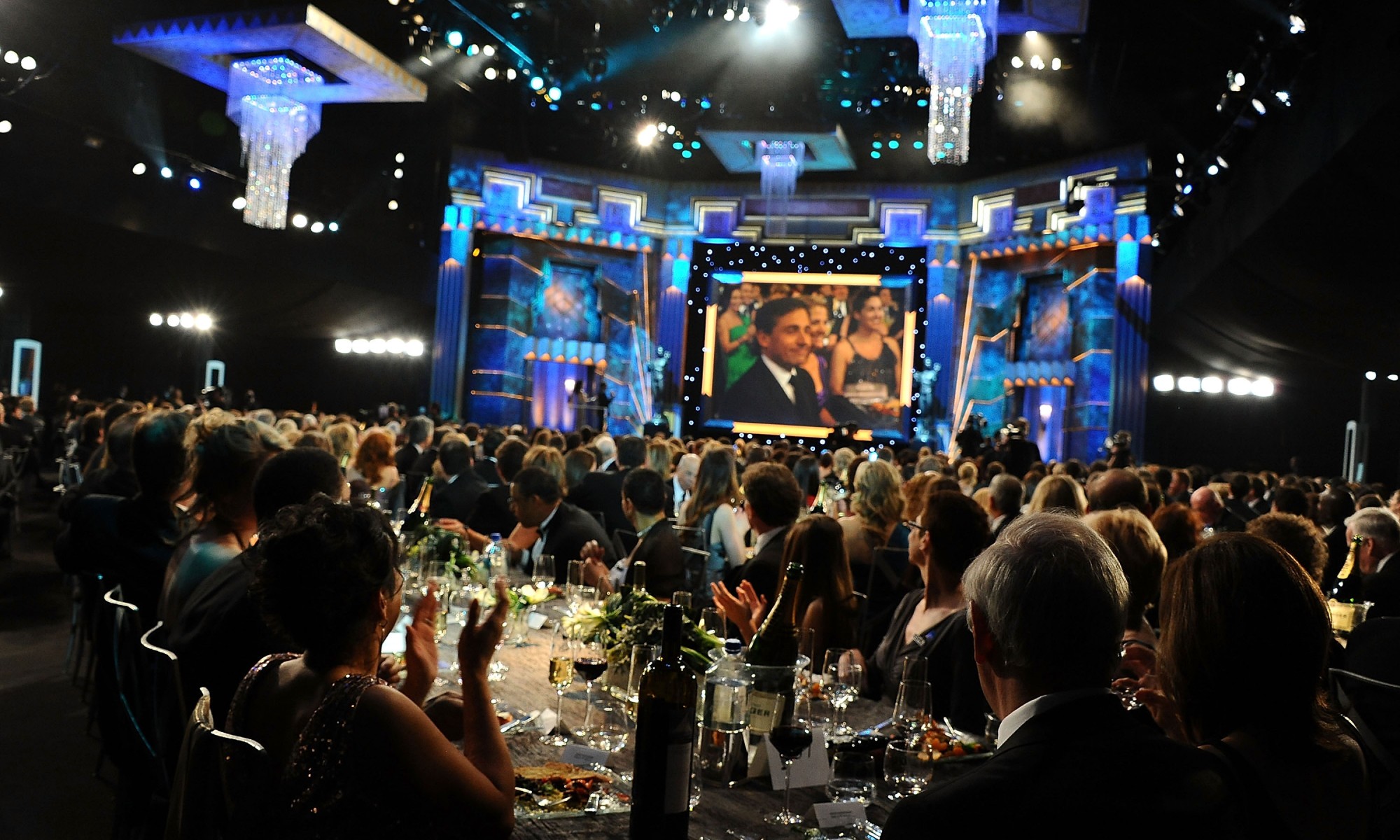
At the awards ceremony, attended only by actors and closed to the press, the actors sit at tables rather than in rows. Those chosen to speak deliver their Actors Stories from their seats. Executive producer and director Jeff Margolis says the actors who will speak are miked in the green room, and nobody, including their tablemates, knows in advance who will tell a personal story to the roving Steadicam.

“I think it’s sort of become our signature—we’re the only show that does it,” Margolis says. “It gives the actors a chance to do something other than thank 40 people that nobody knows. The people at home, as well as some of the other actors, don’t know how these people got started.”

In the years of the longer speeches, Writers Guild members wrote the comments with the actors’ input. Now actors provide their own material, giving the producers an advance copy. But that doesn’t mean there are no surprises, Connell observes. “They have thought about it, but it is also live television. Sometimes (the speech) gets tweaked, so we are all having a live moment.”

Some speeches are comic. Some are heartfelt. And some, like this 2004 Actor Story, are just plain bemused: “In 1978, I got my SAG card and since then I’ve been asked to give it back on six separate occasions. I’m Brad Garrett, and I don’t belong here.”

Behind The Scenes On HBO’s The Girl

Thomas J. McLean is an AwardsLine contributor. This article appeared in the Jan. 2 issue of AwardsLine.

Alfred Hitchcock built his reputation as cinema’s undisputed master of suspense by using every tool and trick at his disposal to tell tales of powerless peril, circumstance, and betrayal—usually with a lovely blonde starlet front and center.

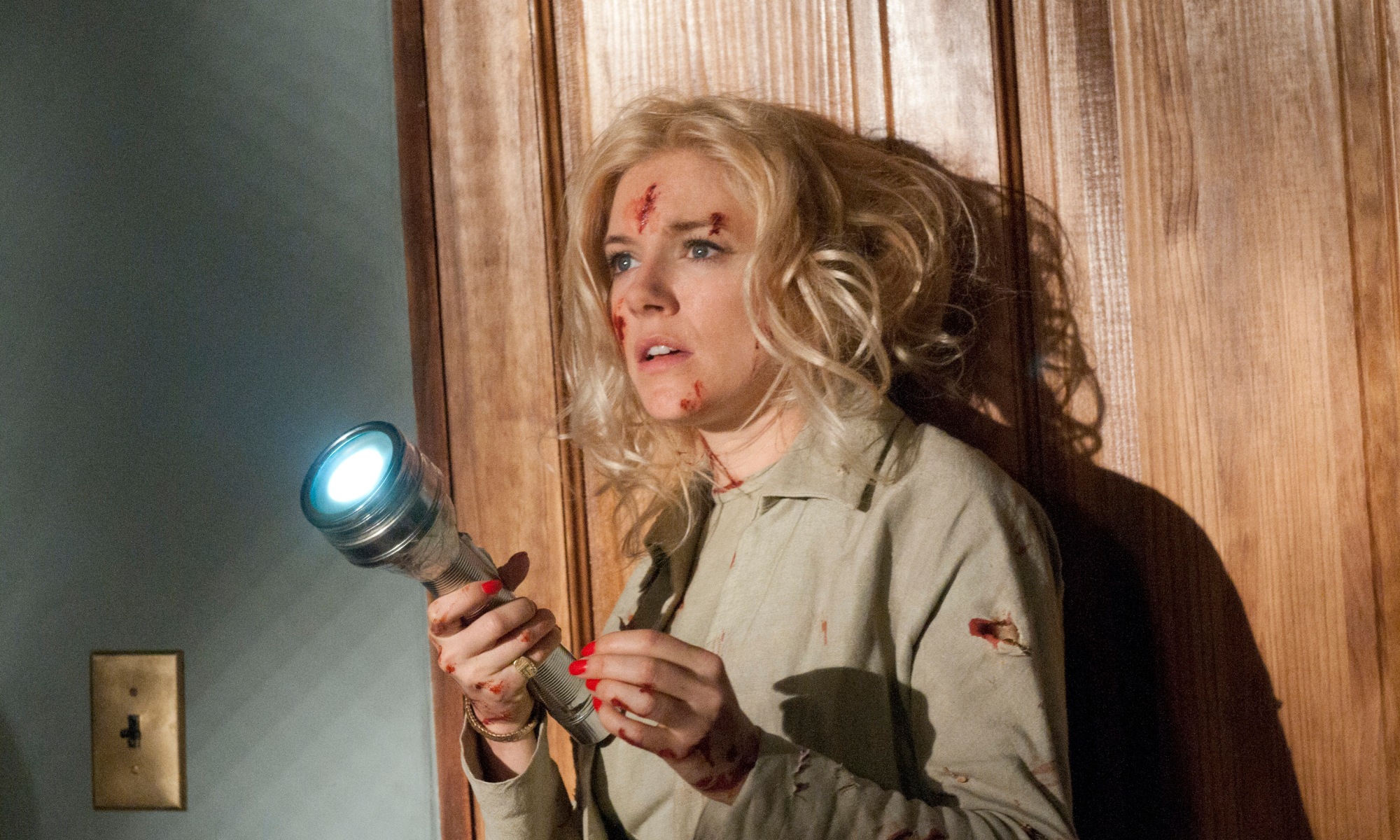
But the story behind the story has been revealed as appropriately Hitchcockian in its own way, as proven by The Girl, nominated for three Golden Globes for best TV movie or miniseries, best actor in a TV movie for Toby Jones’ portrayal of Hitchcock, and best actress in a TV movie for Sienna Miller’s take on actress Tippi Hedren.

The HBO Films and BBC presentation delves into the rocky relationship the director had at the height of his career with model-turned-actress Hedren during the making of The Birds and Marnie. Hedren’s relationship with Hitchcock, who had long developed a fascination bordering on obsession with his leading ladies, veered from charming and erudite into much darker territory that tested her limits.

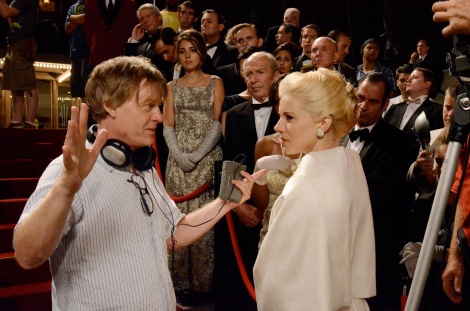
Director Julian Jarrold, left, on the set with Sienna Miller.

The story, which Gwyneth Hughes scripted based on Donald Spoto’s book Spellbound by Beauty: Alfred Hitchcock and His Leading Ladies, offered a way to explore both Hitchcock’s dark side and his creative impulses, says director Julian Jarrold.

“Hitchcock is such an extraordinary person to investigate based on his personality and his psychology,” says Jarrold, a veteran of British cinema and TV. “The kernel of the story seemed to be about his demons and obsessions, which also seemed to be reflected in his movies.”

To avoid playing just to the caricature of Hitchcock, the filmmakers turned to the chameleon-like qualities of Jones, who previously has played such diverse real-life roles as Truman Capote and Karl Rove. “He’s not ever going to do a straight impersonation,” says Jarrold.

A huge admirer of Hitchcock’s work, Jones says the role was impossible to turn down. “My concern was it would be a hatchet job on Hitchcock,” he says. “But I felt that what Gwyneth had presented in the script was this element of tragedy.”

In Miller, the filmmakers saw many of the same qualities of Hedren, who was a well-established model and independent single mother at the time Hitchcock cast her in The Birds. “There was something intriguing about her, with the kind of life history that she’s had, really, of being able to use that and be able to play against that,” Jarrold says. “She understood this character.”

Miller was drawn to Hedren’s reserved and almost icy, European quality. “I liked playing someone a little more contained than I had (played) in the past,” she says.

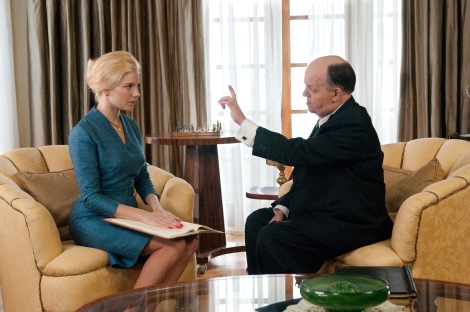
Toby Jones, right, plays the Master of Suspense in HBO's The Girl.
Toby Jones, right, plays the Master of Suspense in HBO’s The Girl.

The chance to meet and talk with the real Hedren, who had assisted Hughes in researching the script, was also exciting for the actress. “I’ve played real people before, but never anyone who could critique the performance at the end of it,” says Miller.

The 28-day shoot was set in Cape Town, South Africa, chosen for its resemblance to The Birds’ original shooting location of Bodega Bay, CA, in the mid-1960s. Jarrold says efficiency was the watchword on set, especially with Jones needing to undergo four hours each day of makeup, which included facial prosthetics, a fat suit, and wigs.

Jones studied recordings and footage of the director to get not just the way he moved but his iconic voice, which has elements of everything from cockney to California in it, the actor says. Once he had donned Hitchcock’s iconic suits and begun to speak like him, it was easier to stay in the role as much as 
possible on set.

“Toby would transform himself into Hitch, and we spent the day as those people,” says Miller. “He’s phenomenal, as everyone knows, as an actor, and imposing as Hitchcock. He was staying in character, but not in a way that was indulgent and creepy.”

The work on set was confusing in a fun way, Miller says, with the set itself being a set and having Jones play a director being directed by the real director. There also were moments where the pace of production and the darkening arc of the script made for some tension. “There were definitely moments where it was exhausting and nasty,” says Miller. “I think that isolation that she felt is really unpleasant, but at the same time, I had a real director who was really warm.”

Jones says the South Africa location brought the right amount of intensity to the tale. “To a visitor, there’s a certain uneasiness. You’re trying to work out the politics, and that feeds usefully into the work itself,” he says. “This is an uncomfortable story.”

Hitchcock’s famous directing style had some influence on Jarrold’s approach, but the director says he resisted the temptation to fill the movie with homages. “I wanted to give the atmosphere and feel of his style, the American style if you like,” he says.

He also moved more quickly, filming the famous attic scene from The Birds in a little more than three hours—a scene that took Hitchcock five days. “We just had it running in long shots,” Jarrold says. “It was almost like a live event.”

For Miller, the final nervous hurdle to overcome was when Hedren saw The Girl. “She was very complimentary and very supportive and very relieved,” says Miller. “She sent me this smashing email I will treasure forever.”

Behind The Scenes On Boardwalk Empire

This story appeared in the Jan. 2 issue of AwardsLine.

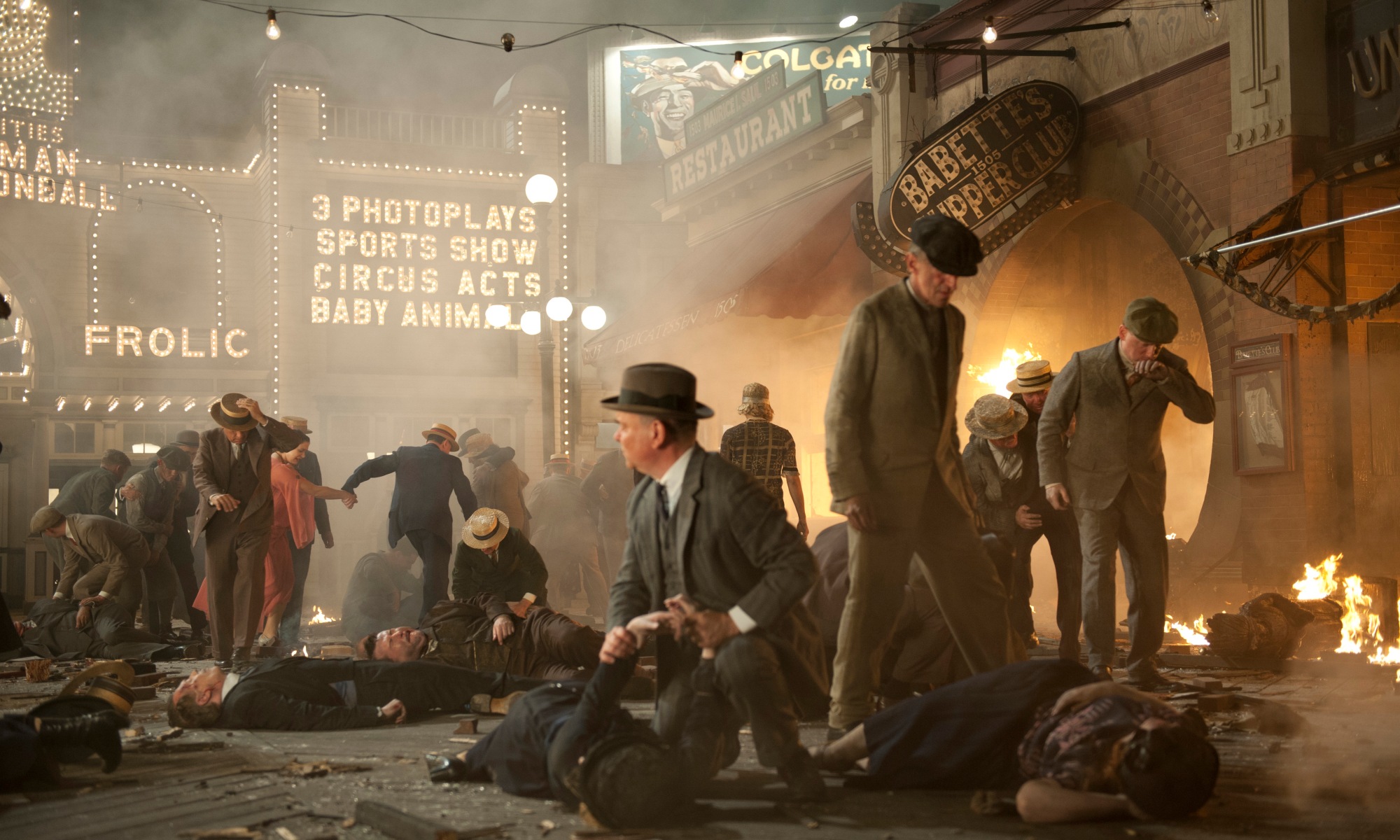
Rusty-voiced, sweet-natured, a tin mask covering up his facial World War I wound, Richard Harrow, as played flawlessly by Jack Huston, is the type of vigilante one might find in a DC Comic book, warts and all. But in HBO’s 1920s epic Boardwalk Empire, he’s a supporting character that creator Terence Winter and his writers transformed from late gangster Jimmy Darmody’s trusted sharpshooter into a human being. For the bulk of this season, Harrow refrained from killing off any bad guys as he wooed a war veteran’s daughter and acted as the surrogate father to Darmody’s orphaned son, Tommy. “Richard knows how to kill. He doesn’t do it well; he does it great,” says Huston about Harrow, who even puts fear in lead Atlantic City kingpin Nucky Thompson (Steve Buscemi) “I reminded Terry that I was getting an itchy finger, and he said, ‘Just wait.’ ”

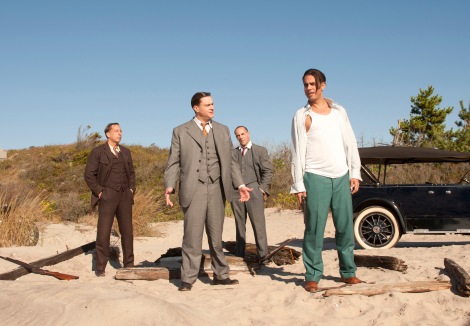
Bobby Cannavale plays Gyp Rosetti, right, a vicious bloodthirsty gangster.

And then the Timothy Van Patten-directed season 3 finale, “Margate Sands,” arrived. In a riveting swinging-camera four-minute gun ballet, Harrow rescues Tommy from his duplicitous grandmother Gillian Darmody’s (Gretchen Mol) whorehouse, which notorious gangster Gyp Rosetti has seized. The payoff: Just as Harrow fakes his surrender, he annihilates the hitman who has a gun to Tommy’s head. “Tim told me, ‘You’re going to be happy with the finale. It’s very Tarantino-esque,’ ” says Huston, who carried around 40 pounds of fake guns, earning cuts and bruises during the scene. “I was meant to shoot nine people, but they kept adding.”

The character of Harrow, from Huston’s nuanced acting to his fireworks finale, is just one example underscoring the cinematic huzzah that punctuated Boardwalk’s third season. So what made this season better than all the others? While the media has long drawn stylish similarities between The Sopranos creator David Chase and his protégé Winter, especially after Boardwalk’s abrupt season 2 finale in which Nucky kills Darmody, it’s clearly evident that Winter came into his own.

Boardwalk Empire“David (Chase) didn’t often engage in wish fulfillment for the audience. If it didn’t work for him for the storyline, he didn’t feel obligated to pay things off. I don’t necessarily feel obligated, but I enjoy setup and payoff,” explains Winter, who would sometimes encourage to payoff storylines on The Sopranos. “I knew Harrow going into the Artemis Club would be a great crowd-pleasing moment. That’s what I’m waiting to see all year is Harrow be the bad ass that we know him as and rescue Tommy. (In season 3), it’s all about that ride and the entertainment and the catharsis.”

Adds executive producer-director Van Patten: “We promised war at the end of episode 11 between Nucky and Rosetti. The last image is of Al Capone and his troops arriving (to help Nucky), and we felt that we had to deliver. I wanted (episode 12) to be part Sam Peckinpah, part Sam Fuller, part Sergio Leone, part Arthur Penn, while referencing Raoul Walsh’s films. When Nucky and (his brother) Eli are trapped in that lumberyard, it felt like a western.”

Nonetheless, one can see Chase’s influence throughout Boardwalk, and it’s that mixture that enables season 3 to rival the gangster and western genres to which it pays homage. Winter told Deadline’s Mike Fleming Jr. 
in a spring AwardsLine interview that one of the takeaways from working with Chase was “dismissing the first five things that occur to you” in the writers’ room in order to keep the story fresh. Case in point: It would have also been a crowd-pleaser to see Nucky enlist Harrow’s help to mow down Rosetti’s gang. However, Harrow operated on his own accord. “That was certainly on the table, and we dismissed that for the very reason that you’d expect that to happen,” Winter says.

Likewise, starting season 3 a year later in the characters’ lives and glossing over season 2 cliffhangers were also nontraditional means of handling unraveled plot. “Starting in 1923 put the characters in a different place physically and psychologically, and this was way more challenging,” says Winter.

But the lifeblood of season 3 belongs to the über-villain Rosetti—a twisted, short-fused, perverted gangster with a fetish for S&M who has his eye on taking over Nucky’s Atlantic City bootlegging empire. Having played lovable lugs like Vince D’Angelo, the boyfriend of Will Truman on Will & Grace, Bobby Cannavale owned Rosetti’s ferociousness, outstripping such hothead turns as James Caan’s Sonny Corleone in The Godfather, and yes, even James Gandolfini’s Tony Soprano. “People told me that they covered their eyes when Gyp came on screen,” says Winter, adding, “Bobby never read for the role.”

Cannavale was one of the few Italian-American actors who Winter never had the chance to work with on The Sopranos, as their schedules never synced. After seeing Cannavale play a heavy, blue-collar type in Stephen Adly Guirgis’ play The Mother**cker With the Hat, “It reminded me why I wanted to work with him,” says Winter. “In the play, he had veins popping out of his head. When you meet Bobby in person, he’s physically intimidating. He understands that predatory way that gangsters have to keep people off balance.”

Unlike the standard HBO villain, Rosetti lacks any redeemable qualities. Heck, in the opening sequence of the third season’s first episode, Rosetti bludgeons an old man to death with a tire iron after he helps him fix a flat, and then steals the guy’s dog. “We never start off with a cold opening like that, introducing a strange character, but we wanted to interject someone in the show that would distinguish it from last season,” says Van Patten.

The birthing of Rosetti by Winter and his team stemmed from the fact that as Prohibition progressed, the decade became darker. The average person began relying on bootleggers for their liquor, especially as their stockpiles ran dry. Competition and profit margins were greater, and the game got dirtier.

“As things got competitive, we needed to put Nucky under the most possible pressure. He needed a nemesis like Gyp. Nucky creates a monster in a subtle moment when he decides he’s not going to do business with him. One misstep with a guy like Gyp, and a mountain grows out of molehill,” Winter explains.

Boardwalk EmpireWith gangsters running around at a fever pitch, one would assume that executive producer Martin Scorsese had a heavy hand this season, however, “He isn’t involved in story,” says Van Patten. “He reads and notes the scripts, sees and notes the cuts. His notes are precision bombing: He identifies the problems right away, as he has an eye for these things.”

While Boardwalk has been a below-the-line juggernaut in terms of wins at the Emmys over the last two years—with directing wins for Scorsese’s pilot and Van Patten’s second-season finale “To the Lost”—the series has also rallied at SAG over the same frame, with back-to-back drama prizes for best ensemble and best actor for Buscemi. This awards season, both are eyeing their third charms in the two categories. The show won at the Golden Globes in its first year out, along with Buscemi, and both are nominated again this year. For the third year in a row, the Writers Guild recognized Boardwalk with a TV drama nom, but the show has only won once in the new series slot last year.

And if the last season of Boardwalk could be considered mind-blowing, season 4 promises to be even more unhinged as Boardwalk heads into 1924, the year that earned the decade’s moniker, “The Roaring ’20s.” It’s a time when fellow gangsters Al Capone, Meyer Lansky, and Charlie Luciano galvanize their reputations as kingpins, and Nucky goes underground to form his own gang. It would seem that Winter and his team’s M.O. is to outstrip the thrills of such gangster forefathers like The Untouchables, but that’s mere flattery, as Boardwalk’s rule of thumb for mastering the genre is quite simple.

“We pull out the stops, and sometimes it does take us three or four episodes to peel the onion,” says Van Patten, “But at the end of the day, we look at each other in the writers’ room and ask each other, ‘Is this entertaining?’ ”

Q&A: Hayden Panettiere On Nashville

Diane Haithman is an AwardsLine contributor. This article appeared in the Jan. 2 issue of AwardsLine.

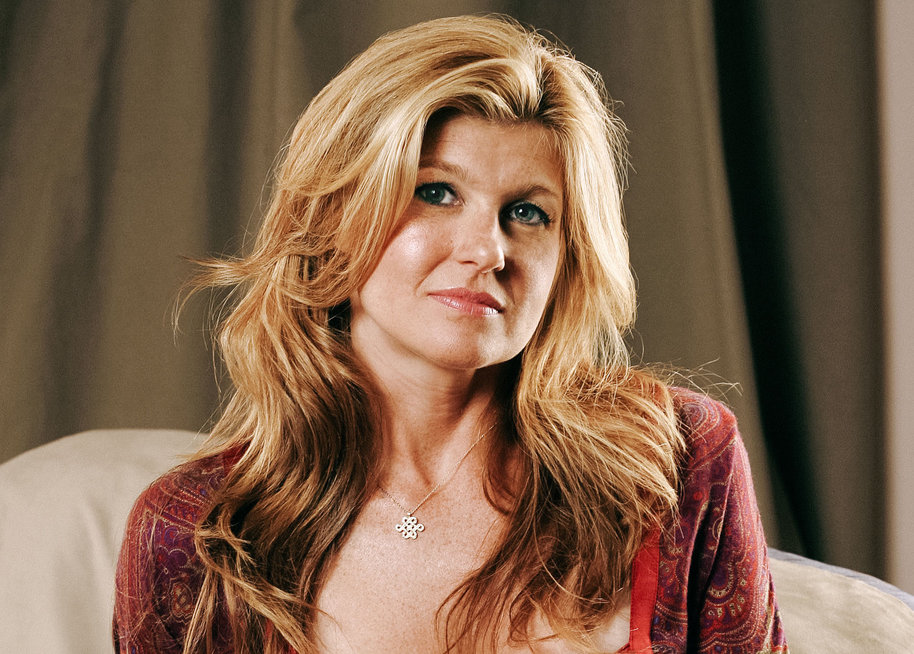
Hayden Panettiere, 23, began her career as a child actor on the soaps One Life to Live and Guiding Light, and met an untimely death as Kirby Reed in Scream 4. But she is perhaps best known as Claire Bennet, the high-school cheerleader with supernatural powers on NBC’s Heroes. She’s trying to change that girl-next-door image in ABC’s Nashville, portraying ambitious, conniving country-pop diva Juliette Barnes, youthful nemesis of old-school country star Rayna Jaymes (Connie Britton). Apparently the catfight chemistry is working: ABC recently handed the freshman series created by Callie Khouri (Thelma & Louise) a full-season order. And both Panettiere and Britton scored big at the Golden Globe nominations: Panettiere netted a nom for best supporting actress in a TV series, miniseries, or motion picture, and Britton is up for best actress in a TV drama.

AwardsLine: This role was a lot to take on with singing. What led you to accept the part of Juliette?
Hayden Panettiere: I love the fact that this character that Callie Khouri created is so multidimensional; there’s so many layers to her. But this was a big deal for me because I really wanted to break away from my character in Heroes. I’m so deeply blessed that I got to play that character, don’t get me wrong, but I knew after that character it would be an uphill battle for people to see me as anything besides the all-American cheerleader.

AwardsLine: As the episodes unfold, we find out Juliette has a dark past that influences her character, but it’s got to be sort of fun to play the bad girl.
Panettiere: Absolutely. But it’s more interesting when you get to play the bad girl with a heart, that back story, that thing that people can find sympathy for.

AwardsLine: What kind of relationship do you and Connie Britton share off camera? Do you try to maintain the tension by staying away from each other?

Panettiere: We definitely are close friends. I feel like the closer you are to somebody, the easier it is to really go after them (on camera) because nobody’s going to take it personally. It may sound silly, because you are acting, but some people are so Method that they won’t develop a relationship with the person they are acting across from. If this show goes on for years, that would be a very difficult person to try not to get along with. We get along brilliantly, and the closer we become, the more fun we have.

AwardsLine: Do you have any favorite “meow” moments?
Panettiere: What we have to say comes off so snarky sometimes! I mean, when they yell, “Cut,” we don’t exactly call each other names, but it cracks me up when Rayna calls me Miss Sparkly Pants.

AwardsLine: If this show lasts for multiple seasons, wouldn’t these two women eventually make peace with each other?
Panettiere: I think you’d be surprised as to the reasoning behind why people don’t get along. I’m not saying I know anything specific, but I have a feeling that there’s something personal, some nerve that Rayna has in her, and at some point people might see that and understand it. But the show does not revolve around this catfight. You cannot survive on a show where the entire thing is revolving around one catfight. You have to bring in something else to sink your teeth into. We have a lot more going on.

AwardsLine: You mention taking on the role because of the multifaceted character Callie Khouri created. What is your impression of her?

Panettiere: She is unbelievable. She is by far one of the coolest but most talented people that I’ve ever come across. I just remember seeing her for the first time, and she was just this long, lean, statuesque woman with the beautiful hair and cream-colored pants and top, these brown riding boots. I just remember being in awe of her, and just how beautiful she was. She has made this show everything that it is. It’s so grounded, and this reality and this world, because Callie has lived in it. She’s experienced it; she’s not somebody who has only heard about it in books and movies.

AwardsLine: With its look at showbiz behind the scenes, does Nashville take its cue from NBC’s Smash?
Panettiere: All of our songs are incorporated into these characters’ daily lives. We don’t break out in song midscene.

AwardsLine: Has anything been said or written about the show that you disagree with?
Panettiere: The only thing that ever kind of drove me crazy was in the beginning there was a lot of speculation that Juliette was completely untalented—it was almost like what was going on behind the scenes of our press was also going on behind the scenes of Juliette’s press. People don’t see her as a true artist, somebody who is talented, they see her as this big moneymaking machine, and she wants so desperately to be respected, for people to know that she is an amazing songwriter and that she can sing. I don’t feel like she would be as interesting a character if she had no talent. She would just be annoying.

Q&A: Connie Britton On Nashville

Diane Haithman is an AwardsLine contributor. This article appeared in the Jan. 2 issue of AwardsLine.

Connie Britton, 45, is a multiple Emmy Award nominee for her roles on Friday Night Lights and American Horror Story. But during one of her typical 16-hour workdays for ABC’s freshman drama Nashville, she says of her first Golden Globe nomination—for best actress in a TV drama series—that it never gets old: “I’m far from jaded about awards nominations.” Britton shares the honor with costar and fellow Golden Globe nominee Hayden Panettiere, 23, and talks about why their onscreen duet seems to work.

AWARDSLINE: What is the appeal of the uneasy relationship between your character, Rayna Jaymes, and her young competitor, Hayden Panettiere’s Juliette Barnes?
CONNIE BRITTON: I was talking to (Nashville creator) Callie Khouri last night, and we were both talking about just how much fun it is, particularly now that Hayden’s character and my character are really engaging. What’s funny to me is, in the first five or six episodes, we didn’t really engage that much. There is something really interesting about these two women in very different places in their lives who are fighting for their lives in different ways.

AWARDSLINE: We hear stories about actors who go to unusual lengths to stay in character on set—fellow Golden Globe nominee Daniel Day-Lewis in Lincoln is a good example. What about you two?
BRITTON: No. (Laughs.) I think Daniel Day-Lewis is one of the greatest actors that we have amongst us right now, but I don’t think if Daniel Day-Lewis was doing television, he could sustain that. We have 22 episodes.

AWARDSLINE: Before the show aired, everyone hailed it as a new Dallas. Is Nashville a soap opera or close to reality?
BRITTON: At first, I resisted the over-the-top elements of the show, and I was really pushing for complex storytelling because I think Nashville deserves that. That being said, there are some big stories in Nashville. Having a spent a little time in Nashville, hearing some of the lore of this town, I’m saying: “We’re playing it safe.”

AWARDSLINE: And yet it’s not the big platinum hair, Dolly Parton, “Rhinestone Cowboy” world.
BRITTON: I really wanted Rayna to be coming from that more simplified core storytelling place of a Bonnie Raitt or a Lucinda Williams. Such amazing women.

AWARDSLINE: How does Nashville compare with another heightened reality you are familiar with, Hollywood?
BRITTON: A friend of mine here, we were talking about the Country Music Awards, and she was saying, “It’s just like an awards ceremony in Hollywood, but everybody’s nice.” I sort of love that. Nashville is where the business is; there are more parallels with Hollywood than I originally thought. But it feels less cutthroat than Hollywood. And frankly, it’s a much smaller town where people have to live together. In Hollywood you can kind of screw somebody over and not really have to see them for a while.

AWARDSLINE: Callie Khouri has been involved in many projects, but I think many women associate her with writing Thelma & Louise, about two women literally on the road to self-empowerment. Are there any parallels here?
BRITTON: I am, and was, and always will be an enormous fan of Thelma & Louise. I really grew up with that being a seminal movie for me. So I’ve always known who Callie Khouri was; that’s why I was so excited when I got this script. Hers is an interesting kind of feminism. It’s not in your face. (In Nashville), it’s dealing with the complexities of being a woman in a society that really isn’t built for feminism. That’s what I’ve always liked about playing Southern women; some of the most fierce women I’ve known were women from the South, yet they are coming from a world that is not very welcoming to their fierceness. I think Callie really confronts those aspects of feminism in a really unique way. It’s a little subversive, actually.

AWARDSLINE: As Hayden Panettiere has said, the show wouldn’t be believable if her character were a truly bad singer. She has to be good or your character would not feel so threatened.
BRITTON: Yeah, completely. It’s not about good voice, bad voice; it’s about style and values and really the culture. Rayna comes from a tradition of country music, and Juliette is feeding into a sort of a pop-culture frenzy, she is representing this new way that people listen to things and look at things based on new media—there’s a lot less storytelling and a lot more bling. Rayna doesn’t really understand it or respect it, but she’s kind of getting knocked on her ass by it, because basically everybody’s saying, “You’ve got to pick up these new ways or you are going to be left behind.”

AWARDSLINE: Did you have any trepidation about not only taking on a singing role, but the role of someone who is supposed to be one of the great country voices of our time?
BRITTON: Terror. It was horrifying. Because I am the least-trained singer in the show, it was really important to me to be really specific about the type of music Rayna sings. It had to be more about the heart and the soul that she brings to the songs than about having the best voice in the world. Honestly, I would never have taken the role if I thought that it would be any other way.

Taylor Swift Plucks Heart Strings With Globe-Nommed Hunger Games Song

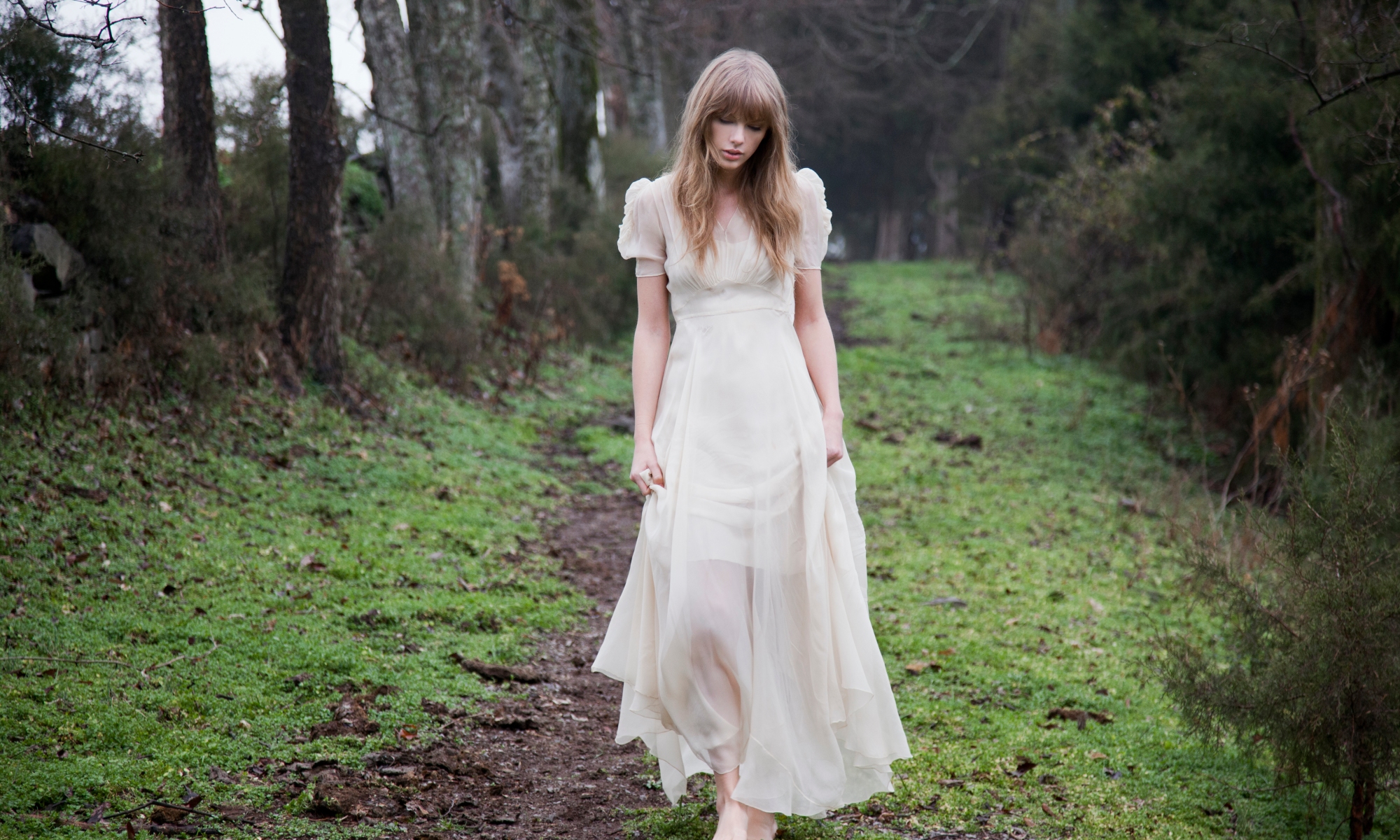
Who better to provide a voice to the well-received feature adaptation The Hunger Games than the generation’s most popular soulful vocalist, 23-year-old Taylor Swift? However, when Lionsgate executives and Oscar-winning singer-songwriter T-Bone Burnett approached Swift to pen an end-credits song, it wasn’t about the marriage of pop brands, rather it was her penchant for confessional folk ballads that caught their ear. Still, synergy doesn’t hurt. Last year, Swift’s album-sales headlines read like the boxoffice numbers of a record-breaking tentpole film: Her fourth album Red marked the second time in a debut week she sold over a million records, a feat no other female recording artist—not even Lady Gaga—can tout.

“They wanted the song to reflect what Appalachian music would sound like in 300 years, and they wanted me to write from Katniss Everdeen’s (Jennifer Lawrence’s character) perspective,” says Swift of the Golden Globe-nominated tune. After watching exclusive clips from the apocalyptic thriller in Nashville, she promptly ripped through Suzanne Collins’ trilogy before teaming up with Burnett and the Civil Wars (Joy Williams and John Paul White). When the four gathered in a studio home that Burnett was working from, “It was just like lighting a match,” she says. “Joy suggested that we write about how Katniss wants to protect and comfort (the youngest Hunger Games contestant) Rue to the very end.” Coincidentally, Swift had been working on a song concept she was calling “Safe & Sound,” hence the tune’s title. Swift wrote the song on the back of her baby Taylor guitar (a brand unrelated to Swift), while the Civil Wars mapped out harmonies, an experience that she says was akin to “watching twins.”

“Throughout the course of writing ‘Safe & Sound,’ we discovered we were also writing about Katniss and her (best friend) Peeta, as well as her relationship with her (sister) Prim,” explains Swift. “The theme of protecting and comforting someone is so broad-reaching throughout the film.”

This is further evident in the song’s refrain, recalling the scene in which Rue dies in the forest before a crying Katniss: Just close your eyes/The sun is going down/You’ll be alright/No one can hurt you now/Come morning light/You and I’ll be safe and sound.

Swift dropped the song on Twitter just before Christmas 2011, three months prior to the Stateside release of Hunger Games. Within two days, the song sold 136,000 copies on iTunes before culminating a tally of 1.4 million last month, in addition to two Grammy nominations (best country duo/group performance, best song written for visual media) and, of course, its Golden Globes best original song nom. Unfortunately, the song was deemed ineligible by the Academy of Motion Pictures Arts & Sciences as it plays as a second end-credits track—a pity because the song, coupled with Swift’s ethereal, touching vocals, truly captures the film’s spirit.

Outside the film, “Safe & Sound” stands on its own with its guitar-stringed heart-wrenching lyrics about undying love against a wilderness setting. Should “Safe & Sound” softly bring to mind Fleetwood Mac’s “Landslide,” that’s no coincidence.

“Stevie Nicks has inspired me in so many ways,” exclaims Swift, who spent time with the iconic artist a few years ago, “I’ll never forget the way she tells a story. There’s so much feeling in everything she does. No wonder that comes through in her songs.”

Q&A: Jodie Foster On Her Cecil B. DeMille Honor

David Mermelstein is an AwardsLine contributor. This article appeared in the Jan. 2 issue of AwardsLine.

Few stars can rival Jodie Foster’s durability. One has to go back to Hollywood’s golden age—to the likes of Judy Garland—to find those who even approach her successful transition from childhood roles to adult parts. And what other child actor started directing after accomplishing that transition? None. Which is why it’s fitting that the Hollywood Foreign Press Association is bestowing on Foster its highest honor, the Cecil B. DeMille Award.

Foster has been with us so long, it’s almost impossible to believe she’s just 50. Amazingly, it’s been 20 years since she won her second best-actress Oscar (for Silence of the Lambs). Her first came three years earlier (for The Accused). But her first Academy Award nomination dates back to 1977, for Taxi Driver, in which she played a young teen prostitute, opposite Robert De Niro and Harvey Keitel.

“I’ve been doing this a long time,” Foster says with typical understatement during a recent phone interview. “And it feels like a long time, but it also feels great. I don’t remember ever starting. My earliest memories are doing commercials and TV. And here comes this celebration of my whole life. So now what? Hopefully there’s more to come.”

There no doubt will be for Foster, who continues to eye both acting and directing projects with an eagerness tempered by discernment. Yet she acknowledges a certain ambivalence regarding her career. “I don’t know if I have the personality for it,” she says. “I’m not sure if I’d not fallen into it, it’s what I’d have done. I mean this mostly as an actor rather than as a director, but I’m one for entirely different reasons from most people. It’s become a psychological evolution. I chose movies based on what I had to learn about myself, not because I had to act. There’s lots of things I’m not interested in, and I don’t want to play parts in those movies.”

Despite the wide range of roles Foster has undertaken and the very different plots of the three films she’s directed, she sees a throughline in her work. “I always feel like I’m making the same movie over and over again,” she says. “Nobody else seems to notice, but I do.” The perspective, though, is markedly different depending on whether Foster is acting or directing. “As an actor, I’m always playing solitary characters,” she says. “But as a director, I’m always making ensemble movies, which focus on lots of people’s lives and how they intertwine. Similar things interest me both as an actor and as a director but in totally different ways. As an actor, I’m attracted to drama; as a director, it’s humor—because it’s the story of my life, and I can’t be that serious about it. Being alone is a big theme in all my movies, both as a director and as an actress.”

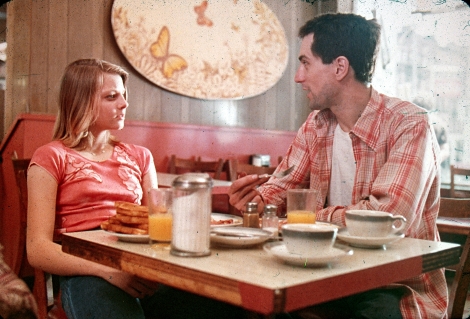
Jodie Foster's first major film role was at age 12 opposite Robert De Niro in Taxi Driver.
Jodie Foster’s first major film role was at age 12 opposite Robert De Niro in Taxi Driver.

The actress credits her mother, Brandy, with laying the groundwork for her transition from family-friendly roles to more serious work, and Taxi Driver (1976) was the turning point. The film’s producer, Michael Phillips, remembers director Martin Scorsese’s determination to cast Foster, an instinct that really paid off. “She was only 12 and kind of shy,” Phillips recalls. “But she was very intelligent and quite mature. She just had the acting chops. She was very natural in the character and seemed unthreatened and undaunted by the sexuality. That was one of the big issues—how comfortable she would be with that material. She was doubled for the sexual material; some of it her sister did. But she was exposed to blood and violence. It was just her politeness that gave away her age. She was impossible not to like and respect, and it was amazing how much self-possession she had at that age.”

By the time Foster appeared in The Accused (1988), there was no denying that a major actress had arrived. Yet she insists that even after she made that film, she had doubts about spending the rest of her life in pictures. “Right after The Accused, I was heading to grad school and thought that was the last of those. Part of me was disappointed in my performance. Then I saw the movie and realized that a lot of it was about fear and a lot was unconscious. And also I thought, Literature doesn’t wake me up at 5 in the morning. So grad school wasn’t going to do that.”

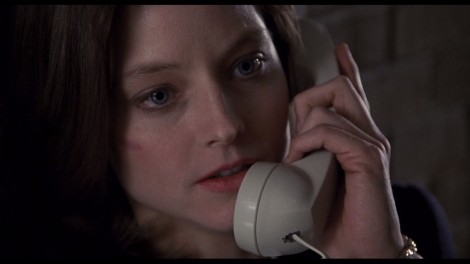
Foster won her second best actress Oscar for Silence of the Lambs.

Her perseverance in Hollywood was rewarded with The Silence of the Lambs (1991), which won five Academy Awards, including best picture. Jonathan Demme directed Foster to her second best actress Oscar, yet he credits her with helping him shape his conception of the film. “The first time I met Jodie,” Demme says, “we hadn’t started casting yet. But she reached out to express her deep regard for the book. She described it as the story of one young woman desperately trying to save the life of another young woman, with these roadblocks put up by all these men. And something really clicked for me when she said that, and that became the theme that guided me in making the movie, and it impacted endless decisions. I was so moved by what she said that I named my production company Strong Heart in honor of Jodie’s thematic inspiration. I treasure how she oriented me as how best to tell this story.”

Though modest about her two Oscars, Foster willingly acknowledges their impact on her career. “It’s like winning the lottery,” she says. “It doesn’t mean you’re a better person. At the same time, after my first Oscar, I was able to say, ‘OK, I’m doing this incredibly risky thing. I’m going to try and direct.’ It gave me some kind of passport that I might not have had. But I also think the reason you were given the honor is because you played from the heart, not because you followed a rulebook. And you learn you have this great saber, which allows you to make decisions against the tide. Silence of the Lambs was not something people expected me to do. But I loved this book and this character, and the film operates at such a high level. And by the way, I just won an Oscar, so too bad. It was really the best decision I could have made.”

The impact of those wins resonates even now, for the avenues they opened offered Foster a way to remain fulfilled in Hollywood. “I think it’s something I’ll probably do my whole life and also something I need a break from a lot,” she says. “But there’s lots of different ways to tell stories and lots of different ways to make films. I’ve only directed three movies, and I’ve got a lot to learn, and there’s a lot ahead for me there. It’s hard getting movies off the ground—harder and harder every year. My goals are humble as a director. They’re really about having the films as an expression of who I am. As an actor, you can’t really do that. You do it and move on. But directing, well, that’s me. It requires a real 100 percent investment in all levels of the storytelling.”

Foster isn’t shy about owning up to missed opportunities, even if she isn’t eager to mention specific projects. Yet she remains optimistic. “I’ve had a weird career, and I get a lot of grief for it,” she says. “What I choose is just really personal, especially as a director. I can’t just go, ‘I like scuba diving, so let’s do a scuba diving movie.’ It has to be something I would die for. And because it’s the story of your life, there are the popular parts and the parts nobody likes and the parts people don’t understand. But I have to make those movies, too.”

SAG Sticks to Favorites While Globes Anoint Newbies

Ray Richmond is an AwardsLine contributor. This article appeared in the Jan. 2 issue of AwardsLine.

The Golden Globes are the awards that love you immediately and without reservation. The SAG Awards are the ones that—while somewhat more tentative—like to honor their favorites repeatedly. Those tendencies held form yet again in the TV nominations announced last month, bringing a certain consistency to exercises that typically lack it.

Katharine McPhee stars in Smash.

Indeed, if you’re looking for a red carpet to be rolled out to welcome the new kids, the Hollywood Foreign Press Association is your go-to gang. Rarely does a first-year show with even moderate buzz escape Globe voters’ attention. This year, it heaped attention on freshmen including HBO’s Aaron Sorkin cable-news drama The Newsroom and star Jeff Daniels; the HBO comedy Girls and its multihyphenate young star Lena Dunham; Julia Louis-Dreyfus from the rookie HBO comedy Veep; star Don Cheadle from Showtime’s House of Lies; lead Connie Britton and supporting player Hayden Panettiere from the ABC soap Nashville; and, most surprisingly, a comedy/musical series nod for NBC’s Smash.

The inclusion of Smash was perhaps easy to predict, because it’s the rare comedy/musical series that is both comedy and musical. It took the spot previously held down by Fox’s Glee, the category winner in 2010 and ’11 that failed to make the Golden Globe cut this year. Evidently, only one musical comedy per year is permitted.

But shaking things up is simply the HFPA being the HFPA. And often, the omissions are often as noteworthy as the inclusions. For instance, three-time Globes victor Mad Men from AMC was unable to crack the top drama list for the first time. HBO’s Game of Thrones was in last year—its first year of eligibility—and out this time, along with star Peter Dinklage.

There also seem to be certain shows that simply don’t resonate with the Hollywood Foreign Press as they do elsewhere. It never nominated Everybody Loves Raymond for comedy series, and star Ray Romano was nominated just twice (both losses). Moreover, for the first time this year, the Globes finally honored AMC’s Breaking Bad for drama series. Star Bryan Cranston wasn’t nominated for his three-time Emmy-winning role until 2011.

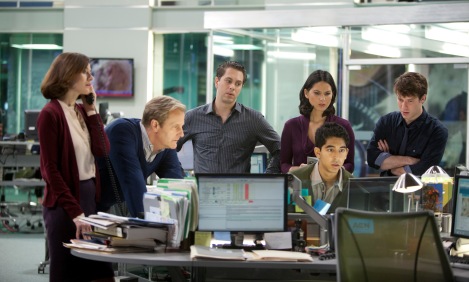
Aaron Sorkin's The Newsroom earned Globes attention in its first season of eligibility.
Aaron Sorkin’s The Newsroom earned Globes attention in its first season of eligibility.

As for the SAG Awards, it, too, likes to honor the ensembles of series fresh out of the starting gate along with their individual stars, though not so much this year. Daniels from HBO’s Newsroom is alone in cracking the list on a first-year series. It ignored Veep and Louis-Dreyfus as well as the white-hot Girls and Dunham, not to mention Fox’s New Girl and star Zooey Deschanel. Youth doesn’t seem to carry much weight with this crowd.

On the other hand, no one will ever be able to charge SAG with ageism, unless it’s the reverse kind. Betty White, who turns 91 on Jan. 17, has won two consecutive comedy lead SAG honors in a row for her role on TV Land’s Hot in Cleveland and is nominated with a chance for a third. Steve Buscemi, age 55, might make it three wins in as many nominations for his work in the HBO mob drama Boardwalk Empire. And Alec Baldwin, age 54, has won the comedy actor trophy an astounding six consecutive times and could make it seven in a row this year for NBC’s 30 Rock. He’s been a relative flop at the Globes, taking home a mere three.

Yet while the SAG Awards look to be a mere popularity contest on the one hand, on the other it has yet to honor with a win any cast member from ABC’s Modern Family (though the show has won the best comedy ensemble award two years in a row). It’s nominated Ty Burrell, Sofia Vergara, and Eric Stonestreet again. Yet this is the first year that two-time Emmy victor Jim Parsons has received an individual SAG nom for the CBS comedy The Big Bang Theory.

It’s clear that there have been some curious irregularities in SAG voters’ choices in the awards’ 18-year existence dating to its first year in 1995, when it failed to recognize a freshman NBC comedy called Friends. It also completely snubbed the cast of NBC’s The West Wing in 2000, its initial eligibility year. But voters corrected that oversight the following two years, when the ensemble won for drama series along with individual leads Allison Janney and Martin Sheen.

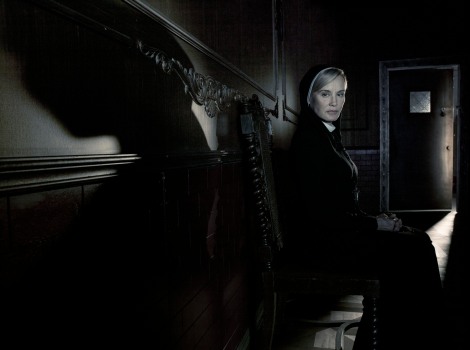
Jessica Lange earned SAG and Globe Awards last year for her work in American Horror Story.

A similar phenomenon could be gaining speed at the SAG Awards this time for Showtime’s Homeland, which was the darling of both the Emmys and the Globes in 2012. It was shut out at the SAG Awards in its maiden season a year ago, like West Wing before it. This time, it’s nominated for drama ensemble along with actor/actress Emmy winners Damian Lewis and Claire Danes. It would surprise no one were voters to make amends by honoring the much-praised series with three statuettes.

The Globes set the Homeland awards bandwagon in motion with wins a year ago for both the series and Danes. It’s back this time looking for two in a row, taking on The Newsroom, 2011 winner Boardwalk Empire, Breaking Bad, and PBS’ Downton Abbey, making a smooth transition from the movie/miniseries to drama series category with a trio of noms. Conversely, FX’s American Horror Story: Asylum had a tougher time of it in switching the other way, from drama series to movie/mini. After landing a drama honor in ’12, it earned one nom for star Jessica Lange this time. (Lange also won for supporting last year.)

If recent Globe history holds, it might be wise to bet on the newbies, as the Hollywood Foreign Press often appears to look upon even second-year shows as aging veterans. That would mean Smash or Girls for comedy/musical and Newsroom for drama—all seeming longshots on paper, but not with the HFPA.

In 2012, all six series lead and supporting acting winners at the Golden Globes represented first-year shows: Laura Dern (the HBO comedy Enlightened), Matt LeBlanc (Showtime’s comedy Episodes), Kelsey Grammer (the Starz drama Boss), Danes (Homeland), Lange (Horror Story), and Dinklage (Thrones). If we extrapolate this trend to 2013, it would mean Cheadle (Showtime’s House of Lies) has the inside track for comedy actor, with Louis-Dreyfus and Dunham battling it out for comedy actress.

But just when you think you have the Globes figured out, the voters defy conventional wisdom and their own history to cross up the experts. Never was that more clear than when NBC’s Friends earned its first win in 2003 for best comedy actress Jennifer Aniston. The show, first nominated in its second year, saw five best comedy TV shows noms, but zero wins in that category.

The SAG Awards, by contrast, seem at least somewhat easier to gauge. And again, the trend is that the guild likes to honor those whom it honors over and over again. Besides Baldwin and White, Maggie Smith has four nods this year alone—two for her work in the film The Best Exotic Marigold Hotel, two for Downton Abbey. Cranston has three (two for Breaking Bad, one for feature ensemble in Argo). Then there is Edie Falco, who just reeled in another pair of nominations for her work in Showtime’s Nurse Jackie. That brings her career total to a whopping 19, tying David Hyde Pierce for the SAG career noms record.

Another thing that distinguishes SAG is a dogged determination to go its own way and follow no one else’s lead. This was obvious back in 2006, when the awards permitted David E. Kelley to submit for comedy (rather than drama) consideration for his ABC hour Boston Legal. It landed four—for comedy ensemble as well as stars James Spader, William Shatner, and Candice Bergen—while winning none. It submitted as a drama the following year. This year, the guild refused to allow American Horror Story to submit as a miniseries, categorizing it as a drama ensemble. Lange earned a nomination; the series ensemble did not.

One trend that continued for both the SAG Awards and the Globes is the cable domination in drama and broadcast in comedy, a direction that doesn’t figure to be changing anytime soon. SAG comedy is still about 30 Rock (Baldwin, three-time winner Tina Fey), Modern Family, Parks and Recreation (Amy Poehler), and The Big Bang Theory, while drama has only Julianna Margulies from CBS’ The Good Wife breaking the cable-PBS logjam. In the Globes, no freshman broadcast series has generated a single top drama nod since NBC’s 
Heroes in 2006.

But it’s worth pointing out that half of the 10 lead comedy acting nominees at the Globes are featured on cable shows as stars: Louis C.K. and Dunham generate substantial buzz and critical acclaim with their personally crafted half-hours.

What about longform? As usual, it’s dominated on both the Globes and SAG lists by HBO and its made-for-TV movies Game Change, Hemingway & Gellhorn, and The Girl along with stars including Nicole Kidman, Clive Owen, Julianne Moore, Woody Harrelson, and Sienna Miller. That’s not to mention the mega-rated History Channel mini Hatfields & McCoys and its lead Kevin Costner.

Having a feature-star pedigree is no guarantee of success at either the Globes or the SAG Awards, however, what seems to help is youth (if you’re a series) and age (if you’re an actor). And it never, ever hurts to be named Alec Baldwin.