Moments In Oscar History, Part 1: The Producers

In honor of the 85th Academy Awards, AwardsLine is spotlighting memorable moments and winners from the last eight decades. This is Part 1: The Producers. Part 2 will be Actors & Actresses; Part 3 will be The Directors.
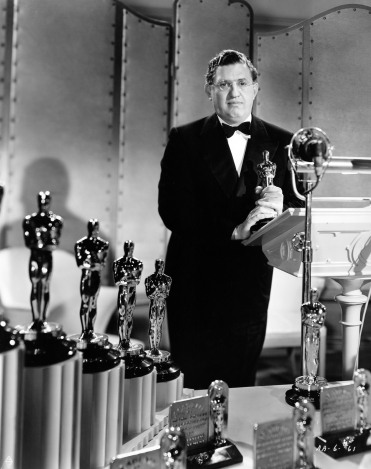
David O. SelznickDavid O. Selznick, 1940: The 12th Academy Awards took place at the Ambassador Hotel on Feb. 29, 1940, honoring a year that produced some of the most enduring films in history. Not only did David O. Selznick’s Gone With the Wind earn a recordbreaking eight statuettes—including picture, director for Victor Fleming, and actress for Vivien Leigh—but other well-known classics enjoyed nominations, including Dark Victory, Mr. Smith Goes to Washington, Ninotchka, and The Wizard of Oz. Frank Capra was both a nominee and director of the show, having sold the rights to a documentary of the proceedings to Warner Bros. Bob Hope hosted for the first time, although the Los Angeles Times eliminated some of the suspense by printing the winners in its evening edition, which attendees could read on the way to the ceremony. Robert Donat earned a best actor award for Goodbye, Mr. Chips.

“Paramount executive Y. Frank Freeman was called upon to bestow the best picture award. Since there was no longer any question as to what was going to win, Freeman kidded, ‘The only reason I was called upon to give this honor is because I have a Southern accent.’ Handing Selznick the award, Freeman drawled, ‘I present this trophy to you, David Selznick. But David, I never saw so many soldiers as were used in Gone With the Wind. Believe me, if the Confederate Army had that many, we would have licked you damn Yankees.’”

–Excerpt from Inside Oscar (Damien Bona, Ballantine Books, 1996) detailing David O. Selznick’s best picture Oscar acceptance for Gone With the Wind, which went through two directors—George Cukor and Sam Wood—prior to Victor Fleming.
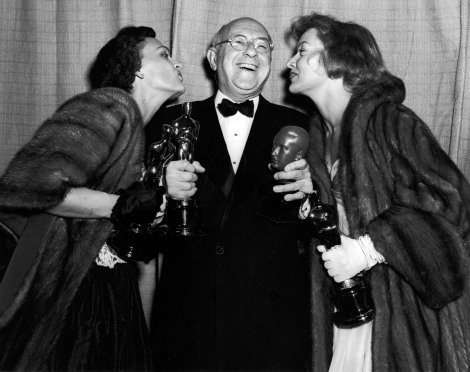
Cecil B. DemilleCecil B. DeMille, 1953: The 25th Academy Awards ceremony took place March 19, 1953, at the Pantages Theater. It was hosted by Bob Hope—his sixth time as emcee—and the ceremony aired on television for the very first time, despite the movie industry’s reticence to embrace the new medium. Although commercial TV had only been around for about five years, the Oscar telecast drew the largest audience to date. Gary Cooper won best actor for High Noon; Shirley Booth was best actress for Come Back, Little Sheba; and best director was John Ford for The Quiet Man.

“On behalf of the thousands that it took to make The Greatest Show on Earth, I thank you for them. For the stars and the electricians, for the circus people, for their bravery. I thank you for all of them because I am only one little link in a chain that produced that picture. And I’m very happy for them. Thank you.”

Cecil B. DeMille (with Katherine DeMille Quinn, left, and Gloria Grahame) accepting the 1952 best picture Oscar for The Greatest Show on Earth. He earned the Irving G. Thalberg Memorial Award that same year. His only other statuette was an honorary Oscar in 1950.
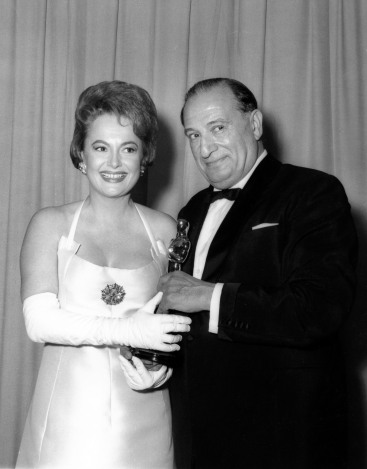
Sam SpiegelSam Spiegel, 1963: The 35th Academy Awards took place April 8, 1963, at the Santa Monica Civic Auditorium, and Frank Sinatra had hosting duties for the first time. Lawrence of Arabia was the big winner of the night, taking home seven statuettes, including picture and director for David Lean. Best actor was Gregory Peck for To Kill a Mockingbird and best actress was Anne Bancroft for The Miracle Worker.

“Ladies and gentlemen, there is no magic formula for creating good pictures. They are made with the serious, concerted hard work by everyone connected in the making of them: The writer, the director, the technicians, the actors, thousands of employees off the picture during the making of it. In behalf of all of those who sweated months in the desert to create this picture, I deeply, sincerely thank the voters of the Academy and proudly accept this honor, proudly and humbly. Thank you.”

Sam Spiegel (with Olivia de Havilland) accepting the 1962 best picture Oscar for Lawrence of Arabia. He won two other Oscars, for 1954’s On the Waterfront and 1957’s Bridge on the River Kwai, plus earned the Irving G. Thalberg Memorial Award in 1964.
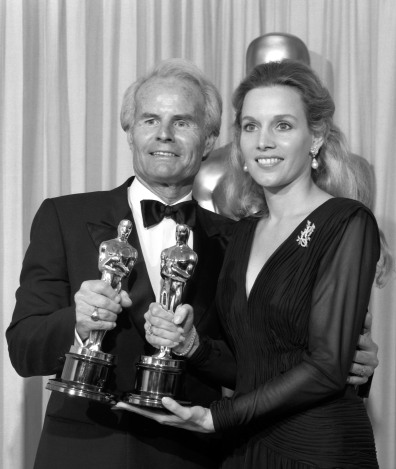
Richard and Lili ZanuckRichard D. & Lili Fini Zanuck, 1990: The 62nd Academy Awards took place March 26, 1990, at the Dorothy Chandler Pavilion, with Billy Crystal taking his maiden voyage as host. Longtime telecast producer Gil Cates held the reins behind the scenes for the first time, as well. The low-budget favorite Driving Miss Daisy earned a total of four Oscars, including best actress for Jessica Tandy and best picture. Daniel Day-Lewis took home best actor for My Left Foot, and directing honors went to Oliver Stone for Born on the Fourth of July.

“Thank you, Academy. We’re up here for really one very simple reason, and that’s the fact that Bruce Beresford is a brilliant director. It’s as simple as that.”[Ed. note: Beresford did not receive a directing nom that year].

—Richard D. Zanuck accepting the 1989 best picture Oscar for Driving Miss Daisy. He earned one more Oscar in 1991, the Irving G. Thalberg Memorial Award.

“I hope I’m as religious all the rest of the year as I’ve been the last two months. I would very much like to thank the Academy for honoring us and making my mama so proud. Thank you.”

—Lili Fini Zanuck accepting for Driving Miss Daisy.
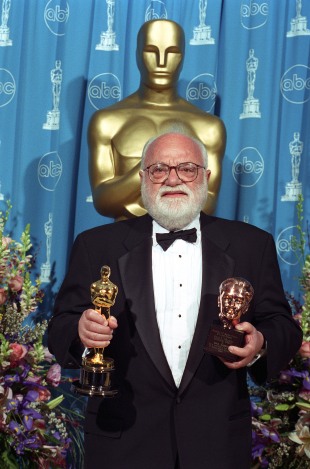
Saul Zaentz Saul Zaentz, 1997: The 69th Academy Awards took place March 24, 1997, at the Shrine Auditorium. Billy Crystal, by now a familiar face at the telecast, hosted for the fifth time. But the ceremony did have a first: No major studio took home any Oscars in the major categories. The picture and director prizes went to The English Patient; best actor was Geoffrey Rush for Shine; and best actress went to Frances McDormand for Fargo. All were independently produced features.

“I said my cup was full before, now it runneth over. I’d like to thank actors. I love actors. Producers are supposed to not be in love with them, but I love ’em. And I love writers and directors, too. And everyone who worked on the picture, for what they did in making the picture happen. When we were shut down, ran out of money, everyone stayed there in Italy, without pay. Then Harvey and Bob Weinstein came through and financed the picture—we had final cut, though.”

—Saul Zaentz accepting the 1996 best picture Oscar for The English Patient. At the same ceremony, he also earned the Irving G. Thalberg Memorial Award. English Patient marked his third best picture win following 1975’s One Flew Over the Cuckoo’s Nest and 1984’s Amadeus.
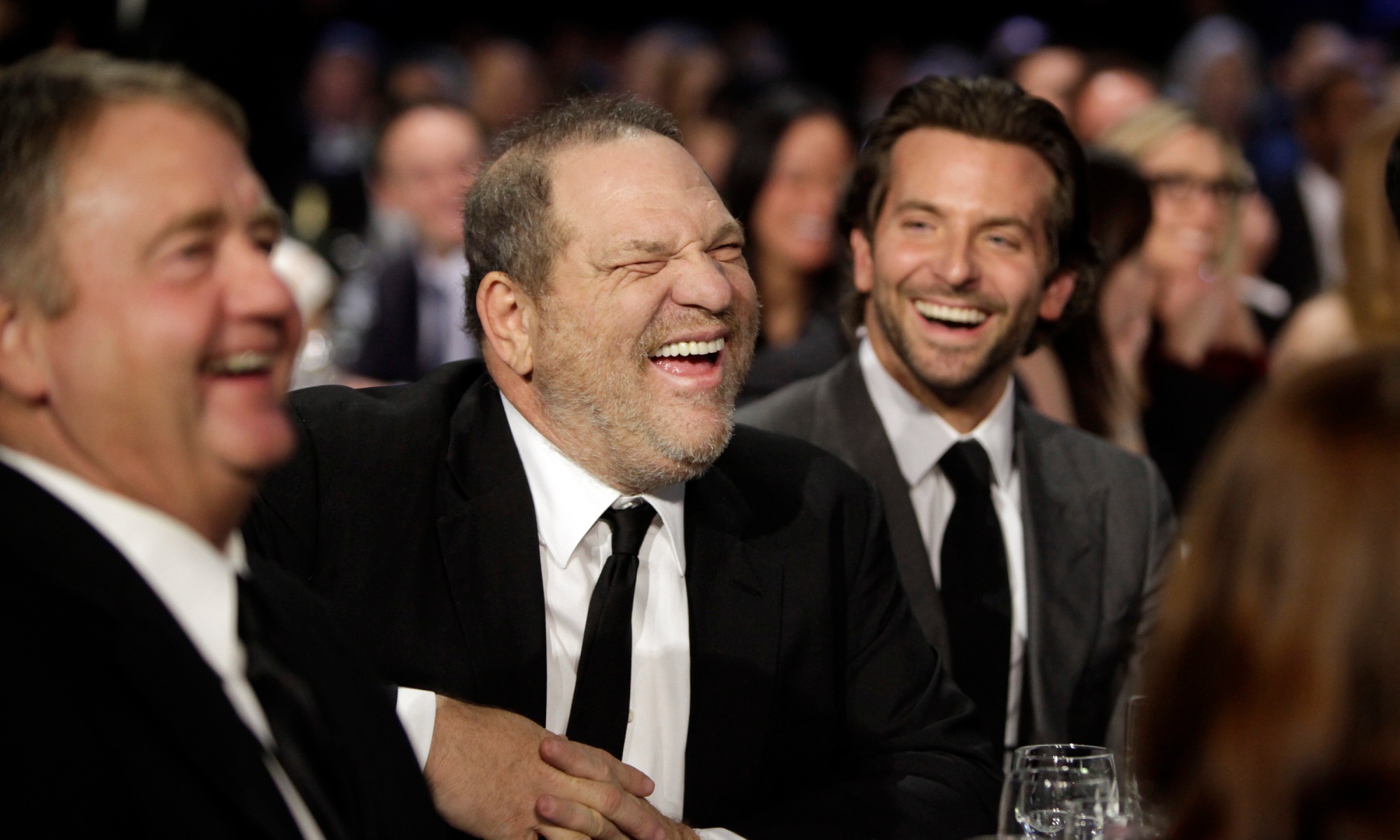

Q&A: Harvey Weinstein On His Contenders

Mike Fleming Jr. is Deadline’s film editor. This article appeared in the Feb. 6 issue of AwardsLine.

When Harvey Weinstein sat down at Sundance for what has become an annual interview with Deadline, he looked as tired as I felt. He, David Glasser, and the rest of the team stayed awake all night to make a splashy deal for Fruitvale, one of the best-liked titles at Sundance. A fixture at this festival since he helped turn it into a lucrative market back in 1989 when he bought and found crossover success with Steven Soderbergh’s sex, lies & videotape, Weinstein is several years removed from reports of money problems and a studio that had to refocus because he was preoccupied with other businesses. The reigning two-time best picture Oscar champ has two films in this year’s wide-open race; and he’s making a fortune on a film he’s not releasing, The Hobbit, because of gross points he took to allow Peter Jackson shop The Lord of the Rings. He discusses politics, Sundance, and of course the Oscars, though remains circumspect on the latter, fully aware that the voting period is in full swing.

AWARDSLINE: And here I’d read in The Hollywood Reporter that you’d be at Barack Obama’s inauguration today. On behalf of Deadline, thanks for cancelling. He’s the leader of the free world, so this can’t be about me. Is Nikki Finke that powerful?

HARVEY WEINSTEIN: (Long pause). I’ll say yes. (Laughs.) The thing I love about Nikki Finke is, I’ve got Silver Linings Playbook in its 12th week, grossing $13+ million. Unheard of for a movie to complete the platform it had and go wide like this, and it kills it, the No. 3 movie in the country, beating all the new releases. Does she write, “Outstanding!” “Boy they were smart!” “God, they’re going to do $100 million,” or “Shit, I was wrong”? Nothing. The movie’s at $58 million now, and we’re six weeks until the Oscars. Silver Linings is going to gross $100 million. And when it does, I suppose she’ll just say, “Silver Linings grossed $100 million.”

AWARDSLINE: You’ve had the best picture winner two years running. This year, two of the nine nominated pictures are yours. Make a case why Silver Linings Playbook and Django Unchained would each make a worthy winner. 

WEINSTEIN: I don’t want to do that. Anyone who talks about this Oscar race has to deal with the fact that this was such a good year for movies that, who knows? Life of Pi, brilliant—Ang Lee at his absolute best. Lincoln’s a masterpiece. Ben Affleck hit it out of the ballpark with Argo. Zero Dark Thirty. Amour, amazing, and those guys did such a good job getting that film noticed and nominated. Beasts of the Southern Wild, Les Misérables. Stupendous year.

AWARDSLINE: Let’s attack it another way. You worked on Silver Linings Playbook for years, and it started as a Sydney Pollack project. He couldn’t crack the idea of a comedy with a bipolar protagonist. He brought in David O. Russell, who made it work. What was the creative breakthrough?

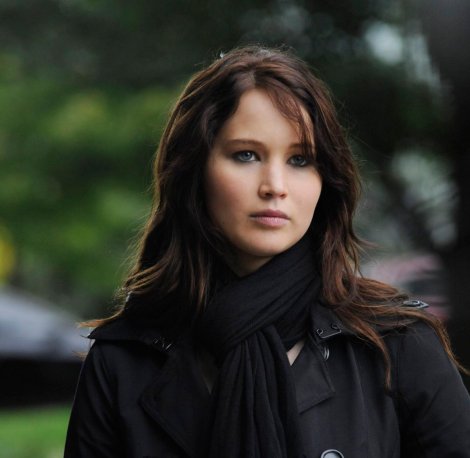
WEINSTEIN: Here was the eureka moment: People who are bipolar or depressed or are borderline don’t usually say, “Hey, that’s me.” The same way stutterers felt before The King’s Speech. They hid it in shame. The movie destigmatized that, same as The King’s Speech did. David O. Russell’s son, as he’s admitted, is borderline. And he one day said to him—and this was the key that unlocked the movie—“I don’t want to live in this world.” To hear that as a father, you can just imagine how he felt. And he wrote this to give hope to people who have this problem. Everyone in this movie has something. Bradley Cooper’s character is bipolar, Jennifer Lawrence’s character has problems, and Bob De Niro’s character is obsessive compulsive. It is no day in the park, but David used humor beautifully to deal with an important subject, in a way that gives people hope. Sydney going to David was serendipitous for all of us. This is the last project for Sydney and Anthony Minghella, the final project for two exceptional men who influenced our industry in an incredible way. This was Sydney’s more than Anthony’s; it’s really Sydney’s last hurrah and that means a lot to us. And of course, Django means a lot to us because it’s Quentin.

AWARDSLINE: People seem to tiptoe around controversy during Oscar voting. Anybody who read Quentin’s Django Unchained when it circulated two years ago could see what was coming, from the violence to the degradation of slaves, to the used of the N-word, to the spaghetti-western style and humor. When media reports count the number of times the “N” word was used and play that as big news, how much harder does that make it for you during this voting period?

WEINSTEIN: The movie has had champions from Jesse Jackson to Al Sharpton to BET to the NAACP; it got five Oscar nominations including best picture. The people who are for it are much more influential than the people who are against it, and they’ve put out a lot of those early fires started in some cases by people who hadn’t even seen the film, which is irresponsible. The “N” word was in Lincoln, too, because that’s what they were called. It was in Roots. They weren’t called African-Americans then; the reference was way more derogatory.

AWARDSLINE: Was Quentin robbed of a nomination for director?

WEINSTEIN: I don’t want to use the word “robbed,” but Quentin Tarantino not in the running for best director? He is one of the greatest directors of our time. Here’s what I think happened on Django. We finished the movie Dec. 1. We didn’t show it until a few days later. The race was early this year: The voting cutoff was Jan. 3. We tried to show it to people in theaters, not on DVD. It’s an epic movie and that man put his whole life and heart into this. It’s his most important movie, his most important subject matter, and the idea of DVDs stopped me cold.

AWARDSLINE: What do you mean? Even I have an Oscar DVD.

WEINSTEIN: I delayed them. I wanted people to see it on the big screen. I told Quentin we’d probably pay the price at the Oscars, but it was the right way to see an epic period movie about a man who does not give up. Eventually, we gave out the DVDs, but we paid the price for being late. We paid no price as far as the gigantic business the movie’s doing. It’s the biggest of Quentin’s career. After we put our heart and soul into the movie, the Oscar campaign was secondary. But make no mistake about it—we got five nominations including best picture, and we only had one week. We sent the DVDs out on Dec. 17.

AWARDSLINE: The first script had an even harsher depiction of how slave women and Broomhilda in particular were used for sex by their masters, and how male slaves were used in gruesome fights to the death to entertain those masters. Did you ever say, “Quentin, I don’t know”? After all, you have been in business with him his whole career, and you’re the one who markets these movies.

WEINSTEIN: Quentin is so educated on the subject that the original idea for this wasn’t even a movie. Ten years ago, he spoke to me about how Birth of a Nation had been lauded and yet there was this strand of racism in it that had been ignored by major critics who’d put it at or near the top of their all-time best lists. I watched Birth of a Nation and suggested that he do a piece for The New Yorker, a 30- or 40-page treatise. You know Quentin, he can write like any film professor. He writes brilliant scripts, and trust me, I read pages of the treatise. It was astounding. And the amount of research he put into the slave era is astonishing. If anything, I’m the one who said to him, “If you really want to show slavery, show it.” It was worse than what we put on that screen. Way, way worse. All I said was, “We’ve got to find a way to get an audience inspired by this, to do their own research, but not turn them off at the same time.” I knew Quentin knows this subject better than anybody, and when you’ve got someone like that who wants to bring that incredible knowledge to the screen, you just let them be.

AWARDSLINE: What about Paul Thomas Anderson’s The Master? Why didn’t it click with a wider audience?

WEINSTEIN: I probably could have marketed it better. I probably should have prepared the audience. We opened up to the highest arts per screen ever, and I just think the audience had trouble with the movie. They needed to be guided. I was so enamored with the film that I didn’t think the audience would have that trouble. Other people around me did say the audience was going to have that trouble but I personally loved the movie and Paul. Maybe I would have done him more of a favor being a better devil’s advocate, instead of a cheerleader. That is what I always think a distributor should be, a cheerleader and not a devil’s advocate. I seem to do better when I’m devil’s advocate. I do think the film will live stand up and have a long life down the line.

AWARDSLINE: Everybody says you do this Oscar campaigning the best.

WEINSTEIN: It’s always about the movies. I don’t know what people think we’re campaigning. Where? Have you seen me campaigning?

AWARDSLINE: No. Well, for Obama.

WEINSTEIN: That’s about the only campaigning I’ve done this year and last.

AWARDSLINE: What prompted this political activism?

WEINSTEIN: I was cursed with it when I went to college. I had two Irish roommates, Dennis Ward and Eugene Fahey. Eugene is now a New York State Supreme Court Judge, one of the highest in the state; Dennis is a constitutional lawyer. Instead of going out and having a good time like I should have in those college years, I went with these guys as they ran the campaign for the mayor or the councilman and I’d be out there hanging posters and handing out stickers. Politics has been part of me since I was 17, when I met those guys. They still call me every five minutes. There’s always another issue, another problem. We should have been in more bars having fun, and instead we were in town hall meetings.

AWARDSLINE: How has your flair for marketing and organization helped in being an ally for the president or other politicians? What has been most gratifying?

WEINSTEIN: The concert for Hurricane Sandy was more gratifying than anything I’ve done in movies. We raised over $60 million in one night. Jim Dolan, John Sykes and I produced that show. This started the same way as the 9/11 concert. I was in Los Angeles, watching Hurricane Sandy on television. My grandma used to have a little cottage in Rockaway. We didn’t go to the French countryside back then, you know? The Weinstein family was packed into this Rockaway bungalow. I’m watching the TV and there is no Rockaway. The boardwalk was floating in the water. I called Jim Dolan and said, “We gotta go do something.” So where was I campaigning for movies? I was producing that concert around the clock, 24/7, right after the election.

Foreign Language Nominees Tell Intimate, Personal Stories

David Mermelstein is an AwardsLine contributor. This article appeared in the Feb. 6 issue of AwardsLine.

If one thing links all five of this year’s nominees for the foreign film Oscar, it’s that the director of each picture was driven to make his movie because of strong, deeply personal feelings. These five films—a varied batch if ever there was one—have nothing in common in terms of where and when they are set, but they all deal, unapologetically, with powerful emotions. And those feelings are expressed not only by the characters in these films, but also by their creators.

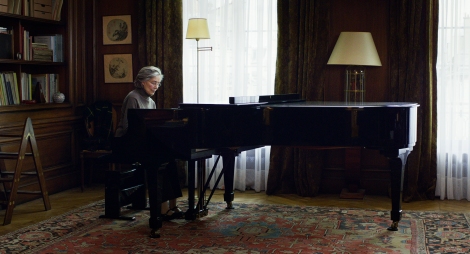
The French-language Amour follows a husband who must care for his ailing wife.

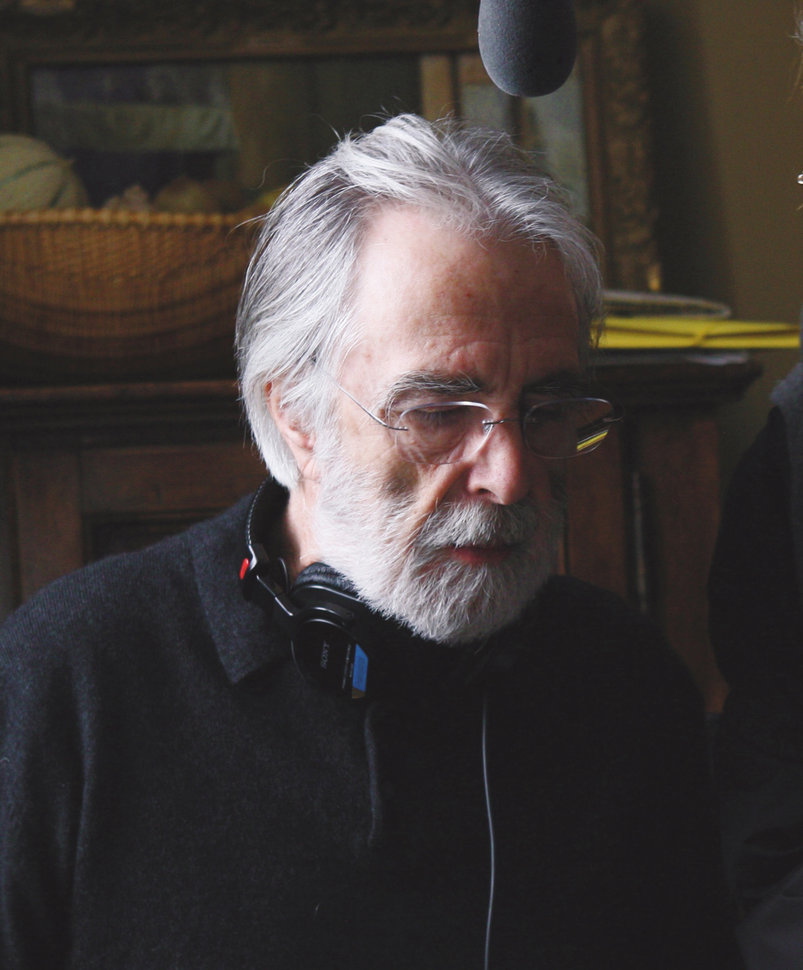
Perhaps the most obviously personal is Michael Haneke’s Amour, which achieved the rare feat of earning best picture and director noms, as well. The film has been cited for, among other things, its unblinking look at the degradations inflicted by illness on an aged couple. The German-born writer-director says that his recollections of a beloved aunt’s increasing infirmity inspired him to make the film. “I was forced to look on as someone very close to me suffered, someone for whom I cared very much,” he says, noting that the specifics of his aunt’s condition were not replicated in the movie. “What’s shown in the film is the product of lengthy research and my imagination.”

Yet one especially chilling aspect of his aunt’s situation—her asking him to assist in her suicide—was strongly echoed in the film. “Of course I had to tell her I was unable to do it,” Haneke recalls, “because I would have been put in jail if I had done it. I was grateful for that alibi, for I don’t know if I would have had the strength to do it otherwise. But she did it anyway, without my help.”

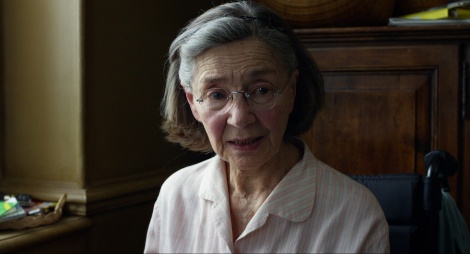
Asked whether he himself—now age 70—worries about a fate similar to that faced by the principal characters in Amour (portrayed with uncanny and moving effect by octogenarians Jean-Louis Trintignant and Emmanuelle Riva, who earned a best actress nomination for the role), Haneke responds wryly and invokes another, very different, master filmmaker. “Billy Wilder was asked a similar question,” Haneke says, “and he responded by saying that the bombardments, so to speak, are coming ever closer.”

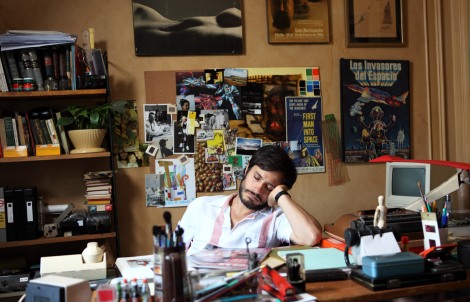
Gael Garcia Bernal stars in No, which takes place in Chile, following the removal of dictator Augosto Pinochet.

Chilean director Pablo Larrain’s closeness to the subject of his film No is palpable, even though he was only 12 years old when the1988 referendum that removed strongman Augusto Pinochet as president of Chile occurred. His film examines that historic vote from an unconventional perspective—through the eyes of a young marketing executive, played by Gael Garcia Bernal—but the view is no less compelling for its novelty.

“It’s a big shadow for everyone in my country,” Larrain says, referring to Pinochet’s 17-year dictatorship. “We are still quite divided. You cannot avoid it or pretend it never happened. Pinochet died at the end of 2006, not long ago—a free man and rich. He’s a very controversial figure. He really damaged our society and created a lot of pain. You can’t pretend it doesn’t affect you.”

Though Larrain didn’t encounter outright opposition to his unconventional dissection of a delicate subject, his approach did elicit some head scratching in his country. “There were people who were curious why we picked the ad guy’s perspective,” the director acknowledges. “When you do a movie like this, a period movie but not from long ago—and it’s a huge date in my country—everyone has an opinion about it. So we had to deal with walking on eggshells.”

Politics weren’t the issue. “Now most people—nearly 90 percent—would say no to Pinochet, or to another one like him,” insists Larrain, whose choice of protagonist proved more controversial. “Some people felt we were telling this story to the world through the eyes of people who weren’t the most important, but I think the ad guys were important on many levels. Pinochet imposed capitalism on Chile and brought with it the logic of marketing and advertising. So without realizing it, he created the tools that finally pulled him out. And we thought that was fantastic. There were other people who were important in the No campaign, but I’m not sure they would have succeeded without these ad guys, because they made people feel more comfortable about voting no.”

Larrain offers an unexpected analogy to explain his film’s foundation. “It’s like ancient Greek tragedy,” he says, noting how Pinochet was, in effect, undone by instruments of his own making. “The more you try to avoid your death, the closer you get to it. What happened with Pinochet is a little Greek story, in my opinion. If they had known, they would have reacted differently. But by the time they knew, it was already too late. It’s a paradox, and we know that works very well in movies.”

Though the director at first maintains that his movie “doesn’t intend to be a political film,” he then allows, “I would understand if somebody thinks so.” Ultimately, he broadens his definition of the term. “Every movie by anyone is political,” he said, “because it has a perspective on human behavior. It could be a comedy or drama, brilliant or not. Movies always have a political point of view somewhere.”

War Witch focuses on child soldiers in Sub-Saharan Africa.

Politics with even more immediate resonance seems to lie at the heart of Kim Nguyen’s War Witch, a French-language Canadian production that focuses on child soldiers in present-day Sub-Saharan Africa. But what motivated Nguyen to spend almost a decade nurturing the project was its humanity. “As I started doing research for the script, it came quite early on that the point wasn’t an educational film but rather a dark poem about 21st-century Sub-Saharan Africa in turmoil,” the writer-director explains.

“I’d seen a lot of movies about Sub-Saharan Africa, and it always ends up as the white man who saves Africa,” Nguyen says. “I thought it was important to give a voice to the forgotten ones, who often find inner strength to survive these horrendous situations—especially women who are child soldiers. About half are girls. And unfortunately the girls are not only soldiers but sexual slaves and forced laborers as well.”

Nguyen immersed himself in research to create his complex characters—often a compelling mixture of childlike innocence and sociopathic brutality—but he didn’t limit himself to the safety of his computer screen. “I went to Burundi and met ex-child soldiers,” he says. “And in the Congo, where we eventually filmed, I saw things like houses built out of abandoned billboards. They’re used for survival, and it creates a whole new postmodern message. The film carries a lot of those symbols of reinvention.”

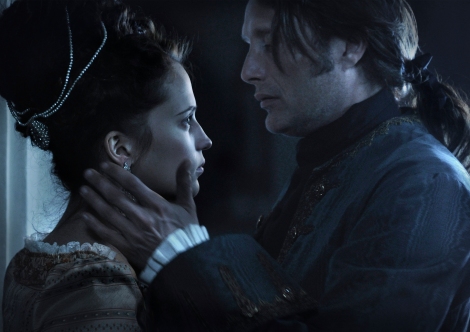
The royal couple attempts to bring reform to Denmark in A Royal Affair.

Many Americans might expect the Danish film A Royal Affair to unspool as a dry history lesson—though the movie is more like a political thriller with powdered wigs. But for Nikolaj Arcel, the film’s director and cowriter, the 18th-century story of Dr. Johann Friedrich Struensee, Queen Caroline Mathilde, and King Christian VII remains resoundingly contemporary. Though the forward-looking physician and the good-hearted if naïve royal couple tried and failed to bring reform to Denmark, they paved the way for the next generation to effect lasting change.

“It’s almost impossible not to know this story if you’re from Denmark,” Arcel says. “Every school kid knows it. So it was more a question of getting to a point of where I was mature enough to do the film. I’d been thinking about it for some time. It was a bit of a daunting prospect. I spent a year writing the script and then about four years trying to finance it. So it wasn’t that easy. In fact, I did a whole other film while waiting for financing.”

Germans and Britons had previously filmed the story, but apparently poorly. Yet no Dane had succeeded in getting it to the screen, despite repeated attempts. “A lot of great directors, even idols of mine, had been trying to make it,” Arcel says. “It was sort of like: Let me try and fail like the others. And we almost failed. There were times I felt we’re never going to make this. I was actually quite depressed for a while.”

But Arcel did succeed. The film has done huge business in Denmark and fared extremely well in the U.K., Australia, and France. Arcel had never directed a period drama before, and he owns up to having felt intimated by the prospect. “I was terrified, actually,” he says. He didn’t even have the comforts of home to console him, for re-creating 18th-century Copenhagen proved impossible in 21st-century Denmark, and the Czech Republic had to substitute. What drove him forward were the progressive ideas at the heart of the film.

“I’m a little bit of a political nut,” the filmmaker says. “There are some movements in Denmark and also here in America that are moving away from the Age of Enlightenment. I have quite a liberal viewpoint. I truly believe that every man is equal and should have an equal chance in life. And that’s what Struensee fought and died for, and it’s something we have to keep fighting for—rationality rather than irrationality.”

Kon-Tiki is a re-creation of Norwegian adventurer Thor Heyerdahl’s epic trek across the Pacific, from Peru to Polynesia.

It could be said that the opposite—irrationality over rationality—drives the figures at the center of Kon-Tiki, a re-creation of Norwegian adventurer Thor Heyerdahl’s epic trek across the Pacific, from Peru to Polynesia, which is codirected by Joachim Rønning and Espen Sandberg. Some older Americans might recall this incredible feat, which occurred in 1947, but many more know of it through Heyerdahl’s bestselling book, also titled Kon-Tiki, and the identically named documentary it inspired, which won an Oscar in 1951.

But Rønning and Sandberg’s enthusiasm for this story goes far beyond that of an armchair explorer. Like Arcel and his film, these helmers—who have been making movies together since they were kids—feel a personal tie to the tale they tell. “Thor was extremely well known, maybe the biggest celebrity of all in our country,” Sandberg says. “But he was even more important to Joachim and I because he came from the neighboring town, even smaller than ours. And he made the life he wanted for himself. And in that sense he was a huge inspiration for us becoming directors. In Norway, you’re not really supposed to stick your nose out, so to have a man like that from almost the same place as ourselves was a great inspiration.”

Though Sandberg allows that Kon-Tiki didn’t necessarily have to be made by Norwegians, others had tried and failed, including Hollywood. “We’ve been working on it for four years,” he says. “We tried to get ahold of it earlier because we were so interested in it, but we were told to forget about it. As the saying goes, luck is where persistence meets opportunity. And this movie is bigger than the system here in Norway allows. There’s only 5 million of us—a number we hit just three months ago.”

The shoot required four weeks on the open sea and another four in a tank, with the production based in Malta. The raft they used could hardly have been more real, as it was the same one, slightly modified, that Heyerdahl’s grandson used to re-create his grandfather’s famous voyage. As for the realistic-looking shark scenes, Sandberg owns up that “all the sharks are Scandinavian”—in other words, virtual, thanks to CGI technology.

Regarding the division of labor, Sandberg jokes that he and Rønning alternate at the helm “every other day.” But seriously: “We grew up together in this small town and have made movies together since we were 10,” Sandberg says. “So the process evolved with Joachim taking care of visuals and me talking to the actors on set. But we talk about everything all the time. And because we’ve always done it this way, it’s completely natural.”

Supporting Actor/Actress Handicap

Pete Hammond is Deadline’s awards columnist. This article appeared in the Feb. 6 issue of AwardsLine.

This season’s supporting actor and actress Oscar races can be summed up in one word: Winners! A remarkable seven of the 10 nominees actually already have at least one Oscar on their mantel, and all of them have been previously nominated. Unlike the marquee lead races, not a single newcomer has been invited to the supporting party. In fact, all five supporting actor nominees are past winners, a rare occurrence that proves Feb. 24 will indeed be veterans’ day at the Dolby Theater. And though there is a strong frontrunner emerging for the women, the male race is one of the most wide open in years, with no one taking the lead to date and the outcome a real question mark. So how did they all get here? Here’s the rundown.

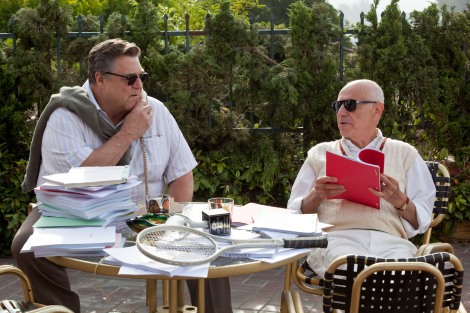
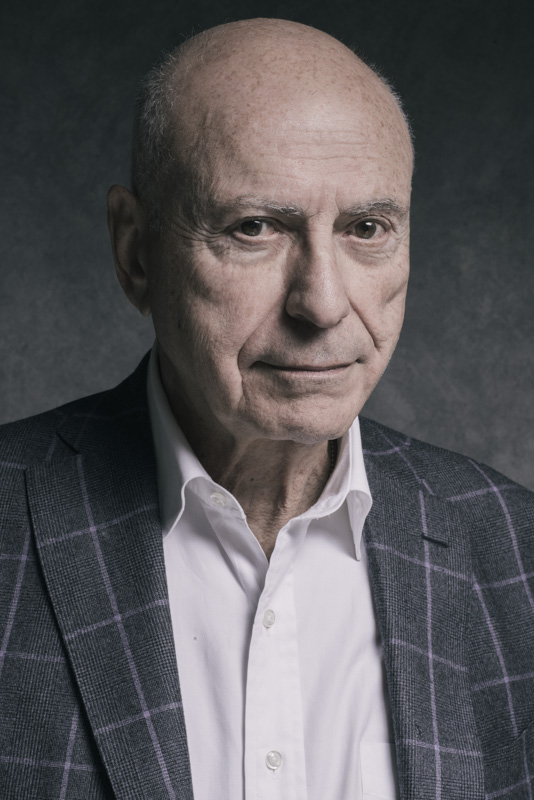
John Goodman, left, and Alan Arkin play Hollywood insiders who collaborate with the CIA in Argo.

SUPPORTING ACTOR

Alan Arkin | Argo

This veteran actor got his first lead actor Oscar nomination in 1966 for his film debut in The Russians Are Coming, The Russians Are Coming. And then a second just two years later for The Heart Is A Lonely Hunter. But it was a near-record 38 years before Arkin returned to Oscar’s inner circle, finally winning a supporting actor prize for Little Miss Sunshine. Now, six years later, he is back in contention as the Hollywood film producer in Argo, and the reason is simple: He not only gets the best lines, he’s playing the kind of industry insider that Oscar voters will instantly recognize. As Lester Siegel, who becomes the fake producer of a fake film created to free six American hostages in the 1979 Iranian hostage crisis, Arkin is perfection, delivering his lines with the kind of droll style for which he is known. He plays a character that, oddly enough, makes Hollywood proud of what they do: He uses a schlocky script to save lives and make a difference, instead of making money.

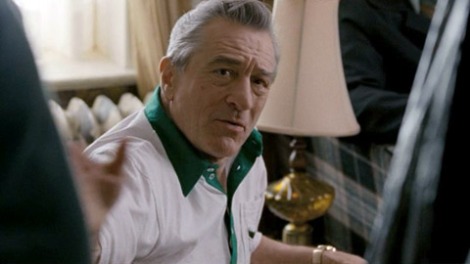
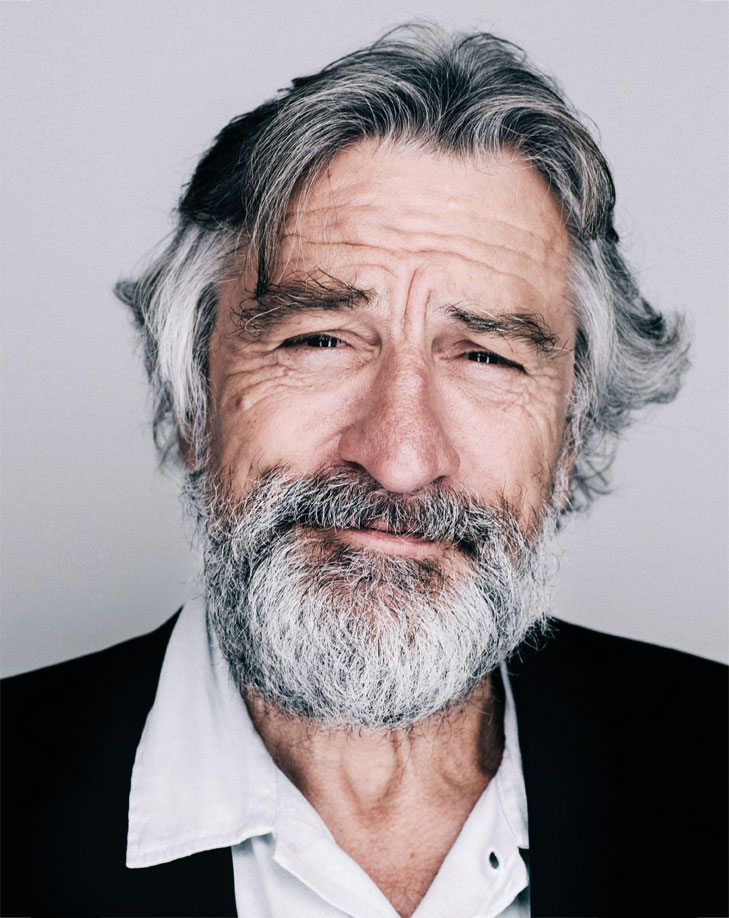
Robert De Niro as Pat Sr. in Silver Linings Playbook.

Robert De Niro | Silver Linings Playbook

One of the most revered—if not the most revered—living actor, De Niro has won two Oscars and been nominated six times. Remarkably, his last nomination came 21 years ago for Cape Fear, and since then he has been criticized in some quarters for taking on too many commercial projects (Fockers, anyone?) and not enough so-called Oscar worthy roles. However, with films like Casino and Heat to his credit in the interim, this isn’t really true: He’s got one now for which he scored a touchdown. As Pat Sr., the obsessive-compulsive Philadelphia Eagles-loving family man, De Niro has some of his richest moments on film in years. He’s alternately funny, touching, and real. Clearly, the actor in him was energized, and the role fit him like a glove. As Pat Sr., De Niro is back in the (Oscar) game, and that might be irresistible for Academy voters, who have been waiting since his iconic role as Jake La Motta in 1980’s Raging Bull to find an excuse to give this legend another statuette.

The Master
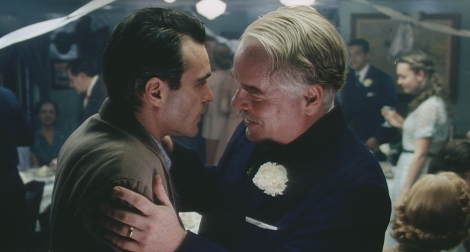
The awards-buzz worthy performances of Joaquin Phoenix, left, and Philip Seymour Hoffman in The Master are worth more their weight than B.O.gold.

Philip Seymour Hoffman | The Master

Hoffman won best actor for playing Truman Capote just a few short years ago, and now he’s managed to find another great role suited to his immense talents. In the same year he wowed Broadway as Willy Loman in a landmark new production of Death of a Salesman, Hoffman won raves as the title character in Paul Thomas Anderson’s The Master, playing Lancaster Dodd, the L. Ron Hubbard-style founder of a religious cult in the early 1950s. Reaction to the movie among filmgoers was decidedly mixed, but nearly everyone agreed Hoffman was brilliant, going toe to toe with Joaquin Phoenix’s unbalanced Freddie Quell. In fact, though Phoenix is nominated for lead actor, both these roles are of equal weight, and that could help Hoffman, who perhaps has the meatiest role in this entire category. After all he is the Master and totally in control in scene after scene, giving this bigger-than-life character real dimension when it could have been over the top.

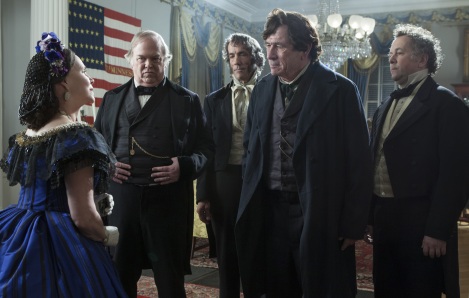
Tommy Lee Jones plays abolitionist Senator Thaddeus Stevens in Lincoln.

Tommy Lee Jones | Lincoln

Tommy Lee Jones won an Oscar in 1993 in this category by chasing Harrison Ford around in The Fugitive. He has a chance nearly two decades later to repeat the feat by taking on Abraham Lincoln in Steven Spielberg’s quiet epic on the fight to pass the 13th amendment. In a sterling ensemble cast, Jones has the most colorful and vivid role as Thaddeus Stevens, a deeply passionate man set on ending slavery. By contrast, Daniel Day-Lewis is positively subdued, but Jones has the kind of scenes that, quite frankly, win Oscars in this category. He could win for the wig alone. It’s a memorable turn in a very good year for Jones, and it earned him a supporting actor trophy from the Screen Actors Guild. That one-two punch in voters’ minds could remind them what a great and versatile actor he is, cinching the deal.

Christoph Waltz, left, is nominated for Django Unchained.

Christoph Waltz | Django Unchained

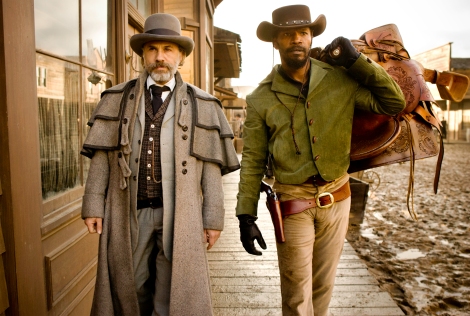
As Dr. King Schultz, a dentist/bounty hunter, this Austrian-born international star takes another tailor-made Quentin Tarantino character gift and socks it home with deadpan delivery, sly glances, and scene-stealing aplomb. He understands Tarantino’s rhythms like few others do, and it pays off. A winner here just three years ago for Tarantino’s Inglourious Basterds, Waltz got back in the race this time by standing out as the lone cast member of the large ensemble to grab an Oscar nomination. Largely unknown to most American audiences until he exploded on the screen in Basterds, Waltz has become a go-to character actor in a short amount of time. His role as a take-no-prisoners practitioner of bringing in “the bad guys” is a priceless reminder he’s got what it takes to win over audiences and win Oscars. Whether the Academy will want to give him a second one so soon is another question, but with a Golden Globe already in his pocket for this role, don’t count him out.

BEST SUPPORTING ACTRESS

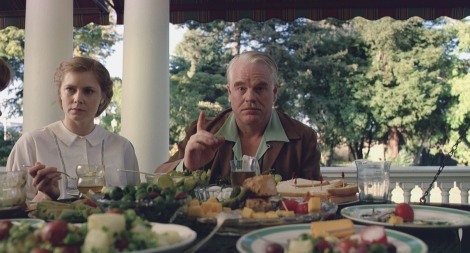
Amy Adams and Philip Seymour Hoffman star as a cult power couple in The Master.

Amy Adams | The Master

Amy Adams is getting to be a regular in this category. It has taken her just seven years to amass a remarkable four nominations: Junebug (2005), Doubt (2008), The Fighter (2010), and now her startlingly different role as Peggy Dodd, the faithful wife who might really be the one in control in The Master. The only thing that links these four characters is the actress herself, and she got in this time taking real risks, making choices other actors know aren’t the easy ones. This is a role she seems to disappear almost completely in at times, but she gives the role its greatest power in the subtle, nonshowy way she spends each scene, never once succumbing to the temptation of going over the top and always standing head to head with costar Philip Seymour Hoffman.

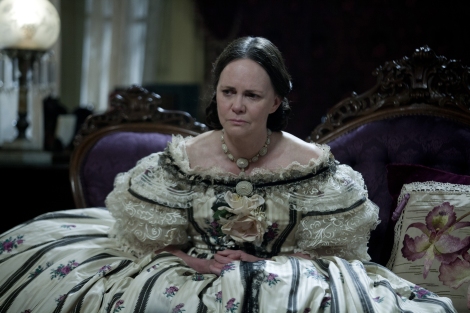
Sally Field plays the complex First Lady in Lincoln.

Sally Field | Lincoln

A two-time winner for Norma Rae (1979) and Places In The Heart (1984), Field has a perfect Oscar track record: Two for two. Now this plucky veteran is back to try for a third as Mary Todd Lincoln, President Abraham Lincoln’s long-suffering First Lady. She was a cinch for a nomination because fellow actors love the grit and determination she showed just in hanging in there as the film went through development hell over the course of a decade, while she slowly started to age out of the part. Insisting on a screen test and not giving up, Field won the role by sheer will—and talent. Her powerful scenes opposite Daniel Day-Lewis prove the decision was right.

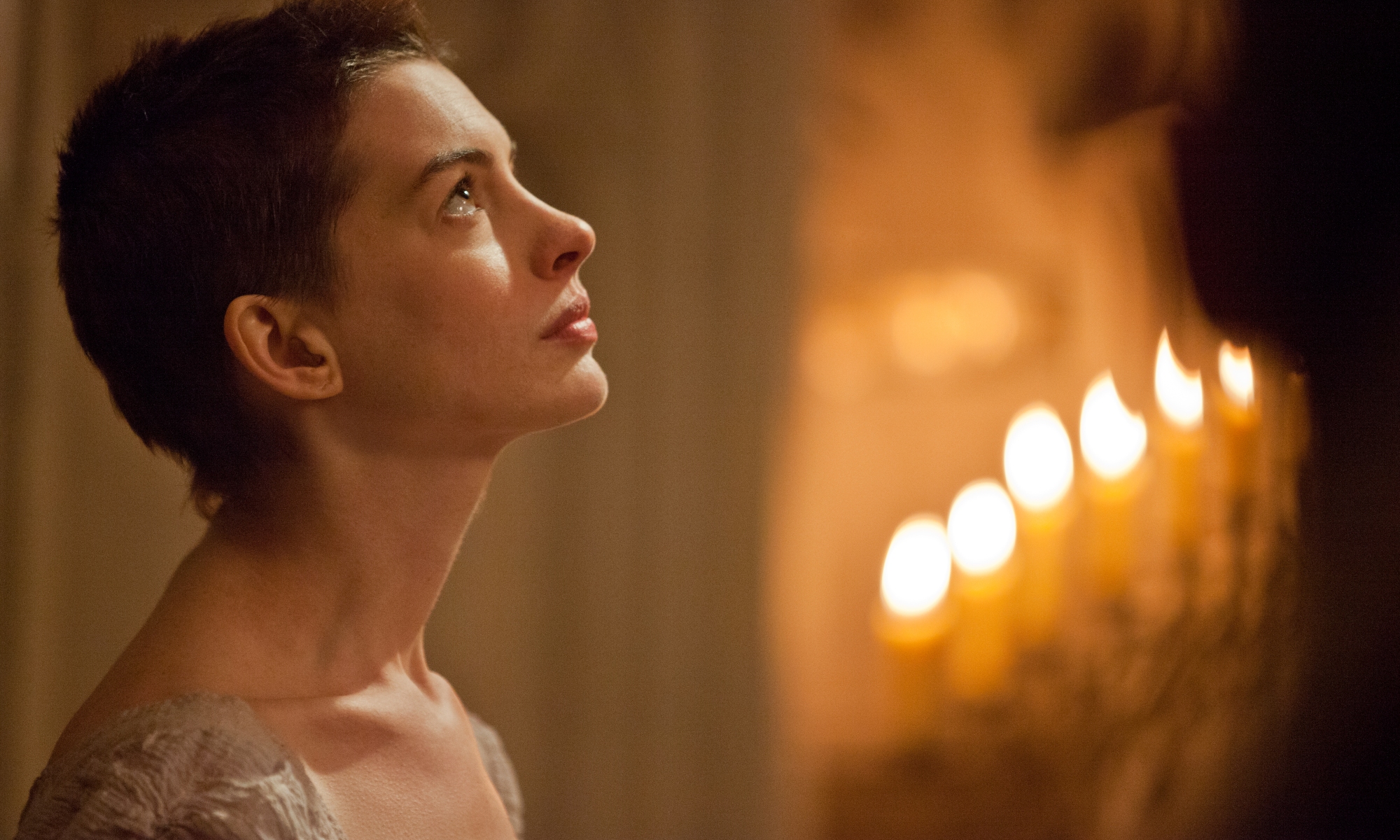
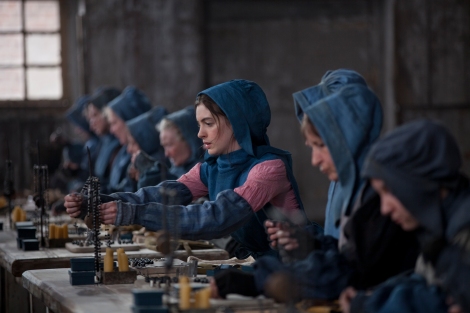
Anne Hathaway is the doomed Fantine in Les Misérables.

Anne Hathaway | Les Misérables

If there is a frontrunner in any Oscar category this year, the mantle surely belongs to Anne Hathaway, who takes the small but pivotal role of the tragic Fantine in the iconic musical and somehow not only makes it her own, but probably delivers the definitive version. In closeup, singing live, one take at a time, Hathaway is heartbreaking. Something otherworldly seems to take hold of her, so much so that it’s not possible to believe she could have nailed it over and over. There were eight takes, she says, but she only felt she got it perfect on the fourth, and that’s the one that wound up in the film. It’s not a large part compared to some others in the category, but it’s one from the heart, and that counts a lot with Oscar voters. Both Globe and SAG voters have already given her the statuette for this role.

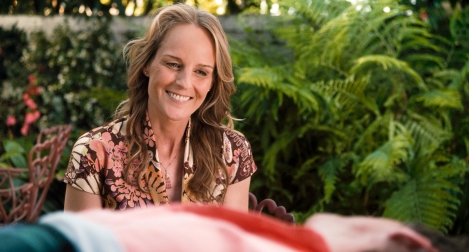
Helen Hunt plays a sex therapist in The Sessions.

Helen Hunt | The Sessions

Helen Hunt won four Emmys for her role on TV’s Mad About You and then a best actress Oscar for 1997’s As Good As It Gets. After those triumphs, it seemed like her career got a little spotty, and she couldn’t quite recapture the magic, despite some fine work in little-seen projects in the last few years. And then along comes the true story of Mark O’Brien, a man in his late 30s living in an iron lung and who longs to lose his virginity to Cheryl, a sex surrogate played by Hunt. She clearly could relate to this woman because rarely have we seen such an open and vulnerable Hunt on screen. It might be her finest performance, one in which she is naked, both physically and emotionally. Opposite the equally remarkable John Hawkes, who was clearly robbed of a best actor nomination, Hunt got to show she still has it.

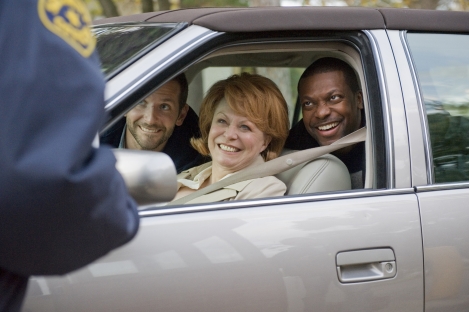
Jacki Weaver plays Pat Jr.'s doting mother in Silver Linings Playbook.
Jacki Weaver plays Pat Jr.’s doting mother in Silver Linings Playbook.

Jacki Weaver | Silver Linings Playbook

As the mother in a dysfunctional Philadelphia family, Weaver finds herself back in the same category she first appeared in 2010 in the gritty crime drama, Animal Kingdom. However, this role could not be a more different kind of mother. Weaver’s nomination might be the biggest surprise in the category because it is by far the least-showy role. Unlike her nominated costars, she doesn’t have the “big scene,” there are no real histrionics, no big laugh lines, no heavy drama. She’s just real, and as director David O. Russell says, “She manages to be the heart and soul of this movie.” Roles like this don’t often get recognized because they seem so effortless. You never once catch Weaver acting, and that’s a rare gift.

Rule Changes And A Theatrical Program Help Shorts Find A Bigger Audience

Although short films have been a part of the Oscars since 1931, the live-action, animation, and documentary shorts categories are getting more time in the spotlight than ever before. Voting on the winners in each category will be open to the entire Academy membership for the first time this year, and the Academy is sending DVDs of the nominees to every member—two changes that Jon Bloom, who chairs the short films and feature animation branch, says were important to the executive committee.

“It is, for us, a bit of an experiment,” Bloom explains. “Everything within the Academy about the awards is a work in progress from the standpoint that we’re all always trying to make things better.”

Nevertheless, it’s all about visibility when making voters and viewers take notice of these small yet powerful categories. And Bloom points to the theatrical and video-on-demand program, Oscar Nominated Short Films 2013, that DirecTV’s ShortsHD short-movie channel began offering to consumers eight years ago as helping elevate the profile of short films.

Adam and Dog is about the bond between people and canines.

“The huge breakthrough was to think of the shorts as a collection, meaning being feature length and being available in a way that fits,” Bloom says of the program, which packages each category of film into a theatrical, iTunes, and VOD presentation. “By having the Academy’s seal of approval on a handful of shorts that are being touted as special, then having audiences respond to those, has been very gratifying for us.”

It has also been a relatively successful venture for ShortsHD, its distribution partner Magnolia Films, and the nominated filmmakers. Theatrical receipts have increased 800% since the program’s 2005 debut, and 2012’s package ranked in the top 50 grossing independent releases, earning $1.7 million nationwide.

“Last year, we made a 5% return on the release. We consider it marketing, rather than something we’re trying to make money on,” ShortsHD CEO Carter Pilcher says, adding that each nominated filmmaker receives a $5,000 flat-fee advance. “After we recover the costs of the release—we work very hard not to make them very expensive—we then do a 50/50 split on all the receipts.”

(The documentary shorts are part of the doc branch, and four of the five nominees are owned by HBO, so ShortsHD pays a fee for the right to include them in the release.)

A man gets a second chance at life through the help of an odd collector.

Making short films more accessible has increased Oscar submissions in the categories, as well. “The numbers are not staggering when you look at a Sundance that’s getting something like 7,500 shorts submitted to them,” Bloom says. “But this year, we had 120 live-action and 55 animated shorts. For us, that was a record number in those two categories. It’s partly the digital explosion that’s making tools and opportunities more plentiful and more affordable.”

They’ve have also become an appealing alternative for international filmmakers looking for Academy validation, according to London-based Pilcher, who says this year’s rule changes are “one of the best things the Academy has done.”

“We’re teaching them slowly that the other route to an Oscar for a national film is short film,” Pilcher says, adding that live-action and animation shorts Oscars are generally won by foreign filmmakers. “Countries find it very difficult to compete except in the foreign-language film category, but it’s an enormous political gunfight to decide which film of theirs will be the one to go to the Oscars.”

Although the Oscars are watched less attentively east of France, anytime a local filmmaker gets a nomination, it’s cause for national celebration, says Pilcher, pointing to Belgian nominee Tom Van Avermaet, who directed the live-action Death of a Shadow. “They’re sending over TV crews. It has huge national interest suddenly. All of Belgium will be paying attention to this particular category,” Pilcher says.

A hair salon gives free beauty treatments to women undergoing chemotherapy in Mondays at Racine.

Receiving a nomination means a lot to filmmakers around the world, but a win can be career-changing, particularly for those who are already toiling in the trenches of Hollywood. For example, Chris Wedge’s 1999 win for Bunny made the industry take notice of the animation house he founded, Blue Sky, which ultimately partnered with Fox on the Ice Age movies. And Brave director Mark Andrews was nominated for his animated short One Man Band in 2006, no doubt raising his profile in Pixar.

Whatever additional changes come to the categories, they will be about bringing attention to an artform that deserves to be seen. “In many ways, the shorts categories are the purest and most passionate of any of the Oscar categories because these are not big commercial projects. They’re labors of love,” Bloom explains. “We don’t think we’re pulling the train. We know that people are most interested in the features and in the glitzy stuff. But we’ve gained a tremendous amount of traction with the public in terms of excitement in the category, and not just from people who aspire to make a short and win an Oscar.”

Documentary

Inocente

Nominees: Sean Fine and Andrea Nix Fine

A 15-year-old homeless undocumented immigrant refuses to let her circumstances crush her dream of being an artist.

Kings Point

Nominees: Sari Gilman and Jedd Wider

Five seniors living in an American retirement resort grapple with themes of self-reliance, community, and aging.

Mondays at Racine

Nominees: Cynthia Wade and Robin Honan

On the third Monday of every month, two sisters open their hair salon to women undergoing chemotherapy for free beauty services and camaraderie.

Open Heart

Nominees: Kief Davidson and Cori Shepherd Stern

Eight Rwandan children take a long journey without their families to have heart-valve surgery to repair their rheumatic heart disease.

Redemption

Nominees: Jon Alpert and Matthew O’Neill

A portrait of people called canners who survive in New York City by collecting bottles and cans and redeem them for cash.

Animation

Adam and Dog

Nominee: Minkyu Lee

A story that explores the relationship between man and dog from the perspective of the canine who forms a bond with Adam in the Garden of Eden.

Fresh Guacamole

Nominee: Adam Pesapane (PES)

The avocado is a hand grenade and the lime is a golf ball in this stop-motion-animated two-minute demonstration on how to turn everyday objects into guacamole.

Head Over Heels

Nominees: Timothy Reckart and Fodhla Cronin O’Reilly

A married couple live separate but parallel lives: She lives on the ceiling and he lives on the floor. When the husband tries to rekindle the spark, neither spouse can agree on how to fix their relationship.

Maggie Simpson in The Longest Daycare

Nominee: David Silverman

When Maggie gets dropped off at a new daycare and gets paired with the average kids, she spends the day trying to save a vulnerable cocoon from a classmate that likes to smash butterflies.

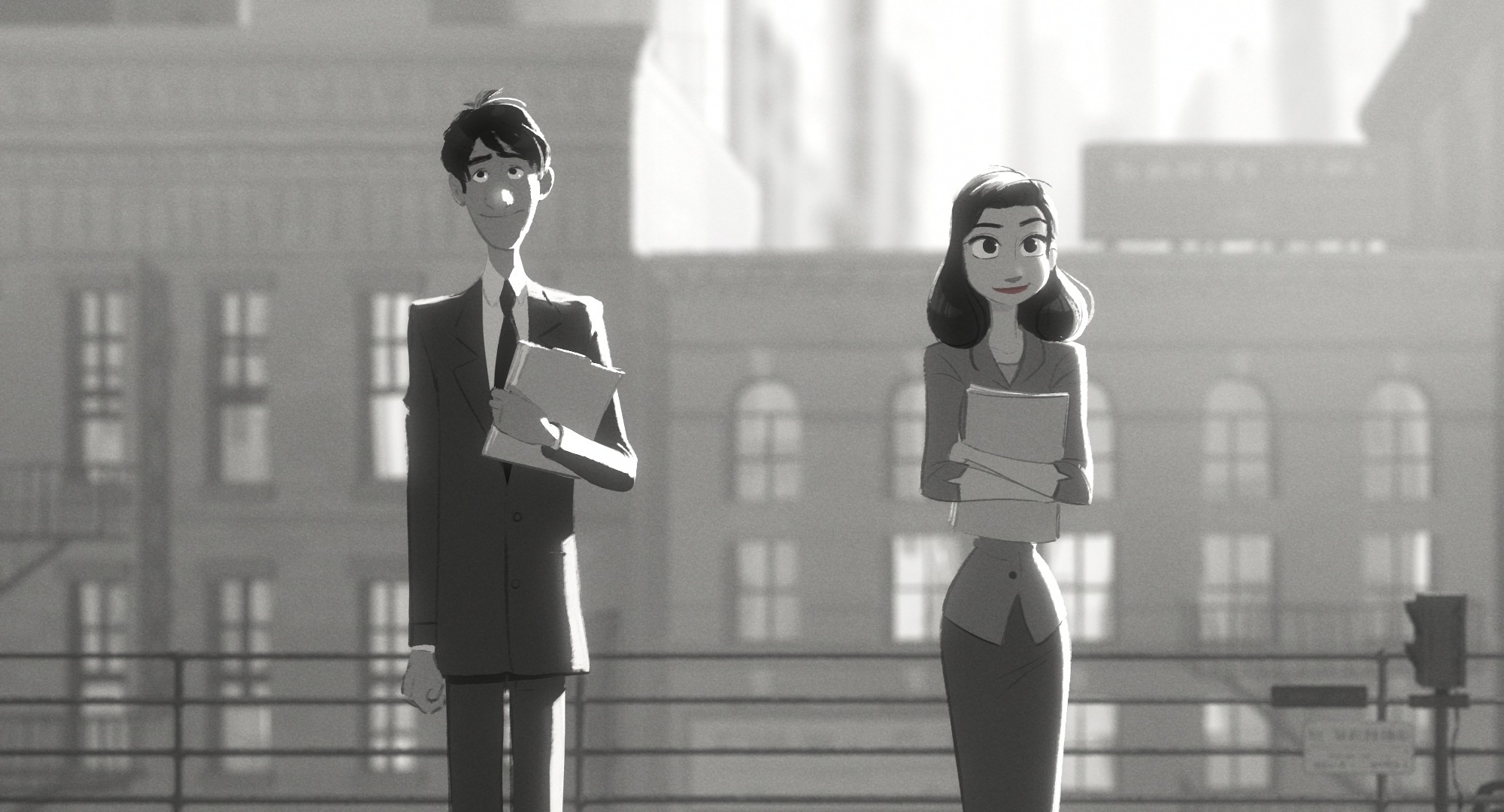
Paperman

Nominee: John Kahrs

A chance meeting on the train platform leaves a lonely young man searching for the woman with whom he crossed paths.

Live Action

Asad

Nominees: Bryan Buckley and Mino Jarjoura

An all-Somali-refugee cast brings to life the story of a boy who must choose between the life of a pirate and earning an honest living as a fisherman.

Buzkashi Boys

Nominees: Sam French and Ariel Nasr

Set against the backdrop of Afghanistan’s brutal game of horse polo, Buzkashi, this coming-of-age story follows two best friends as they progress to manhood in a wartorn country.

Curfew

Nominee: Shawn Christensen

A man gets a call from his sister asking him to care for his 9-year-old niece.

Death of a Shadow

Nominees: Tom Van Avermaet and Ellen De Waele

A soldier who died in World War I finds that a strange collector has imprisoned his shadow but gives him a new chance at life.

Henry

Nominee: Yan England

A concert pianist’s life is thrown into disarray when the love of his life disappears.

Q&A: Alan Arkin On ‘Argo’

Pete Hammond is Deadline’s awards columnist. This article appeared in the Feb. 6 issue of AwardsLine.

With a best actor Oscar nomination for his very first film, the comedy The Russians Are Coming, the Russians Are Coming, and a second one for the drama The Heart Is A Lonely Hunter just two years later, Alan Arkin got off on the right foot early in his career. It would be 38 years later before he got a third nomination, and it turned out the third time was the charm when he won best supporting actor for Little Miss Sunshine. But don’t think the long wait to get to Oscar’s stage mattered much to Arkin. He has a tough time dealing with the whole idea of competition between actors and is happy just letting his work speak for itself. This versatile actor, who is now 78 years old, is still going strong all these years after getting his start as a founding member of The Second City comedy troupe in Chicago. Memorable performances in films as varied as Catch-22, Wait Until Dark, The In-Laws, Glengarry Glen Ross, Edward Scissorhands, and so many others have marked a long career that seemed to win a second life after the Oscar. His fourth nomination is for Argo, in which he plays the ultimate insider Hollywood producer, Lester Siegel, who is called upon to use his expertise in a very different and important way. In typical fashion, Arkin hits it out of the park, and also in typical fashion, he’s not bragging about it.

AWARDSLINE: Argo has passed $100 million at the boxoffice domestically. Did you have any idea that this movie would be that kind of hit it when you got involved?

ALAN ARKIN: I never think about it. I don’t spend a lot of time concerning myself about the grosses. I thought it might be possible—I get a bump in my salary then I start caring. (Laughs). Otherwise, it’s not something I care about. It’s just something I want to do or not.

AWARDSLINE: So what attracted you to playing Lester Siegel?

ARKIN: I felt like I knew the guy. I felt he was wonderfully humorous, completely real. I mean, it was a lot of funny material, but I felt it served the entire piece. Stylistically, it’s the way movies used to be. You (would have) a serious movie and have no problem with having comedic elements in it. For some reason, that seemed to change over time, and this film brings it back to where you can have a serious moment and pull out some humor. I love that idea.

AWARDSLINE: Why do you think it changed? Argo does seem to be embraced by people in the industry, because it is something that feels different now.

ARKIN: (The business is) more corporate and more formulaic and less experiential.

AWARDSLINE: What makes you say yes to a project these days?

ARKIN: It’s a combination of things, like a graph. It depends how high something goes on the graph: It could be the director, the script, the part—it could be any one of those things alone if I feel strongly about it. There are times when I like the character and not the director, or the other way. Usually it has to be a combination of the three.

AWARDSLINE: There’s Oscar buzz this year for you in Argo. Does that mean something to you at this point in your career?

ARKIN: It’s a euphemism for people telling you they like your work. I had a hard time treating my field as if it’s horse racing, putting actors in competition against each other. I see how the industry and the studios feel it’s important, but I don’t really have a feeling for being in competition. I want to feel sympathetic and close to others, not opposed to them. Every physicist knows that things connect with each other. To isolate things is not the way the universe works—winning best actor is arbitrary.

AWARDSLINE: But you are one of the rare actors to get an Academy Award nomination for best actor on your first feature film, The Russians Are Coming, the Russians Are Coming.

ARKIN: It was one of the many times in my life where I disappeared. Somebody was in my body and answered for me. I went away and didn’t come back until the awards were over with. Somebody was there, I have a vague impression of it, but I just ran away.

AWARDSLINE: I was at a recent screening of the film, and it still holds up.

ARKIN: It’s a sweet film; I love it. My main memories of that were that (director Norman Jewison) ruined me for the next 10 people I worked with. He was so extraordinary to work with. It was like a dream come true. It was a totally embracing experience in every way. Norman got the entire town involved in shooting; everybody in the town was an extra. Everybody was invited every day, to the point that they had to ask people to keep their children home and doors closed because we couldn’t hear the sound guy. It was to me what I always hoped movies were going to be. But it didn’t happen again very frequently.

AWARDSLINE: That nomination led to a lot of great movies for you, including Wait Until Dark with Audrey Hepburn.

ARKIN: She was a dream, she was everything you had hoped for. I was a little bit tongue-tied around her. She was very accessible, very hardworking, great sense of humor—but regal.

AWARDSLINE: You really terrified her, and she was playing a blind woman.

ARKIN: I had a miserable time because I liked her so much. I couldn’t stand what I was doing to her—very unhappy about it.

AWARDSLINE: Do you like doing theater? You were so successful on stage; you won Tonys.

ARKIN: I would rather die than do a play—10 years in solitary instead. Here’s how much I want to do it: If you told me I could rehearse this play for two days and perform it for one night with the book in my hand, you said you’d pay me $10 million, and not only that but (we’d have) world peace for the next 50 years, I’d have to think about it for six months. And then I’d say no. The repetition of it drove me crazy—nothing creative about it for me. I need to be inventing and playing, and not doing the same thing over and over again.

AWARDSLINE: But you did spend a good amount of time on stage as a founding member of The Second City…

ARKIN: Once I got to Second City, I found the kind of acting I enjoyed. We’d do a show for three months, then the next show would be based on improvisations that worked on the show before that. (It was a) constantly rotating series of set improvisations.

AWARDSLINE: How did you initially get involved in it?

ARKIN: A friend of mine married a guy named David Shepherd who was one of the founders of Campus Theater, and we did a thing in St. Louis in the summer—improvisational theater. Paul Sills, who no one had ever heard of, came down and told me if I ever wanted a job a Chicago to give him call. I said, “Fat chance. I’m going to have a big career in New York, so I’m not going to bury myself in Chicago.” After starving for six months in New York, I called him, and I thought I’d be there for the rest of my life earning $800 a week. Six months later, it got national attention, (and) it was the beginning for me.

AWARDSLINE: Do you still love the business?

ARKIN: I don’t love the business. I never wanted to be a part of it. I don’t think any actor does. Most of the time, I’ve been really fortunate to work with people who are really fun to work with. It doesn’t mean we don’t take it seriously, but no one is under the delusion (that we’re) bringing world peace for the next 100 years. If anybody told me 40 years ago what would be happening, I’d think they were crazy.

Nommed Cinematographers Discuss Key Scenes

Thomas J. McLean is an AwardsLine contributor. This article appeared in the Jan. 30 issue of AwardsLine.

In a year filled with remarkable imagery, the work of the Oscar-nominated cinematographers stands out as integral to the success of the movies they shot.

The nominees bring broad experience to their films. Seamus McGarvey, nominated for shooting Anna Karenina with director Joe Wright, came to the project off the summer blockbuster Avengers; Robert Richardson shot his fourth film with Quentin Tarantino with Django Unchained; Claudio Miranda went both digital and 3D to lens Life of Pi for Ang Lee; Janusz Kaminski made his 13th film with Steven Spielberg in shooting Lincoln; and Roger Deakins ventured into the world of James Bond with Skyfall.

AwardsLine asked the five nominees for Oscar’s Best Achievement in Cinematography to pick a key scene and break it down in detail. The choices, like the nominated films themselves, speak to the challenges inherent in the craft and its essential importance to making a movie.

Anna Karenina
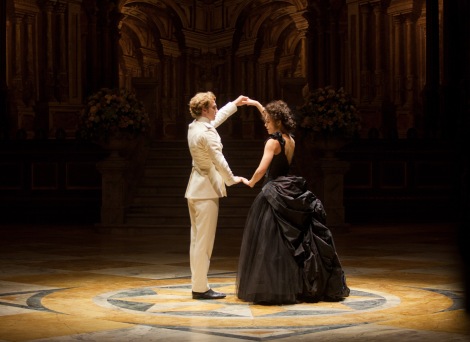
Seamus McGarvey’s work in Anna Karenina served to demonstrate how Anna and Vronsky connected on the dance floor.

Seamus McGarvey

The Scene: In a single sweeping, shot Vronsky (Aaron Taylor-Johnson) leads Anna Karenina (Keira Knightley) on the dance floor at a high-society ball, with their electricity igniting movement from the other dancers. They connect in a moment of silence, and, for a moment, the auditorium is empty before the dancers return, bringing the star-struck couple back to reality.

Behind the Scene: “(Director) Joe (Wright) worked very closely with Sidi Larbi Cherkaoui on the choreography of the scene, and the actors rehearsed it very much in advance to create a gestural language for this dance—one that wasn’t a classical waltz; it was fresh and modern and expressive. What we also explored with it was the idea of the photography shifting in its personality during the take, so we would migrate from a kind of an objective point of view to a subjective one within the same shot, and that the camera would shift perspective within the shot and then back again. From a lighting point of view, it allowed me to experiment with lighting that I had never tried before—theatrical lighting within a movie setting. All those things make it gently distinctive in terms of the film. On the day of, we had a plan for how we would shoot it, and we spent quite a bit of time planning the shot and planning the choreography. I had a huge amount of work to do in terms of programming the lighting changes because even as the camera is moving around in a circle, there are quite complex shifts in the lighting that I was controlling on a wireless pad, with which we were able to cue the lights live to preprogrammed settings. There were probably 30 or 40 cues in that one shot. But it has a simplicity. You don’t want to overwhelm the shot or the emotion of the shot with trickery.”

Django Unchained
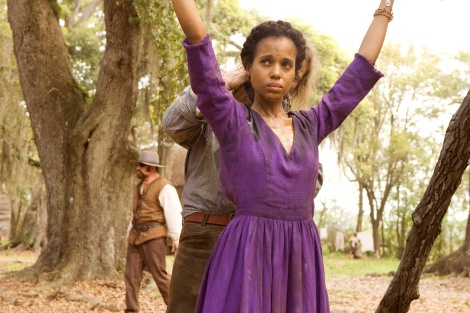
Robert Richardson used two cameras–unusual for Quentin Tarantino–to capture the emotional scene in which Broomhilda (Kerry Washington) is whipped.

Robert Richardson

The Scene: A flashback, in which Django (Jamie Foxx) fails to convince the Brittle brothers not to whip his wife, Broomhilda (Kerry Washington).

Behind the Scene: “The style is wildly different than the majority of sequences within Django Unchained. When Quentin talked to me of the scene, he asked that we shoot with two cameras, which is quite rare for us. He knew that an emotion and a spiritual space would be found once we began filming, and he wanted to capture that. Spiritual is an understatement. Shooting the scene was an act of enlightenment. Both Jamie and Kerry poured their hearts and their souls into the sequence. To watch the acting on set was extremely difficult for me, as it moved further and further away from acting or as I moved further and further from perceiving it as acting. When I was photographing Jamie, I noticed clouds race across his eyes then mist raised as he fell to his knees begging, tears sliding down his cheeks. Kerry was tied tightly to a wooden frame, stripped of her clothes, and one of the Brittle brothers pulled back a whip and fiercely let go. Kerry lurched from the lashing. Her screams stopped everyone on the set. I began shooting within a state rarely achieved: A blind desire to capture this particular moment that was so very real that, in hindsight, I know was out of place for a feature film. Deeply provoked and touched by the acting, which appeared to disappear as we settled into the past. It was as if we were transported through time. The setting, meaning the location, was on Evergreen Plantation, which is listed on the National Register of Historic Places. Two-hundred-year-old live oaks covered the property. Beneath these stunning trees sat 20 or so slave quarters. Ironic to have such beauty atop such hideous history. We filmed amidst those slave quarters. Haunting. A vital slap of reality. What was extremely challenging was to maintain a vision for the scene when the events within the frame were as powerful as these were. Documentaries can mirror the moment described above. But I have experienced few in my career that rival.”

Real candles lit this scene in Life of Pi.

Life of Pi

Claudio Miranda

The Scene: Young Pi (Gautam Belur) attends a spectacular candlelit ceremony with his Hindu mother as his older self narrates his and his family’s differing views on religion.

Behind the Scene: “It’s supposed to be big, with lots of light and spectacle. So I thought it would be really beautiful to try to fill this place with tons of candles. And I said, ‘Wouldn’t it be great if we could totally light the space with candles? How many would it be?’ And we were kind of walking around and measuring, and Ang (Lee) was talking like we should have one for every square foot. That’s 50,000 candles! We had to have that lit for the whole night, so I think we ordered 120,000. I don’t think it still was enough, and we added more with CG. The story was a little bit more about the mother—this was her religion, and they were taking her to this place and she was very introspective at that moment. That was shot pretty early on, just outside of Pondicherry. It was a scene about getting the kid. The kid was young and sometimes a little bit hard to get. We did know the beats. and we did go through those beats, and we wanted to be getting some angles on top—and we shot until the sun came up.”

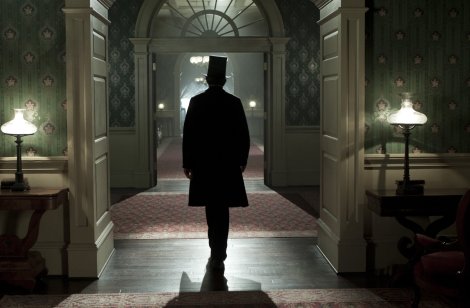
The president walks slowly down the hall, heading to the theater for the evening.

Lincoln

Janusz Kaminski

The Scene: Having successfully passed the 13th amendment and ending the Civil War, Lincoln (Daniel Day-Lewis) is reminded he is due at the theater and walks down the halls of the White House toward a greenish window and the exit.

Behind the Scene: “It’s not a difficult shot. I just like the metaphor of it, and that’s what makes it special. I chose that shot simply because it represents the metaphor of what is going to happen. This is the last time we are seeing him, except for his death bed. And I like that he’s going toward slightly greenish glass, which resembles the light on his death bed, which had a little bit of a greenish quality. He’s almost walking toward an unknown future, which as we learn quickly, it’s death. One of the difficulties was to find the proper choreography between Mr. Slade, who was his servant, who was trying to remind the president about taking his gloves with him, and the pace and direction of the president walking toward that glass window. I think we had done several takes, because somehow we couldn’t get the coordination between the camera and the actors’ movement. I also remember it was very dimly lit. It was probably not the brightest set that I’ve done in that particular movie. We wanted a bit of a silhouette of Lincoln going toward the exit of the White House. We all know what happens to him, and it’s a combination of sadness because he’s going to die but yet it’s not a completely depressed scene because he’s achieved so much.”

Skyfall
Roger Deakins lit this scene in Skyfall with an actual LED screen and shot on a stage.

Roger Deakins

The Scene:  James Bond (Daniel Craig) engages his target, a professional hit man (Ola Rapace), in a fight to the death in an under-construction skyscraper illuminated by a massive LED screen at night in Shanghai.

Behind the Scene: “It’s one we shot early on, and I felt I was taking a chance by suggesting or pushing for that kind of look, the big LED screens and light and the whole set just with those source lights that you see in the shot. Also the fact that we did it on stage as opposed to a location, which was the original intention. And I was quite pleased the way it turned out. When it’s one of the earlier scenes in a shoot, you feel a sense of relief that you’ve achieved something close to what you had in your mind’s eye when you started. We spent a lot of time prepping. Obviously it was a big stage set, and there was a lot of very particular lighting that was built into the set. We spent actually weeks and weeks testing a few different big LED screens for the playbacks. And then we had to order a particular one we liked, which was a combination of being a fine pixel count and also being practical to do in the size we wanted, because it was about 60 by about 40 or 50 feet, I think. And we had to find one we could rent for the period we needed it and, in fact, it was available for only a small window of time, so we had to shoot the scene and then it had to be broken down and sent back before we had really cut the scene. It was a bit of a risk in it, really. But it was good being on stage at Pinewood because we were shooting there quite a bit, and I could go in at the end of the shoot day and look at the lighting and just gradually build it. ”

Lead Actor/Actress Handicap

Pete Hammond is Deadline’s awards columnist. This article appeared in the Jan. 30 issue of AwardsLine.

In a race as tight as the one this year for best actress and particularly best actor, there were many deserving performances that might have made the cut in any other year but were overlooked because of intense competition. As far as lead acting categories go, this year is one of the most fiercely fought in recent Oscar history. So what was it about the 10 nominated performances in the top two acting categories that sealed the deal with Academy voters? Here’s a look at why they made it to the golden circle.

Best Actor

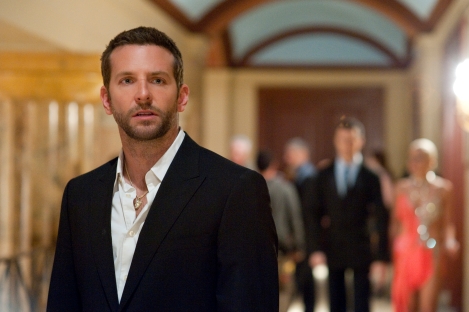
Bradley Cooper stars in Silver Linings Playbook.

Bradley Cooper | Silver Linings Playbook

Coming into the project just shortly before production began, Cooper proves a shrewd choice to play Pat Jr., a volatile man just released from an institution, in denial about his dead marriage, and just trying to put his life back together. Mark Wahlberg was cast in the part originally, but after he dropped out, Cooper got the role and ran with it. It’s a delicate balance of comedy and drama that Cooper must navigate, and he creates a wholly original and likable character, a neat trick considering Pat Jr. isn’t always sympathetic. Coming off popcorn movies like The Hangover and The A Team, Cooper finally shows his true acting chops, and his scenes opposite Robert De Niro and Jennifer Lawrence prove he is a talent to be reckoned with. Watching him and Lawrence go toe to toe in the dance competition is worth the price of admission alone. Seeing him try to explain his reaction to a Hemingway novel while his parents try to sleep might be the comic scene of the year.

Daniel Day-Lewis plays the 16th president in Lincoln.

Daniel Day-Lewis | Lincoln

If ever there were a match made in heaven between actor and role it has to be Day-Lewis channeling Abraham Lincoln at a key moment in his presidency. Many actors have tackled Lincoln before with great success, but the reason Day-Lewis is likely to become the first actor to win three best actor Oscar statuettes, and the first to win for playing a president, is because he shows a complex, human side to the man we only thought we knew. His risk-taking acting choices—including creating a voice for Lincoln, which no other actor has dared attempt—make this more than just the usual standard biopic performance, one that definitely is not an impersonation but a full-bodied three-dimensional Abe for the ages.

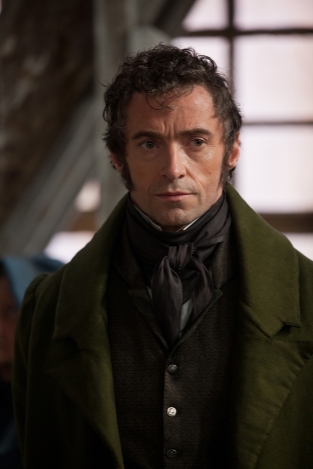
The original composers of Les Misérables wrote a new original song, "Suddenly," for Hugh Jackman to perform in the film.
The original composers of Les Misérables wrote a new original song, “Suddenly,” for Hugh Jackman to perform in the film.

Hugh Jackman | Les Misérables

Audiences have been waiting a long time for triple-threat performer Jackman to get his first shot at a big movie-musical. If the man were in his prime in Hollywood’s golden age, when musicals were the norm, he probably would have made 10 or 20 of them. His extraordinary turn as Jean Valjean in this iconic musical, though, was worth the wait. It’s a role that required a 2 ½-octave range in which he had to sing live, a revolutionary idea for a movie-musical that has almost never been attempted onscreen. Jackman gets to the essence of the man with an emotional power he has rarely shown in his other roles. Jackman and Jean are an irresistible pairing, and if he can get past the Lincoln juggernaut, he could become the first actor since Rex Harrison in 1964 to win this prize for a full-on musical role. And how ironic it is that Harrison was the last actor in a major musical who himself attempted live singing on film? A good omen, perhaps?

The Master: Though it’s polarizing in many aspects and sure to divide audiences, Paul Thomas Anderson’s tour de force got people talking.

Joaquin Phoenix | The Master

Almost from the moment The Master started screening, it seemed inevitable Phoenix would be among the year’s best actor nominees, in spite of his early comments about disdain for the Oscar race itself. In a risky performance that recalls the best of Marlon Brando or Al Pacino, Phoenix nails it in a riveting turn as a man searching for answers in a post-World War II America. His scenes opposite Philip Seymour Hoffman as the cult leader trying to lure him in are about as electrifying as screen acting gets these days. However, the Paul Thomas Anderson movie itself has polarized audiences and received its only three nominations in the acting categories, which will make it hard for Phoenix to prevail in the end. If he does, that extraordinary one-on-one encounter with Hoffman at the movie’s end will be the reason.

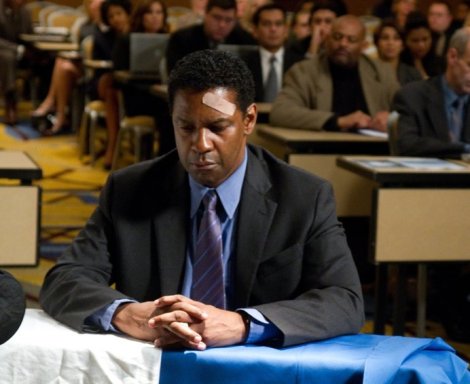
Denzel Washington plays a pilot with a substance-abuse problem in Flight.

Denzel Washington | Flight

As an alcoholic, drug-addicted airline pilot who has to summon every ounce of courage and skill he has to crash-land a plane while intoxicated, Washington has one of the stellar roles of his career. As Whip Whitaker, an enormously talented pilot but a man battling his own demons, Washington shows the dark side of an alcoholic that the screen has rarely seen. His character is so despicable and helpless that it makes it especially impressive that some audience members are even rooting for him to get away with it. Washington says he turned to YouTube to study what many drunks are like and incorporated that into his research. Whatever he did pays off in director Robert Zemeckis’ gritty adult drama that has earned this two-time Oscar winner his sixth nomination.

Best Actress

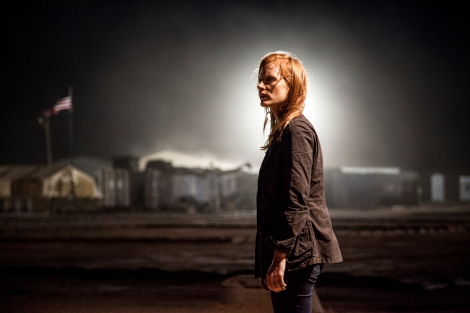
Jessica Chastain stars as a relentless CIA agent pursuing bin Laden in Zero Dark Thirty.

Jessica Chastain | Zero Dark Thirty

Nabbing what has the be the premiere, grittiest, gutsiest, take-no-prisoners female role of the year as a CIA agent who methodically tracks down Osama bin Laden’s hiding place, Chastain continues her remarkable rise to the top tier of film actors. Essaying a role about a woman who is not beholden to a man in any way, personally or professionally, Chastain dominates the film with an impressive mix of toughness, cunning, self-doubt, anger, and power. The moment in which she reveals she is the “motherf—-r” who tracked down bin Laden is priceless, perhaps the most satisfying line of the year. After watching most of her recent films sit on the shelf until suddenly being released one after another last year and nabbing her first Oscar nom in the supporting cast of The Help, Chastain proves she is the real deal as a leading player in Zero Dark, with a Golden Globe and Critics Choice Movie Award already on her mantel with obviously more to come.

Jennifer Lawrence stars in Silver Linings Playbook.

Jennifer Lawrence | Silver Linings Playbook

As Tiffany, a tough but endearing young widow who wears armor on the outside but is trying to put the pieces of her life back together with the help of Pat Jr. (Bradley Cooper), Lawrence at age 22 pretty much shocked the industry with an all-knowing and richly rewarding performance that can be compared to Shirley MacLaine’s Fran Kubelik in The Apartment or even Cher’s Oscar-winning turn in Moonstruck. Like those actors, she walks the fine line between comedy and drama, delivering a flesh-and-blood, flawed human being we want to root for. In a role designed for an older actress, Lawrence proves she can probably do it all, and her best actress nomination for Winter’s Bone two years ago was definitely not a fluke. If there is a silver lining at all in this year’s Oscar race, it’s that Jennifer Lawrence is a keeper, one to watch for decades to come.

Emmanuelle Riva plays a stroke victim in Amour.

Emmanuelle Riva | Amour

At 85, she is the oldest best actress nominee ever, and in fact, turns 86 on Oscar day, Feb. 24. It would be a nice birthday gift to give this veteran French actress that statuette—and she could get it, even though the film is foreign and in French, and those aren’t usually easy things to overcome. As a wife finding her health failing and the end of her life nearing, Riva is heartbreaking but never drifting into sentiment as she deals with the nightmare of aging, leaving her husband, brilliantly played by Jean-Louis Trintignant, to care for her when all she wants is to keep her dignity as life fades away. It was easy to see that this star, previously best known for 1960’s Hiroshima Mon Amour (there’s that word again), would be nominated. Nearly every actor’s branch member I talked to mentioned her name first when I asked who their favorite was. The role—and the player—touched many in a story that hits very close to home.

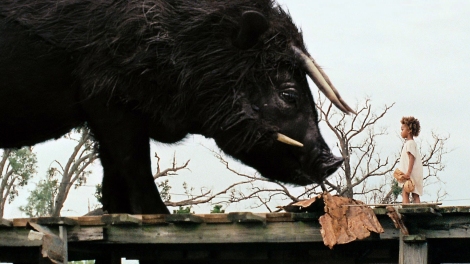
Quvenzhané Wallis stars as Hushpuppy, a strong-willed child who lives with her father in the bayou, in Beasts of the Southern Wild.

Quvenzhané Wallis | Beasts of the Southern Wild

At just 9 years old, Wallis is the opposite of Emmanuelle Riva, the youngest best actress Oscar nominee in history. And in truth, she was a total nonprofessional 6-year-old when she tore up the screen as Hushpuppy, a determined girl who must face nature’s cruel ways while trying to keep her life together in the most primitive part of the Delta. It’s about as fierce and nuanced a performance you will see from an actress at any age, never mind a child. Kids are often taken for granted and overlooked in the big Oscar categories, with voters thinking the director might have used a bag of tricks to get the goods. This was a performance that simply couldn’t be ignored.

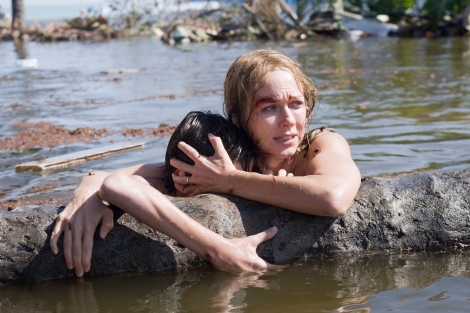
The Impossible tells an almost unbelievable story about a family that survived the 2004 Indian Ocean tsunami.

Naomi Watts | The Impossible

Playing the real-life survivor of the disastrous 2004 Indian Ocean tsunami, Watts had what she admits is the toughest, most daunting role of her career playing Maria Belon, who struggles to survive and bring her family back together after the waves hit their hotel and separate them. From a physical sense, there are few actresses who have ever had to endure more, and Watts spent the better part of a month being battered around in a water tank to demonstrate her character’s sheer will to live. But physical challenges aside, what makes Watts so effective here is also the essence of great screen acting. She plays it with her eyes, those soulful eyes that tell us so much about what she is going through and who she is. Watts is the sole nominee for this extraordinary film, so she might have an uphill climb, but if voters watch it, she could be the big surprise on Oscar night.

Q&A: Michael Haneke On ‘Amour’

David Mermelstein is an AwardsLine contributor.

Though his films might lead you to believe otherwise, Michael Haneke is surprisingly good-humored in conversation. His latest film, Amour, is nominated for five Oscars: best picture, foreign-language film, director, original screenplay, and actress. It soberly and precisely charts the decline of an aged French couple, played to a fare-thee-well by Jean-Louis Trintignant and Emmanuelle Riva. The film might be the writer-director’s most personal to date, for though it retains the intense focus and absence of sentimentality present in his other work, its plainly expressed—and inevitably touching—humanity was inspired by a chapter from Haneke’s own life. Until Amour, Haneke was best known in America for the Oscar-nominated The White Ribbon (2009), which chillingly depicts village life in pre-World War I Germany and hints at the foundations of Nazism, and Cache (2005), which plumbs issues of memory, guilt, and identity. Speaking from Madrid, during rehearsals for a production of Mozart’s Cosi fan Tutte, the filmmaker discussed with AwardsLine various issues connected with his recent film work.

AWARDSLINE: What compelled you to make Amour?

MICHAEL HANEKE: Nothing forced me [to make the film], but what motivated me was a case in my family. I was forced to look on as someone very close to me suffered—but not specifically as depicted in the film—someone for whom I cared for very much. And that led me to make the film.

AWARDSLINE: Your films are all very distinctive, but Amour is perhaps more specifically personal. I understand that you had an aged aunt who was ill. And she asked you to help her pass away. Was that part of what made you want to write and direct this film?

HANEKE: Yes. Of course, I had to tell her that I was unable to do it. I would have been put in jail if I had done it. But I was grateful for that alibi, for I don’t know if I would have had the strength to do it otherwise. But she did it anyway, without my help.

AWARDSLINE: And were there things in the film that you took directly from your experience with your aunt?

HANEKE: No, there’s nothing at all in the film based on my own experience. What’s shown in the film was the product of lengthy research in similar situations [to what the film shows] or from my imagination.

AWARDSLINE: You are now 70 years old. Do you yourself worry about the traumas of age and infirmity that you depict in Amour?

HANEKE: Billy Wilder was asked a similar question, and he responded, “The knocking is all the more insistent”. No, not the knocking at the door, but rather that the bombardments, so to speak, are coming ever closer.

AWARDSLINE: What was the most challenging scene to direct in Amour?

HANEKE: The pigeon. You can’t direct a pigeon. At most, you can entice it to move it a certain way by placing corn on the ground. But even then, it won’t obey your instructions. Of course I’m joking when I say that. The most difficult scene in the film is the one in which he [Jean-Louis Trintignant, the husband] suffocates her [Emmanuelle Riva, the wife]. The scene is preceded by a 10-minute-long monologue. And Jean-Louis Trintignant had a broken wrist at that time, so we had to shoot around that. And Emmanuelle Riva was concerned about her safety physically. So it was difficult for everyone involved.

AWARDSLINE: What about the scene in which Ms. Riva was naked in the shower? I can’t imagine that was easy to direct.

HANEKE: As a director, it wasn’t difficult for me. It was far more uncomfortable for her. But it was clear from the beginning that it was necessary to shoot this scene—to capture the fragility of her situation, what’s forced up on you as a human being [in such circumstances]. My job as a director was to make sure I didn’t betray her—that she wasn’t shown critically or depicted in an unpleasant light, but just to show what people in such situations have to go through.

AWARDSLINE: With regard to writing the script—was there one particular scene you especially enjoyed writing, and why?

HANEKE: It’s very difficult to say. It was so long ago, I can’t remember [any details about that writing process]. But generally when it comes to screenwriting I can say that if it’s flowing, you enjoy it; if not, it’s far less pleasant. But there’s always ambivalence—the struggle to put something there on a blank page when there was nothing there before. If it’s successful, you’re happy; if not, you’re depressed.

AWARDSLINE: You remade Funny Games in English, but does Hollywood hold any allure for you?

HANEKE: No, I’m willing to work anywhere [where] I’m given the working conditions I prefer. With the exception of a fascist country, I’m willing to work anywhere where I can work as I wish to work. I really can’t say [about Hollywood] because I’ve never worked in Hollywood. But in Hollywood, producers have their say in the project and can impose their own conditions on it. In terms of the conditions I require, I’m willing to work with a producer, but if a producer wants to make his own film, then he’s free to do so, just not with me.

AWARDSLINE: Whom do you make films for? Or does that change depending on the film?

HANEKE: For everyone and for myself [I make my films]. With Funny Games, I intended an attack on the spectators who enjoyed consuming violence. Unfortunately, it didn’t reach that audience. But like every filmmaker, I make my films to reach the widest audience possible.

AWARDSLINE: Some of your films are in German and others in French. How do you decide what language to film in?

HANEKE: In the case of this film, what determined that it be in French was that Jean-Louis Trintignant and Emmanuelle Riva only exist in France. Beyond that, if I have the good luck, I can call on collaborators [which is to say, producers] in different countries. It’s great to be able to do that. It’s very difficult to finance films these days. All my films have been coproductions, and that’s made things a lot easier for me. Absolutely Amour is a story that can take place anywhere in the Western world.

AWARDSLINE: But not The White Ribbon.

HANEKE: Naturally. Well, yes and no. The film wasn’t intended to be limited to Germany. It’s rooted in the German past, but it shows the dangers of when certain ideas are transformed into ideology. The lesson of the film isn’t limited to Germany. It draws on the German past to tell a lesson that can be applied anywhere. For example you could shoot a similar story in any country with an extremist Islamic regime. The details would be different, but the basic principles would be identical. In the case of The Piano Teacher, too, it was because of the actress [i.e., Isabelle Huppert] that we filmed in French.

AWARDSLINE: And are there specific challenges attached to one or the other language?

HANEKE: I never write in French. I always write my scripts in German, and if they need to be translated, I give them to the same translator I’ve always used. Then I revise them line by line with the translator. Of course, it’s easier to work in your mother tongue. Not because it’s easier to express yourself in the script, but because it’s easier to follow what’s happening on the set if you’re working in your mother tongue. It takes a lot more effort when you’re working in a foreign language. But having worked so often in French now, the stress has diminished.

AWARDSLINE: You’ve made a number of films with Isabelle Huppert—in particular The Piano Teacher and Time of the Wolf, but also Amour, of course. What is it about this actress that you find so compelling, and can we expect to see her again in future films from you?

HANEKE: She is like a Stradivarius violin, on which you can play Bach, Mozart or Brahms, and it will always sound good. I like to write for actors I know and with whom I’ve worked before. You can write to their strengths and weaknesses and write roles that are better suited to them.

AWARDSLINE: I understand you were once a film critic. So were Truffaut and Godard, of course—and Bogdanovich too. Do you think there is a something film critics bring to filmmaking that others do not?

HANEKE: It’s hard to say. You become a film critic because you’re interested in film. I don’t know whether knowing so much about cinema leads you to make better films, but it certainly can’t hurt.

Q&A: Robert De Niro On ‘Silver Linings’

Pete Hammond is Deadline’s awards columnist. This article appeared in the Feb. 6 issue of AwardsLine.

Robert De Niro hit his stride in terms of movie recognition in 1973 when both Bang the Drum Slowly and Mean Streets put him on the map. The latter remains a special favorite because it marks the beginning of his long association with Martin Scorsese. Remarkably, De Niro didn’t come close to peaking after winning his first supporting actor Oscar for 1974’s The Godfather Part II—he’s still going strong nearly four decades later, thought by many to be our greatest living film actor. But effortlessly playing the young Don Corleone and doing it entirely in a Sicilian dialect should have signaled to anyone that this was a talent like no other. A look at the other roles that won him recognition from the Academy an impressive six times overall between 1975 and 1992 only confirms that early promise. There’s Taxi Driver, The Deer Hunter, Awakenings, Cape Fear, and of course, Raging Bull, which brought him a second statuette for best actor in 1980. But consider some of the brilliant performances Oscar didn’t recognize, and you get an idea of the career we are talking about here: The King of Comedy, The Mission, Midnight Run, Awakenings, Once Upon a Time in America, Casino, Heat, and one especially close to his heart, Everybody’s Fine, to name just a few. As a producer, entrepreneur, and founder of the ever-growing Tribeca Film Festival, De Niro is not only a multifaceted actor, he’s a multifaceted person, who might be hitting his stride again in the same year he will turn 70. After waiting 21 years, De Niro now has a richly deserved seventh Oscar nomination for his role as Pat Sr. in Silver Linings Playbook, and he’s back in the supporting actor category for the first time since the Academy started its admiration society for him 40 years ago. Will history repeat itself? For De Niro, he’s just happy to still be in the starting lineup and still getting roles as rich as this one.

AWARDSLINE: How did Silver Linings Playbook come about? The character in the book is markedly different than what Pat Sr. became in the movie.

ROBERT DE NIRO: Yes, a lot different. (David O. Russell) turned the character inside out. (Pat Sr. is) very interesting in the book, but this was another way to do it. There were more colors in a sense and the other was more consistently not communicative, kind of funny in his own way.

AWARDSLINE: How was working with David O. Russell’s directorial style? It’s freewheeling and creative, shooting at 360-degree angles…

DE NIRO: It is different. I have done some things like that, but not really. His style is very unique, specific to him, and I think it’s really great because it adds an immediacy, a spontaneity, an unpredictability. You don’t know where it is really going to go, and it has that energy to it with a lot of the handheld stuff. He will throw lines at you. You already know what you are doing scriptwise, but there are times he is going to throw lines at you that are spontaneous and right. And that’s great.

AWARDSLINE: There is a lot of Oscar buzz again for Silver Linings. Does that mean much to you?

DE NIRO: Of course I am happy about it all, but I don’t want to expect much because I don’t want to be disappointed: You expect, and you think, and it never happens. So all I try to do is be even-keel about stuff.

AWARDSLINE: Are the movies you received the Oscars for the ones you think you should have won for or are there others where you thought you should have won instead?

DE NIRO: I don’t know. There’s so much competition out there. There’s so many good performances, so many good movies I don’t know what I would be. It depends on the alignment of the stars sometimes for certain things. I think for Godfather II, Raging Bull, yes. There were others. Who knows?

AWARDSLINE: Were there any films in the past 20 years that have been really frustrating experiences for you? Looking down the list, I see one: Everybody’s Fine. I thought it was terrific.

DE NIRO: I think it was left flat by Miramax and the parent company (Disney). They said they weren’t going to do that, but of course they did. How you present it is important—I know the director (Kirk Jones) was concerned about it, in America at least. In England, they had an interesting poster which is more right for it. I never say this about myself, but I was proud of that (performance), and Kirk is a terrific director. I certainly worked very hard on that one.

AWARDSLINE: Is it tougher finding scripts you are excited by these days?

DE NIRO: It’s always hard to find good scripts. That’s just the way it is, unless it is a director like David or (Martin) Scorsese or certain directors who you know are smart and whatever they do is going to be interesting. You just have to rely on the director, because it is not always on the page.

AWARDSLINE: You seem to be working all the time—you obviously still love making movies.

DE NIRO: You do a movie, and you don’t know it is going to be received. If Silver Linings Playbook was received in another way, I would say it doesn’t really take away from everything we did. You can’t predict how the public or the audience is going to feel about something. Taxi Driver was the same thing. I just don’t know. I am happy when people like them, but you do your best, and that’s all you can do.

AWARDSLINE:  I personally loved Bang the Drum Slowly at the beginning of your career in 1973, but is there one movie that stands out from the rest?

DE NIRO: Mean Streets. I had a great time with Marty, being the first feature we did together. There’s also working on something that is not the most fun, but that could be one that’s received well. You just never know.

AWARDSLINE: Will you be teaming with Scorsese again anytime soon?

DE NIRO: Yes, we are planning on it. We are trying to narrow the time down. Its original title was I Heard You Paint Houses. They have been calling it The Irishman lately—I don’t know what it will be called. But it is me, Al Pacino, Joe Pesci, and Marty directing. I never talk about stuff—I don’t like to because it seems whenever you do, it never works out. I’m so careful. But this one I did. I am feeling good about it and hoping it will all work out.

The Best Picture Contenders, Part 3

The last in a three-part series in which AwardsLine breaks down all nine of the best picture contenders.

Django Unchained didn't screen for the SAG nominating committee, which meant it was left off of one of the most respected Oscar-forecasting nomination lists.
Django Unchained didn’t screen for the SAG nominating committee, which meant it was left off of one of the most respected Oscar-forecasting nomination lists.

Django Unchained

What the Academy says:  5 nominations (Picture: Stacey Sher, Reginald Hudlin, Pilar Savone; Supporting Actor: Christoph Waltz; Original Screenplay: Quentin Tarantino; Cinematography: Robert Richardson; Sound Editing: Wylie Stateman)

What the public says: $147.5M domestic boxoffice; $111.5M international (as of Feb. 1)

What Pete Hammond says: Quentin Tarantino’s spaghetti-western homage was a Christmas Day release and struggled just to meet its late-year release date. That means its five nominations including best picture are an impressive feat considering many members probably didn’t get a chance to see it because of the earlier voting schedule. It just shows the love for all things Tarantino, as this is the third film for which the director has seen a best picture nom. Although unlike Inglourious Basterds and Pulp Fiction, Tarantino didn’t earn a best director nomination this year. However, along with Michael Haneke for Amour, he’s a frontrunner for original screenplay for this wild and somewhat controversial mashup of cowboys and slaves. It has little chance to prevail as best picture, but because it’s now certified as Tarantino’s biggest boxoffice hit to date, that probably doesn’t matter.

What other awards say: 2 Golden Globes for supporting actor Christoph Waltz and Tarantino’s screenplay, 1 CCMA win for original screenplay, 5 BAFTA noms, and a PGA nom.

What the critics say: “What Tarantino has is an appreciation for gut-level exploitation film appeal, combined with an artist’s desire to transform that gut element with something higher, better, more daring. His films challenge taboos in our society in the most direct possible way, and at the same time, add an element of parody or satire… The film is often beautiful to regard. Tarantino’s Southern plantations are flatlands in spring, cloud-covered, with groups of slaves standing as figures in a landscape.”—Roger Ebert, The Chicago Sun-Times

What the producer says: “When Quentin made Reservoir Dogs, he realized that some people didn’t know they were allowed to laugh. When he made Pulp Fiction, Quentin said he needed to let the audience in on the joke,” explains Stacey Sher. “That’s the reason why humor is a part of his work, because that’s how you can take the dramatic underpinnings of everything that he’s doing that are profound and emotional and that take you on the journey. There’s always romance in Quentin’s films, whether it’s unrequited like Mia Wallace and Vincent Vega or even cartoony like Pumpkin and Honey Bunny in Pulp Fiction, and ultimately all of the stuff that has been subtexted in his movies, in these great love stories, is text in Django’s quest to find his Broomhilda. So he mixes these things. These are the colors in his tool kit. They’re sophisticated, they’re surprising and allow you to go on his journey that includes things that are rough.”

What the filmmaker says: “I was never stirred by how much I put the N-word in my script,” Tarantino said at this year’s Golden Globes. “If someone out there is saying I use it more in my movie than it was used in the Antebellum South, well, feel free to make that case. But no one is making that case. They’re saying I should lie, whitewash and massage (my script), and I don’t do that when it comes to my characters. I’m more concerned about the slavery in America: The drug laws that put more blacks in jail than they did in the ’70s, the prisoners that are traded back and forth between public and private prisons — that’s straight-up slavery.”

Jessica Chastain stars as a relentless CIA agent pursuing bin Laden in Zero Dark Thirty.

Zero Dark Thirty

What the Academy says:  5 nominations (Picture: Mark Boal, Kathryn Bigelow, Megan Ellison; Lead Actress: Jessica Chastain; Original screenplay: Mark Boal; Film Editing: William Goldenberg, Dylan Tichenor; Sound Editing: Paul N.J. Ottosson)

What the public says: $71.8M domestic boxoffice; $7.7M international (as of Feb. 1)

What Pete Hammond says: When Zero Dark Thirty started the season off by winning one major critics award after another, it appeared that it could have unstoppable momentum all the way to the Academy Awards. After all, this film was the followup project for the Oscar-winning The Hurt Locker team of director Kathryn Bigelow and screenwriter Mark Boal. And Sony Pictures had a strong release plan, opening it slowly, building awards and word of mouth, and then going wide the day after Oscar nominations. Unfortunately, controversy reared its ugly head with a trio of powerful U.S. senators and the acting head of the CIA all criticizing the film for its depiction of torture as a device used to ultimately capture and kill Osama bin Laden. The studio and the filmmakers were slow to respond and defend their film, although they eventually did come out swinging. Then the Academy’s director’s branch, as they did with Ben Affleck and Tom Hooper, surprisingly snubbed Bigelow, who was thought to be a certain nominee for her remarkable work. Although the film got five key nominations, its momentum from the critics awards slowed. Though star Jessica Chastain won at the Globes and Critics Choice, and the boxoffice was extremely strong when it finally went wide, its inevitability as a major best picture threat seemed questionable. But it is a crazy year, and another chapter might still be written for Zero Dark Thirty, especially if voters feel big government is trying to roll over artists.

What other awards say: 5 BAFTA noms, 2 CCMAs for best actress Chastain and film editing, 1 Golden Globe win for Chastain, , as well as DGA, and WGA noms.

What the critics say: Zero Dark Thirty is a puzzle that keeps changing and re-forming; we’re held by fleeting references, by the workings of Maya’s calculations. Bigelow and the cinematographer, Greig Fraser, make fluid but firm use of a handheld camera, without excessive agitation, so that you feel pitched into the middle of things but also see clearly what you need to see. A sequence in which a Jordanian who may provide access to bin Laden approaches an American military installation is drawn out to a level of almost unendurable suspense. Two unexpected bomb explosions throw you back in your seat; they have a ferocious power that makes most movie explosions feel like a mere perturbation of digits.”—David Denby, The New Yorker

What the producer says: “I didn’t want to play fast and loose with history,” says Boal, “and I wanted to track as closely as I could with what was known of the intelligence hunt and hopefully bring together all these disparate pieces of information. But you’re compressing 10 years into two hours, so that’s where all the normal things that movies do to compress time were things that I did, and you’re also trying to dramatize events to tell a story most effectively. That doesn’t mean the events aren’t true, it just means you’re making them as dramatic as you possibly can.”

What the filmmaker says: “It’s not just the modern military genre (I’m attracted to), but also it’s the topicality that I find really riveting and galvanizing,” Bigelow says. “(Boal) was certainly reporting this story as it was unfolding, and there’s a kind of urgency and timeliness to that. And at the same time, I think we both felt a responsibility to tell it in a certain way, to tell it responsibly and to be faithful to the research.”

Beasts of the Southern Wild went against all of the rules of filmmaking, but the risks paid off for first-time feature director Benh Zeitlin.

Beasts of the Southern Wild

What the Academy says: 4 nominations (Picture: Dan Janvey, Josh Penn, Michael Gottwald; Directing: Benh Zeitlin; Lead Actress: Quvenzhané Wallis; Adapted Screenplay: Lucy Alibar, Behn Zeitlin)

What the public says: $11.7M domestic boxoffice

What Pete Hammond says: This is definitely the little indie movie that could. Debuting only a year ago at the Sundance Film Festival where it won the Grand Jury Prize, few would have guessed that it would become such a major Oscar player just one year later with nominations for best picture, adapted screenplay, director, and lead actress for its 9-year-old star, Quvenzhané Wallis. It is clearly a Cinderella story for this unusual film and a feather in the cap for Sundance as well as Fox Searchlight, which picked up the film and ran with it. As the only best picture nominee to come from the first nine months of the year, it also stands out as the beneficiary of a passionate support base in the Academy. However, like last year’s Searchlight nominee, The Tree of Life, the love probably stops with the nomination, but it could triumph the day before at the Independent Spirit Awards.

What other awards say: 4 Cannes Film Festival awards (FIPRESCI Prize, Golden Camera, Prix Regards Jeune, and Ecumenical Jury), 2 Sundance Film Festival wins (cinematography, Grand Jury Prize), 4 Indie Spirit noms, 1 CCMA win for Wallis as best young actor/actress, and 1 BAFTA nom for adapted screenplay.

What the critics say: “Played by Quvenzhané Wallis, an untrained sprite who holds the camera’s attention with a charismatic poise that might make grownup movie stars weep in envy, Hushpuppy is an American original, a rambunctious blend of individualism and fellow feeling. In other words, she is the inheritor of a proud literary and artistic tradition, following along a crooked path traveled by Huckleberry Finn, Scout Finch, Eloise (of the Plaza), Elliott (from E.T.), and other brave, wild, imaginary children. These young heroes allow us, vicariously, to assert our innocence and to accept our inevitable disillusionment when the world falls short of our ideals and expectations.”—A.O. Scott, The New York Times

What the producer says: “The premise was a challenge from the get-go, and we weren’t backed by a major studio. We made it with Cinereach, a nonprofit that is challenging the world with the movies they’re putting out. We went in saying, ‘We want to make a movie with a 6-year-old who’s never acted before and put her opposite someone who’s never acted before.’ And Cinereach said, ‘Yes, that’s the miracle of the movie,’ ” says Gottwald.

What the filmmaker says: “When we shot the last scene between Quvenzhané Wallis and Dwight Henry,” says Zeitlin, “when both actors had to cry—they were first-time actors, so they didn’t have years of training to know how to just switch on the waterworks, so we all had to work together at that moment to make it happen. And then I was crying, the cameraman was crying, the boom operator was crying, the producers were crying—we all put ourselves in the mindset of losing a parent, and when I got the take, it was that moment where I knew we had gotten the film.”

The Best Picture Contenders, Part 2

The second in a three-part series in which AwardsLine breaks down all nine of the best picture contenders. This article appeared in the Jan. 30 issue of AwardsLine.

Silver Linings Playbook: David O. Russell’s funny and moving character study of two broken people who use each other to mend was perhaps the critical and audience consensus winner at Toronto and the one to beat come Oscars.

Silver Linings Playbook

What the Academy says:  8 nominations (Picture: Donna Gigliotti, Bruce Cohen, Jonathan Gordon; Directing: David O. Russell; Lead Actor: Bradley Cooper; Lead Actress: Jennifer Lawrence; Supporting Actor: Robert De Niro; Supporting Actress: Jacki Weaver; Film Editing: Jay Cassidy, Crispin Struthers; Adapted Screenplay: David O. Russell)

What the public says: $71.4M domestic boxoffice; $19.8M international (as of Feb. 1)

What Pete Hammond says: Because it is a comedy, albeit one laced with drama, Silver Linings Playbook is at a disadvantage right out of the starting gate because comedies don’t traditionally win best picture Oscars. But this critically acclaimed story about two broken people who are trying to get their lives back together benefits from a passionate base of admirers, and that’s key in building a best picture campaign. Plus, it has the Oscar campaign know-how of the Weinstein Co., which has won the best picture Academy Award for two years running. And now it has achieved a landmark in Oscar nominations, becoming the first film since Warren Beatty’s 1981 film Reds to win nods for picture, screenplay, director (for David O. Russell who was overlooked by the DGA), and all four acting categories. Additionally, it even got an editing nomination, which every best picture winner has had since 1980. The pundits say it is an underdog, but the tea leaves are starting to say it could really happen.

What other awards say: 3 BAFTA noms, 4 CCMA wins for acting ensemble, best comedy, best actor in a comedy for Bradley Cooper, and best actress in a comedy for Jennifer Lawrence; 1 best actress in a musical/comedy Golden Globe for Lawrence; 5 Spirit Award noms; 1 SAG Award for lead actress Lawrence; plus a WGA nom for Russell.

What the critics say: “Lawrence and Cooper face off in the most convincing way, matching each other stride for crazed stride. It would spoil the fun to even hint at all what goes down between two people equally possessed by partners who are not coming back, but you can be sure it won’t be dull. That’s also true for Silver Linings Playbook as a whole. Russell’s gift for smart, honest, and unexpected dialogue and situations keeps you off-balance in an almost addictive way. He’s brought a reality to the world’s damaged, uncertain strivers that makes them next door to irresistible, and that can’t have been an easy thing to do.”—Kenneth Turan, Los Angeles Times

What the producer says: “I don’t want to speak for (Russell), but he does say this all the time, that having had the experience on The Fighter in dealing with the creative core of that movie, he felt as though he could extend what he was exploring in that film,” Donna Gigliotti explains. “He really does think about these two films as companion pieces. And you can see why he thinks that. They’re dealing with similar themes. So while it wasn’t easy—I don’t want to undersell this idea that it was like, ‘Oh, great, he made The Fighter. Fine, let him make Silver Linings’—there were a lot of issues going on in terms of how I got him the budget that he needed, putting together textiles in Philadelphia, shooting it on a schedule that made sense for the budget. After The Fighter, he wanted to go back to work; there were other projects out there. But I never doubted that this was the one that he was most attached to emotionally.”

What the filmmaker says: “I needed to work, I needed to write something and I needed to make a living,” Russell says. “And I also really, really responded to the material. So it was a matter of having the tone right. You had to not stop working on the tone all the way through the editing process. The key to the whole thing is to keep it real, is to keep the people’s emotions committed and real.”

John Goodman, left, and Alan Arkin play Hollywood insiders who collaborate with the CIA in Argo.

Argo

What the Academy says:  7 nominations (Picture: Grant Heslov, Ben Affleck, George Clooney; Supporting Actor: Alan Arkin; Film Editing: William Goldenberg; Original Score: Alexandre Desplat; Sound Editing: Erik Aadahl, Ethan Van der Ryn; Sound Mixing: John T. Reitz, Gregg Rudloff, José Antonio García; Adapted Screenplay: Chris Terrio)

What the public says: $118.2M domestic boxoffice; $71.5M international (as of Feb. 1)

What Pete Hammond says: With its director Ben Affleck famously dissed by the directors branch, this extremely well-liked (if not loved) movie managed to land seven nominations overall, a good showing that keeps it in the race—and remember Affleck still got one of those noms as a producer of the film with Oscar veteran George Clooney and Grant Heslov. But can it become the first film since 1989’s Driving Miss Daisy to win best picture without a director nomination? Time will tell if it can and also if, oddly, it only wins best picture, considering the film is not really thought of as a frontrunner in any of the other six categories in which it is nominated. Now wouldn’t that be an Oscar twist for the ages?

What other awards say: 7 BAFTA noms, 2 Golden Globe Awards for best director and best drama, 2 CCMA wins for best picture and director, 1 SAG Award win for ensemble, PGA Zanuck Award, plus DGA and WGA noms.

What the critics say: “Mr. Affleck handles his own roles, on camera and behind it, with a noticeable lack of self-aggrandizement. He doesn’t show off with his direction or the performances, going for detail instead of bombast with eerie silences, traded glances, trembling gestures, and beaded sweat. (It’s a good guess that he’s committed the unnerving opening of Three Days of the Condor to memory.)”—Manohla Dargis, The New York Times

What the producer says: “We thought it would be a tricky film to market because it’s got an odd title, and it’s a very hard film to sell,” says Heslov. “On one hand, it’s a real nail-biter thriller, and on the other hand, there’s a lot of comedic moments. But it’s not a comedy. If you sell it as a comedy, people are going to be disappointed. So it was tricky, but I think the studio did a great job. We’re really happy with what they did with it.”

What the filmmaker says: “L.A. turned out to be our saving grace. Had we just stayed in Turkey, we would have been completely screwed because we couldn’t get any Farsi speakers,” Affleck says. “Then I was told there’s a huge population of Iranians here—they call it ‘Tehrangeles,’ and there are half a million Persians here. It was like realizing that you’re sitting on a gold mine. Not only that, but there’s this very robust theater tradition and acting history, and all these bilingual people. They really understood what you wanted in English, and they could do it well in Farsi. So we switched the airport scene (to L.A.), and we had 500 Persians in Ontario, CA, pretending to be stopping our houseguests from leaving Tehran. We had so much enthusiasm. For them it was like someone was telling their story. They knew the airport. They knew that the tile in the bathrooms was teal, to the point where I would go, ‘That’s good. We don’t need all that, we don’t have any scenes in the bathroom.’”

The French-language Amour follows a husband who must care for his ailing wife.

Amour

What the Academy says:  5 nominations (Picture: Margaret Ménégoz, Stefan Arndt, Veit Heiduschka, Michael Katz; Directing: Michael Haneke; Actress: Emmanuelle Riva ; Original Screenplay: Michael Haneke; Foreign Language Film: Michael Haneke [Austria])

What the public says: $1.8M domestic boxoffice; $13.1M international (as of Feb. 1)

What Pete Hammond says: One of the rare films to win both best picture and best foreign language film nominations (Z, The Emigrants, Life Is Beautiful, Crouching Tiger, Hidden Dragon were the others), Amour looks very strong with directing, writing, and lead actress bids as well. However, no foreign language movie has ever won best picture, and it is a long shot to think the Academy will award it both picture prizes since it is a foregone conclusion it wins in the foreign film category. An original screenplay win for writer-director Michael Haneke is probably most likely to be the only other Oscar category it could take, matching the feat of another film that starred Amour’s leading man, Jean-Louis Trintignant, when A Man and a Woman won both in 1966. But in a year with so many genuine contenders and the possibility of a widely split vote among as many as six films, could this one sneak in? It has a passionate fan base in the Academy, and anything is possible in this topsy-turvy year.

What other awards say: Cannes Film Festival Palme d’Or winner, 4 European Film Awards (best actor, actress, director, film), 1 Golden Globe win for foreign language film, 4 BAFTA noms, 1 CCMA win for best foreign language film, and an Indie Spirit nom for best international film.

What the critics say: “Considering Haneke’s confrontational past, this poignantly acted, uncommonly tender two-hander makes a doubly powerful statement about man’s capacity for dignity and sensitivity when confronted with the inevitable cruelty of nature. Acquired by Sony Pictures Classics before Cannes, this autumnal heartbreaker should serve arthouse-goers well—not for first dates, but for those who’ve long since lost count.”—Peter Debruge, Variety

What the producer says: “When I first met Michael Haneke, it was during the sound mixing of The Piano Teacher, and he said to me, ‘Perhaps we can do something together?’ I said, ‘I’m not sure I can spend two years of my life with cruelty and blood!’ And he let out this big Austrian laugh,” exclaims Margaret Ménégoz who has worked with him since 2003’s Time of the Wolf. But did she have any sway in terms of convincing Haneke to take on more humane films like Amour? “I don’t think so,” says Ménégoz. “He decided that.”

What the filmmaker says: “I don’t think I made a film about aging or dying, but rather in my personal life, I was confronted with the case of someone who I loved very deeply, someone in my family who was suffering very deeply, and I had to look on helplessly at the suffering. That led me to think about making the film. I could just as easily have made a film about a 40-year-old couple who is coping with a child dying of cancer, but however tragic that story would have been, it would have remained an individual case, whereas old age is something all of us are going to have to cope with at some point,” Haneke explains.