Composers And Lyricists Discuss Their Entries In The Oscar Race

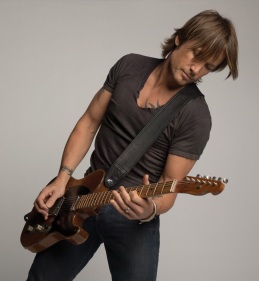
Keith Urban, pictured, and Monty Powell wrote "Only You"  for Act of Valor.
Keith Urban, pictured, and Monty Powell wrote “Only You” for Act of Valor.

ACT OF VALOR

“For You,” Monty Powell & Keith Urban

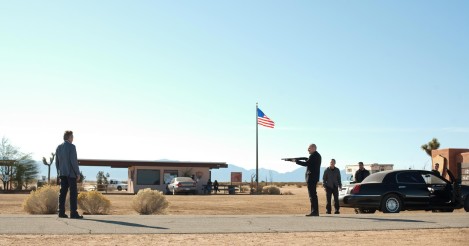
After watching Act of Valor, country music icon Keith Urban sat down at his Nashville home with his cowriter Monty Powell to discuss their feelings about the military action film they just saw; an anomaly that specifically cast active U.S. Navy Seals performing fictionalized missions.

“I asked myself, ‘Was there something I would die for?’  Certainly, in my case, it was my family.  That was the spirit of the song for me,” explains Urban about the film’s sacrificial theme. “It’s easy to watch a military film and have an opinion, but for me it wasn’t about those things, rather, if I had to take a bullet, I would do it for them.”

It was that kind of heart that brought soul to the end-titles song for Relativity’s hit winter film ($70 million), not to mention resonating with Urban’s fanbase and sending “For You” to the No. 6 slot on Billboard’s Country Songs chart.

When writing the opening lines of “For You,” the duo drew inspiration from a moment in which one of the Navy SEALS jumps on a grenade and gives his life for the team. “We decided to start the song seconds after he died, and that if he came back from the dead, here’s what he would have to say,” explains Urban.

Urban and Powell used banjo to construct an up-tempo signature riff to pull the listener in before segueing to acoustic guitar and climaxing with a Strat guitar solo to “respond to the epic landscape of the music,” says Urban.

Shooting the music video proved exhilarating, as a number of the Bandito Brothers production crew reconvened on the original California desert site, the Silurian Dry Lake, where they shot Act of Valor four years prior. A particular high point during the video was the detonation of explosives in the background of Urban’s performance.

Given the amount of music-themed films that his wife, Nicole Kidman, has headlined, Urban looks forward to contributing a track to one of her projects down the road. In fact, director Lee Daniels reached out to him about the possibility of contributing a song for Kidman’s latest movie, The Paperboy. But when you’re a country recording artist with 15 million album sales under your hat, a world tour, and American Idol judging duties, timing is key.

—Anthony D’Alessandro

CHASING ICE

“Before My Time,” J. Ralph

Composer J. Ralph, who has scored two Oscar-winning documentaries, The Cove and Man on Wire, was drawn to his latest project by a somewhat difficult challenge. In working on the climate-change doc Chasing Ice, he wanted to bring a voice to the ice.

“I wanted to create an awareness of feeling, a spiritual and visceral projection of the ice breaking up,” says Ralph, who enlisted the vocal talent of his friend Scarlett Johansson for the title track, “Before My Time.”

Johansson is paired with violinist Joshua Bell on the song, which brings an emotional close to the powerful examination of the changing glaciers. “I wrote the song as a meditative and endless look at the feelings we face daily when governments and corporations neglect the changes in climate control,” Ralph says. “Scarlett provided the Mother Earth feeling that I wanted to express in the song. She knew where to find and emphasize the specific emotional beats in the tune. The one instrument that spoke to me was the violin, and that’s where Joshua Bell complemented Scarlett’s voice so well. Her voice and his violin are the only two instruments you hear on ‘Before My Time.’ ”

Ralph admits he was tempted to ask Carly Simon or other well-known singers he’s worked with to sing “Before My Time,” but the first person he played Johansson’s vocals for—rock legend Stephen Stills—echoed his enthusiasm. “She can really sing and knows how to act out the song,” Stills says.

Ralph, who would love to write an original score for a feature film, realized from the beginning of Chasing Ice that audiences would have to pay attention to the scientific details discussed on screen. “You can have any opinion you desire on climate control, but when you see glaciers physically disappearing before your eyes, it’s hard not to be emotionally moved,” he explains. “The movie grinds to a halt at the end then becomes surreal, so the song gives clarity to the audience. I wanted the lyrics to say that you can’t protest or think you are bigger than Mother Nature. Just look at the news footage of Hurricane Sandy.”

—Craig Modderno
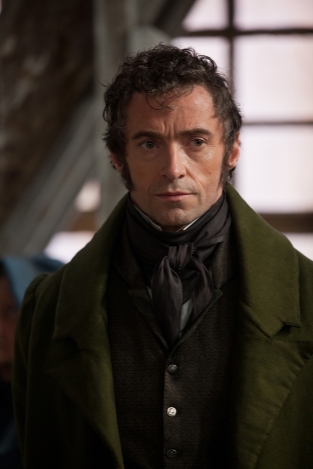
The original composers of Les Misérables wrote a new original song, "Suddenly," for Hugh Jackman to perform in the film.
The original composers of Les Misérables wrote a new original song, “Suddenly,” for Hugh Jackman to perform in the film.

LES MISÉRABLES

“Suddenly,” Alain Boublil & Claude-Michel Schönberg

After nearly 30 years and one of the longest runs in musical history, the much-touted film version of Les Misérables includes a new song, penned and composed by the musical’s original lyricist, Alain Boublil, and original composer, Claude-Michel Schönberg.

Both Boublil and Schönberg are quick to credit the notion of adding a new song to the film’s director Tom Hooper, who’d pinpointed a chapter he wanted to incorporate from Victor Hugo’s 1862 novel, upon which the eponymous musical is based.

“It is the first time Jean Valjean meets the young Cosette, just as he rescues her from the Inn of the Thénardiers,” explains Boublil. “We called the song ‘Suddenly’ because (Jean Valjean) suddenly discovers the world is not all bad, it’s not about revenge and hatred. Hugo described how two people who’d been unhappy—the girl and Jean Valjean, who was in jail for 19 years for nothing—can come together to create happiness. This song is a discovery of love.”

“There’s a good reason for this very tender, very moving song,” Schönberg adds, “and it’s much easier to show this on the camera, with a hand stroking the head of a little girl, than it is to capture that (detail) on stage.”

Both Boublil and Schönberg started out as pop songwriters in France, and throughout their three decades of collaborating—which also included the musical blockbuster Miss Saigon—their process has remained unchanged. First, they discuss at great length what a song is going to be about, then Schönberg composes the music, and last, Boublil writes the lyrics.

Both claim they’ve always been open to a film version of their musical Les Mis, but nothing ever came to fruition. “We went as far as we could, but projects have their own strength, they carry on or they don’t,” says Boublil. Then they were introduced to Hooper, who’d just won the Oscar for The King’s Speech. Hooper insisted the film version of Les Mis be the musical in its entirety and not a movie crafted around songs. He also insisted it be shot live rather than lip-synched, which had been the standard method for filming songs.

“We were working with a director for a new medium with new avenues for ways things couldn’t be said on stage,” Boublil says.

Aside from the addition of “Suddenly,” the film remains true to the original musical. “No songs have been removed,” assures Boublil. “That would have been a sacrilege.”

—Cari Lynn
55512.001.tif
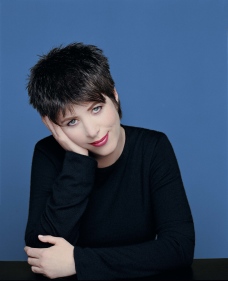
Diane Warren penned the song “Silver Lining” for the Weinstein Co. film Silver Linings Playbook.

SILVER LININGS PLAYBOOK

“Silver Lining,” Diane Warren

“When it comes to the Academy Award, I feel like Susan Lucci,” jokes songwriter Diane Warren, who has six best song Oscar nominations but no wins. Her last nom was in 2002 for a song featured in Pearl Harbor, but Warren has a good chance again this year for penning “Silver Lining,” the romantic theme song for director David O. Russell’s offbeat comedy-drama Silver Linings Playbook. Warren’s lyrics, performed by Jessie J, highlight a dance-rehearsal scene between Bradley Cooper and Jennifer Lawrence at a crucial moment late in the picture.

Though she wasn’t able to see the completed film before setting to work, Warren says she loved the script. “As soon as I read the script, the computer in my brain started putting together the song, which was a little more up-tempo and soulful and more retro than the version in the film,” Warren explains. “The idea was to show an important change in the temperamental relationship between the two leads that reflected the fun and romantic joy of going crazy.”

Warren’s hardest problem was convincing executive producer Harvey Weinstein to let her friend Jessie J sing the song in the film. “Harvey kept saying, ‘Get me Beyoncé or Adele.’ Harvey wanted a name, a star to sing it. Later on, he suggested turning it into a duet with Bruno Mars and any female singer the public would know. When Jessie J closed the Olympics, Harvey, to his credit, claimed she was now a star and gave us permission to use her.”

Warren, who has written songs for three different testosterone-driven Jerry Bruckheimer-produced action films, enjoyed the challenge of writing for a gentler film. “You get big-bucks royalties from writing songs for extremely popular male-bonding movies like Con Air, Pearl Harbor, and Armageddon,” she says. “This time, it was nice to do a zany romantic song that showed more of my
feminine side.”

—Craig Modderno

STAND UP GUYS

“Old Habits Die Hard” & “Not Running Anymore,”Jon Bon Jovi

When Jon Bon Jovi received an Oscar nomination almost 22 years ago for his composition “Blaze of Glory” from Young Guns II, he didn’t think it would take him that long to try again. “I was watching an awards show earlier this year, and I thought to myself, Why haven’t I written a film score lately? Oh, yeah, it’s because I made six albums in the past decade, and I forgot about my film work,” he says, somewhat amused at his benign neglect of his scoring and promising acting career. (Though he had a small part last year in director Garry Marshall’s New Year’s Eve.)

But Bon Jovi has finally turned back to his film work, writing two songs—“Old Habits Die Hard” and “Not Running Anymore”—for the gangster movie Stand Up Guys, starring Al Pacino and Christopher Walken. Though he wrote them off the script prior to shooting, the New Jersey rocker’s follow-through was quite unconventional. “Originally, I played my guitar and sung my songs on my iPod for the filmmakers. Then, when they started shooting, I went on location, and I became these guys in my head. I was very low-key and absorbed the atmosphere to fine-tune the songs, which are very specific to the action onscreen.

“The funny thing is, I love writing songs for films,” Bon Jovi continues. “My band is very supportive of me doing this because it teaches me humility. Musicians are in awe of actors and both respect each other’s craft. After he saw the film, Al wrote me a nice letter saying it was the best song he heard in a movie since Bang the Drum Slowly. That’s the kind of compliment that makes me want to do more movies.”

Bon Jovi admits his life would change a bit if either of his songs were to get attention from the Academy. “I may have to shift some things since my band will be on the road then. I can afford to give up the day job (for that)!”

—Craig Modderno
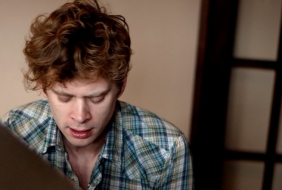
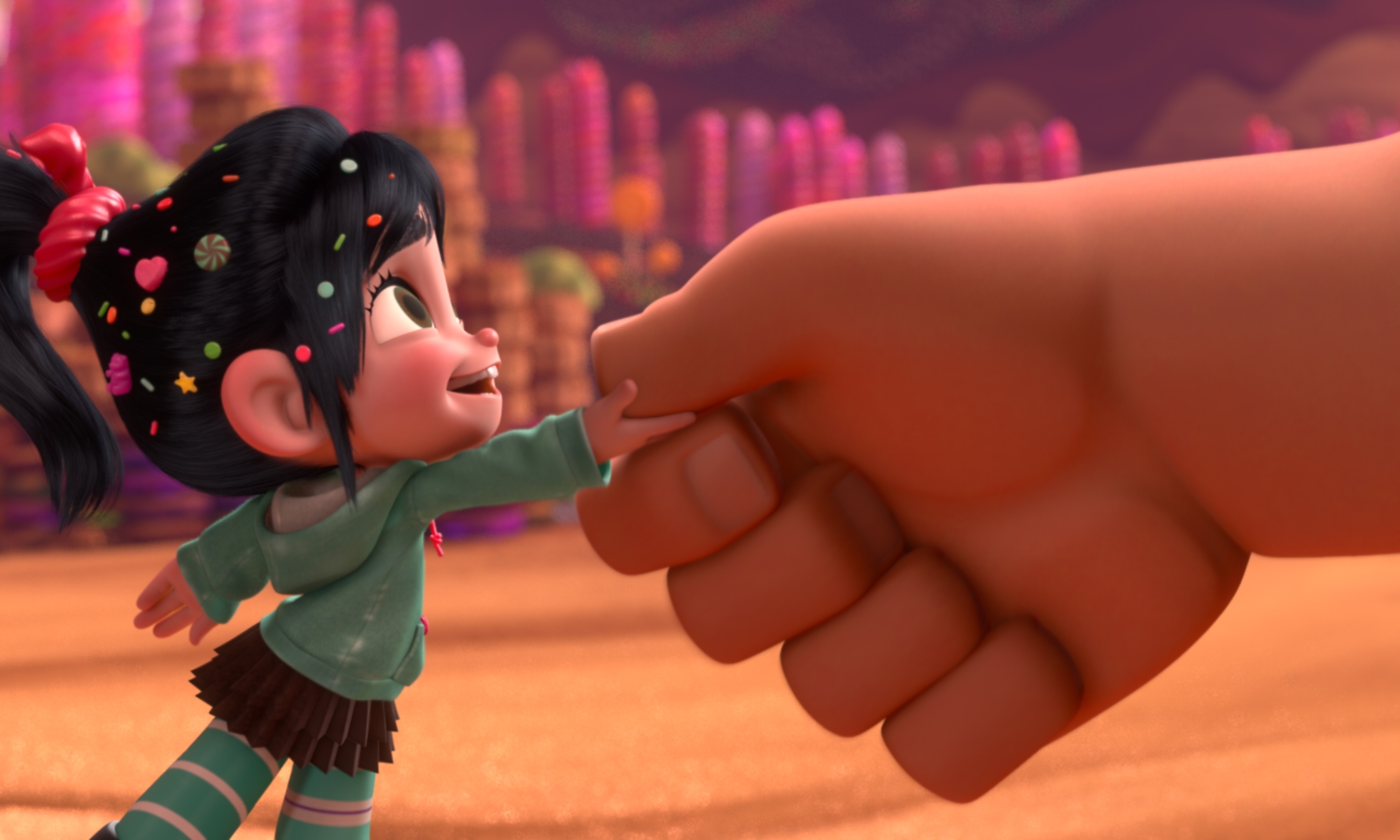
Matt Thiessen, pictured, wrote "When Can I See You Again?" with Adam Young for Wreck-It Ralph
Matt Thiessen, pictured, wrote “When Can I See You Again?” with Adam Young for Wreck-It Ralph

WRECK-IT RALPH

“When Can I See You Again?”Adam Young & Matt Thiessen

When Adam Young received a call from Disney Animation asking him to pen an original song for the animated film Wreck-It Ralph, it almost seemed too good to be true. It hadn’t been that long since Young was an anonymous kid experimenting in his parents’ Minnesota basement with some keyboards and his computer, then uploading the resulting songs to MySpace. A longtime fan of Alan Menken, who scored Disney’s Aladdin among others, Young was told it was his electronica sound that would be a perfect fit to close the 3D film about videogame characters.

Tapping his friend and frequent collaborator Matt Thiessen, of the Christian rock band Relient K (the two are so close they refer to each other as Brother Bear), they were shown only a handful of storyboards and the last five minutes of the film. “(Disney) said, ‘We don’t want to show you too much because that can sometimes be counterproductive,’ ” Young explains. “I agree, and it was great to have just broad strokes and the general feeling.” Thiessen, too, felt that the sentiment in the clip was enough to inspire, and they set about creating a song that was optimistic but somewhat open-ended.

On past collaborations, they worked together in the same room, but this time, they were both on separate tours with their bands so they had to make do. “Adam cooked up a track and sent it my way, and I started singing over it, then sent it his way,” says Thiessen, who wanted to focus the lyrics around the exploration of new worlds, of getting out there and living. The track went back and forth via email as they both changed and added elements, and an MP3 demo eventually went to Disney.

“They were very open-minded to how rough the quality was,” Young says. “They weren’t quick to criticize anything, which I hadn’t expected because there’s nobody who does this better than they do.”

When asked about the Oscar buzz surrounding their song, both were genuinely humble. “It’s hard to grasp what it means just to have a song in a Disney Animation film,” says Young, “and you can see it in the theater and see my name in the credits. To bring in the subject of Oscars, it’s crazy.”

“It’s one dream outshining another dream,” says Thiessen.

—Cari Lynn
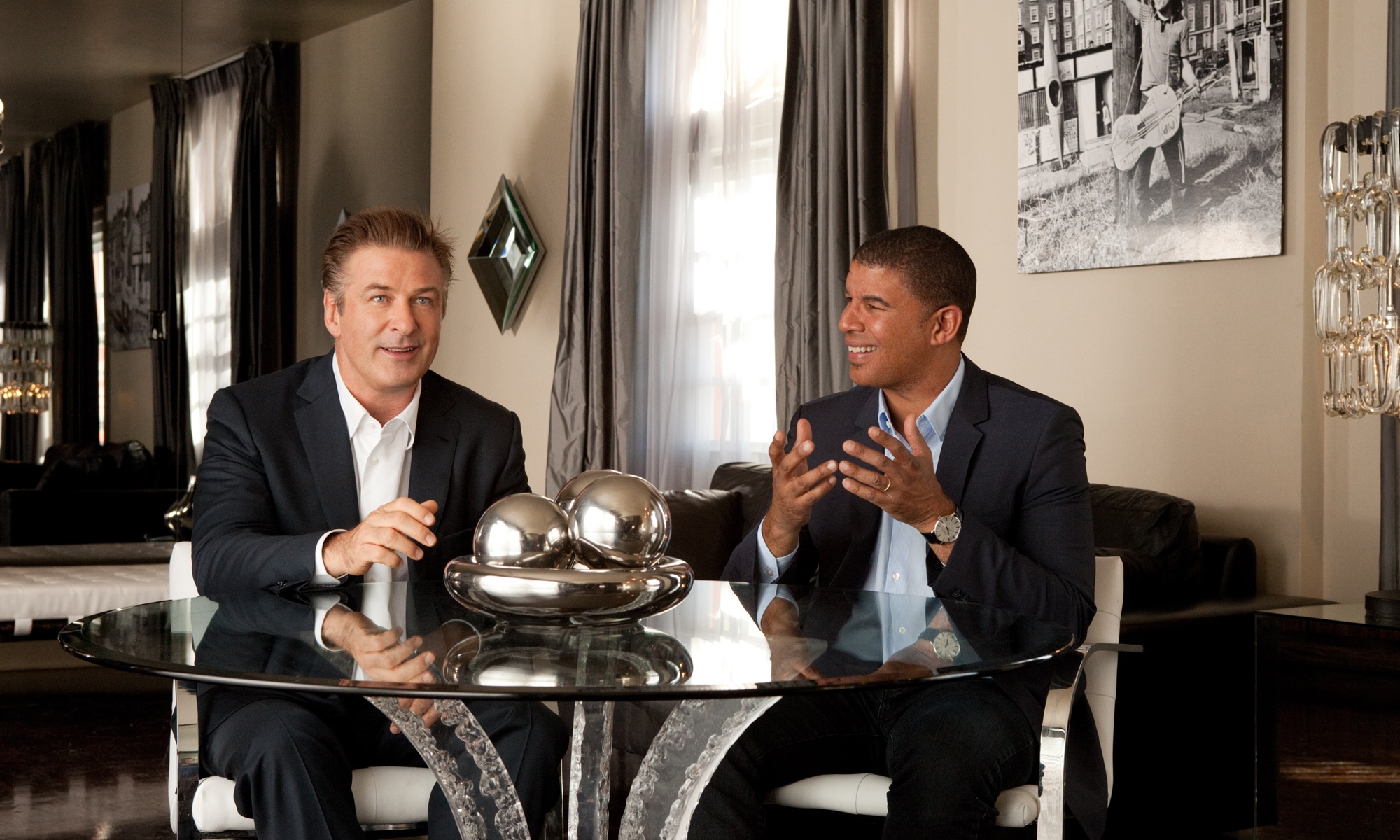
Behind The Scenes On Rise Of The Guardians

Thomas J. McLean is an AwardsLine contributor. This article appeared in the Nov. 28 issue of AwardsLine.

As a child, William Joyce wanted more answers about Santa Claus, the Easter Bunny, and other holiday figures than his parents were able to give him.

“I know where Superman came from—from planet Krypton!—so what about this guy, the Easter Bunny?” says Joyce. The typical parental answer to queries about how Santa Claus and the Tooth Fairy did what they do was, “They just do,” which Joyce found dissatisfying, even years later when he became a father.

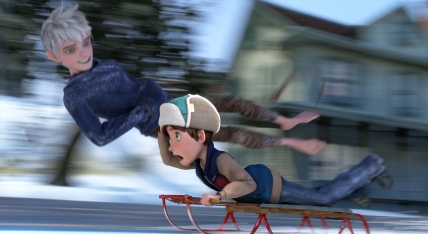
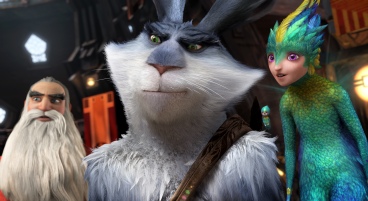
Jack Frost teams up with Santa Claus, the Tooth Fairy, and the Sandman to save the world in Rise of the Guardians.

“I wanted to come up with something better for my kids,” says Joyce. “And it really galvanized when my daughter asked me one hot August day—after her little brother lost his tooth—‘Do the Tooth Fairy and Santa Claus know each other?’ And I’m like, ‘Yeah!’ ”

Joyce, a celebrated illustrator, children’s book author, and filmmaker, began filling in those blanks, creating detailed backstories and a shared universe robust enough to fill a Guardians of Childhood book series. His imaginative work ultimately provided the foundation for DreamWorks Animation’s hottest contender in this year’s Oscars race, the 3D animated Rise of the Guardians.

It is a project Joyce calls his magnum opus. He directed a Man in the Moon short film as proof of concept, but found himself turning down offers from the likes of Pixar before hearing exactly what he wanted from DreamWorks Animation chief Jeffrey Katzenberg.

“Jeffrey was the only guy from any of the studios who was willing to take on the bigger picture I wanted, which was books and a movie,” says Joyce. “Everybody else just wanted to do a movie, and they didn’t want me to do these books, and that was a deal-breaker for me.”

DreamWorks' Rise of the Guardians puts Santa Claus, the Easter Bunny, and the Tooth Fairy in charge of saving the world.
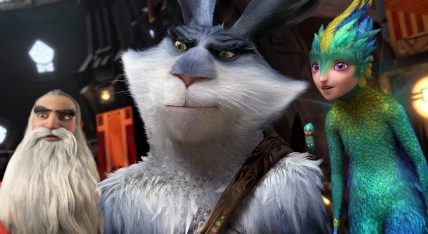
DreamWorks’ Rise of the Guardians finds Santa Claus, the Easter Bunny, and the Tooth Fairy charged with ensuring that children continue to believe in them.

Joyce’s feature animation credits include concept art for the original Toy Story; he was production designer and producer on Blue Sky Studios’ Robots; and saw Disney adapt one of his books into the animated feature film Meet the Robinsons. For Rise of the Guardians, he came on as codirector but had to step back into an executive producer role when his teenage daughter, Mary Katherine, was diagnosed with a brain tumor. (She died at age 18 in 2010, and Guardians is dedicated to her memory.)

Stepping up to the director’s role was Peter Ramsey, an animation veteran who had just come off directing DreamWorks’ Monsters vs. Aliens Halloween TV special. He joined playwright David Lindsay-Abaire, who wrote the screenplay, production designer Patrick Marc Hanenberger, and producers Christina Steinberg and Nancy Bernstein in developing the project, with input from director Guillermo del Toro.

“A lot of my thinking dovetailed well with what David Lindsay-Abaire was doing, which is not doing a satirical take but actually meeting it head-on and making the core story about the belief in the characters and this new vision of what the characters actually represent and mean,” Ramsey explains.

Del Toro was particularly helpful in restructuring the story, which incorporated an idea Katzenberg pitched to Joyce in their first meeting on the project: to introduce a new Guardian. That crystalized the story around Jack Frost and made children’s belief in these characters the central theme of the story.

Key to Joyce’s take on the characters was the need to treat them seriously and make them cool in a way that decades of bland holiday TV specials could not.

“We knew that we didn’t want to go the postmodern, wink-wink route,” says del Toro. “What we aspired to was to make them feel alive, to make them really have a personality, and that they would have a personality where you as a kid have an option of saying they were cool without sounding childish.”

Most of the characters took their cues from Joyce’s ideas, such as North, a.k.a. Santa Claus, being a swashbuckling Cossack complete with Russian accent and tattoos. The Easter Bunny changed the most, with Joyce adopting the movie’s boomerang-wielding outback warrior for his books over his original idea.

“The Easter Bunny that Bill originally had was something a bit more Beatrix Potter-y and a bit more ‘fussy professor,’ ” Ramsey says. “We just couldn’t pull him off that way, so we decided to keep him a little more in line with our superhero idea.”

Joyce, who launched Moonbot Studios in his native Shreveport, LA, and wrote and codirected the Oscar-winning short The Fantastic Flying Books of Mr. Morris Lessmore, says he was very comfortable with the studio’s approach. “I really felt like the studio and Peter wanted to tell the story that I wanted to tell,” says Joyce. “Then it was easy to stand back.”

Katzenberg was essential in getting the studio’s first choices for casting: Alec Baldwin as North, Jude Law as the villain Pitch, Isla Fisher as Tooth, Hugh Jackman as E. Aster Bunnymund, and Chris Pine as Jack Frost. Voice work was new to Pine, who says the one day he worked directly with Baldwin was surprisingly counterproductive.

“I had all of my actorly hopes that it would help ground the experience, but it really didn’t help,” says Pine. “It actually worked out better, I found, after three years of doing it, to just go section by section by myself and play with the lines and with volume.”

The animators developed different styles of movement for each of the characters. Steinberg says teams were assigned to each character, but by the end of production those styles were so well defined it was second nature for animators to work on any or all of the characters.

“We started calling it ‘method animation’ because we were trying to get as much naturalism into the performances as we could,” Ramsey says.

The look of the film borrowed heavily from Joyce’s illustrations. “Most animated movies drink from the fountain of pop art,” says del Toro. “We wanted to go for a more painterly look and a look that felt like it was based on a production design more in tune with illustrated books of the past, rich and lush and embroidered and detailed.”

Joyce, whose next animated project is the feature Epic, due out next year from Blue Sky Studios, is more than pleased with Guardians and has high hopes for a sequel. “There’s two things that aren’t the way I wanted them to be: I wanted Bunny to have a cape, and I wanted the Tooth Fairy to be a little bustier. But other than that, it’s what I hoped.”

Behind The Scenes On ParaNorman

Craig Modderno is an AwardsLine contributor. This article appeared in the Nov. 28 issue of AwardsLine.

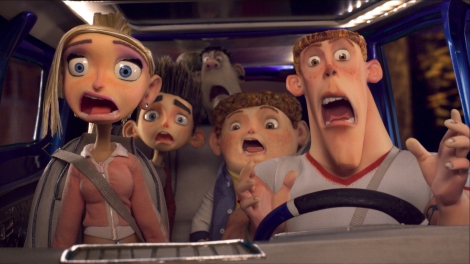
Details are everything in animation, but ParaNorman producer Arianne Sutner knows all too well how difficult it can be to get them right. Her seemingly simple suggestion to add a shower cap in a scene in the 3D stopmotion film quickly became a question of balancing creativity and schedule.

“There’s a scene where Courtney comes to the door looking for Norman and is met by Mitch, who is wearing a towel,” Sutner recounts. “I thought having Mitch wear a shower cap would be funny. The trouble came when I remembered in stopmotion you can only do a minute a week.”

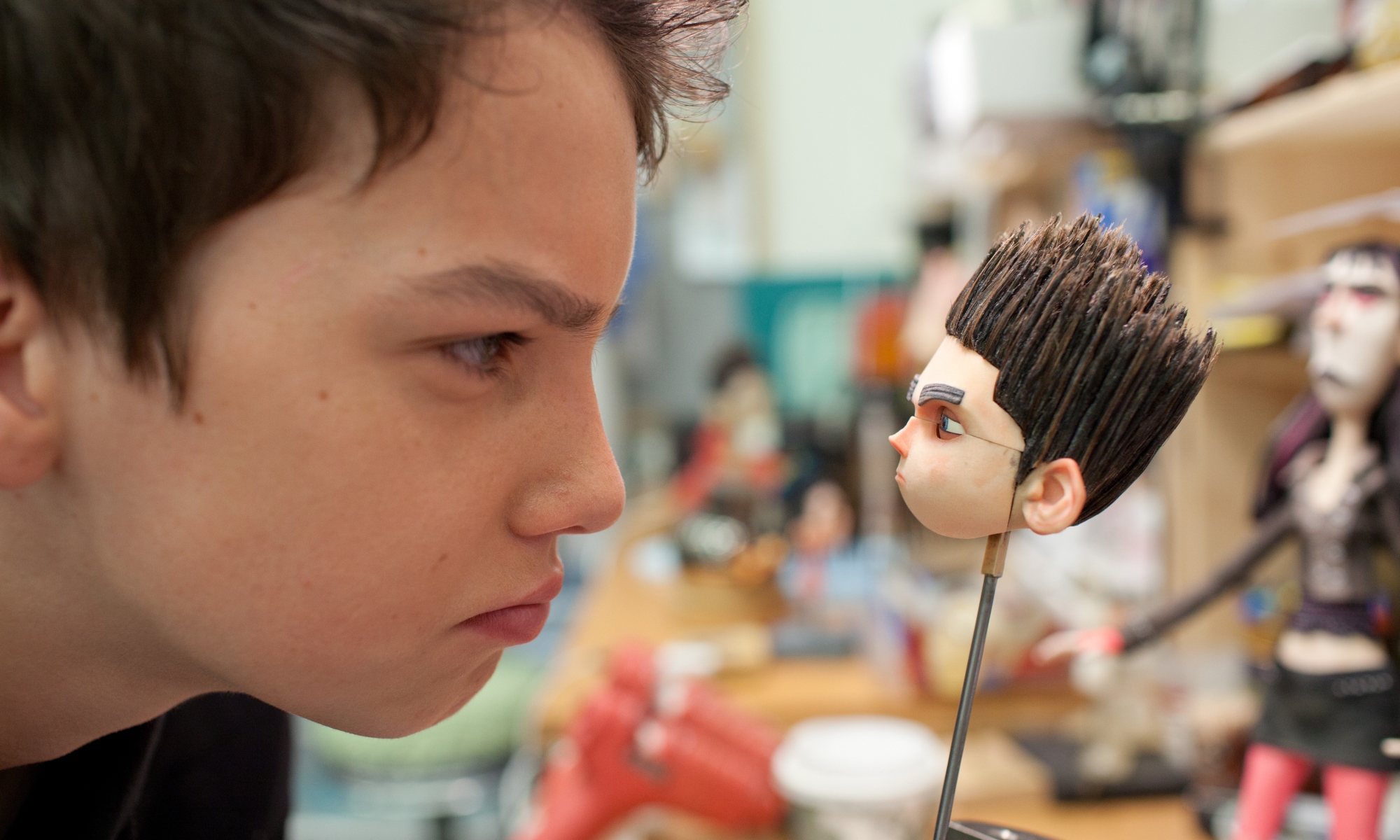
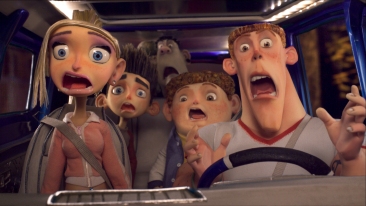
The title character in ParaNorman fights off zombies, parents, and other distractions to save his town in this clever horror spoof.

Fortunately, Sutner had codirector Sam Fell, codirector and writer Chris Butler, and fellow producer Travis Knight—who’s also the CEO of the financing company Leika—on her side.

“We had an unspoken rule that if anyone had a change that could improve the film, we would try it,” Knight says. “We were working from an excellent script, so we looked at ideas like hers as basically tweaking the source material, which we all loved.”

The resulting feature film took two years to complete and is the biggest stopmotion 3D animated film ever produced, employing 320 designers, artists, and animators who worked on 52 separate shooting units. It’s also one of the 21 animated films that qualify for the 2012-13 Oscar race, an exceptionally long list of toons that will result in five nominations for only the fourth time since the category’s debut.

The film’s production team is hoping that ParaNorman will follow a successful path similar to its previous stopmotion animated effort, Coraline, a dark-themed story of a family coming apart in parallel universes that earned more than $125 million worldwide and was a 2010 Oscar nominee. In fact, Coraline’s success allowed the creative team behind ParaNorman (many of whom worked on Coraline) to self-finance and shoot in the laid-back environment of Portland, OR.

Being out of the critical eye of Hollywood meant fewer egos to deal with, but they knew that having a good story is important no matter where the production is based. “The trick is to sell good scripts, no matter who the buyer is,” Sutner says. “Audiences may be attracted to a certain type of film—animation versus live action for example—but they’re always attracted to a good emotional story.”

ParaNormanKnight, however, thinks animation might just have to try a little harder. “Animation has been ghettoized through the years by giving the impression we only do the same kind of stories,” he says. “(But) the classic Walt Disney films have a perfect balance of darkness and light.”

Like Coraline, ParaNorman, which came out on DVD this month, strikes a similar balance between darkness and light and could be enough of a commercial and critical hit to make the Academy take notice. But two years ago, any thought of Oscar gold was the furthest thing from the minds of ParaNorman’s creative team. They needed the right voice talent.

“We wanted to have kids be kids, not over the top. We wanted naturalism and people playing the same genders. Little things are important, like having older characters sound older,” Sutner explains. “Age is really conveyed in the voice. It’s hard to fake a life fully lived through your voice. Elaine Stritch, who plays the grandmother, earned her life history!”

“Each vocal performance is a symphony,” Knight continues, adding that they tried to cast against type when reviewing vocal performances. “When you think of the warm grandmotherly type of character, you don’t think of Elaine Stritch. But she was perfect because you could hear the rough life in her voice.”

Having a very specific vision for the type of family film they wanted to make also helped keep the production focused. “People now look at animated and stopmotion films like ParaNorman as movies with character and heart, unlike the comic-book pictures that dominated the multiplexes all summer long,” explains Fell.

“It was a film made by grownups who see themselves as kids, that is aimed at kids,” Butler continues. “We wanted to catch the suburban underbelly of a John Hughes picture and combine it with the eerie atmosphere of a John Carpenter picture. If it wasn’t so scary this might have been—with a few major adjustments, of course—a Scooby-Doo adventure.”

While Butler and Fell were in sync on the concept, their opinions diverge when it comes to how technology supported their efforts.

“Part of the reason the film took so long to make was the emerging technology,” Fell says. “We could see the performance unfolding during the day, which made it easier to expand the film by adding big-ass special effects without harming the story. We believe ParaNorman is a game-changing film in combining new digital technology and old-craft technology.”

However, Butler says the emerging technology they employed for ParaNorman was not without its own set of challenges. “I disagree with Sam in that I think it’s not easier to film animation because of the evolving technology,” Butler reveals. “You can have digital background extras and a lot more people handling a lot more things with a lot more questions. A fundamental truth of filmmaking is just because you can do more things with the technology doesn’t mean you won’t have to face newer, more complicated problems.”

Planning ahead helped the team face those complicated problems without the production’s pace grinding to a halt. It also helped to refine the details, such as Sutner’s shower cap addition, somewhat on the fly. “We very rarely reshot,” Fell says. “It’s a big deal in animation because we do such extensive preproduction in every department. In stopmotion, you are actually capturing the performance because we shoot on digital camera now instead of film.”

Butler and Fell ultimately found a creative shorthand in their two-year working relationship. “You play off each other’s creative energy, because you’re not cans of beans for two years,” Fell says. “You get excited when you push the story, and the next year your characters come to life. Then you look at each other, and you realize your film is giving birth to itself. It’s a joyous but difficult feeling to describe!”

“We were a good complement (to each other) really since it was my story and his vision at the start,” offers Butler. “At the beginning it was tough, but then we realized how much we liked each other. Sam and I had a marriage that worked, but now we need a little distance to enjoy our creation. I’d love for us to work together again, and Sam’s indicated the same feeling to me.”

Composers Zeitlin And Romer On Scoring Beasts

David Mermelstein is an AwardsLine contributor. This article appeared in the Nov. 28 issue of AwardsLine.

Convincingly relating a child’s sense of wonder in a movie for grownups is never easy. But Benh Zeitlin and Dan Romer managed it handily in the music for Beasts of the Southern Wild, which Zeitlin also directed and cowrote.

Set in the wetlands of the deep South immediately before a major storm (presumably Hurricane Katrina), the film combines expected musical choices—country fiddle, accordion—with some unconventional ones—celesta and pop-music beats—to create a satisfying gumbo rich in character, mood, and atmosphere.

“I think the world looks down on these places,” Zeitlin says of his film’s setting. “I wanted to make this film about why people stay, about how beautiful and how much freedom there is in this culture. I want audiences to understand that places like this have found freedom and joy, and the music takes you there.”

To convey that sense Zeitlin and Romer used music of indigenous Cajun bands, especially the celebrated Balfa Brothers, but they also didn’t shy from incorporating other elements from their eclectic playbook. “Me and Dan have diverse taste,” Zeitlin explains. “We listen to a lot of Rachmaninoff and Michael Nyman. We both write pop music. Kate Bush was a big influence on us, also Beyoncé and Rihanna.”

Their big challenge was creating a sound that simultaneously incorporated a sense of place with a child’s sense of self. “Our star (Quvenzhané Wallis as Hushpuppy) is 6 years old, and modern pop music is what she loves,” Zeitlin says. “We wanted the score to have an indigenous texture, but also have kick-you-in-the-face energy that modern pop music is so good at, and we wanted to find a bridge to all those things.”

They found it toward the beginning of the film, as a parade makes its way through the area affectionately known as the Bathtub in the movie. The scene culminates in a fireworks celebration that also serves as the film’s title sequence. “That was pretty much the first idea we had when we sat down,” Romer recalls. “Benh wrote me that there would be a Cajun band early on. He asked what musicians should be there at the shoot. We talked about two violins and a guitar. We wanted a Cajun band playing in the scene, but then something else is playing in Hushpuppy’s head. We wanted Hushpuppy to augment the live music in her brain. To the rest of the world, it’s just a Cajun band, but in her head it’s reharmonized and orchestrated.”

The pair got the Lost Bayou Ramblers to play Balfa Brothers songs, including “Balfa Waltz” (or “Valse de Balfa”). “When I listened to that song, I realized we can do so much with it because it’s basically only one chord,” Romer says. “We can completely reharmonize this. We can add cellos or whatever. It just worked out perfectly. That was our first big idea together. The fireworks sequence is the big takeoff, blending the traditional music with the Bathtub anthem. The full anthem doesn’t come back until the credits, though it does come back in smaller bits in between.”

For Zeitlin, that cue was the movie in nutshell. “The purpose was to make you fall in love with this town and culture in a very short period of time,” he said. “We had to sell audiences on this place that they might normally be afraid of. And music was a key to making that happen. This world may look reckless or dangerous, but for Hushpuppy it’s what she loves more than anything else in the world.”

Q&A: Paul Williams

Although the documentary Paul Williams Still Alive didn’t make the Academy’s short list this week, there’s an original song by the Oscar-winning composer wrote for the doc, aptly titled “Still Alive,” that remains in contention. Williams, who at first resented director Stephen Kessler’s attempts to document his childhood idol, now calls the doc “a gift” that has allowed him to gain a new appreciation for his songwriting work. While the doc doesn’t discuss much of Williams’ current activities, he’s been working behind the scenes as chairman and president of ASCAP since 2009, something he calls an honor, quickly joking, “I’ve got a black belt in back slapping.” With several new songwriting projects in the works, including a musical version of Guillermo del Toro’s Pan’s Labyrinth, Williams is still very much alive and still busy. He recently spoke with AwardsLine about his reticence to participate in the doc and reflected on his Oscar win in 1977.

AWARDSLINE: What made you finally decide that you were going to agree to participate in the documentary? It’s pretty clear that you weren’t thrilled initially.

PAUL WILLIAMS: There was a time in my life when I became much better at showing off that showing up. If you put down a couch and a camera, Paul Williams would appear on that couch. You know, to feel like you’re really different is difficult. To feel like your special, in my case, it was addicting. Eventually my addiction to alcohol and cocaine outran all other addictions—I think I ignored songwriting; my craft kind of fell off. For me, to revisit this with Steve… He started by sending me an email. For some reason, I just backed off immediately about the idea of somebody following me around, and didn’t want to participate in another VH1: Where Are They Now?. I didn’t know if he wanted to make fun of me, (but) he seemed to really know my music and be a real fan. I found that every time he would hang a microphone on me, there was a little place that kind of tightened up, and it just was like, “I don’t like this.” I have a lovely balance to my life right now. I have a great relationship with my wife and my kids, and I’m working just about as much as I want to. There was a lot going on that didn’t make it into the film. While we were filming, I went to Disney and pitched an idea for the Muppets: I wrote the songs, I cowrote the story and cowrote the teleplay for a one-hour TV special for the Muppets (A Muppets Christmas: Letters to Santa). I got nominated for an Emmy (for the song “I Wish I Could Be Santa Claus”). That’s not in the movie, though. I think that if Steve Kessler had found me living in a trailer behind a junkyard playing at the Red Lion Inn and singing to a sock puppet he would have been thrilled, like, “Look how far he’s fallen.” That really wasn’t the case, but he eliminated things to tell the story in the best way.

AWARDSLINE: It also reflects the view that a lot of people have about fame: If people don’t hear about you anymore then you must not be doing anything.

WILLIAMS: You cease to exist, yeah.

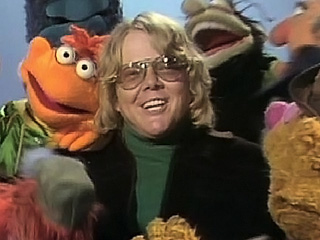
Paul Williams MupptesAWARDSLINE: What has been the response since the film’s release?

WILLIAMS: First of all, I had no idea it would get the kind of response it had. I wrote the title song about three weeks before we went into Toronto, and the response to the film and song was just amazing. What Steve did that was a real gift to me was his willingness to put all of his ineptness at certain moments back into the film. Those things where I challenged him and said, “You’re interrupting a meaningful story about my dad taking me to the ballgame so you can ask some silly-ass questions about a talent show. Put that in the movie,” and he did. Moments where he’d ask me questions that, frankly, just felt like a dig. God bless him, he put them in the film.  So you wind up with a film where you observe a relationship begin to take place with us, which I think is funny and interesting. I think part of the journey for Steve was he went into the process thinking that fame equals happiness, relevance. And then in the midst of it, in 2009, I was elected president and chairman of the board of ASCAP with 150,000 people that are fighting to make a viable living through music. For the first time in my life, I felt really, really connected to the world around me. And that’s what I was afraid of giving up if we shot this film.

AWARDSLINE: The original song you wrote for the documentary, “Still Alive,” is getting some Oscar attention, which has to be fun for an awards-season veteran like you.

WILLIAMS: I’ve been nominated six times, and the fact is, the nomination comes from your peers—just from the music branch—so the huge event is being nominated. When I really look at it, I see that it’s the win to be nominated. (But), obviously, it’s amazing to walk up on the stage. You know, they play my acceptance speech (for “Evergreen” with Barbra Streisand) every now and then because I looked at the audience and said, “I was going to thank all the little people, and then I remembered I am the little people.” I remember walking out, andNeil Diamond gave us the award, and I hugged Barbra and I looked at the audience: It’s like, there’s Kirk Douglas, there’s Gregory Peck, there’s Elizabeth Taylor. You see me backstage in the green room having a conversation with Bette Davis and Cary Grant, and you go, “Oh, my God, how did he get here?” Now if I look at it, I would say that what I did to get there was a small part of it. (It was) immense good fortune and the people that I met along the way.

Listen to Williams’ original song for the documentary: Still Alive

Hair & Makeup Artists Are Key To Believable Characters

Monica Corcoran Harel is an AwardsLine contributor. This article appeared in the Nov. 28 issue of AwardsLine.

Publicists, producers, personal trainers? Ha. Let’s face it: When it comes to nailing a role, a fantastic hairstylist and extraordinary makeup artist are an actor’s best friends. Where would Nicole Kidman be without her exuberant Virginia Woolf prosthetic nose? Oscarless. Ditto for Meryl Streep, who even name-checked her loyal hairstylist J. Roy Helland of 37 years at last year’s Academy Awards for her The Iron Lady victory. “I want to thank my other partner,” said the actress.

This year, the Academy tweaked the categories to include hairstyling in the makeup award for the 86th annual ceremony. It’s a smart inclusion, considering the two departments work incredibly closely, and the right period hair is essential to any film—even a post-apocalyptic one. Case in point: Hunger Games hairstylist Linda Flowers bleached 500 people’s eyebrows for the film and dyed the hair of 75 extras. With a team of 45 stylists, she also created 450 original wigs and hairpieces.

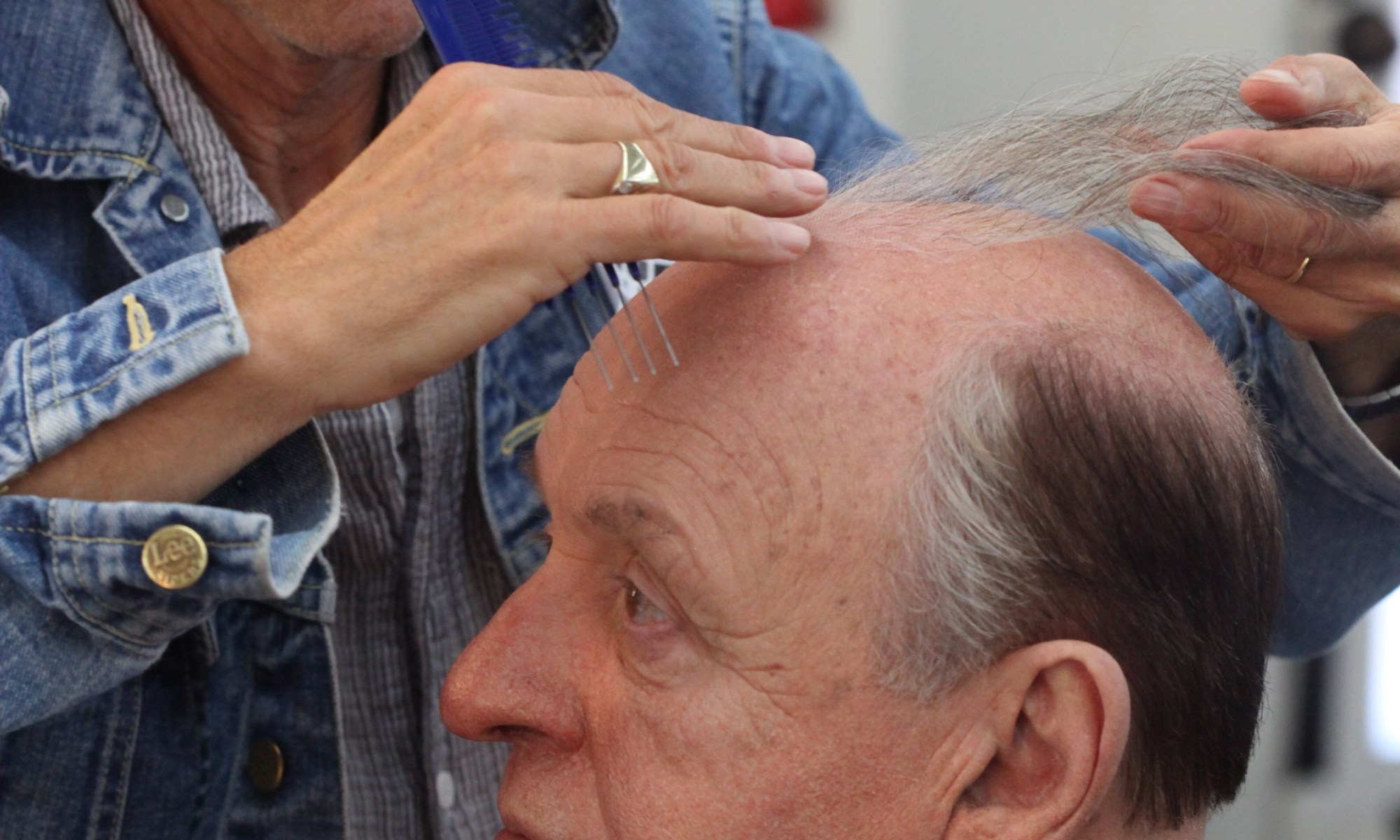
This year’s likely contenders for hair and makeup run the gamut in scope, from doctoring huge ensemble casts to refashioning lead actors into famous characters. For Hitchcock, hairstylist Martin Samuel had to recede Anthony Hopkins’ thick snowy mane with a partial shave and dye it brown at the sideburns. He also had a very sparse toupee made for the actor’s crown to simulate a balding man’s pate. “We kept it up every day for the 40 or so days of shooting, and Anthony was very patient,” says Samuel, who collaborated with Howard Berger on the prosthetics and makeup. It took 2½ hours each morning to turn handsome Hopkins into the homely, weak-chinned director.

Of course, it’s a tricky negotiation to conceal an actor’s most important means of expressing himself. Daniel Day-Lewis, in Lincoln, underwent just a scant hour and 15 minutes of cosmetic overhaul each morning to play the stately but physically craven 16th president of the United States. Instead of relying on prosthetics—which could easily encumber emoting—makeup artist and longtime Steven Spielberg collaborator Lois Burwell studied photos and casts of the president and then used a method called “stretch and stipple” to age the actor 10 years. She also dyed Day-Lewis’ natural beard darker and thinned it out.

“Lincoln had a soft chin and Daniel doesn’t, so we structured the beard to give that impression,” she says, adding that the Oscar-winning actor was new to the extreme makeup process. “You can’t just put one face on another. It’s not like you are working on a mannequin.”

The team working on the science-fiction epic Cloud Atlas, which wildly spans generations, had a Herculean undertaking in that they had to metamorphose dozens of actors into myriad characters. Consider Halle Berry as an elderly Korean man or Hugo Weaving playing a blonde, female nurse and you quickly get the idea. The film’s six storylines are directed by Tom Tykwer or the Wachowskis, and makeup artists Daniel Parker and Jeremy Woodhead worked with the directors, respectively. At the same time, the two had to constantly compare their sketches and visions to be sure that they weren’t repeating looks.

To transform Berry into an Asian elder, Woodhead used a wig, implants, contact lens, facial hair, and prosthetic teeth. “There was the added complication of an implanted eyepiece that covered the whole of one of Halle’s eyes and had to look like it was embedded in her skin,” says Woodhead. “Halle just sat there and laughed with delight as each layer went on and the character gelled together.”

Parker, who delighted in re-creating Weaving as the brutish, voluptuous Nurse Noakes, adds that last-minute directorial decisions to have an actor join another sequence as a different gender, age, or ethnicity intensified the workload. Still, he insists “this was a dream project for an artist.” He adds that the actors embraced the process and didn’t grouse about the marathon makeup sessions that took as much as four hours.

On the opposite end of the spectrum is Bill Murray’s portrayal of Franklin D. Roosevelt in Hyde Park on Hudson. In this case, the director Roger Michell instructed Morag Ross to employ a subtle touch in physically refashioning the actor as the jovial president. “The M.O. for the whole look was less is more. Nothing heavy-handed,” says makeup artist Ross, who added a mole to Murray’s right cheek and a swath of melanoma above his left eyebrow.

A 1939 Life magazine photo of FDR became the inspiration for Murray’s hairstyle. Norma Webb made an educated guess on the hair color, as her historical references were all in black and white. “I proceeded to cut the hair as for the period,” she says. “But the cut needed to reflect Roosevelt’s seeming disinterest in ‘conservative’ behavior and image.” The translucent actress Olivia Williams also plays Eleanor Roosevelt with a soft wink. She’s not nearly as equine-looking as the First Lady in the end, but Ross added prosthetic teeth that altered both her profile and the shape of her face. Webb added hair wefts and colored Williams’ mane to reflect the First Lady’s unruly tresses and disdain for vanity.

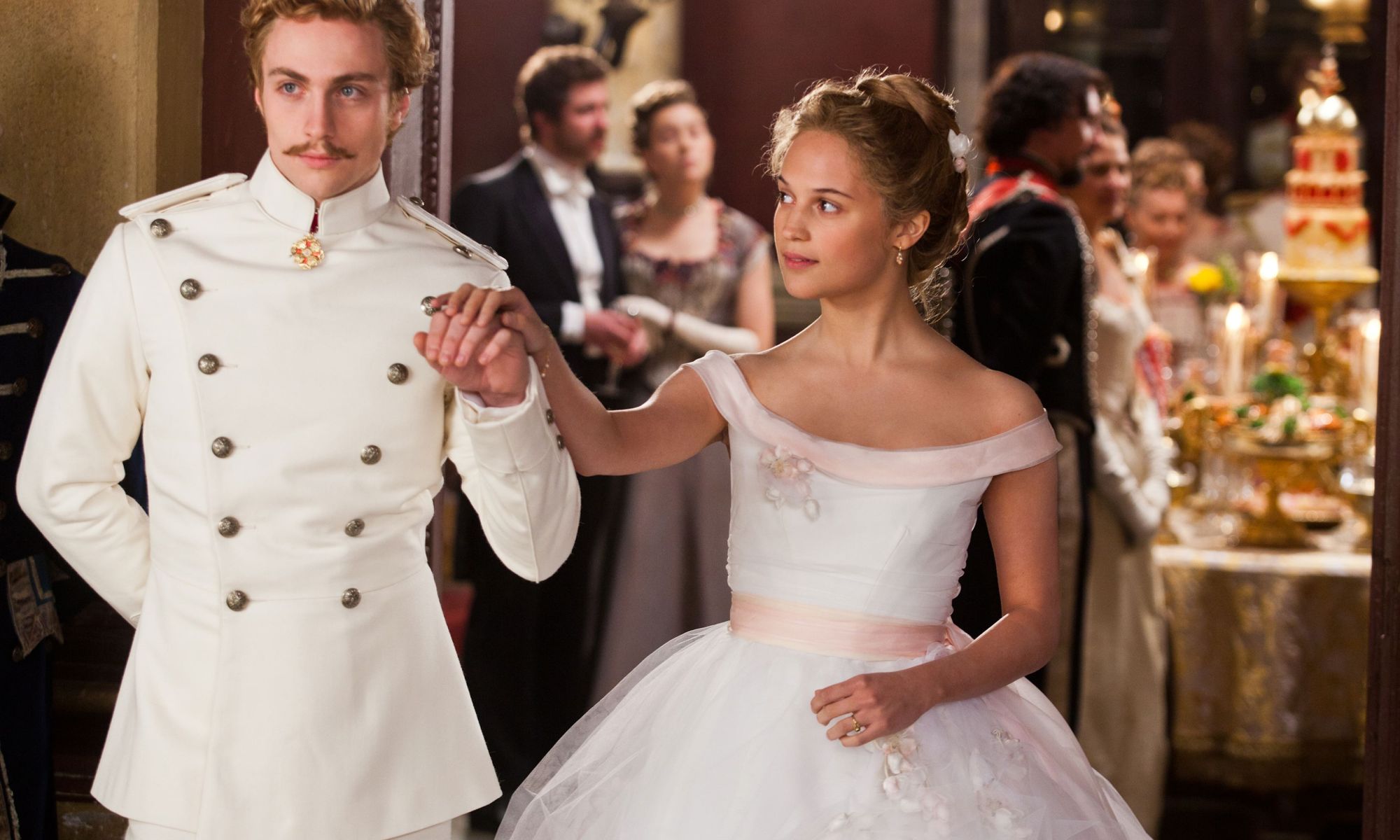
Channeling Russian high society of the 1800s for Anna Karenina required some artistic license. Back then, women didn’t wear makeup but relied on creams to enhance their looks, notes makeup artist Ivana Primorac. Still, she and director Joe Wright wanted “to appeal to the modern audience without looking wrong for the period.” Actress Keira Knightley underwent a minimal change with a slight darkening of her fair coloring and hair. Jude Law, however, needed to be aged and refashioned as a bit of an “egg head.” To do that, Primorac altered the shape of his temples, receded his hairline and lengthened his jaw with a beard.

The near 40-artist team that tackled the hair, makeup and prosthetics on The Hobbit probably needs a long vacation. With 13 lead characters and stunt and scale doubles often needed, the crew helmed by lead makeup and hair artist Peter King had to oversee the transformation of no less than 36 actors. Even more challenging was the need to distinguish characters of the same race—such as dwarves—in appearance as well as silhouette. “Audiences must be able to recognize them by the head and body shape as they’re walking up a mountain,” says Richard Taylor, cofounder of special effects company Weta Workshop.

Realizing the vision of director Peter Jackson before filming even began required about 800 illustrations and 1,000 sculptures. New characters like goblins required their own physical evolution, but it was the high-resolution camera that made fabrication and application an arduous endeavor. “It’s exponential how much more challenging prosthetics and makeup have become because of the clarity of this camera,” says Taylor. “It sees everything. Everything!”

Composer Alexandre Desplat On Scoring Five Awards Season Contenders

David Mermelstein is an AwardsLine contributor. This article appeared in the Nov. 28 issue of AwardsLine.

Alexandre Desplat is nothing if not prolific. This year the quadruple Oscar-nominated composer will have five films in theaters. And, as is typical for him, each score is completely different from the others—much like the movies themselves. “If I only did thrillers, I would kill myself,” he said by phone recently from Majorca. “Seriously, I would want to change jobs.”

What keeps him in the game is the opportunity to play with various styles in different genres and compose music that challenges and delights him. “They’re all my babies and all so different,” he says of his scores. “They have different faces and shapes and costumes. Some are big, some are small—and some are huge. Some are talkative, and some are quiet. But I try to give the best of my energy to all of them.”

The most time consuming of these recent projects was his soaring music to DreamWorks’ Rise of the Guardians, which marked the first time Desplat wrote for animation on such a vast scale. “It was three months altogether, writing and recording,” the composer says. “When you work on animation, the music has a great task: to create a sound and melodies and mood and atmosphere and energy dedicated to these extraordinary characters. And you see they are very specific, very clearly designed. Each has a personality that is different. It’s fun and moving and very emotional.”

For Ben Affleck’s Argo, Desplat merged western and eastern sounds to evoke the film’s Iranian setting. “As soon as I heard about the project,” Desplat says, “I got masters of the ney, oud, kemenche, and Persian percussion. And we also had vocals by the Persian pop singer Sussan Deyhim. I could write anything because these are incredible musicians.” But the driving element was never exotica for its own sake. “Ben was mainly interested in emotion,” Desplat says. “He wanted to hear despair, fear, hope. That was always the main thing with Ben.”

With Wes Anderson’s Moonrise Kingdom, Desplat’s challenge was finding room for his own voice in a film dominated by the strains of Benjamin Britten. “Britten became this thread through the film,” Desplat explains. “And I had to be smart and get inspired by that and convey the love story, the quirkiness, the adventure—but in a weird, restrained, childlike way. I couldn’t have music that would be too adult in terms of harmonies. I tried to stick to what the picture was offering me and be in the heads of the characters and almost in the landscape.”

The French-language Rust and Bone marks Desplat’s sixth film for writer-director Jacques Audiard, their most recent before this being the Oscar-nominated A Prophet (2009). “There’s something that makes a real collaboration,” Desplat says. “You can tell it’s the same director and composer. There’s a real continuity in the work, the style, the orchestration. It allows both director and composer to blossom and find a way through cinema to develop a style like no one else. There’s a word we use with Jacques, ‘modest grandeur’—something really noble but still modest. And I wanted to find that in the music. It couldn’t be symphonic or emphatic. It had to be constrained, restrained, but with fire burning. And it had to be emotional. This is a story about love and how it comes toward you without you noticing.”

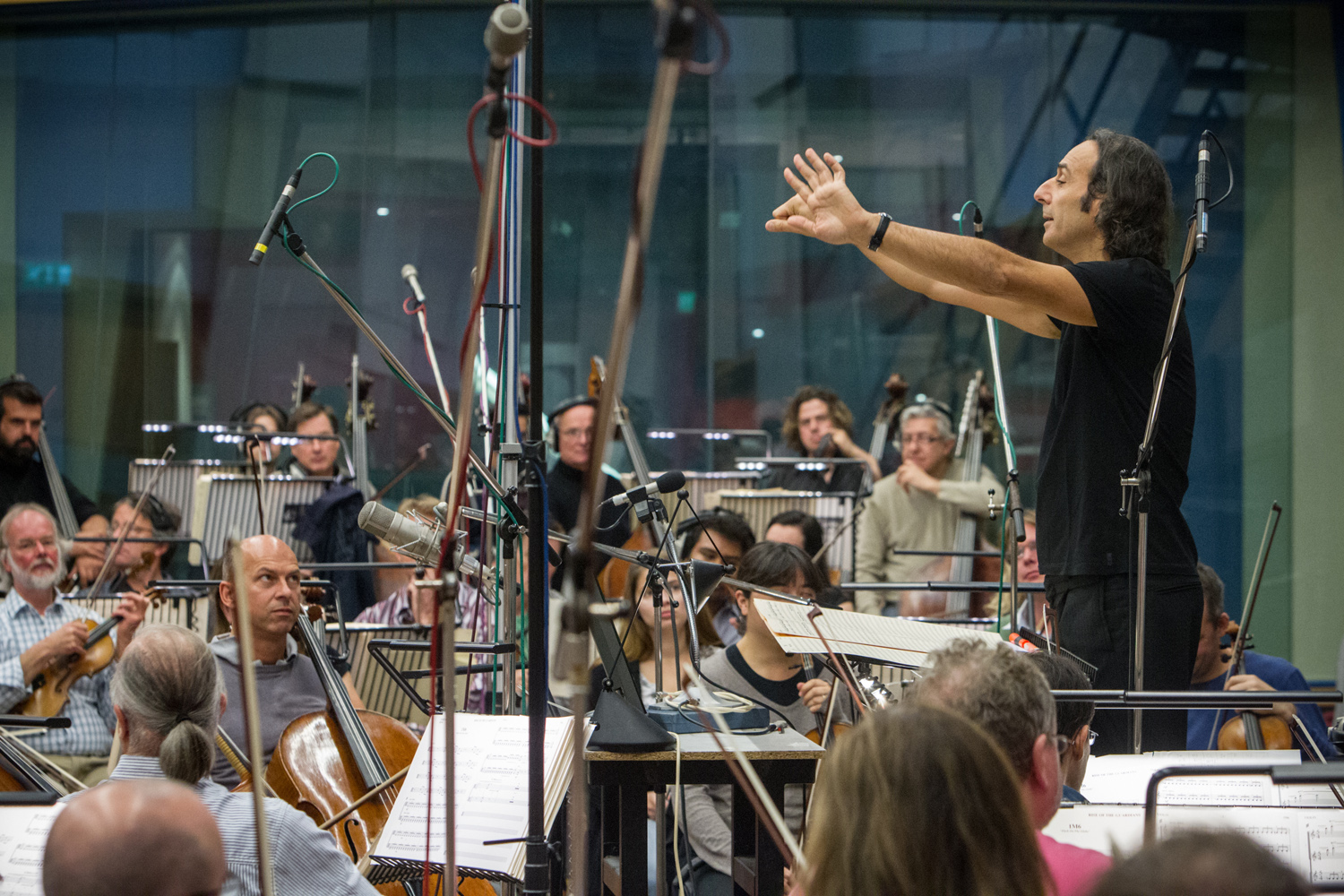
Desplat wraps up his fecund year with one of the most awaited films of the season, Kathryn Bigelow’s Zero Dark Thirty, her follow up to the Oscar-winning The Hurt Locker (2008). “It’s a very delicate subject,” Desplat explains, referring to the killing of Osama bin Laden. “There is this sense of inexorability. But it’s also about a war between two cunning and ruthless camps with no limits. Kathryn doesn’t show evil and good battling. The audience is wise enough and adult enough to choose. War is ugly, and both sides are ugly. Never mind who started the war. So the music is very dark. Many times I mentioned (director Akira) Kurosawa to Kathryn, and the musical world Toru Takemitsu created for him in Ran. We use no violins. I use only the low side of the strings. And for brass, the same—so 12 trombones, 12 horns, three tubas. It creates an army of sound, dark and earthy. And I think that works pretty well for a film about desert war.”

The composer makes an unexpected comparison when describing his career at this stage. “As I get further along, I feel more like an actor in these films. I try to disappear with everyone else. I’m not detached but rather part of the game. And when music is not a character, it’s an issue.”

His Drama Zone: Walken Sparks Somber Stride in A Late Quartet

Craig Modderno is an Awardsline contributor

“I make movies that nobody will see.  I’ve made movies that even I have never seen,” exclaims actor Ronald Walken who has been working in pictures since director Sidney Lumet cast him in his first showy role as the kid in 1971’s The Anderson Tapes when the world met him as Christopher Walken.

“My hair was famous before I was!”

Even off camera, the actor’s wry sense of humor exudes. Blessed with a self-punctuated, Queens cadence, which he can easily massage from cryptic to sarcastic, Walken at 69 is continually in demand across every genre. His dramatic flair is so iconic, comedians from Jay Mohr to Kevin Pollak impersonate him.  Heck, Walken even impersonates himself (check out this hysterical video of him reciting Lady Gaga’s “Poker Face”)

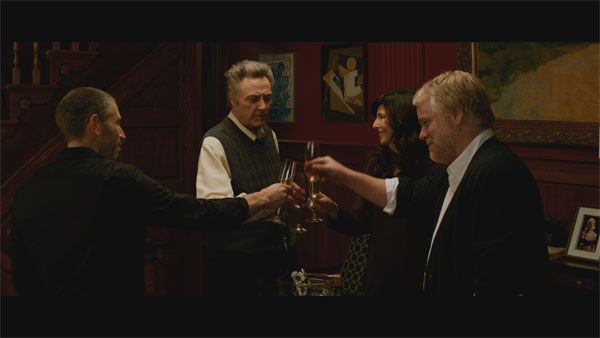
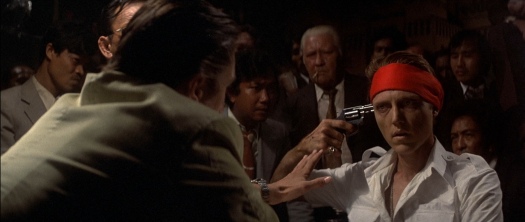
Early this fall, Walken walked on the wild side in CBS Films’ shoot-em up comedy Seven Psychopaths as Hans, a rambling dog-napper who doles out screenplay advice until he dies (literally).  In the upcoming Stand Up Guys, Walken gets guffaws as a geriatric gangster. But it’s his turn as Peter Mitchell, a renowned New York City cellist who contends with his Parkinson’s disease, in A Late Quartet that has awards voters buzzing.  Rather than playing the heavy this time around, Walken’s Peter is one of his heaviest roles in years, rivaling his Oscar-winning supporting turn as Nick, the Russian Roulette Vietnam soldier masochist in 1978’s The Deer Hunter and his second Oscar-lauded role as a failed father to Leonardo DiCaprio’s master grafter Frank Abagnale, Jr. in 2002’s Catch Me If You Can.


Seven Psychopaths
Walken, left, relentless talks himself into danger in CBS Films’ Toronto Film Festival fave Seven Psychopaths

AWARDSLINE: What drew you to three distinctively different roles in A Late Quartet, The Stand Up Guys and Seven Psychopaths?

CHRISTOPHER WALKEN: I liked the scripts, and the directors. It’s strange that all these films are coming out now since they were all made during the past 2 years. I have no specific criteria — except the rare one that doesn’t have me kill someone goes to the top of my reading pile. (Laughs) It’s true. When I read a script that I cut out in my mind — all punctuation and directions which is the reason for my unusual screen patterns on camera– that process helps me find the character on my own and probably makes it easier for comics to impersonate my characters.

AWARDSLINE:  A Late Quartet seems like your most serious film in a while. Why is that?

WALKEN: Well if you won’t tell anyone it’s because I don’t kill anybody in the film. As I get older, I start to get parts for grandfathers and people who give great advice…the parts Michael Caine will seemingly be able to play forever.  I will still play wise guys, troublemakers because I like playing crazy guys and villains. Plus the economics of making films today are so unpredictable that even small films fall apart often right before shooting.

AWARDSLINE: What did you do to research your role in A Late Quartet?

WALKEN: I don’t like to discuss my process generally in preparing for a role. If I tell you I studied cello then you’ll watch my playing more carefully and perhaps pay less attention to the story.

AWARDSLINE:  Was it a competitive atmosphere between you and your co-stars on the film?

WALKEN: No, only what the script called for. They were all excellent actors and very nice people. We all knew we were making a very special film.

AWARDSLINE: Do you look for something specific in a dramatic role that tells you it will be a challenging part?

WALKEN: No for me it’s more of a feeling:  “Am I good at playing the part?” I read scripts for myself, which is why I erase punctuation because sometimes a question could actually be a statement. I read the scripts as if they play the way I think my character would respond, not what a reader would think how they would play my part.

AWARDSLINE: At this stage of your career what do you want from a director?

WALKEN: To hire me! (Laughs) I want him or her to be sure about the information and history of the project, so the actors become kids in a sandbox; feeling free, playing together. If you don’t cast well, the movie has a hard time getting a rhythm of its own. The best directors like Mike Nichols, Sydney Pollack, Marty Scorsese and Paul Mazursky to name a few who direct, are also excellent actors so they’re careful choosing the right actor. Besides Sidney Lumet, Michael Cimino and Steven Spielberg, who taught me a lot about my craft, I’ve been lucky in taking chances and calculated choices with some of the best directors of our times.

AWARDSLINE: What impact did winning the Oscar have on your career?

WALKEN: It was enormous. It brought me recognition from the industry that resulted in me receiving better scripts and for the most part not having to do auditions.

Christopher Walken
Walken logged a riveting Oscar-winning turn as the Vietnam soldier Nick in Michael Cimino’s 1978 film The Deer Hunter

AWARDSLINE: How competitive was campaigning for an Oscar in the 1970s?

WALKEN: I never campaign for personal attention from the media. I do go on press junkets when the film warrants that kind of attention because I consider that part of the job. Most films’ press peters out quickly, which is the good thing about the so-called awards season is that a fine film like A Late Quartet gets a special spotlight shown on it. I used to never do internet interviews because I don’t own a computer or a cellphone. My friends are surprised that I don’t, but sometimes I think we’re in an age of too much information.

AWARDSLINE: What was it like being at the ceremony where your film The DeerHunter faced strong competition from another Vietnam War film Coming Home?

WALKEN: I’ve been there as a nominee twice and there’s nothing better than winning. But I remember exiting the ceremony the second time and truly believing we were all winners even though only a few of us were holding statues. Then they give you a really nice dinner even if you didn’t win an Oscar.

AWARDSLINE: You co-starred in Heaven’s Gate, which is considered one of the biggest disasters in film history. What did that negative response do for your psyche?

WALKEN:  It wasn’t anything good. I never really understood what the enormous fuss was about. There was lots of stuff written at the time that was over the top, especially books written on how the failure of the film sunk United Artists. But since (director) Michael Cimino’s previous picture The Deer Hunter had won several Oscars, it created a new area of opportunity to bash Heaven’s Gate because the expectations were higher.

AWARDSLINE: You were supposedly the number two choice to play Han Solo in Star Wars. How did you feel when it became a classic worldwide hit?

WALKEN: No feeling because I was only one of hundreds of other guys who auditioned for the role. I don’t think I’m the best actor to play a role that spins off into an action figure doll.

AWARDSLINE: Another film you almost got the lead in was Love Story. Could you have said the line “Love Means Never Having to Say You’re Sorry” with a straight face?

WALKEN: It was just as well that I didn’t get the role.  I believe an actor gets certain jobs at the right time in his or her career.  A critic once wrote of my stage performance as Shakespeare’s Romeo is that one of my unique qualities is everything I said sounded so sarcastic. Maybe if I had done Love Story then comics today would be having fun doing me doing my dialogue from the film!

AWARDSLINE: Is it true that at age 10 you did a TV Comedy skit with Jerry Lewis and he encouraged you to pursue a career in show business?

WALKEN: Yes. It was The Colgate Comedy Hour. They recently found a kinescope of it which I saw. I had a couple lines in the skit and it was shocking that I hadn’t changed my acting style at all. (Laughs) I’m amazed I’ve gotten this far. Knock wood, they let me continue. Maybe part of the reason is I don’t live my characters — many of whom scare even me — off screen. Perhaps the one little kid quality that I’ve duplicated was during the making of The Deer Hunter, I would hide in the shadows and watch my fellow actors because I knew how good they were.

Hobbit Digital Characters: Familiar Faces But Radically Different Construction

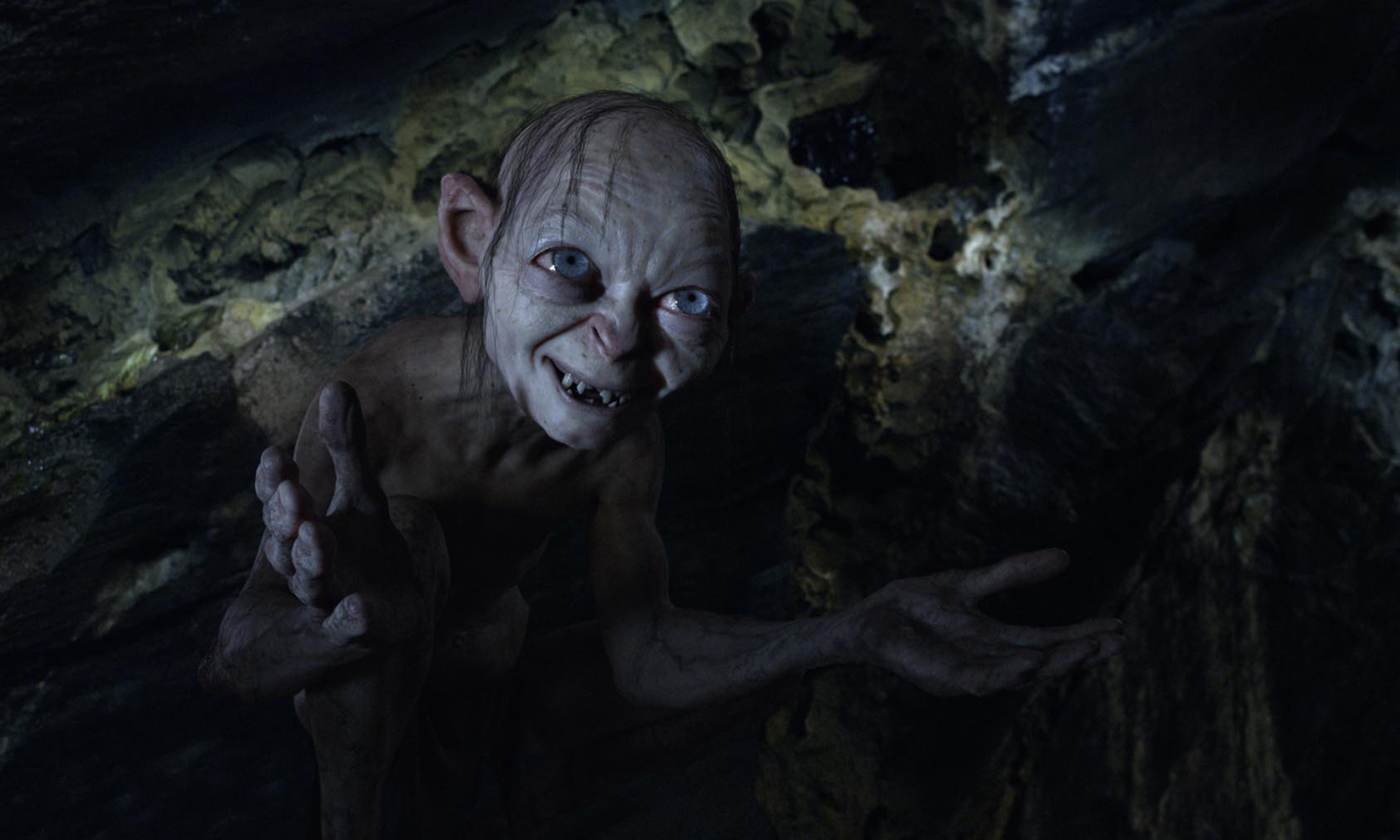
Although the wait is nearly over for the familiar goblins and mystical forests of The Hobbit: An Unexpected Journey, senior visual-effects supervisor Joe Letteri says the only thing that remains the same for this iteration of Peter Jackson’s fantasy films is on the surface. The digital tools that brought countless Orcs to life and gave Gollum his distinctive distorted face are virtually unrecognizable from those used a decade ago for the The Lord of the Rings trilogy.

“It’s changed almost completely,” Letteri says. “On the outside, you want Gollum to look like the same character, but he’s completely different (under the hood).”

The biggest change from the first set of films is the way that actor Andy Serkis’ performance is captured and analyzed in order to create the digital character, according to visual-effects supervisor Eric Saindon. “Our facial capture has progressed leaps and bounds,” he says. “Now we actually capture all of Andy’s performance, when he’s acting with Martin (Freeman) in Gollum’s cage on set. We have a small camera attached in front of his face that captures his exact facial performance. Rather than an animator going in and doing it frame-by-frame, the computer analyzes Andy’s performance and then fires Gollum’s muscles to do the exact same thing. So the first half of the animation, which is the raw mo-cap data, is really Andy.”

“We know so much more about how the face works,” Letteri adds. “When people communicate face to face there are so many things that are going on that you really have to study now and put into the characters. We hope that people recognize that there’s this extra layer of depth.”

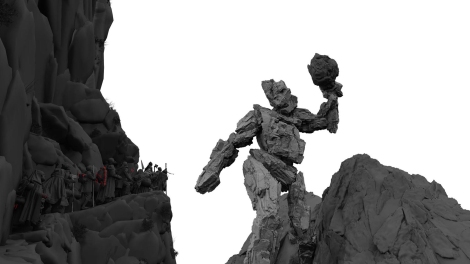
The "before" version of the stone giant sequence, part of which was shot on a very small stage.
The “before” version of the stone giant sequence, part of which was shot on a very small stage.

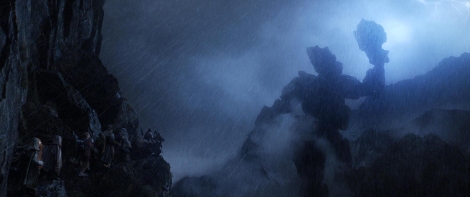
While Gollum takes a bit of a back seat to the other myriad creatures in The Hobbit, the film’s team at Weta had plenty of other digital characters to create, including the formidable stone-giant and its complex sequence. The crew shot the actors on a very small set climbing a hill along a rock wall, and every other element was added digitally after the fact, including the rain. “We did try to capture rain on set; it worked OK, but it was very easy to get rain on the mirror for the 3D, and then the stereo breaks instantly. The lighting was (also) very hard to control with the rain. So we did it for about a day and then we decided that it would be better just to do the rain in post. Then we added the stone giants, which are basically these mountains that come to life to have a thunder battle.”

The "after" version of the stone giant sequence.
The “after” version of the stone giant sequence.

Saindon admits that sometimes it’s tough to tell the practical effects from the digital, which is exactly the level of detail the team hopes to achieve.

“Your eye is not easily fooled,” Letteri says. “We all go to the movies because we want to be fooled, but on the other hand we want to be fooled really well.”

Composer Danny Elfman On Scoring Hitchcock

After composing five film scores straight, without a weekend off, it’s fair to say that Danny Elfman has had a very long year. Still, there was no limit to what he would do to work on a film about his idol, Alfred Hitchcock.

“I don’t know how I’m going to do this, but I have to do this,” Elfman recalls about committing to Fox Searchlight’s Hitchcock, which was scheduled for delivery right before his opus on Disney’s Oz: The Great and Powerful. “I wouldn’t have a film-music career if it wasn’t for Bernard Herrmann, who has inspired me since the age of 12.”

It would be an understatement to say that Elfman is a big fan of the Master of Suspense and his longtime music collaborator. Never mind the large photograph of Hitch that hangs in Elfman’s office (as observed by Hitchcock helmer Sacha Gervasi), Elfman is the only composer who has handled the sacred scrolls: Herrmann’s original manuscript for Psycho, which Elfman deftly adapted for Gus Van Sant’s 1998 remake. For his current project, Elfman was so stoked to visit the Hitchcock set where they were shooting the Psycho editing-bay scene with Anthony Hopkins (as Hitch) and Helen Mirren (as his wife, Alma) that he asked if he could come back for a second day.

But idolization has no boundaries and, though the production was strapped for cash, Elfman wasn’t going to compromise the score to a movie about his favorite filmmaker.

“He literally bought sections of the orchestra out of his own pocket,” says a gobsmacked Gervasi. “We were recording with the top musicians in London, and we couldn’t afford to keep them through lunch. Danny asked the orchestrator, ‘How much do the violas cost? 3,000£? I’ll take them. How much for the French horns?’ And Danny held the musicians through lunch.”

An adult gesture for a composer not always recognized for his adult scores, despite having credits on a multitude of dramas like Dolores Claiborne, A Simple Plan,and last year’s Restless. We all know the gothic, orchestral stylings from Elfman’s Tim Burton fare (for instance, this year’s Dark Shadows and stopmotion Frankenweenie) to his summer tentpoles (Men in Black 3, the first of which earned him a comedy score Oscar nom), however, this is arguably the first awards season in a long time that Elfman has had an abundance of adult-themed scores, a trend that he says “isn’t intentional.” As the new kid on the block in the late ’80s, his splashy Dvorak-like score for Burton’s 1989 Batman was overlooked by the Academy, but it’s been his grownup themes for Good Will Hunting (1997), Big Fish (2003), and Milk (2008) that have garnered Oscar nominations.

In addition to Hitchcock—which Elfman committed to under the condition that he didn’t have to turn in a Herrmann-esque score, rather a romantic, classical sound—the former Oingo Boingo frontman churned out his seventh score for Van Sant, an eclectic guitar-stringed mood for the environmental political drama Promised Land. Then there’s David O. Russell’s Silver Linings Playbook,which represents a departure for Elfman in terms of his process and contemporary sound. Employing drums, stringed-pads (that Elfman created), guitar as well as his own vocals, the score to Silver Linings Playbook is a synthesis of late-’60s harmonized sunshine pop coupled with a coffee-house acoustic vibe.

“What saved me was that these scores were different and there were no overlapping of styles. If I had two scores that were in a similar genre, I would have gone through a mental meltdown,” Elfman humbly admits. “I didn’t get log-jammed, but I had to be more focused than ever before.”

Also keeping Elfman at the top of his game is the company he keeps with offbeat directors who challenge him. At first, when Elfman heard Silver Linings Playbook was a romantic comedy, he resisted. “That is the genre that I feel no affinity toward at all, and it’s the only one I stay away from. I did a few early on in my career, and they were incredibly difficult.”

But after watching a cut of the film, Elfman was drawn to the actors’ chemistry. Upon agreeing to work with Russell, Elfman says, “He didn’t even know if he needed music in the movie. It was a total journey for him, and I learned with David, you just take that journey. I said to myself, ‘If at the end, I served no purpose but to show him that he doesn’t need a score, well, that’s fine.’ ”

That ride entailed Elfman actually stepping inside the recording booth. Typically, during a scoring session, the composer is on the other side of the glass.

“I was playing around with instruments and put my vocals onto one piece as a goof, and David was like, ‘Do more of that! Do more of that!’, like he was producing me. Before we knew it, that’s what we were doing,” Elfman says with a laugh. “It was really crazy and off the track of what I’m usually doing, which is writing very intense, big scores.”

Russell says of their first-time partnership, “He was working with a simple arsenal of instruments due to budget. The end result seamlessly blends with the source and the emotion of the characters. I think that was the challenge, to find the voice of his music that would do that.”

Elfman says Van Sant is another director who “pushes me in strange directions.” Originally on Milk, Elfman wrote 15-18 minutes of opera-like music, inspired by the fact that Harvey Milk was a fan of the genre. After playing it several times for Van Sant, “He said, ‘You know, it’s not working,’ so we went back to square one,” Elfman recounts.

And while Burton is one director with whom Elfman can easily employ his Herrmann-esque and monster-movie side, specifically the classic horror organ wafting in Frankenweenie, it comes as a surprise to learn that Elfman and Burton still don’t have a shorthand after working together for 27 years.

“Every film is like starting over. I’ve never written a cue for Tim yet where I’m like, ‘He’s going to love this!’ He’s extremely unpredictable, and I never know how he’s going to react. Sometimes he has to take a journey to find out where the musical heart of his film is,” explains Elfman.

Nevertheless, the pair has a director-composer partnership that’s second only to Steven Spielberg and John Williams, yet one that the Academy doesn’t often recognize.

“I have a simple philosophy about (Oscar politics): I don’t think about it at all. I’m a big supporter of what the Academy does for films, but when it comes to the awards part of it, I stay as far removed as possible. It’s like elections—you can go crazy trying to anticipate what’s going to happen, but how people vote is still a great mystery,” says Elfman.

As one of the few scoresmiths who can churn out a panoramic orchestral creation, Elfman will likely get his due from the Academy one day. Already his eighth reteaming with Sam Raimi, Oz: The Great and Powerful, sounds like the type of epic, á la Lawrence of Arabia,that voters crave.

“The movie has this big, blustery old-fashioned feel, and I wanted to give it a big, effective, narrative score,” Elfman says. “It’s huge—105 minutes of music.”

And no matter what road Elfman embarks on musically with a director, it always comes back to Herrmann. “If anything, I’ll evoke more Herrmann-esque sounds in Oz: The Great and Powerful than I did in Hitchcock,” says Elfman. “At times I can’t help it, I have to try not to be Herrmann-esque because his music is so much a part of my musical DNA. For that is from whence I sprung.”

Composer Dario Marianelli On Scoring Anna Karenina

David Mermelstein is an AwardsLine contributor. This story appeared in the Nov. 28 issue of AwardsLine.

For Dario Marianelli, who has scored all but one of Joe Wright’s five films, Anna Karenina presented exciting challenges. Wright’s fragmented telling of Tolstoy’s great novel afforded the composer new opportunities for musical expression—even as the film hewed to the story’s period setting.

“There were huge opportunities by the film not being literal,” says Marianelli, who recently spoke by phone from England. “But because those opportunities were opened up, they had to be taken, and that’s hard work. I can’t remember a film where I worked so hard and so long. For more than a year, on and off.”


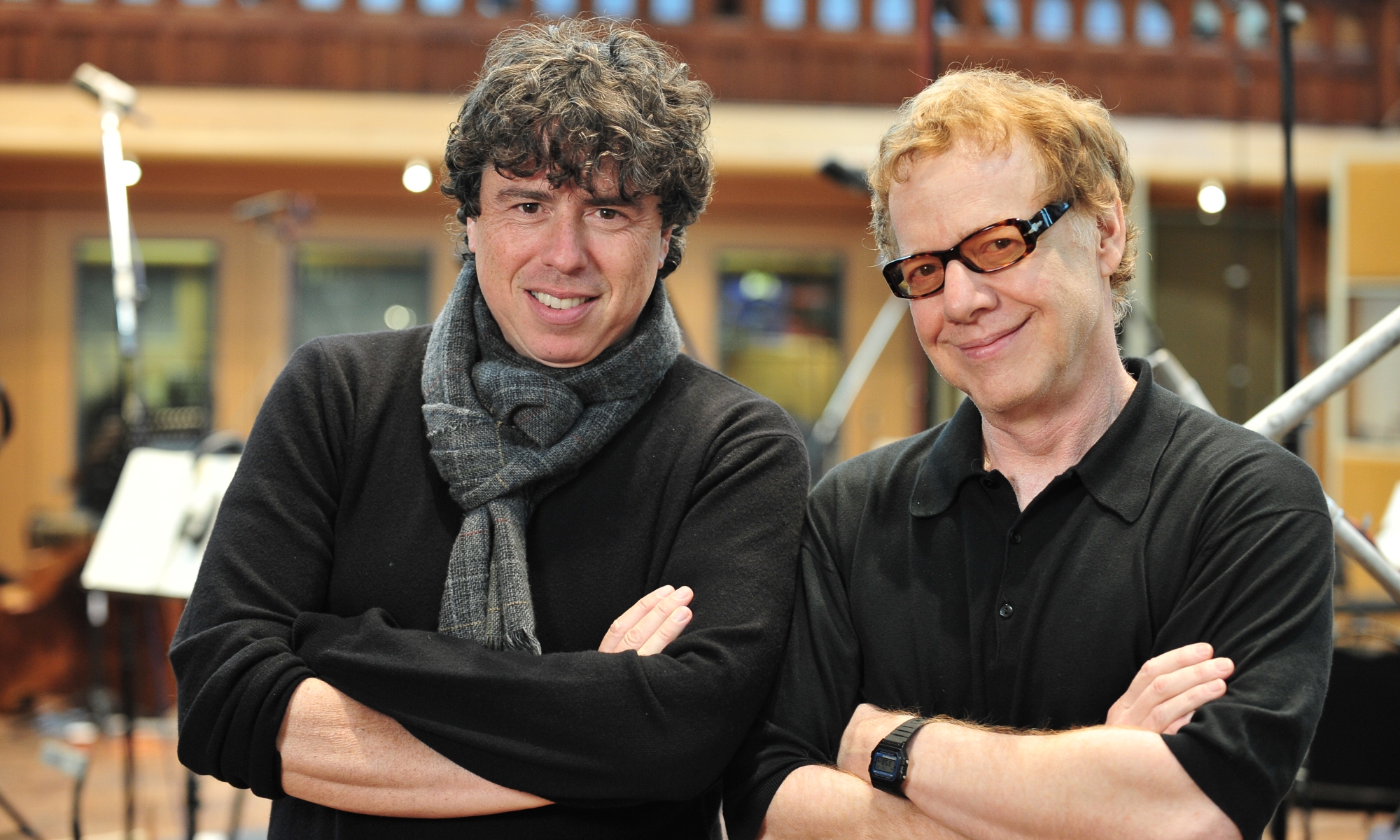
Composer Dario Marianelli, left, with director Joe Wright.

Beyond that, Wright’s film was heavily choreographed, so Marianelli’s music had to be ready especially
early. “It was a lot of work up front, written before the script was even finished, particularly the two waltzes. I had to write them first, then adjust them when they were shot and then adjust them again during the editing. It was an inordinate amount of work, but all worth it.”

The freedom extended to the kind of music Marianelli would write, and its instrumentation, including a surprising amount of brass. Anyone expecting buttoned-up strains will be surprised by the pulsing passion and robust comic flair of the composer’s score, which despite such indulgences remains appealingly tasteful and elegant.

“We started with the idea of two opposites,” Marianelli says, “the folk music, the earthy music toward which the character of Levin (Domhnall Gleeson) is attracted, and then the more sophisticated music of the aristocracy and also the pretense, the life on a stage. Then gradually more ideas came in, and they started interbreeding. We ended up with a lot less folk music and more of this new entity of the bands—rougher sounds coming into the sophisticated orchestra but still very pure high violin over simple piano or music-box notes.”

But a third element soon forced its way into Marianelli’s musical consciousness. “There was a necessity to have something that could give voice to the aspirations Anna (Keira Knightley) and Levin have to lead a life away from the stage. So I have a compass with three points, the third being this otherworldly music that had to be very pure and simple, and that represented the truth of a life they all wanted but couldn’t have—the escape they desired.”

The hardest part, of course, was getting started, and Marianelli points to that first waltz with particular affection. “I remembered recently that was the very first tune when I put my hands on the keyboard and wanted to send something to Joe to start the conversation,” the composer recalls. “This was May of last year, a full four or five months before the scene was shot. But I wanted to find something tender that could be danced to but that I could use at the end as well for when Anna dies. That slowly descending harmony—I’ll whistle it badly for you—that theme is particularly dear to me because it’s the first.”

He is equally partial to the clarity—rare for him, he says—that accompanied its articulation. “At that point, it was clear that it had to be something that could take this whirling moment when Anna falls in love with Vronsky (Aaron Taylor-Johnson), when she’s enraptured or entrapped by him, but could also be used as a mournful commentary on her death. And I never let go of that in the months that followed. I found variations on the piano, in the orchestra, but substantially it was the same tune I had from day one. It’s like an old friend now. And if I have to go to the piano and play a bit from Anna Karenina, that’s what I will play.”

Indies Break Into Animation Oscar Race

Pete Hammond is Deadline’s awards columnist. This story appeared in the Nov. 28 issue of AwardsLine.

A new trend has begun to creep into a category that’s been mostly major-studio territory since its creation a decade ago. The animated-feature lineup is seeing more independent distributors finding their way into the Oscar race and enjoying real success in winning those coveted nominations.

In fact, since the animated-feature category was created in 2001, the list of winners—beginning with DreamWorks Animation’s Shrek through last year’s victor Paramount’s Rango—has been dominated by the major studios, particularly Disney/Pixar, which won four of the past five animated-feature Oscars and six overall. Last year’s Cars 2 was the first time a Pixar entry failed to make the cut, even with five nominations in the category. Even the two independent productions that have won in the category, Studio Ghibli and Hayao Miyazaki’s Spirited Away (2002) and Aardman’s Wallace & Gromit in the Curse of the Were-Rabbit (2005), were still distributed by major studios, Disney and DreamWorks Animation, respectively. So seeing indie distributors making headway in the animation race is causing big trouble for the majors and their expensive tentpole toons that desire domination.

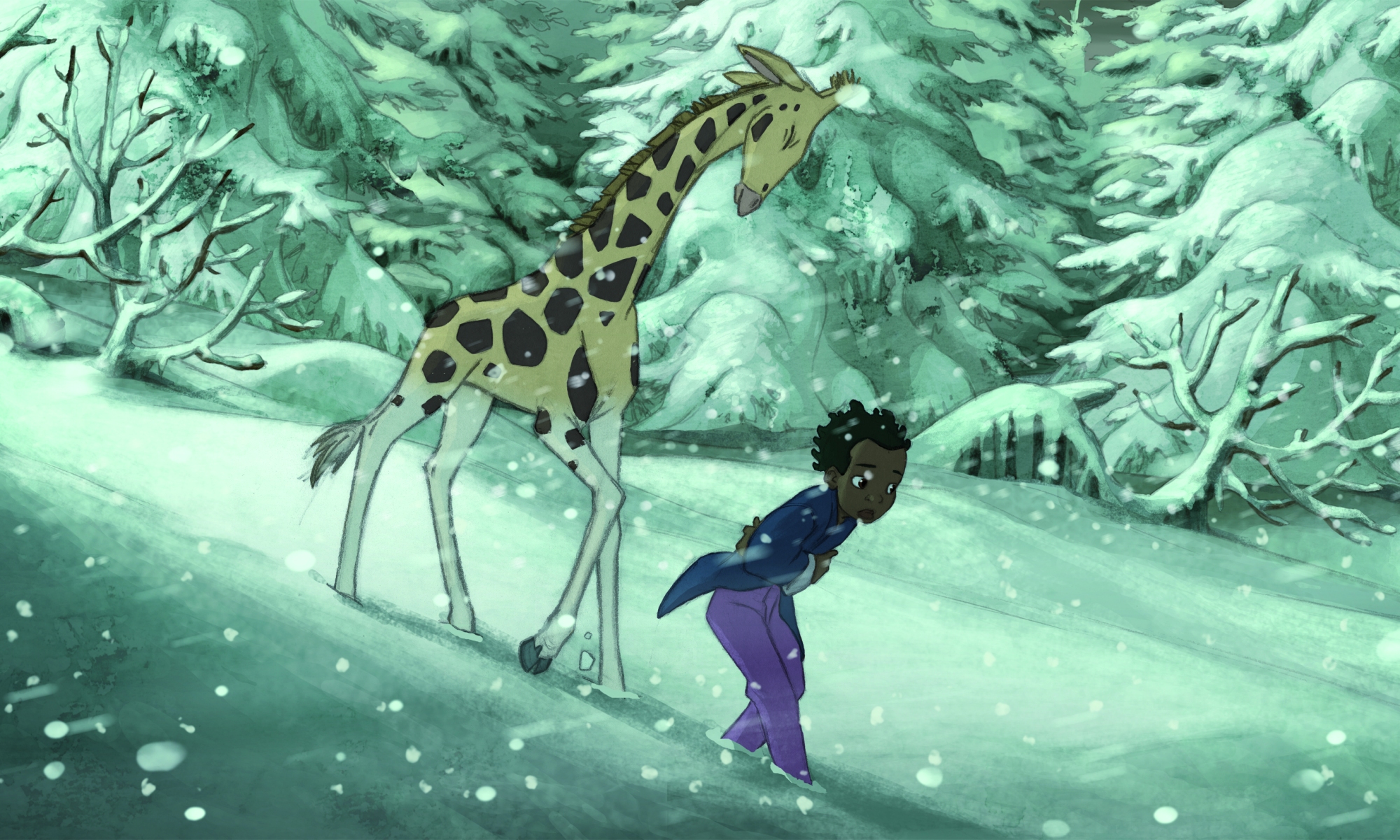
Chief among these indie players is tiny New York distributor GKIDS, which is also the producer of the New York International Children’s Film Festival, an Oscar-qualifying event. The company scours the world for titles appropriate not only for the festival but also for distribution. Now a big part of that process is picking films that might be Oscar friendly, as well. GKIDS first received surprise Oscar recognition for its 2010 entry, The Secret of Kells,and then really hit paydirt last year by becoming the first indie distributor to land two nominations, for Chico & Rita and A Cat in Paris,over a lot of heavyweight contenders, including Steven Spielberg and Peter Jackson’s The Adventures of Tintin. This year, GKIDS leads the indie charge with four qualifying movies (From Up on Poppy Hill, The Painting, The Rabbi’s Cat, and Zarafa),and the company has already announced two more for the 2013 awards year.

Eric Beckman, founder of GKIDS and artistic director of the NYICFF told me after winning those two noms last season, “for us, our whole purpose is to help expand the market for what I find artful and thoughtful, sophisticated animated films for adults and kids. (It’s) an art form that exists with more economic success outside the U.S. than inside.” He says he doesn’t have nearly the budget of the majors but still finds a way to compete. “Our challenge is just getting the film into the hands of the Academy and getting them to put the damn thing in their DVD player. We’re an indie film company; we’re not going to spend a half-million dollars on an awards campaign. We can’t,” he explains.

DreamWorks' Rise of the Guardians puts Santa Claus, the Easter Bunny, and the Tooth Fairy in charge of saving the world.
DreamWorks’ Rise of the Guardians puts Santa Claus, the Easter Bunny, and the Tooth Fairy in charge of saving the world.

Those who can, though, likely will, especially in this year’s hotly contested race. Disney finds themselves in the ticklish situation of having three genuine contenders in Pixar’s Brave, Tim Burton’s Frankenweenie,and Wreck-It Ralph possibly dividing votes and putting a burden on the studio to support all three equally. That’s something DreamWorks Animation’s Jeffrey Katzenberg is trying to avoid by putting most of his company’s Oscar strategy toward the holiday release, Rise of the Guardians, rather than the summer hit Madagascar 3: Europe’s Most Wanted,which has turned out to be the biggest film in the history of the franchise. Still it makes sense. Neither previous Madagascar got a nomination, and it’s unlikely the third film in the franchise will change the trajectory, despite being generally acknowledged as the best in the series. Last year, surprisingly, DWA got nominations for both their entries, Kung Fu Panda 2 and Puss in Boots, which likely split the vote, allowing Rango a clear path to victory. With hit toons from Universal (The Lorax), Sony (Hotel Transylvania),and Fox (Ice Age: Continental Drift),there is a strong studio presence to fight off the new wave of indie love the nominating committee seems to have.The animated field sports 21 titles that have been entered into the competition, meaning it is virtually certain there will be five nominees for only the fourth time in the history of the award. Here is a snapshot of the contenders for those five slots.

ADVENTURES IN ZAMBEZIA

From South Africa, this story about a naïve falcon who flies to bird-friendly Zambezia might remind some viewers of last year’s Rio,but with its likable protagonist and a good voice cast led by Abigail Breslin, Jeff Goldblum, and Samuel L. Jackson, it could be a sleeper.

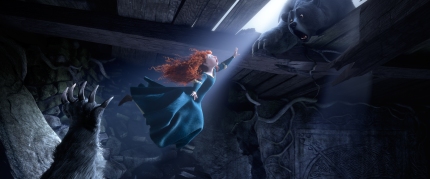
The headstrong red-haired Merida of Disney/Pixar's Brave.
The headstrong red-haired Merida of Disney/Pixar’s Brave.

BRAVE

This Disney/Pixar entry was a summertime hit for the studio and a welcome return to some critical enthusiasm after last year’s Cars 2 detour. It has meticulous animation but didn’t seem to generate the same level of enthusiasm as many past Pixar winners. However, artistry just might be enough here to make the grade.

DELHI SAFARI

The first Indian 3D animated film, in which a bunch of jungle animals team up to save themselves from human intervention, could remind some of the Madagascar franchise, but the Bollywood flavor sets the tone and sets the film apart. Christopher Lloyd and Jane Lynch are among the voices in the English-version indie to be released in the U.S. by Applied Art Productions.

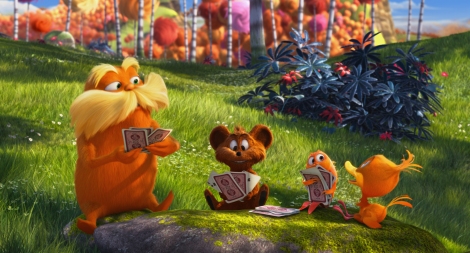
He's the Lorax, and he speaks for the trees.
He’s the Lorax, and he speaks for the trees.

DR. SEUSS’ THE LORAX

Another in the successful transformation of Dr. Seuss from book to animated smash, this huge spring hit with a strong pro-environment message came from Christopher Meledandri, who is turning out to be Universal’s most reliable hit maker. Critical indifference won’t help gain awards traction here, though, making its Oscar prospects a little cloudy.

FRANKENWEENIE

Tim Burton’s most personal film is adapted from a live-action short he made at the beginning of his film career and turned into a black-and-white 3D animation wonder. Boxoffice reception was chilly, but Burton might have enough aficionados on the animation committee to serve up a second nomination for him in the category after first hitting paydirt with 2006’s Corpse Bride.

FROM UP ON POPPY HILL

GKIDS distributes this Japanese entry from legendary Studio Ghibli and Oscar-winning director Hayao Miyazaki and Goro Miyazaki. The 1963-set love story centers on a young couple hellbent on saving their high-school clubhouse from destruction. Never underestimate animators’ love for the Miyazaki brand.

HEY KRISHNA

Yet another entry from India, this one is touted as India’s first fully animated stereoscopic film and is a grand epic adventure tracing the exciting journey of its title character as he battles the forces of evil. Could it be Bollywood’s year in this category?

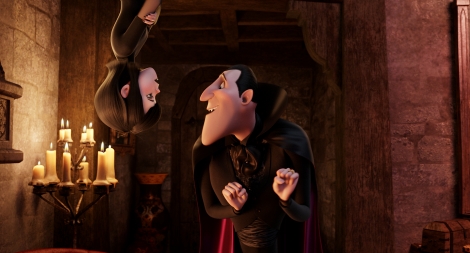
Adam Sandler is the voice of hotelier Dracula in Hotel Transylvania.

HOTEL TRANSYLVANIA

One of several horror-themed entries, Sony Animation’s fall hit features Adam Sandler as Dracula, who operates a plush resort that caters to the monster crowd and is designed to keep humans away. Sony Animation hasn’t been in the race since Surf’s Up, but this is one of the more high-profile films on the list—though critics didn’t bite.

ICE AGE: CONTINENTAL DRIFT

The fourth film in the wildly successful series from Blue Sky and Fox was a cash cow for the studio, but generally was perceived to be a by-the-numbers entry that wasn’t distinguished by any “wow” factor that would help gain it entry into the golden circle of five. A case of been there,
done that, as far as Oscars go this year.

A LIAR’S AUTOBIOGRAPHY: THE UNTRUE STORY OF MONTY PYTHON’S GRAHAM CHAPMAN

A 3D animation romp through the late, great Graham Chapman’s life as seen through the eyes of his fellow Monty Python gang. It is one of the most distinctive entries this year, and Python fans should spark to the storytelling.

MADAGASCAR 3: EUROPE’S MOST WANTED

Three is the charm, as this not only became the most successful and critically admired edition of the zoo gang’s tales but also the series’ biggest hit. Nevertheless what movie with a “3” in the title gets Oscar recognition here besides Toy Story?

THE MYSTICAL LAWS

This Japanese scifi entry envisions a world where Asia has become the Earth’s superpower, against a weakened and powerless United States. This type of action anime rarely wins nominations, and that’s unlikely to change this year.

THE PAINTING

GKIDS is qualifying the original French-language version of this beautifully animated piece from auteur Jean-Francois Laguionie. The film is almost painterly in nature and, therefore, the artiest entry of all 21 films in contention. With animated worlds inside of each painting, Laguionie creates a unique visual look. A real threat to grab an indie slot and steal a spot from a major.

The title character in ParaNorman fights off zombies, parents, and other distractions to save his town in this clever horror spoof.

PARANORMAN

From Focus and Laika, the groups responsible for past nominee Coraline, comes the tale of Norman, who fights off zombies, parents, and other distractions to save his town in this clever horror spoof that is one of the best reviewed animated films of the year. Can lightning strike twice for Laika?

THE PIRATES! BAND OF MISFITS

Aardman strikes again with the fiendishly clever and engaging pirate saga. It was not a boxoffice smash for Sony in the U.S., but its distinctly British sensibility and hip script make it one of the year’s most entertaining toons, one that could surprise pundits who might have written off its chances.

THE RABBI’S CAT

Another GKIDS product from France, this 1930s-set trifle concerns a rabbi and his talking philosopher of a cat, who gains the power of speech by dining on the family parrot. Clever, but weird. Last year, the company scored with a Sam Spade-like cat in the noir takeoff A Cat in Paris, so why not turn to the felines again?

RISE OF THE GUARDIANS

It’s The Avengers of animation, and DreamWorks can only hope to grab just part of that boxoffice. Bringing together childhood icons the Easter Bunny, Santa Claus, Tooth Fairy, Jack Frost, and Sandman to fight the evil boogieman Pitch, this is gorgeously animated stuff from William Joyce’s books. Expect DreamWorks Animation to really make a play for the gold here.

SECRET OF THE WINGS

Yet another in the direct-to-video Tinker Bell series for Disney. The company played it for a week in Hollywood to qualify, just to make sure there would be enough entries in the category to have the maximum five nominees. Disney’s money is on their other three films, not this one.

WALTER & TANDOORI’S CHRISTMAS

With a nice message and a holiday spirit, this entry from Sylvain Viau concerns the pair’s efforts to save their town from an ecological disaster just before Christmas. If Arthur Christmas couldn’t make the cut last year, don’t expect Walter Christmas to do the trick, either.

A videogame villain wants to be a better character in Wreck-It Ralph.

WRECK-IT RALPH

A terrifically funny and clever toon about videogame villain Ralph trying to become a good guy for a change. Great voice work from John C. Reilly and Sarah Silverman, plus a really amusing script, make this one for the hip crowd and a potential spoiler in the race for the triumphant return of the Disney Animation label.

ZARAFA

GKIDS’ Belgium-produced French boxoffice hit centers on a true story of a giraffe given as a gift to France’s King Charles X from the Pasha of Egypt. Shown in the original French-language version, this film has at least one awards consultant worried that it could charm its way into contention. A possible sleeper?