Cari Lynn is an AwardsLine contributor. This article appeared in the Dec. 5 issue of AwardsLine.
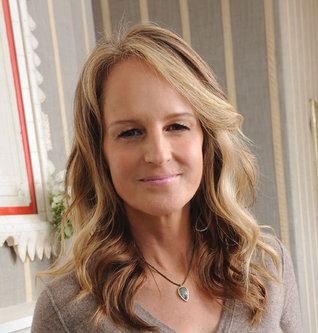
Academy Award winner Helen Hunt might have another shot at Oscar in what’s certainly her most “revealing” role to date—playing the real-life sex surrogate Cheryl Cohen-Greene hired by quadriplegic Mark O’Brien (John Hawkes) in the Sundance darling, The Sessions. Hunt discusses playing a real person, self-acceptance, and what it’s like to be that naked.
AWARDSLINE: I’m taking a stab here that prior to this script you hadn’t ever heard of sex surrogacy?
HELEN HUNT: No, I knew nothing about it. I thought there couldn’t be much difference between prostitution and that, no matter how you dress it up. But then I spoke to the real Cheryl—which, often, as an actress, isn’t as helpful as people would think because when you’re using your own imagination and experiences to build a character, speaking to the real person can be disorienting. But in this case, I didn’t have any idea, and I needed to get one really quickly. The real Cheryl is louder, more frank, and has a more enthusiastic quality than I have. So I got excited about the idea of at least starting like that and with a certain amount of bluster walking into the room: This is what it is to be naked, this is what it is to talk about parts of the body, and let (John Hawkes, playing Mark O’Brien) catch up a little bit. I also thought this would allow me to put something different in the end when Cheryl’s feelings for him deepen and her sense of intimacy grows. It was important that we not see this woman only one way all the way through.
AWARDSLINE:The clothes do come off pretty quickly and unceremoniously.
HUNT: Whenever I see anyone naked in a movie it takes me a minute, and we wanted to just get that out of the way. But also, I think the audience is in John’s head, and the fact that it’s all happening faster than he can quite manage is funny and scary, which are the two things I think it’s meant to be at that moment.
AWARDSLINE:A theme of The Sessions is knowing your body and figuring out how to be comfortable in it. Did that ring true for you personally or was it still quite difficult to approach those full nude scenes?
HUNT: That’s as naked as I know how to be. I was not as comfortable as (Cheryl) was, but I must be more comfortable than a lot of people because I did it. The whole north star for me was loving the story; I didn’t do it for the thrill or the dare of being naked. And what came along is the feeling of, Who cares anymore? Maybe it comes with being older—are we going to care about things we don’t even believe in, like everyone should look a certain way or everybody should be a certain age, or we should all be filled with shame and hiding our bodies and sexuality? Or are we going to take an opportunity of at least trying to be in the skin of someone who isn’t playing that game? By the way, the real Cheryl told me that she wasn’t always so comfortable with her body. There’s working on yourself from the inside out, which I think I did when I was younger, and as I get older I work on myself from the outside in, and by that I mean that if you don’t feel it, act “as if,” and the feelings might catch up, and this a perfect example of that. This is the way I want to be, and what a beautiful piece of good fortune that I was given a part to play around with what it would be like to feel that way.
AWARDSLINE: This film is about acceptance on several fronts, from sexuality to disability.
HUNT: The disability in the movie does something very particular in that it deconstructs the sex by necessity, and so it makes it like the sex that all of us have, improvised and ridiculous and beautiful and awkward and scary, and not so much like all the choreographed weaving that we see in movies and that I’ve done in movies.
AWARDSLINE:How did the real Cheryl respond to the film?
HUNT: She wrote me a card that said, “Thank you for really understanding my intentions in terms of my time with Mark.” I think that’s what probably meant the most to her.
AWARDSLINE: I saw you earlier this year in the play Our Town. What makes you want to take a film role these days? What has to be there?
HUNT: A good script, a good script, a good script…or money. I had a very fancy moment in 1997 or whenever it was that I had a lot of good fortune at once. And then I did Castaway, and people were like, “You’re in it for 15 minutes. What are you doing?” But the story—it was a great story! I like getting to be part of telling a story that works, and (The Sessions) was a totally original, totally beautiful story.
David Mermelstein is an AwardsLine contributor. This article appeared in the Dec. 5 issue of AwardsLine.
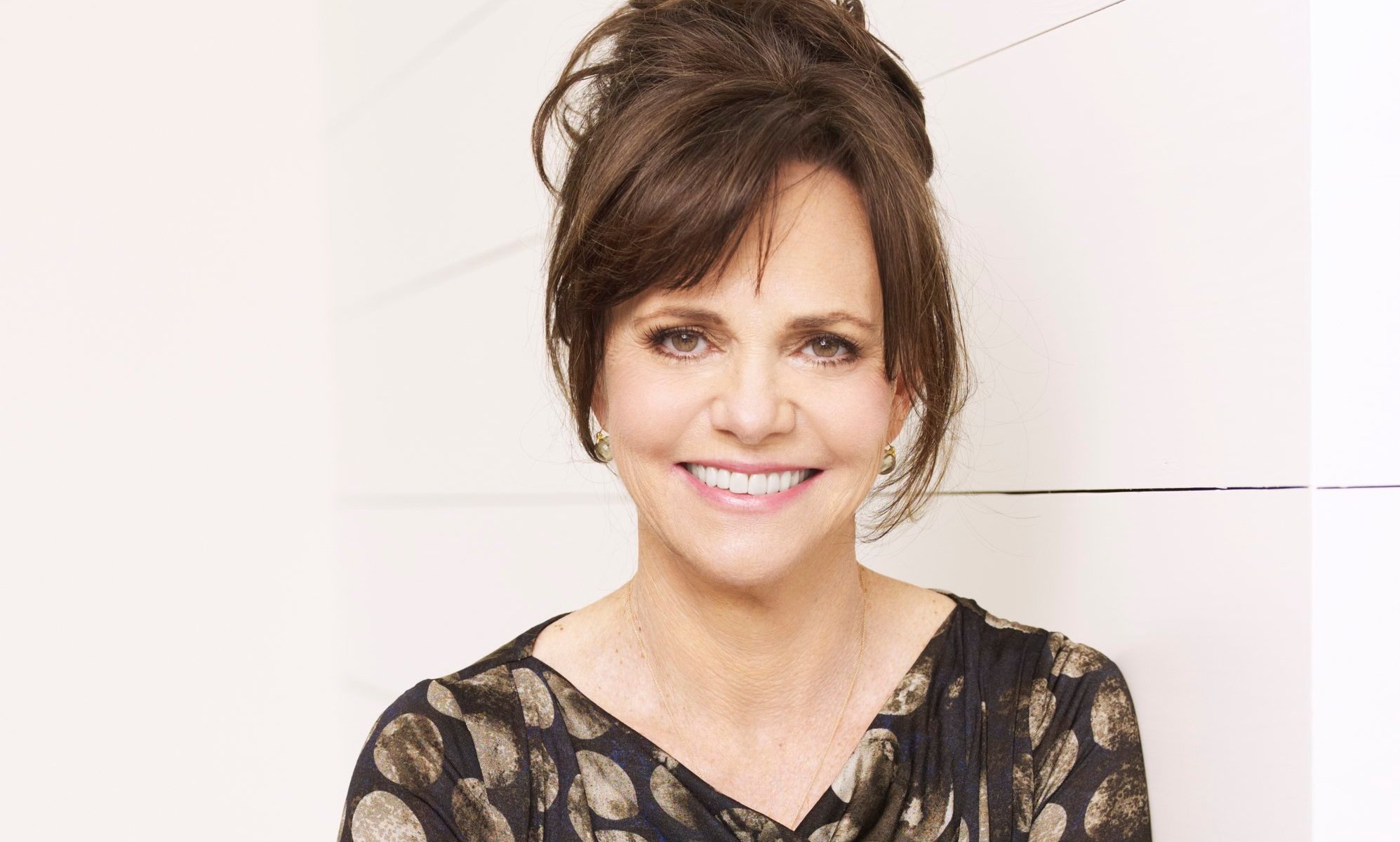
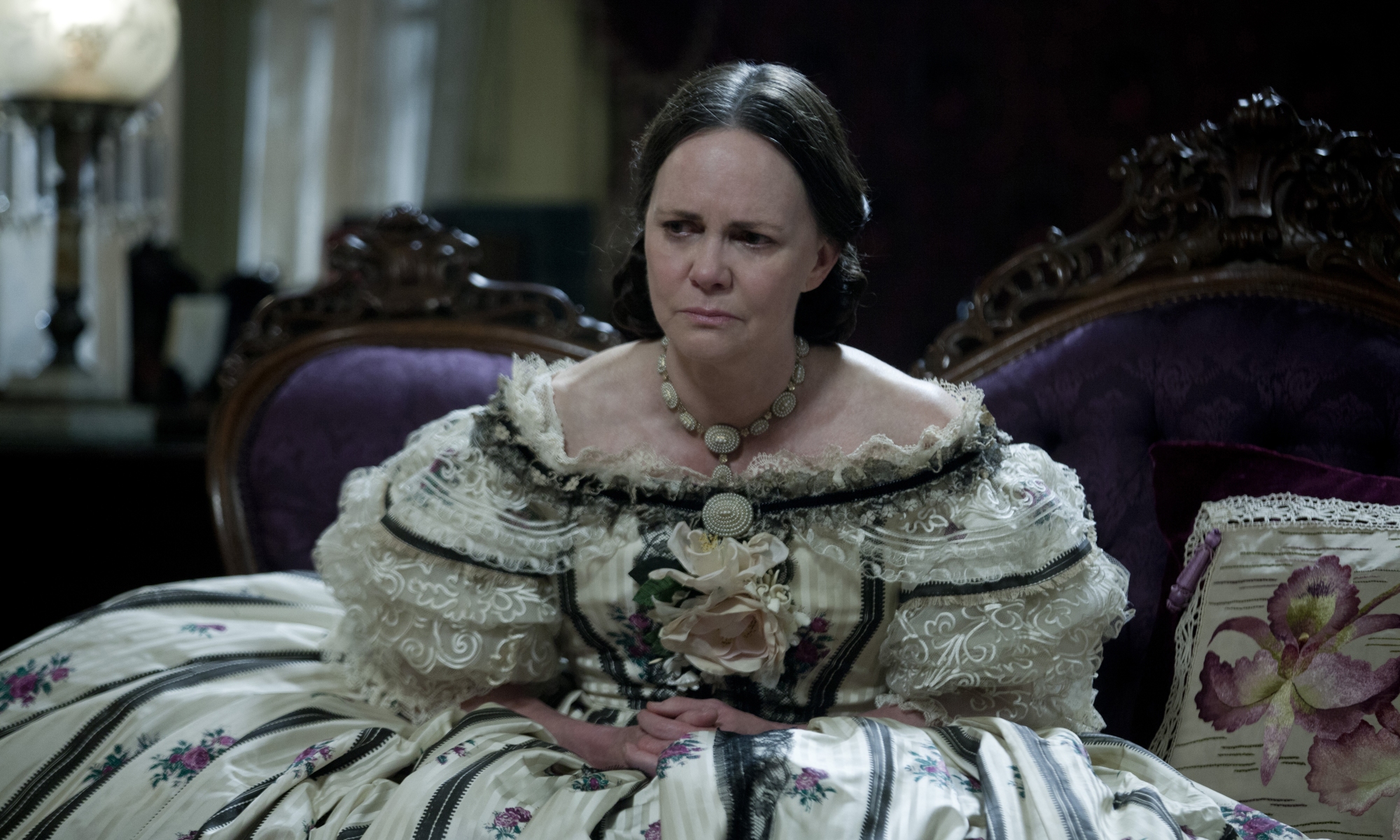
No actress has matured before our eyes the way Sally Field has. Appearing on the scene first as a perky ingénue in two 1960s TV series—Gidget and The Flying Nun—she made an unexpected dramatic breakthrough in Sybil (1976), a made-for-TV movie that brought the genre newfound respect. From there it was a relatively short hop to her first Oscar, as an unlikely union leader in Norma Rae (1979). Then—for a good decade and a half—Field appeared in consistently solid material, including playing a single-minded reporter opposite Paul Newman in Absence of Malice (1981) and Tom Hanks’ redoubtable mama in Forrest Gump (1994). Then, after a period out of the limelight, she reemerged on TV in 2006 to lead the Walker clan for five seasons on Brothers & Sisters. Earlier this year she played Aunt May in The Amazing Spider-Man, Sony’s reboot of its lucrative franchise. And now she claims her biggest—and most important—role in at least 20 years, as the mentally unstable wife of our 16th president in Steven Spielberg’s epic Lincoln, which stars Daniel Day-Lewis as the great man.
AWARDSLINE:What appealed to you about playing Mrs. Lincoln?
SALLY FIELD: What doesn’t? I’d been looking out for her for a long time. She is one of the most underexamined, misunderstood, maligned, yet important women in American history. Had there not been a Mary Todd, there would not have been an Abraham Lincoln. She found him early on, and she was ambitious. She always said she was going to marry the president. She recognized his genius and said, “He’s the one. I will marry him, and he will be president.” She honed him. She was always his closet confidant—until they got to the White House. She was highly complicated but a very necessary and important part of his life. So, yes, she was someone I wanted to play.
AWARDSLINE: You had to fight to land this role. Why?
FIELD: It was the way things needed to happen. Steven was interested in me doing it long ago. Writers came and went, until we got Tony Kushner’s exquisite script, which is poetry, really. Finally, Daniel was on board. But Steven didn’t feel I was right any longer. He tested me, which I asked for, and that didn’t seem to go too well. Yet (even) though he didn’t think I was right, he couldn’t let go of me. I suspect it was Daniel who insisted Steven had to see us on film together to know for sure. So Daniel, being the generous person that he is, flew in from Ireland to L.A., just for the day. And Steven, Daniel, and I had a magical afternoon in which we did some improv in the roles. Then, when I was on my way home, Daniel and Steven together called me, asking me to be their Molly (Lincoln’s nickname for his wife).
AWARDSLINE: How did you arrive at your conception of Mrs. Lincoln?
FIELD: I did all the research I could. I read five credible biographies. One, Mrs. Lincoln: A Life by Catherine Clinton, became my bible. I took it all in, all her documented actions—what she had done and said and her childhood—so I could piece together a psychology. I even visited her home. I tried to see the authentic collections of Mary Todd memorabilia. Then I began to create the exterior, with costumes. To match her measurements, I put on 25 pounds, because we know Mary’s waist size. The costumes were absolutely authentic. You do your work. I worked almost 50 years to be able to do this. Having those pieces of her life and your own life, you put it together. And then you walk on the set and do it.
AWARDSLINE: What was it like working with Steven Spielberg, and what kind of direction did he give?
FIELD: He set up an environment that was the most divine way to work. He allowed us this space. He allowed the crew to understand the actor’s process. I am a Method actor. I try to keep this world going as much as I can. We weren’t called in early to the set. We were called in just as they were ready to shoot. I never had a sense of the crew, and Steven never left the set. And he would let us move around. We wouldn’t even say the dialogue. It was what we did, walking this way and that. And then we shot it. Steven was very much a part of the scene. He would shepherd it, whispering provocative things in my ear. There were not a lot of takes. He would say hugely interesting things. Even if I could remember what he said, I wouldn’t tell you. It’s mine to keep. It was intensely intimate with the three of us.
AWARDSLINE: You’ve got some wonderful scenes opposite Daniel Day-Lewis and Tommy Lee Jones. How did they unfold?
FIELD: We just did them. Obviously, some scenes are more challenging because they are so deeply emotional. But we rehearsed those the least. We rehearsed practically nothing. It was all challenging and not challenging at all. I don’t know. The carriage scene, which is one of my favorites, we only shot that twice—maybe three times. I wanted to do it more just because I loved it so much. I wanted to do it till the day I died. But we did it very few times, because we lost the light.
AWARDSLINE: You’ve been twice nominated for Oscars and won both times, so you’re batting .1000. Are you getting your hopes up about another victory?
FIELD: Well, that’s very generous—I’m incredibly flattered—but, no. I’ve been around long enough to know what really matters to me. I want to do that carriage ride again and again. The kind of text that Tony Kushner wrote, the kind of talent both in front of and behind the camera, to have the stewardship of a master like Steven Spielberg—if I could have that ever again, that’s what I want.
AWARDSLINE: How did your previous Oscars change your life?
FIELD: I don’t think about that. I’m sure they affected my career in some way, but I don’t know how. My whole life has affected my career, because that’s what actors do: Your whole life informs your work. What you do and how you live—all that goes into your performances. Louis Armstrong said you have to live a life. And that’s right. If you don’t live a life, you don’t got nothin’ to come out your horn. Your accumulated life is what you bring to these roles.
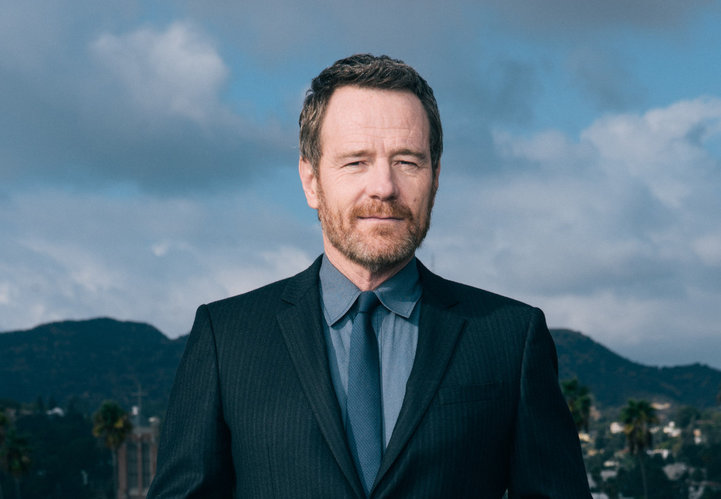
Although he’s better known to TV audiences as the meth-making teacher Walter White on Breaking Bad, Bryan Cranston spends a good portion of his year working on plenty of other film and TV projects. “It’s like a drug to be able to tell stories—that’s (my) drug of choice,” says Cranston, who directed an episode of ABC’s Modern Family this season and is prepping his own feature to direct when Breaking Bad finishes shooting its final episodes early next year. He recently sat down with AwardsLine to talk about his latest role as CIA agent Jack O’Donnell in Argo, Ben Affleck’s story about how Hollywood and the CIA teamed up to rescue six stranded diplomats in 1970s-era Iran.
AWARDSLINE: When you read the script for Argo, did you know that you would be playing CIA agent Jack O’Donnell?
BRYAN CRANSTON: The first time I read a script I don’t really want to know what character they’re thinking of. I just want to get a sense of the story by itself. I could even sometimes look at it and go, “There’s a good story here, but it’s kind of hidden with this muddled script.” If that’s the case, and I like the character, then I’ll talk about (working) on improving the script, which is mostly the case for me. When I heard this story and I read the script, and I was taken away by it. Not only is the story fantastic and real, but Chris Terrio’s screenplay was so supportive of that story and told it beautifully. I realized there’s no discussion here as far as “the script is lacking.” The role of Jack O’Donnell just popped off the page for me, because he’s an integral part of the story but also has his moment of heroism. He needs to rise to the occasion, damn the torpedos.
AWARDSLINE: Besides reading the Wired article, what kind of research did you do?
CRANSTON: I went to Langley, VA, and interviewed CIA officers there. They were a little surprised that I was asking more personal questions than mission-related questions. They said often, “There’s only a few things that we can actually talk about,” and I said, “That’s alright. I’m really more interested in finding out what a CIA officer is like as a person” After a little while, they opened up and went beyond the monosyllabic answers. I told them, “My job here is to take what is a composite character, representing the CIA, and I really want to do it justice.” They wanted to cooperate, as well, because they want to be seen in a light that is at least fair.
It’s interesting the clandestine nature of the subject allowed these people to work under the radar for the right reasons, and there’s no one who wants to celebrate that more than audiences: To say, “The man or woman who was not going to get any recognition for their deeds just got recognized.” That’s a wonderful feeling.
AWARDSLINE: Do you prefer to rehearse?
CRANSTON: Rehearsals to me are fantastic luxury. If you’re able to do that in film and television schedules, you have a bonus. There were directors like Sidney Lumet who used to have it in his contract that there would be an extensive rehearsal period prior to him shooting anything, and I regret that I never had a chance to work with him because that would have been great. We had a rehearsal period on Drive that was soenjoyable. It really allows the actor to be responsible for what you’re bringing to the picture and the story. By the time we started that movie, we were all fully invested because we spent timeon this. But that’s not always the case. In fact, more often that not, it’s not possible.
The fortunate aspect for Argo is that (the) script was just so good that the guide posts were very clear. Nothing was murky. When it came time for me to have meetings with Ben, I didn’t really have many questions. So basically what I did was alone time. I went to the bowels of the underutilized L.A. Times building where we shot. The first thing I wanted to do was go to that bullpen area were Jack O’Donnell lives. The bulk of his career was spent in that bullpen. And I went into my office, and I moved things around. In my backstory, I wanted him to be a devout Catholic, so I asked for rosaries and other religious artifacts that I could put on my desk. Not to billboard it or show it, but for me. (In the backstory), I just wrote, “You know he’s a better man than he is a husband, and he was divorced twice.” I had a feeling like, if this mission we call Argo could work, that’s Jack O’Donnell’s swan song. I think he’d retire after that.
AWARDSLINE: In addition to directing an episode of Modern Family this season, you’re prepping your own feature-film directing project. Can you tell me a little bit about that?
CRANSTON: We hope to be shooting next year, after Breaking Bad finishes shooting. (The story is) a strong family dynamic drama as much as it is a murder mystery. It’s about a man who wants to rekindle family values with his small family, his 16-year-old son and his wife, after he abruptly quits the FBI even though he was lauded for his work. He just feels he needs to do this for his family. But things start to fall apart, and the father and son end up literally and figuratively saving each other’s life.
AWARDSLINE: Does it have a title yet?
CRANSTON: It does, but I don’t want to give it out because we may change it.
AWARDSLINE: Has the success of Breaking Bad changed the type of roles that are coming your way?
CRANSTON: Oh, yes. That’s why I’m sitting here. Breaking Bad has opened up the level of opportunity for me, and I couldn’t be more appreciative. On screen, it is the role of my life; I will never have a role better than Walter White. I know that, and I’m fine with that. Then off screen, it’s afforded me the chance read a better quality of script and meet with fine filmmakers that I would love to continue a relationship with. I don’t play golf, I’m not one of those guys—I enjoy storytelling. I like to write it, I like to direct it, I like to act in it, I like to produce it. I like to be around storytellers. That’s what excites me.
When it comes to straddling comedy and drama, few performers possess the range and commercial longevity. Count Amy Adams as one of those few. In the afterglow of her Oscar-nominated turn as the filter-less Southern-fried Ashley in 2005’s Junebug, Adams continues to rally Academy voters for her somber roles (her suspicious nun in 2008’s Doubt and her Gaelic gal in 2010’s The Fighter) as well as families for her Disney films (last winter’s The Muppets and 2007’s Enchanted). In her latest role as Peggy Dodd, the woman behind Philip Seymour Hoffman’s philosophical cult leader Lancaster Dodd in Paul Thomas Anderson’s The Master, Adams brings a fierce gravitas to every scene she’s in, even when she isn’t speaking. When deconstructing her process, Adams is literally speechless: “The mystery of working with Paul is part of the wonderful experience. You have to invest in the moment and invest in the experience. Of course, you can ask questions. But I always find that living the experience is the answer.”
AWARDSLINE:You can play comedy and serious drama equally. Was achieving this dynamic something you and your talent reps planned or was it serendipity?
AMY ADAMS: It wasn’t so much that we sat there and had a strategy meeting. I finished The Muppets and was looking for what I would be doing next, and The Master presented itself. I do like to challenge myself and have it feel like different experiences in developing characters. Then I went from The Master to Superman. So it’s something I’m looking for from project to project rather than an overall strategy.
AWARDSLINE: What did you do to prepare for the role? Peggy has this Amish appearance, not to mention being controlling.
ADAMS: Yes, she does have a puritanical, buttoned-up way about her. Paul saw her as omnipresent and wanted her around even if she wasn’t involved in the action of the scene. This helped me in forming the character.
AWARDSLINE: How does Paul work with his actors? Does he rehearse a lot?
ADAMS: Paul’s process is immersive and actually quite fluid. There’s no particular technique or category to throw it in. We didn’t do a lot of rehearsals, at least I didn’t. There are conversations. I would love to have anecdotes and easy answers, but it’s so immersive that you come out of it—you don’t feel the same, and you can’t figure out why. It’s a wonderful confusion, so it’s very hard to put your finger on the experience.
AWARDSLINE: As widely reported, the film is inspired by the life of Scientology founder L. Ron Hubbard. Did you read up on Dianetics or did you just leave it to the script?
ADAMS: I left a lot to the script. I read Dianetics before and for some reason I remember it being a self-help book. I really let Paul guide me. I paid more attention to the era, to figure out women’s roles and their place in society. It’s changed so much over the past 100 years, so that’s always fascinating to me when I’m revisiting the past: To see where women were at that time. I read this book a while ago, The Feminist Mystique, and I remember the author talking about women’s roles during post-war (in which The Master is set). Peggy was clearly a bright and educated woman and her being behind a man was a much more powerful thing than for her being out on her own. So that’s what I went back to: The idea of there being limited options for an intelligent, ambitious woman.
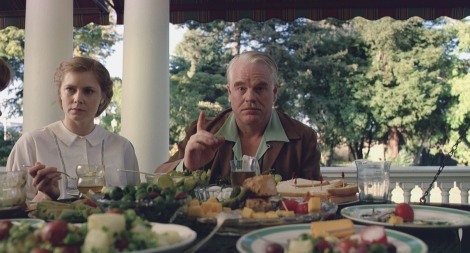
AWARDSLINE: The fact that she can speak out at dinner and exclaim, “We can’t trust Freddie” proves Peggy isn’t a second-class citizen.
ADAMS: No, she’s not a second-class citizen. But at that point, I also try to stay very mannered because I’m in front of the children, and it’s important that I give Lancaster the respect. I’m not yelling at him nor am I manipulating him as I do at a different time in the film where I’m much more direct. Several times when we’re in private, there’s a different Peggy than the one in front of his children where she maintains a level of respect and hierarchy; an arena where she doesn’t want to offend him or push the wrong button.
AWARDSLINE: Let’s address the elephant in the room: That scene where you…[Ed. note: Peggy aggressively fondles Lancaster after a drunken soiree in an effort to discipline him.]
ADAMS: (Laughs.) Really take control of him!
AWARDSLINE: Yes, it’s a bold scene because you’re getting your man back in order.
ADAMS: That scene let me know a lot about who Peggy was, and mercifully, we only had to do it in two takes.
AWARDSLINE: And what was it that you learned about her?
ADAMS: There was a coolness to her that I found so interesting in the writing. I wish I had the script in front of me, so I could say it in Paul’s brilliant words about rinsing her hand off and reaching over to the towel, and that was the whole thing to me: She’s a girl, and she’s going to do what she needs to do to get the job done. That was the scene that made me go, “Oh, O.K. I get her.”
AWARDSLINE: What’s your interpretation of Lois Lane in the upcoming Man of Steel?
ADAMS: I grew up with Margot Kidder as Lois Lane, so I didn’t want to try and be that version. Zack (Snyder) said that he wanted to play for more realism. There’s definitely still banter (with Superman). She’s tough, modern, and more contemporary. There’s also a lot more action than I’ve seen in my career.
AWARDSLINE: You’re also prepping to play Janis Joplin?
ADAMS: It’s still in development; I’ve been talking to people about that over the last couple of years. It’s one of those that is scary to think about, but I often say, “If it isn’t scary, I shouldn’t be doing it,” so I’m typically scared before I start everything.
Pete Hammond is Deadline’s awards columnist. This article appeared in the Dec. 5 issue of AwardsLine.
A strong set of previous Oscar winners could annihilate the chances for a promising group of newcomers who are hoping for their first nomination in the supporting actress category. Sally Field, Helen Hunt, Judi Dench, Maggie Smith, Nicole Kidman, Frances McDormand, Shirley MacLaine, and Susan Sarandon—not to mention three-time nominee Amy Adams—all shine brightly in their respective films. So will the veterans, who have successfully played this game before, dominate the field (as they are threatening to do in the corresponding male supporting category) or can a new class break through and triumph? And then there is the case of Les Misérables:Universal started screening the film Thanksgiving weekend and will continue through its Christmas Day release. It offers strong female roles to at least four actresses who could fill a category all by themselves. Can Les Mis be the first movie since Tom Jones in 1963 to nab three supporting actress nominations all for itself? It’s the stuff that makes the Oscars so damned interesting. Here are the contenders.
SALLY FIELD |LINCOLN
The two-time best actress winner (Norma Rae, Places in the Heart) and three-time Emmy winneris now 66 and actually insisted on being tested for the role of Mary Todd Lincoln, which she says she knew would be hers even though Steven Spielberg said it wasn’t to be. She proved him wrong, and voters might really respond to Field’s pluck in landing the role and bringing it on in a series of emotional scenes opposite Daniel Day-Lewis. Will Oscar like her, really like her, a third time?
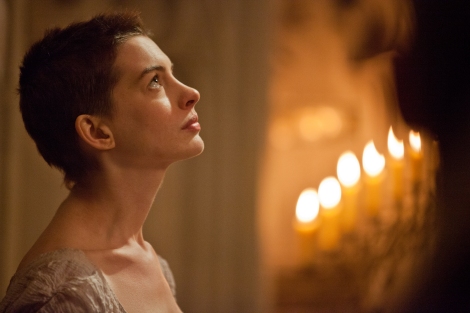
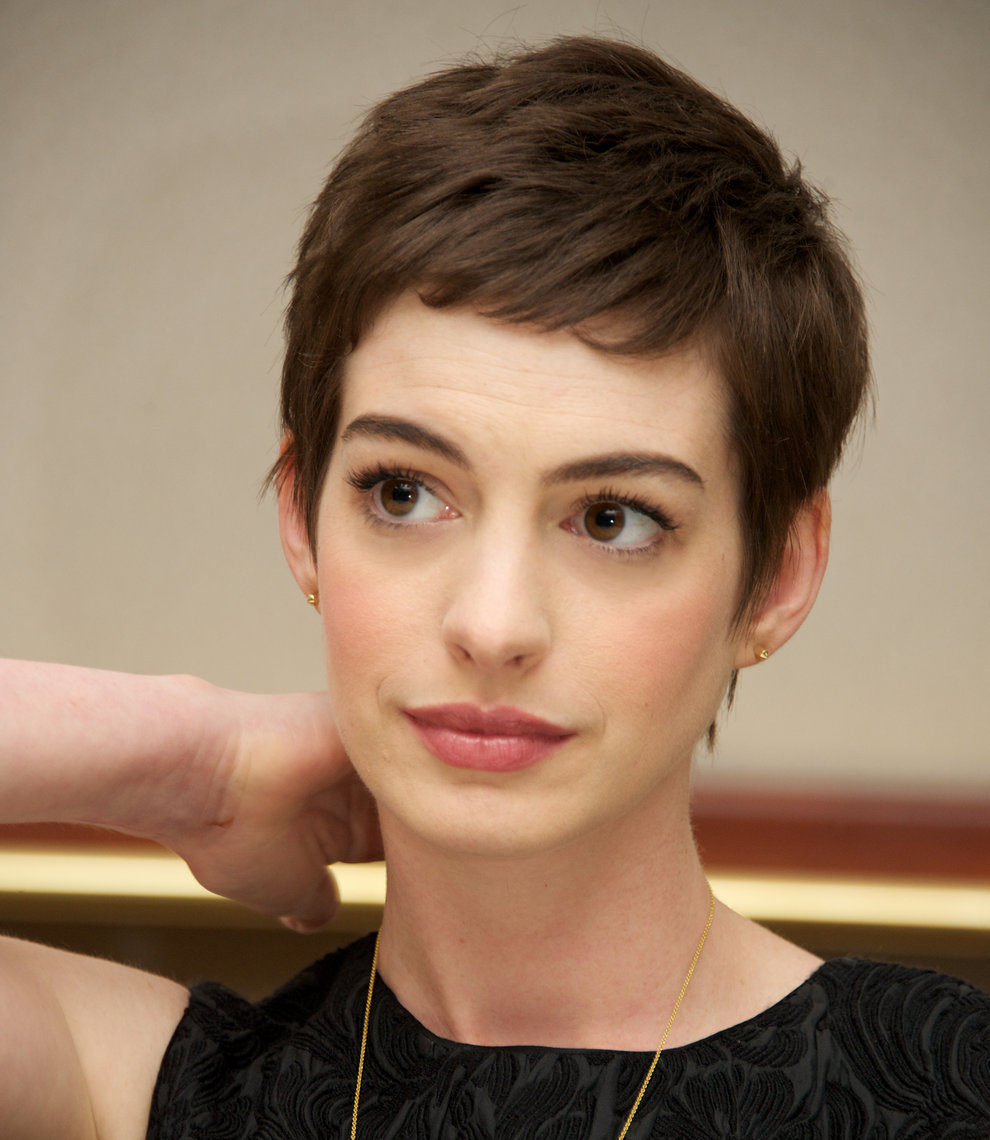
Anne Hathaway as Fantine in Les Misérables.
ANNE HATHAWAY |LES MISÉRABLES
As Fantine, Hathaway has been out front ever since Universal began releasing snippets of her performance of “I Dreamed a Dream,” one of the signature songs in the Les Mis score. The role just has the smell of Oscar all over it, plus she’s got that deglammed down-and-dirty look, but will competition from three other women in the cast lessen her chances or can she rise to the top?
HELEN HUNT |THE SESSIONS
Hunt reveals all physically and emotionally as the sex surrogate who offers her professional services to a man in an iron lung who longs to be deflowered at the age of 38. Hunt nails every aspect of this real-life surrogate and should easily earn a spot in her first Oscar race since winning the best actress statuette for 1997’s As Good as It Gets.
Amy Adams and Philip Seymour Hoffman star as a cult power couple in The Master.
AMY ADAMS |THE MASTER
With nominations in this category three previous times for Junebug, Doubt,and The Fighter,Adams seems to be primed to actually win one. Will playing the strong wife of a religious cult leader in The Master give her that opportunity? A fourth nomination seems like it is in the stars, but polarized response to the movie could dampen her chances for an actual win. Whether it is this year or not, her destiny is with Oscar.
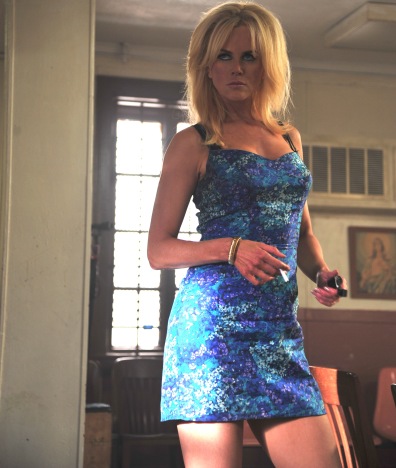
Nicole Kidman plays white-trash-fabulous in Lee Daniels’ The Paperboy.
NICOLE KIDMAN |THE PAPERBOY
Oscar voters love to see actors take risks, and no one does it better than Kidman playing a Southern tart and giving it her all in one edgy scene after another. The movie and her peeing scene were the talk of Cannes Twitter feeds, but it came and went quickly upon its release this fall. Still, actors might sit up and take notice anyway for this past winner’s impressive ability to take a shot and deliver the goods.
SHIRLEY MACLAINE |BERNIE
As the meanest woman in a small Texas town who strikes up an unlikely relationship with funeral director Bernie (Jack Black), MacLaine creates another indelible character in a career that has provided more than a half-century of them. The question is, will enough voters see the indie hit or even remember it came out this year? A Golden Globe nomination could help her chances here.
KELLY REILLY |FLIGHT
As a fellow addict who befriends Denzel Washington’s alcoholic pilot, the British-born Reilly makes a strong impression and holds her own in a few riveting scenes with the star. It seems the stuff of which Oscar nominations are made.
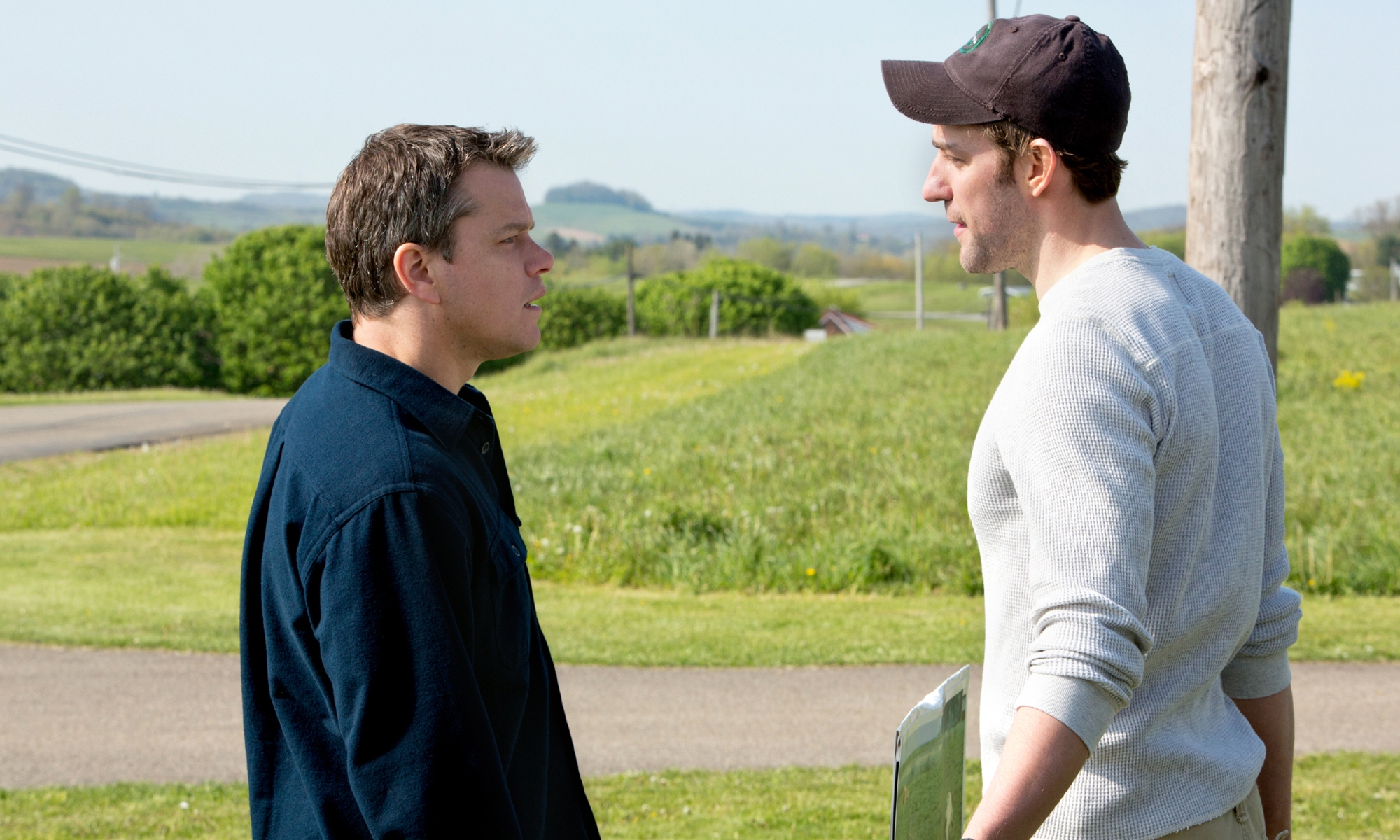
FRANCES MCDORMAND |PROMISED LAND
McDormand and Matt Damon are business associates who represent a big corporate entity trying to win oil-drilling rights from the economically challenged citizens of a small town, and as usual this reliable Oscar winner turns the role into a living, breathing human being. The late release date of the film, though, could prove a problem in getting the film widely seen by the time voting starts. She also gets bonus points for her turn in May’s specialty hit, Moonrise Kingdom.
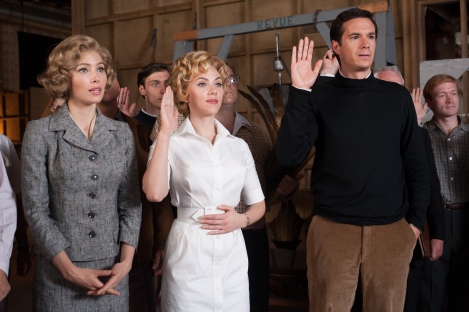
Scarlett Johansson, center, plays Tippi Hedren in Hitchcock.
SCARLETT JOHANSSON |HITCHCOCK
As Janet Leigh during the making of Psycho,she hits all the right notes, deftly capturing the warmth of the bright movie star and the insecurity of an actress taking on a daring role for Alfred Hitchcock. Leigh won her only Oscar nomination in this category for the 1960 film but lost, so wouldn’t it be ironic if Johansson managed to do the same thing playing Leigh playing Marion Crane?
JUDI DENCH |SKYFALL
If it’s not going to be Javier Bardem, could Dench be the first actor in a James Bond film to be nominated for an acting Oscar? Dench’s role as M is larger in this 23rd Bond adventure, and it provides an emotional wallop. A nom would be especially sweet, considering no actor in Oscar history has ever been first-time nominated for a role they have already played in six previous films. Got all that?
Also in the mix
SAMANTHA BARKS |LES MISÉRABLES
As Éponine, this British relatively unknown actress has perhaps the meatiest of the supporting roles to play and could be the most likely to join Hathaway on the nomination list.
HELENA BONHAM CARTER |LES MISÉRABLES
As the colorful Madame Thenardier, Bonham Carter gets a larger-than-life role and is working again
with director Tom Hooper, who directed her to a nomination in this category two years ago for The King’s Speech.
AMANDA SEYFRIED |LES MISÉRABLES
As sweet Cosette, Seyfried might not have the killer scenes of the others in Les Mis and thus could be the odd supporting actress out in this competition.
JACKI WEAVER |SILVER LININGS PLAYBOOK
As Bradley Cooper’s mother and Robert De Niro’s wife, Weaver—nominated in the category two years ago for her extraordinary role in Animal Kingdom—has the least showy part of all the main players, but could get swept in here with the Silver Linings tide.
GLORIA REUBEN |LINCOLN
As the seamstress who becomes Mary Todd Lincoln’s confidante, the former ER star is quietly touching, but Field’s showier role is far more likely to prevail here.
MAGGIE SMITH |THE BEST EXOTIC MARIGOLD HOTEL
As the bitter, racist one in the ensemble cast, Smith is terrific as usual, but voters might actually prefer her lead role in the similar Quartet and leave this increasingly crowded category to others.
KERRY WASHINGTON |DJANGO UNCHAINED
Tarantino’s western is a late-breaking entry, but Washington has a meaty role in it, so don’t discount her chances of finding her way into the race once voters get a look at the film.
SUSAN SARANDON |ARBITRAGE
Sarandon’s killer scene, in which she puts her cheating hubby Richard Gere right in his place, could be just enough to do the trick, but Roadside has to make sure voters see the movie.
BLYTHE DANNER |HELLO, I MUST BE GOING
Here’s a shoutout for the great never-nominated Danner, who shines as the mother of a divorced woman who moves back in with her parents. But did anyone actually see the movie?
LAURA LINNEY |HYDE PARK ON HUDSON & THE DETAILS
Sensing a lack of heat in the best actress race, Focus has made a last-minute switch and moved Linney from lead to supporting for her low-key work in Hyde Park. However, the role she really deserves recognition for in this category is her wildly amusing turn as the over-sexed, needy neighbor in The Details,but the Weinstein Co. isn’t even bothering to campaign the film and sent it almost directly to VOD. Too bad. Linney’s great in it.
JENNIFER EHLE |ZERO DARK THIRTY
With Jessica Chastain in lead and Ehle in supporting, it could ironically be the women that really shine in Kathryn Bigelow’s testosterone-driven military film about the hunt for Osama bin Laden.
EMILY BLUNT |LOOPER
Blunt is always good and again makes her mark as a mother living with her son on a farm in this scifi quasi hit, but it’s not a genre close to the hearts of Academy voters.
KRISTEN STEWART |ON THE ROAD
With this long-gestating film based on the Jack Kerouac book, Stewart breaks out of Bella hell and shows off some real grownup acting skills, but it likely won’t be enough to move her into real contention in this race.
ANN DOWD |COMPLIANCE
As the fast-food restaurant manager facing off against a man who says he is a police officer, character-actor Dowd earned raves, but the film was not widely seen. The real potential, though, of critics awards for her riveting performance could bring it back into the conversation and force voters to take notice.
Cari Lynn is an AwardsLine contributor. This article appeared in the Dec. 5 issue of AwardsLine.
It’s not often that an actor guns for a character who promptly dies in a film, but Anne Hathaway fought for the heart-wrenching role of Fantine in this winter’s Les Misérables—and rightly so. Hathaway’s impassioned performance well makes up for the truncated role, and it’s her voice, singing “I Dreamed a Dream”—and shot live—that sets the scene for the trailer of this Christmas release. Hathaway is no stranger to the Oscar race, having been nominated for best actress in 2008 for Rachel Getting Married, but it’s this role that might well be her lock.
AWARDSLINE: Did you have to audition? And was it the role of Fantine that you always had your eye on?
ANNE HATHAWAY: I did have to audition. There was some resistance to the idea of me because of my age—I was in between the ideal ages of the main female characters and was told I was too old for Éponine and Cosette, but probably too young for Fantine. I agreed I was too old for Éponine and Cosette, but I got fiery and determined and pushed my way into an audition for Fantine. I had a three-hour audition but then had to wait a month until I heard anything.
AWARDSLINE: Did you work with a vocal coach to approach this role?
HATHAWAY: My vocal coach is Joan Lader, and she’s Hugh’s (Jackman) vocal coach as well. Immediately after I was cast, Joan and I began twice a week working to improve my vocal stamina so that I could sing for 12 hours a day. When I got to England to begin rehearsals, I worked with additional coaches there. I had prepared for singing while crying, and I’d been practicing that because I didn’t want to get there and cry and sing for the first time on camera. We also worked on subtle things, such as voice placement since you can get congested when crying, and you have to still be able to stay on pitch.
AWARDSLINE: Was it challenging to sing live with such close-up, tight shots?
HATHAWAY: I found it liberating to sing on camera. On stage, you have to indicate having a thought, and the word you are singing must indicate it as well, but on camera, you can have ideas, you can take in all the stimuli that the character would be taking in, there’s a freedom you get, and you don’t have the obligation to transmit each idea to the back of the house. It felt so much closer to reality for me.
AWARDSLINE: For each take, did you shoot the entire song straight through?
HATHAWAY: Oh, yes. (Laughs.) I’m thinking back to the arrest scene or the factory scene. These are long scenes, and they were exhausting. Fantine is in such an emotionally tragic place, and it involved singing and crying for 12 hours a day.
AWARDSLINE: Do you know which take was used for your quintessential song, “I Dreamed a Dream”?
HATHAWAY: We used earpieces to sing to a live piano track, and I sang it through once, but then I was having trouble hearing the piano, so I put in both earpieces so that I couldn’t hear myself. The second and third take didn’t go straight through, but then it was the fourth take, which was only the second time I’d sung straight thorough, that Tom (Hooper) ended up using. I remember feeling this schism in me that maybe this was the one. But of course, I still had to make them shoot it another 13 times; I had to make it way more complicated.
AWARDSLINE: I’m assuming there was only one take for the hair-cutting—well, more like chopping—scene?
HATHAWAY: The take had to be divided into two sections. Fantine is led into the grotto by a wig maker, and she cut the first part of my hair, a 3- by 4-inch rectangle, and then they had to yell cut (for a costume change), and I had to sit there half-bald for about 20 minutes, which wasn’t easy. I try to be as stoic an actor as possible, and I’m blessed to have been given this role, but this (scene) completely undid me. I’ve never been so scared, and I was slightly manic about it. But when it was done I was fine, and I had a pixie cut. Although I did have a huge bald spot in front, which wasn’t planned—they were cutting my hair with a knife. But I think this might be a new phase in life for me. I now like having short hair for the manageability of it. But by the end of this shoot, I had no vanity left. I was horribly scrawny and bald.
AWARDSLINE: Were you asked to lose weight for the role or was that your own decision?
HATHAWAY: I was trying to merge the Fantine from the stage with Fantine from the novel, and I took my physical cues straight from Victor Hugo. You have to suspend disbelief on stage when Fantine dies, and she doesn’t look any different, but on film we had the opportunity to really get inside Fantine. Being the slightly masochistic actor that I am, I thought, when she says, “I had a dream my life would be so different from this hell I’m living…” what if we were actually able to show her in hell? I wasn’t asked to lose weight, but I talked to Tom about it, and he moved the schedule around so I could lose the weight. In the end, I thought it lent her an authentic vulnerability. You want to wrap a blanket around her and feed her soup. You want to save her. After all, it is called The Miserable, and Fantine is the most Les Misérables of them all, and I felt I couldn’t shirk that. I did a cleanse at first to prime me for the bare bones, no pun intended, that were to come. I lost 10 pounds initially, then lost 15 pounds in 14 days. I don’t recommend it.
AWARDSLINE: You have the amazing distinction of being a second-generation Fantine.
HATHAWAY: Yes, my mom was in the first national tour of Les Mis. She played a factory girl, but was an understudy for Fantine and did play Fantine many times. I was 7 years old, and this was the show that had focused my desire for acting, plus there were children in the production so it made it all seem obtainable. It’s amazing that this film came around when I was the right age to play the character my mom had played, the character that made me want to be an actress. To have it come full circle like this is truly amazing. To say it was the soundtrack of my life is no exaggeration.
Diane Haithman is an AwardsLine contributor. This article appeared in the Dec. 5 issue of AwardsLine.
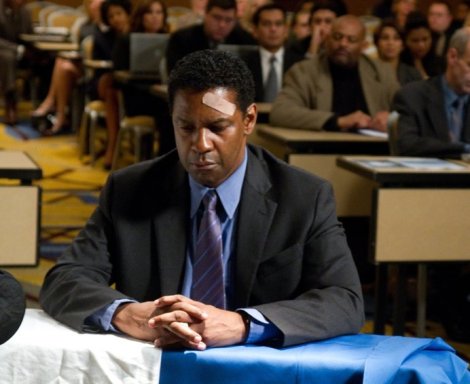
One thing’s for certain about Flight: The Robert Zemeckis-directed drama starring Denzel Washington as an alcoholic pilot will never be a popular in-flight film. “After this movie, people are going to be waiting out on the steps for the pilot with a Breathalyzer test,” Washington recently joked in an interview.
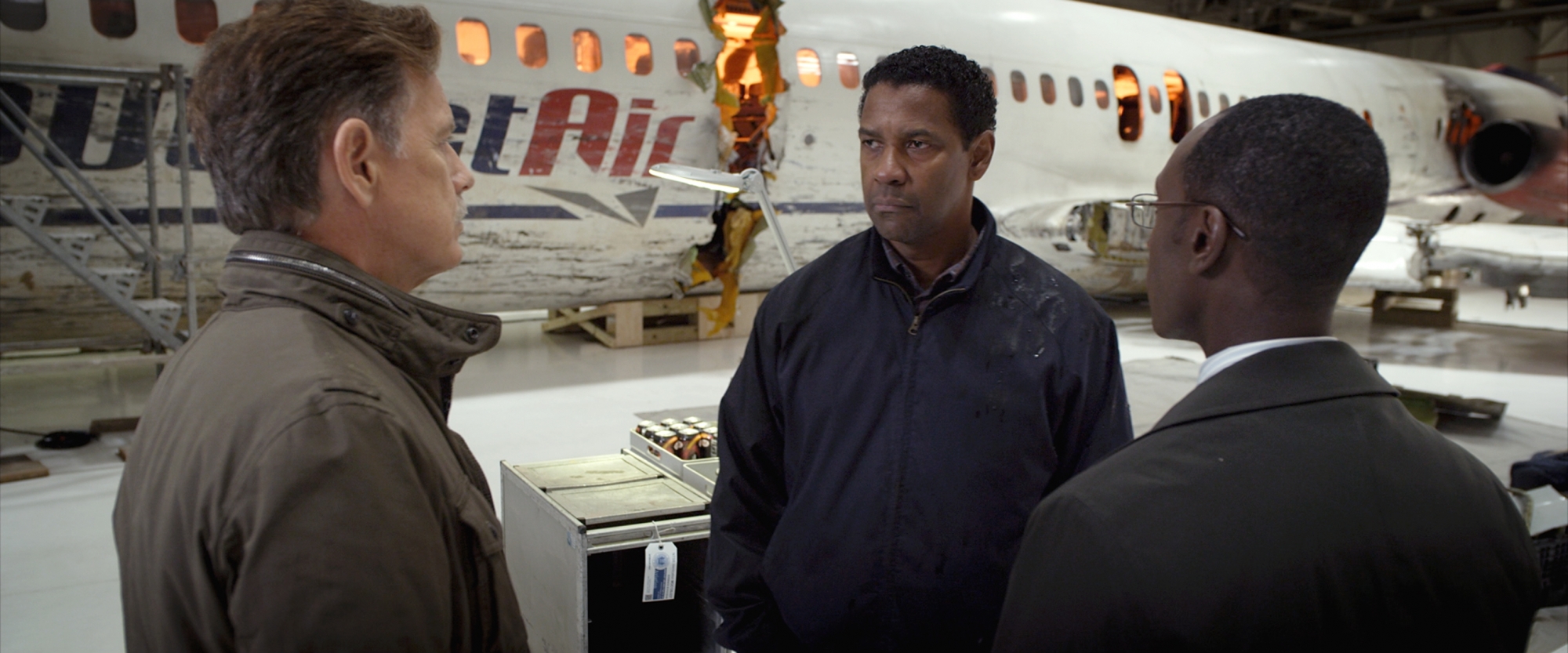
Denzel Washington plays a pilot with a substance-abuse problem in Flight.
Flight screenwriter John Gatins also does not recommend his story for in-flight reading. “I’ve gotten emails from people saying:, ‘Man, I made the mistake of opening your screenplay on a plane,’ ” Gatins says with a laugh. His fictional concept is not too far from recent fact: In 2009, not one, but two pilots were arrested preflight at London’s Heathrow Airport after failing Breathalyzer tests. Both planes, one American Airlines and one United, were coincidentally headed for Chicago.
That basis in reality might be why Flight is taking off at the boxoffice. In fact, it’s impossible to avoid the aviation metaphors when describing the success of this $30 million action film. With Oscar buzz for Washington’s performance and an estimated $80 million domestic boxoffice take through four weeks, it’s soaring, flying high, and taking flight simultaneously.
However, as with the occasional airport experience, Flight didn’t exactly take off on time: Gatins’ ETD for his Flight was 1999; ETA on the big screen, more than 12 years later.
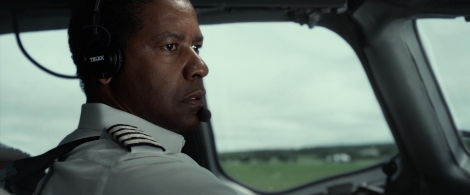
Whip Whitaker (Denzel Washington) safely lands a jet after a catastrophic failure in Flight.
Gatins based his tale on two of his own worst fears: Getting killed in a plane crash and dying of an overdose. After moving to L.A. and living the hard-partying life as he struggled to become an actor, Gatins, 44, says he finally got sober at age 25 and started sketching out this story at age 31. He wanted to examine the conundrum of a successful, talented man who had functioned with addiction for years but was now “circling the drain both physically and emotionally.”
Gatins also sought to explore society’s desperate need to anoint heroes but remain blind to their human faults. The screenwriter compares Washington’s smart, arrogant Whip Whitaker to bicyclist Lance Armstrong in terms of being stripped of hero status once a tragic flaw is revealed.
Besides having to work out the puzzle for himself, Gatins also quickly discovered that Hollywood was not exactly waiting for this story—part plane-crash thriller, part character study of a troubled antihero. The script stayed in his back pocket for years, partly because of his own stop-and-start struggle to put together what he calls a personal Rubik’s Cube of an idea, and partly because he knew that an adult drama about substance abuse was a tough sell. “It’s like, ‘Show me comps of addiction movies that have made $100 million,’ ” Gatins says, describing the initial reaction of film executives to the idea.
Actors, however, always responded to the textured characters, Gatins adds. “Actors always said, ‘There is a way this movie could get made if we got an ensemble of actors together that kind of moved the needle,’” Gatins explains.
In the years since the idea began to take shape, Gatins pursued other film projects, including writing and directing 2005’s Dreamer: Inspired by a True Story, for DreamWorks. Around that same time, a partial draft of Flight was gaining traction at DreamWorks but got shoved to a back burner when Paramount acquired DreamWorks, also in 2005.
Flight came back on the radar in 2009, when Zemeckis’ producing partner, Jack Rapke, brought him the script and let the director know that Washington was interested. “So I called up Denzel and said, ‘I just read this. Are you really interested in doing this?’ And he said, ‘Yeah, are you really interested in this?’ I said, ‘Yeah.’ He said, ‘Well, let’s do it.’ ” (During this time, Gatins was also at work as one of the writers on the 2011 film Reel Steel, executive produced by Zemeckis).
Added Zemeckis:“Of course, that was fun. And then it got crazy. And then it got fun again.”
The “crazy” was coming up with a plan that would make Paramount willing to take a chance on an adult drama. In a nutshell: Keep the budget at $30 million, a tall order for a film that requires a jet to fly upside down.
“Here’s the thing: The guys who are running the studio, they love this kind of movie—we all grew up on these movies. That’s why we got into the business,” Zemeckis says. “Conventional wisdom is that people don’t generally go to see adult dramas. It’s sad that these are the hardest movies to market.
“When I approach a movie, my attitude is, I just want it to make $1 profit, then nobody gets hurt,” the director continues. “But Denzel and I realized that what we’d have to do is waive our fees and make the movie for the $30 million number that Paramount wanted. And then they basically said, ‘Go with God, and make the best movie you can.’ ”
Like Washington, Zemeckis declined to give his actual salary figure, but Washington says both artists were working at one-tenth of their usual pay for a major film. And, in term of amping up the visual sizzle while staying on budget, Zemeckis observes, “We’ve got maybe the greatest actor in the world, so that’s pretty great—you’ve got the spectacle of a Denzel performance, so that’s cool. And then what I can bring to the party is that I’ve got so many years of experience, I know a lot of great (visual effects) artists who can deliver, so I was able to bring them into the movie. That allows the movie to look a lot more expensive than it really is.”
Both the director and the writer acknowledge the movie might not have happened without the commitment of Washington, but the nuanced roles also attracted a celebrated supporting cast including Don Cheadle, John Goodman, and English actress Kelly Reilly, who portrays the vulnerable recovering addict who helps lead Whitaker to face his demons. “It’s a brave movie,” says Reilly. “They do things head on. It’s not cool or clever—there’s no vanity in it.”
For Zemeckis, Flight marks his first return to live-action cinema in 12 years after directing and producing films that use motion-capture technology, including The Polar Express and A Christmas Carol. He thinks too much has been made of this fact. “Making movies never really feels good, it’s always a lot of hard work,” he says. “But doing a live-action movie after not doing a live-action movie for a couple years, it didn’t matter. It’s kind of like riding a bicycle—it all came rushing back.”
For his part, Gatins hopes that Flight helps take the stigma off serious adult dramas when it comes to boxoffice potential. “That’s what the conversation has been like—will there be a turn back to these sorts of films, like the great cinema of the ’70s?” he says. “We were helped by True Grit and Black Swan and The Fighter—movies that had tougher issues at their core. This is a grownup drama.”
Pete Hammond is Deadline’s awards columnist. This article appeared in the Dec. 5 issue of AwardsLine.
In a year when the leading actor race is full of major heavyweight contenders—many going for their second or third Oscars—the supporting actor category is no less competitive and also chockful of major names in the hunt for another Oscar. With certified leading men like Leonardo DiCaprio, Robert De Niro, Philip Seymour Hoffman, Tommy Lee Jones, Russell Crowe, Ewan McGregor, and Matthew McConaughey in the mix, the supporting contest is easily one of the most fascinating to watch. And it begs the question: What really is a supporting role? Is it playing a major title role in The Master or could it be just one 5-minute scene as a cancer patient in Flight? Is it a collective award for a trio of scene-stealing roles in one year, such as John Goodman’s 2012 résumé indicates, or will it honor a return to critical acclaim for a legend like Robert De Niro who hasn’t been Oscar-nominated since 1991? Whatever the case, this is the starriest group of contenders we have seen jockeying for best supporting actor in many years. Here’s a rundown of the major players.
ROBERT DE NIRO |SILVER LININGS PLAYBOOK
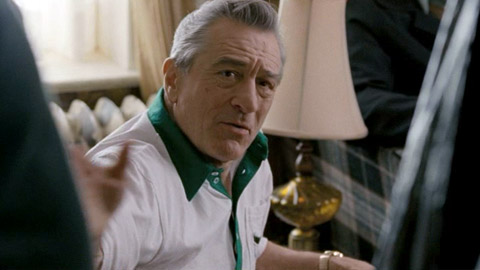
As Pat Sr., the obsessive-compulsive father and Philadelphia Eagles fan, two-time winner De Niro wowed critics and immediately elicited strong Oscar buzz for the first time in a couple of decades. He hasn’t been nominated since 1991’s Cape Fear and hasn’t won since 1980’s Raging Bull. Now he’s back in the supporting category where he first triumphed in 1974 for The Godfather Part II. Will history repeat itself? He’s a hot contender to do just that.
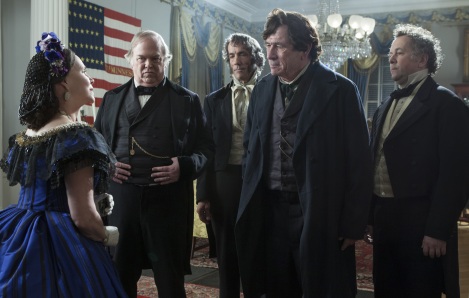
Tommy Lee Jones plays abolitionist Senator Thaddeus Stevens in Lincoln.
TOMMY LEE JONES | LINCOLN
As the spirited and scene-stealing political powerhouse Thaddeus Stevens, Jones livens up the film with a rip-roaring turn that puts this leading actor squarely in the hunt for a second statuette in the supporting category. He won for 1993’s The Fugitive and was last nominated five years for the first time in the best actor category for In the Valley of Elah. His acclaimed turn opposite Meryl Streep in the summer release Hope Springs further enhances his chances of scoring another Oscar for his mantel.
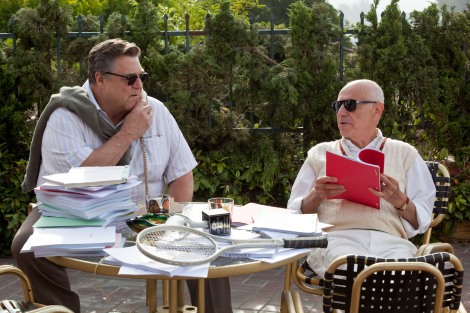
John Goodman, left, and Alan Arkin play Hollywood insiders who collaborate with the CIA in Argo.
ALAN ARKIN |ARGO
Playing the veteran Hollywood movie producer called upon to create a fake film in order to help some hostages out of Iran, Arkin drolly nails the role and gets the laughs in Ben Affleck’s otherwise serious thriller set against the 1979 Iranian hostage crisis. The veteran star finally won an Oscar in this category six years ago for Little Miss Sunshine after being AWOL from the Oscar competition for a record 38 years. But he’s back with a vengeance, and somehow one Oscar just doesn’t seem enough for this beloved actor.
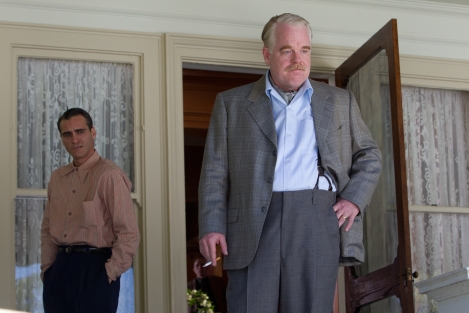
Philip Seymour Hoffman plays the charismatic leader of a cult in The Master.
PHILIP SEYMOUR HOFFMAN |THE MASTER
As Lancaster Dodd, the leader of a cult-like religion in Paul Thomas Anderson’s 1950s drama, Hoffman is riveting and every bit the match for Joaquin Phoenix’s Freddy. But in order to avoid Hoffman and Phoenix competing for votes in the same category, the Weinstein Company is campaigning Hoffman in supporting, which gives him a meaty opportunity to swamp the competition. Polarized reaction to the film among some voters could hurt his overall chances, but a nomination seems like a no-brainer.
EWAN McGREGOR |THE IMPOSSIBLE
McGregor is another leading man going for his first dance with Oscar as the real-life father and husband who searches desperately for his wife and oldest son when their family is divided after the devastating 2004 Indian Ocean tsunami. With one highly emotional scene to boost his chances, McGregor strongly delivers in a role to which any father will relate. And there’s a lot of them in the Academy.
JOHN GOODMAN |ARGO & FLIGHT
Goodman has had an embarrassment of riches this year with scene-stealing roles. He was particularly well-received in Argo as the real-life Hollywood makeup man who helps the CIA pull off a daring plan to rescue six Americans in 1979-Tehran and as alcoholic/addict Denzel Washington’s enabler in Flight. Unfortunately, both roles are being campaigned by their respective studios, and he’s in danger of cancelling himself out. Every actor should have this kind of problem.
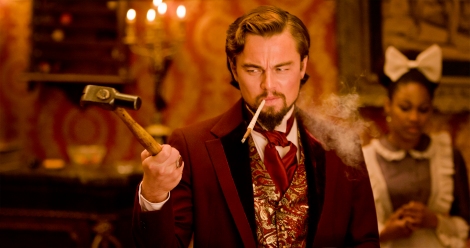
Leonardo DiCaprio plays plantation owner Calvin Candie in Django Unchained.
LEONARDO DICAPRIO |Django Unchained
DiCaprio, a three-time Oscar nominee and certified superstar could compete for supporting honors as the deliciously villainous slave owner Calvin Candie in Quentin Tarantino’s wild ride of a western. The Weinstein Company recently moved costar Christoph Waltz up to lead actor, where he will square off with star Jamie Foxx, leaving the supporting field in the film largely to DiCaprio (though Samuel L. Jackson could also be a small fly in that ointment once the film is more widely seen by voters).
MATTHEW McCONAUGHEY |MAGIC MIKE
Leaving behind a string of romantic-comedy roles, McConaughey completely reinvented his career with a series of strong, offbeat performances in 2012, including the murderous hitman in Killer Joe, the Texas prosecutor in Bernie,and a pair of well-received performances in movies that debuted in competition at Cannes, The Paperboy and the upcoming 2013 release Mud. But it’s his flashy strip-club veteran Dallas in Steven Soderbergh’s Magic Mike that has put him in the supporting actor conversation.
JAVIER BARDEM |SKYFALL
He already has one supporting Oscar for playing evil in No Country for Old Men, but could Bardem be the first Bond villain ever to win an Oscar nomination? As the sexually ambiguous Silva, a wicked mastermind of all things bad, Bardem brings real dimension to what could have been a comic-book portrayal in lesser hands. In doing so, he lifts everyone’s game in the most successful James Bond film yet.
RUSSELL CROWE |LES MISÉRABLES
Oscar-winning leading actor Crowe gets to once again show his dramatic chops as Javert, the singularly focused policeman who hunts down Hugh Jackman’s Valjean in the musical Les Misérables. What might really make voters stand up and take notice is Crowe’s singing ability here, and that can be a real plus for Academy voters, who love to see their Oscar winners stretch.
Also in the mix…
BRYAN CRANSTON |ARGO
With costars Alan Arkin and John Goodman already standing in line, Cranston’s equally terrific turn as a CIA boss might get lost in the crowd.
DWIGHT HENRY |BEASTS OF THE SOUTHERN WILD
A baker in his native Louisiana, Henry is a non-pro who knocks it out of the park as the suffering dad of young Hushpuppy stuck in the middle of a crisis on the bayou. Against stiff marquee competition, he probably has a better shot at success at the Independent Spirit Awards.
ALBERT BROOKS |THIS IS 40
After being robbed last year for going evil in Drive, Brooks is back in familiar territory as Paul Rudd’s needy father in this terrific adult comedy. He nails it, as usual.
HAL HOLBROOK |PROMISED LAND
Holbrook has a couple of strong scenes, including a heartfelt monologue, but he might not have enough screen time, though the same problem didn’t seem to hurt when he was nominated for Into the Wild a few years back. His few moments in Lincoln and veteran statusalso bolster his case.
MICHAEL PENA |END OF WATCH
Playing a good cop on patrol in Southeast L.A., Pena is every bit the equal of costar and partner Jake Gyllenhaal, but the distributor doesn’t want them competing in the lead category. Having Pena in supporting might confuse actors who could want to put him in the upper category with Jake because of the size of the role.
EZRA MILLER |THE PERKS OF BEING A WALLFLOWER
Miller was evil personified in last year’s We Need to Talk About Kevin,but he’s truly a revelation here in a complex turn in this fine drama about real teens. In a year with less competition, he would make the cut.
BILLY CONNOLLY |QUARTET
Connolly is vibrant as part of the ensemble of great actors in Dustin Hoffman’s directorial debut, and voters could single him out, but it’s a longshot.
WILLIAM H. MACY |THE SESSIONS
As the priest confidante of the horny but physically challenged Mark O’Brien, Macy gets the laughs, but the film really belongs to his costars.
NATE PARKER |ARBITRAGE
As a street-smart kid who helps star Richard Gere out of a jam, Parker gives the role three dimensions, but his chances for a surprise nomination are slim with this killer group of contenders.
JAMES GANDOLFINI |NOT FADE AWAY
As a 1960s Jersey dad trying to discourage his son from musical ambitions, Gandofini is once again working with David Chase and back in the home territory of Tony Soprano but showing a completely different side of his talent. Getting the film seen could be a problem.
IRRFAN KHAN |LIFE OF PI
As the older Pi telling his story in flashbacks, this acclaimed Indian star is effective and low-key, but most of the emotional stuff is left to his younger self, played by Suraj Sharma.
GARRETT HEDLUND |ON THE ROAD
Hedlund shows off real star power, along with other things, as the mystical Dean Moriarty in the Jack Kerouac adaptation. He’s a breakout, but Oscar will likely have to wait for another year.
JAMES BADGE DALE |FLIGHT
With just a single scene as a cancer patient, James Badge Dale makes an indelible impression that has fellow actors singing his praises. But at five minutes’ screen time, it’s the longest of longshots.
CHRISTOPHER WALKEN |SEVEN PSYCHOPATHS
Walken’s dog-napper of a con steals the show from his costars, and the Oscar winner is always respected by fellow actors. Don’t discount his ability to break through, but CBS Films will really have to campaign him.
JOHN TRAVOLTA |SAVAGES
Oliver Stone’s Savages seems to be on the sidelines this awards season, but attention must be paid to Travolta’s corrupt and deliciously slippery DEA agent, his best work in years.
ANDY SERKIS |THE HOBBIT: AN UNEXPECTED JOURNEY
With another performance-capture turn as Gollum, has this actor’s Oscar time finally come? Judging from past Academy voting habits, don’t bet the farm on it.
David Mermelstein is an AwardsLine contributor. This article appeared in the Nov. 28 issue of AwardsLine.
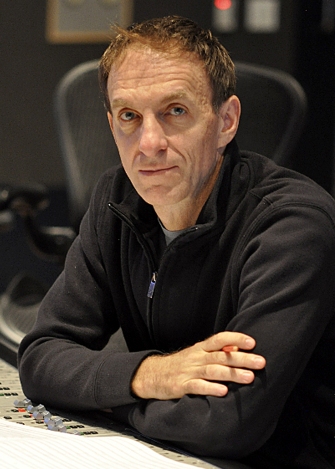
For Life of Pi, his third collaboration with director Ang Lee, composer Mychael Danna incorporated the sounds of Asia—especially India—into a multicultural stew of a score. Along with a full studio orchestra, accordion, piano, celesta, and mandolin, Danna added Balinese gamelan, Persian ney, basuri (an Indian transverse flute), Indian percussion, and, of course, the sitar. Plus, the venerable Pandit Jasraj (still going strong at 82) contributed vocals.
Composer Mychael Danna’s biggest challenge was scoring a vfx-heavy film before many of the major sequences were completed.
“Pi is a 21st-century citizen; he belongs nowhere and everywhere,” says Danna of the lead character in the film, based on an acclaimed novel that blends adventure and spirituality. “It’s set in India but in a French colonial town. So we have accordions and mandolins playing Indian melodies and sitars playing French melodies. We also have an English boys’ choir singing Sanskrit and a Tibetan chorus singing in Latin. The goal was to carefully—and, hopefully, artfully—blend every culture that Pi comes across and then makes part of his own essence.”
Combining the tale’s fantasy elements with its more profound truths didn’t come easy. “Most of the film depicts Pi as a young boy or young man,” Danna says, “and for the music to connect to him, we needed that sense of boyish wonder, that sense of awe and youth to the sonorities. My first drafts didn’t have that.”
Complicating matters for the composer was the film’s great reliance on CGI. “It technically makes it much more difficult to score,” Danna explains, “because those elements don’t come in until the very end of the process. So for a lot of things, I had to rely on Ang’s descriptions. I’d be working with storyboard or crude versions of a scene. There’s an extra layer of removal from what you’re scoring when you work like that. I think it worked out fine, but it was a bit scary.”
The biggest challenge came in the “Storm of God” scene, in which Pi and a tiger named Richard Parker lose the raft of supplies roped to their rowboat. “It’s a very complicated scene in the sense that the CGI was crude when I wrote the music. The score has to get harsh and big—this concept was very important to Ang—because the God of the storm is the real true God, and that God has no personal connection to Pi, no compassion for him. He’s a God far removed from puny human endeavors—as opposed to the gods Pi knew as a child, the mythological Indian gods. And Ang wanted a big transfer here, a shift to awesome and frightening and powerful and overwhelming That’s a shift in color and theme, and it had to be anchored in other places in the score where Pi comes to know God with a big ‘G.’ And we wanted to do this on a very big scale, with big orchestra and big choir, because Pi kind of has a Job-like moment, and God smashes him with the back of his hand into the water and crushes him. That scope was very challenging to do. It’s the biggest group of musicians we used, with a large percussion section and choir. It was very wild, with everyone playing with abandon and a great deal of power and passion.”
To get there, Danna worked closely with Lee. “He’s very involved,” the composer says. “It’s a true collaboration. We did a lot of talking about the best role for the music before shooting, but when we saw the film, we shifted our ideas of what the music should be doing. It’s a film about big questions, and it seemed that the music had to acknowledge that. But underlying it had to be a kind of simplicity and a line that helps join everything together from beginning to end and emotionally guides us through Pi’s life. That’s something we worked on very carefully, music as a compassionate guide. And we wanted to show that compassion to both Pi and the viewer.”
Thomas J. McLean is an AwardsLine contributor. This article appeared in the Nov. 28 issue of AwardsLine.
For Wreck-It Ralph, Disney’s animated hit about an arcade videogame villain who wants more out of life, the movie hit its critical mass and graduated from an idea to becoming a real movie came via a tool borrowed from TV animation: the table read.
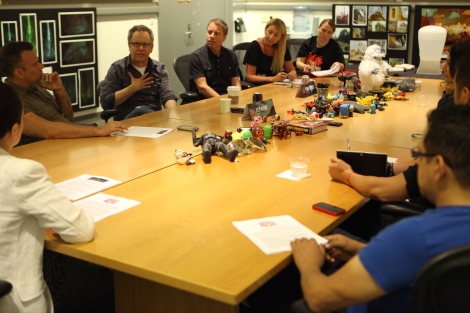
Director and cowriter Rich Moore, who spent the better part of two decades working on series from The Simpsons and Futurama to The Critic, Drawn Together, and Sit Down, Shut Up, imported the practice for the spring 2010 meeting at Pixar that included cast members Sarah Silverman, Jack McBrayer, Jane Lynch, and Alan Tudyk. “It’s a very, very useful tool for the filmmakers—to hear the characters come to life and to hear the dialogue, and to get a good pace for the movie, a feeling for the movie,” Moore says.
A videogame villain wants to be a better character in Wreck-It Ralph.
The result was so well received—even by absent lead actor John C. Reilly and executive producer John Lasseter—that the studio brought in producer Clark Spencer and a storyboarding team to kickstart the 3D CGI movie into full production.
Thanks to that energizing read in 2010, Wreck-It Ralph has become an animated hit for Disney, earning rave reviews since its Nov. 2 release and a $49 million opening weekend domestic gross. There’s also some Oscar-season buzz surrounding the film, despite an already-impressive animated slate from Disney that includes Brave and Frankenweenie.
Awards talk aside, Wreck-It Ralph’s success vindicates Disney’s long-held faith in the idea of an animated feature about videogames, which stretches back to the 1990s when the studio tried to develop projects with titles like Game On and Joe Jump. The idea still appealed to Disney Features Animation chief Lasseter in 2008, when he suggested it to studio newcomer Moore.
Director Rich Moore and producer Clark Spencer at a press day for Wreck-It Ralph.
While Moore shares Lasseter’s affection for vintage arcade games, Moore says it was his teenage son who assured him youngsters still know Pac-Man and Space Invaders. “I never saw a Laurel and Hardy movie in a theater in my life, but I knew who they were as a kid,” says Moore. “And I think it’s kind of similar with these game characters.”
Moore passed on looking at previous attempts to develop a gaming movie and began with the characters. “I fell in love with this idea of telling a very kind of personal, internal story about a character that’s wondering, ‘Is this all there is to life?’”
Moore brought on writer Phil Johnston to flesh out the characters and come up with a story—often going down some admittedly weird roads on the way. “There were several days where we were convinced the best way for them to travel from game to game was through a portal in the toilet, like a vortex in the toilet,” says Johnston. “And that made sense to us for at least a week.”
“There was no screenplay at that point, it was a bunch of index cards and ideas being told through talking in the room,” says Moore. “Once we had those beats down, once we kind of knew what our story was and how we were going to get there, and the different worlds we have, Phil went about writing the screenplay.”
The characters were the key for the writing crew, which grew to include Jim Reardon and Jennifer Lee. Moore says they knew so early on they wanted Reilly, Silverman, McBrayer, and Lynch that they were able to tailor the characters to them. “It’s so rare for animation, but I knew the voices I was writing from the beginning,” says Johnston.
Positive reaction to the 2010 table read pushed the story from development into production. “We always knew that this was a movie that was probably going to get made, but the table read is kind of the moment where John (Lasseter) and the company say yes,” Spencer says.
As is the norm for today’s animated features, the story was constantly tested and revised: Spencer says it was put up on reels about seven times over an 18-month span. “I think that this is what makes animated films—when they’re done well—sharp, and gives them depth, because we are really going in and making each scene the best it can be and testing the relationships between the characters in a way that I don’t think exists in live action,” Moore explains.
Moore says the animation process for a feature differs little from television, save for the amount of time available. Production went so smoothly on the picture that Moore and Spencer were able to accommodate an earlier release date so the studio could give more time to Pixar’s upcoming Monsters University.
“Otherwise, we would have been coming out in spring of 2013, and it just seemed like a holiday release date better suited the movie, and it felt like we were in a place where we could pull it off,” says Moore.
Much of the buzz around the film stems from a wide range of videogame cameos, a move that was inspired by Moore’s affection for Who Framed Roger Rabbit? “I wanted to use the actual game characters in it, rather than creating kind of stand-in characters that evoke certain characters or that felt like they were an ersatz version of characters that people knew, because it really seemed like that would really lend an authenticity to the whole idea,” he says.
The filmmakers approached the story as though they had the rights to any game character they wanted, then Moore and Spencer themselves pitched the story to the game companies personally and got permission to use virtually every character they asked for.
While Ralph features fun moments for classic gaming characters from Pac-Man to Street Fighter, there was one obvious candidate—Nintendo’s Mario—who is not in the movie because the right moment for him just never came up. (Reports that Nintendo turned the movie down on financial grounds are false, Moore says, stemming from a joke Reilly made during a Comic-Con panel about Mario wanting too much money.)
Mario might get his chance to face Fix-It Felix Jr. and Wreck-It Ralph in a sequel, which Moore says he would be happy to tackle again for Disney; a work place he arrived at late in his career. “It was never someplace that I said, ‘In my career, I must work at Disney,’” Moore says. “But to be here now, I really feel like I am in the right place. Creatively it’s been the most satisfying project and job that I’ve ever had, and this is after working on amazing projects with wonderful people.”




 Awardsline