Lead Actor/Actress Handicap

Pete Hammond is Deadline’s awards columnist. This article appeared in the Jan. 30 issue of AwardsLine.

In a race as tight as the one this year for best actress and particularly best actor, there were many deserving performances that might have made the cut in any other year but were overlooked because of intense competition. As far as lead acting categories go, this year is one of the most fiercely fought in recent Oscar history. So what was it about the 10 nominated performances in the top two acting categories that sealed the deal with Academy voters? Here’s a look at why they made it to the golden circle.

Best Actor
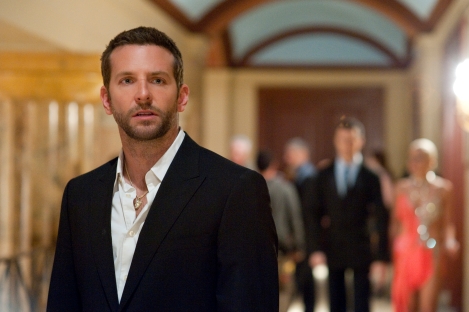
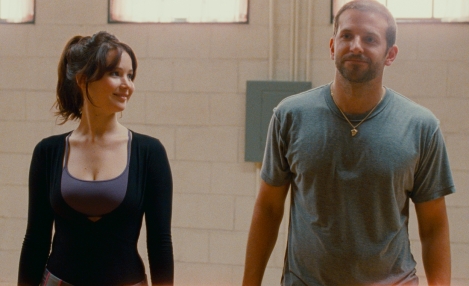
Bradley Cooper stars in Silver Linings Playbook.

Bradley Cooper | Silver Linings Playbook

Coming into the project just shortly before production began, Cooper proves a shrewd choice to play Pat Jr., a volatile man just released from an institution, in denial about his dead marriage, and just trying to put his life back together. Mark Wahlberg was cast in the part originally, but after he dropped out, Cooper got the role and ran with it. It’s a delicate balance of comedy and drama that Cooper must navigate, and he creates a wholly original and likable character, a neat trick considering Pat Jr. isn’t always sympathetic. Coming off popcorn movies like The Hangover and The A Team, Cooper finally shows his true acting chops, and his scenes opposite Robert De Niro and Jennifer Lawrence prove he is a talent to be reckoned with. Watching him and Lawrence go toe to toe in the dance competition is worth the price of admission alone. Seeing him try to explain his reaction to a Hemingway novel while his parents try to sleep might be the comic scene of the year.
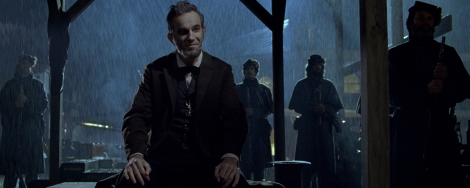
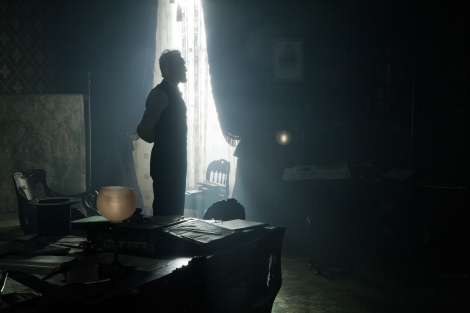
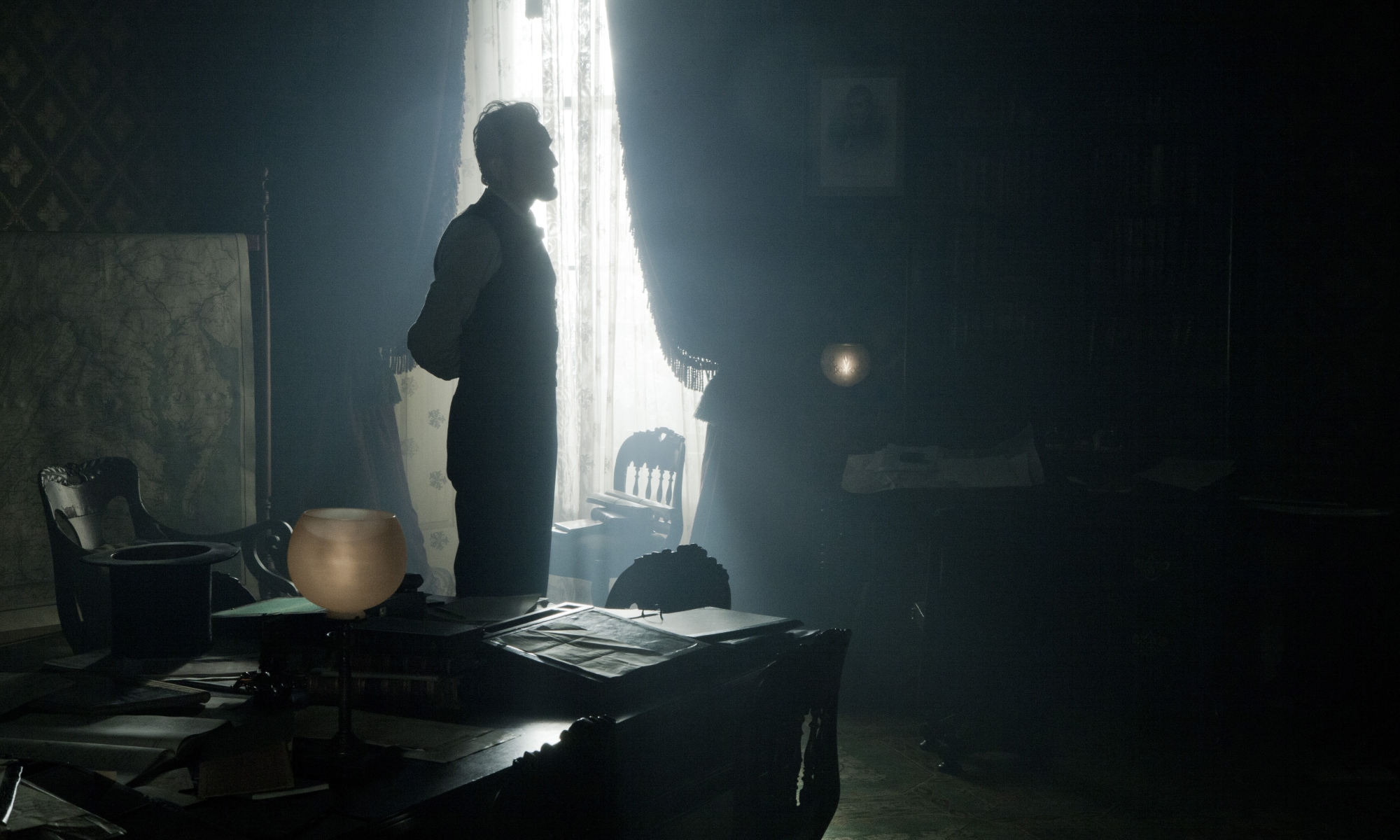
Daniel Day-Lewis plays the 16th president in Lincoln.

Daniel Day-Lewis | Lincoln

If ever there were a match made in heaven between actor and role it has to be Day-Lewis channeling Abraham Lincoln at a key moment in his presidency. Many actors have tackled Lincoln before with great success, but the reason Day-Lewis is likely to become the first actor to win three best actor Oscar statuettes, and the first to win for playing a president, is because he shows a complex, human side to the man we only thought we knew. His risk-taking acting choices—including creating a voice for Lincoln, which no other actor has dared attempt—make this more than just the usual standard biopic performance, one that definitely is not an impersonation but a full-bodied three-dimensional Abe for the ages.
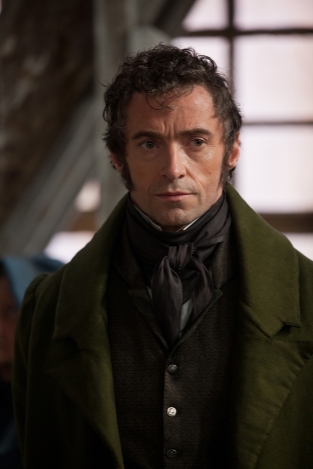
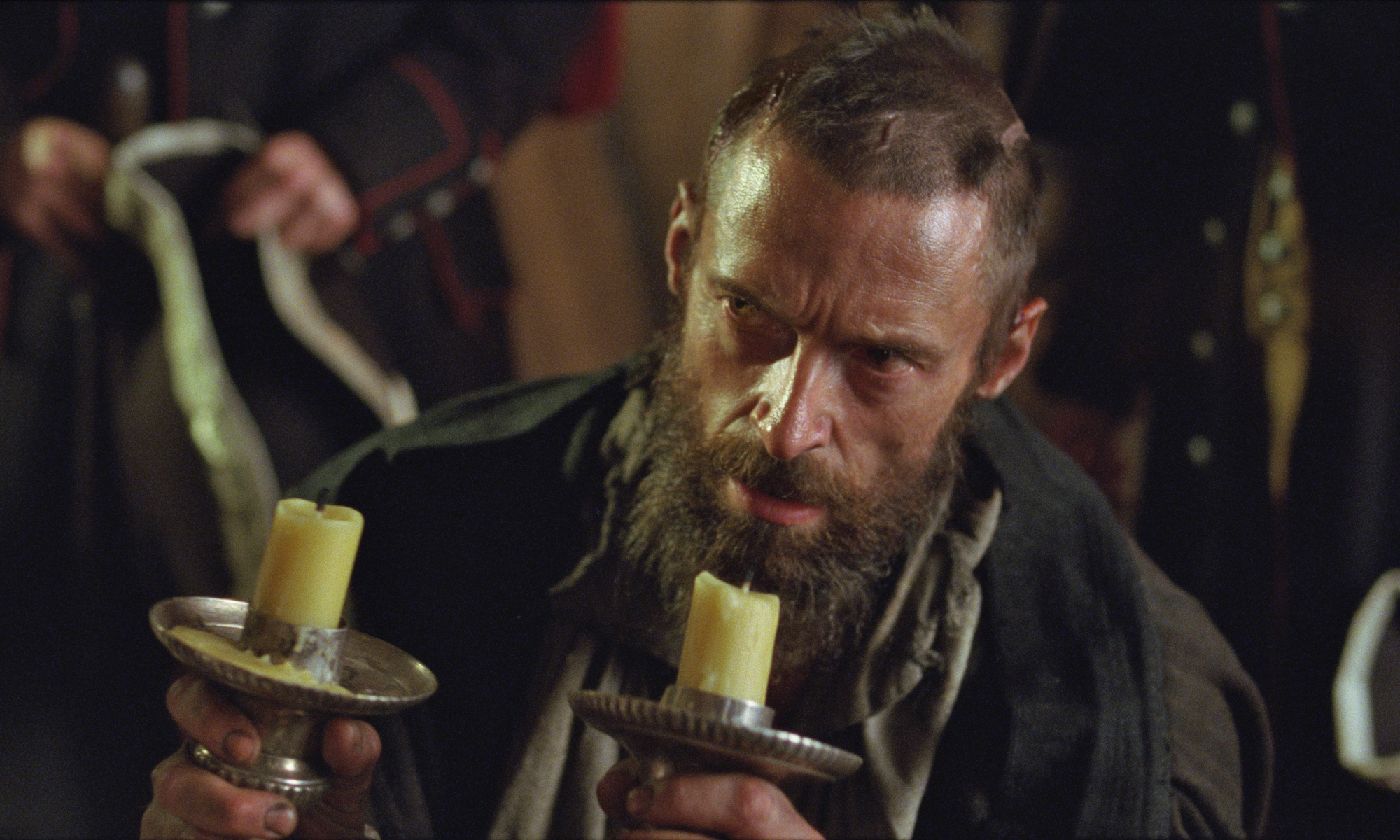
The original composers of Les Misérables wrote a new original song, "Suddenly," for Hugh Jackman to perform in the film.
The original composers of Les Misérables wrote a new original song, “Suddenly,” for Hugh Jackman to perform in the film.

Hugh Jackman | Les Misérables

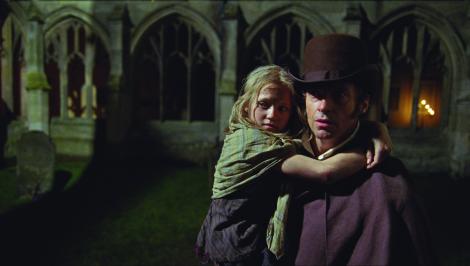
Audiences have been waiting a long time for triple-threat performer Jackman to get his first shot at a big movie-musical. If the man were in his prime in Hollywood’s golden age, when musicals were the norm, he probably would have made 10 or 20 of them. His extraordinary turn as Jean Valjean in this iconic musical, though, was worth the wait. It’s a role that required a 2 ½-octave range in which he had to sing live, a revolutionary idea for a movie-musical that has almost never been attempted onscreen. Jackman gets to the essence of the man with an emotional power he has rarely shown in his other roles. Jackman and Jean are an irresistible pairing, and if he can get past the Lincoln juggernaut, he could become the first actor since Rex Harrison in 1964 to win this prize for a full-on musical role. And how ironic it is that Harrison was the last actor in a major musical who himself attempted live singing on film? A good omen, perhaps?
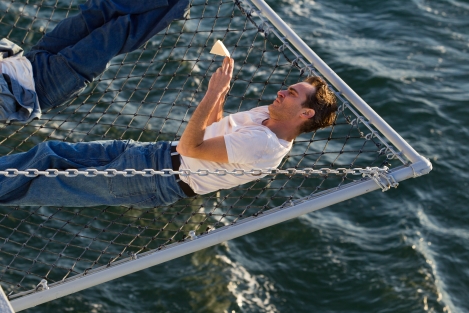
The Master: Though it’s polarizing in many aspects and sure to divide audiences, Paul Thomas Anderson’s tour de force got people talking.

Joaquin Phoenix | The Master

Almost from the moment The Master started screening, it seemed inevitable Phoenix would be among the year’s best actor nominees, in spite of his early comments about disdain for the Oscar race itself. In a risky performance that recalls the best of Marlon Brando or Al Pacino, Phoenix nails it in a riveting turn as a man searching for answers in a post-World War II America. His scenes opposite Philip Seymour Hoffman as the cult leader trying to lure him in are about as electrifying as screen acting gets these days. However, the Paul Thomas Anderson movie itself has polarized audiences and received its only three nominations in the acting categories, which will make it hard for Phoenix to prevail in the end. If he does, that extraordinary one-on-one encounter with Hoffman at the movie’s end will be the reason.
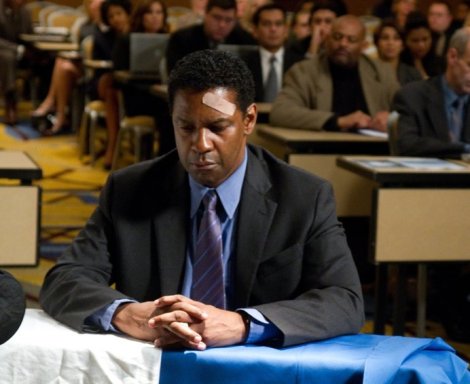
Denzel Washington plays a pilot with a substance-abuse problem in Flight.

Denzel Washington | Flight

As an alcoholic, drug-addicted airline pilot who has to summon every ounce of courage and skill he has to crash-land a plane while intoxicated, Washington has one of the stellar roles of his career. As Whip Whitaker, an enormously talented pilot but a man battling his own demons, Washington shows the dark side of an alcoholic that the screen has rarely seen. His character is so despicable and helpless that it makes it especially impressive that some audience members are even rooting for him to get away with it. Washington says he turned to YouTube to study what many drunks are like and incorporated that into his research. Whatever he did pays off in director Robert Zemeckis’ gritty adult drama that has earned this two-time Oscar winner his sixth nomination.

Best Actress
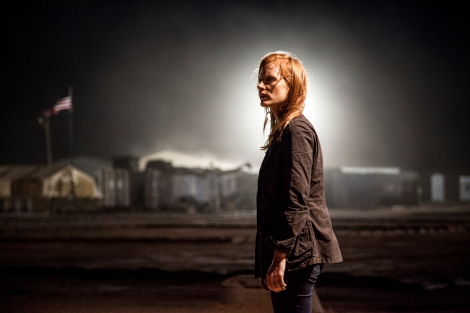
Jessica Chastain stars as a relentless CIA agent pursuing bin Laden in Zero Dark Thirty.

Jessica Chastain | Zero Dark Thirty

Nabbing what has the be the premiere, grittiest, gutsiest, take-no-prisoners female role of the year as a CIA agent who methodically tracks down Osama bin Laden’s hiding place, Chastain continues her remarkable rise to the top tier of film actors. Essaying a role about a woman who is not beholden to a man in any way, personally or professionally, Chastain dominates the film with an impressive mix of toughness, cunning, self-doubt, anger, and power. The moment in which she reveals she is the “motherf—-r” who tracked down bin Laden is priceless, perhaps the most satisfying line of the year. After watching most of her recent films sit on the shelf until suddenly being released one after another last year and nabbing her first Oscar nom in the supporting cast of The Help, Chastain proves she is the real deal as a leading player in Zero Dark, with a Golden Globe and Critics Choice Movie Award already on her mantel with obviously more to come.
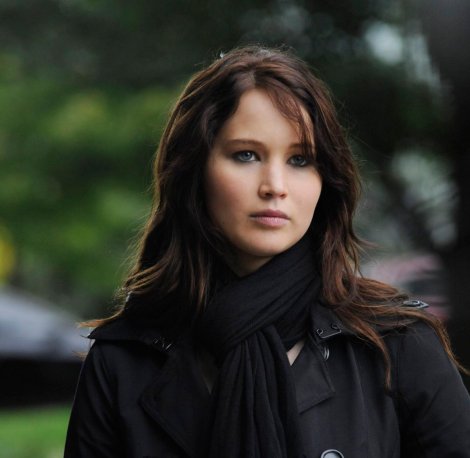
Jennifer Lawrence stars in Silver Linings Playbook.

Jennifer Lawrence | Silver Linings Playbook

As Tiffany, a tough but endearing young widow who wears armor on the outside but is trying to put the pieces of her life back together with the help of Pat Jr. (Bradley Cooper), Lawrence at age 22 pretty much shocked the industry with an all-knowing and richly rewarding performance that can be compared to Shirley MacLaine’s Fran Kubelik in The Apartment or even Cher’s Oscar-winning turn in Moonstruck. Like those actors, she walks the fine line between comedy and drama, delivering a flesh-and-blood, flawed human being we want to root for. In a role designed for an older actress, Lawrence proves she can probably do it all, and her best actress nomination for Winter’s Bone two years ago was definitely not a fluke. If there is a silver lining at all in this year’s Oscar race, it’s that Jennifer Lawrence is a keeper, one to watch for decades to come.
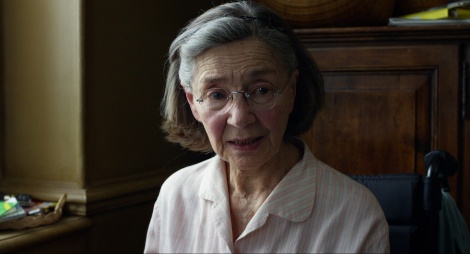
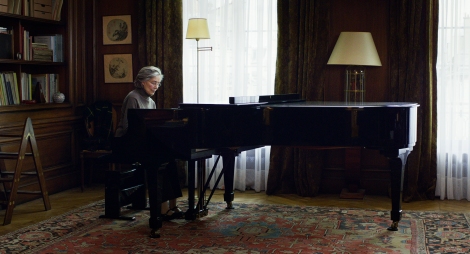
Emmanuelle Riva plays a stroke victim in Amour.

Emmanuelle Riva | Amour

At 85, she is the oldest best actress nominee ever, and in fact, turns 86 on Oscar day, Feb. 24. It would be a nice birthday gift to give this veteran French actress that statuette—and she could get it, even though the film is foreign and in French, and those aren’t usually easy things to overcome. As a wife finding her health failing and the end of her life nearing, Riva is heartbreaking but never drifting into sentiment as she deals with the nightmare of aging, leaving her husband, brilliantly played by Jean-Louis Trintignant, to care for her when all she wants is to keep her dignity as life fades away. It was easy to see that this star, previously best known for 1960’s Hiroshima Mon Amour (there’s that word again), would be nominated. Nearly every actor’s branch member I talked to mentioned her name first when I asked who their favorite was. The role—and the player—touched many in a story that hits very close to home.
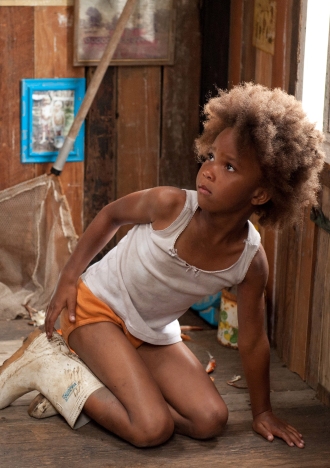
Quvenzhané Wallis stars as Hushpuppy, a strong-willed child who lives with her father in the bayou, in Beasts of the Southern Wild.

Quvenzhané Wallis | Beasts of the Southern Wild

At just 9 years old, Wallis is the opposite of Emmanuelle Riva, the youngest best actress Oscar nominee in history. And in truth, she was a total nonprofessional 6-year-old when she tore up the screen as Hushpuppy, a determined girl who must face nature’s cruel ways while trying to keep her life together in the most primitive part of the Delta. It’s about as fierce and nuanced a performance you will see from an actress at any age, never mind a child. Kids are often taken for granted and overlooked in the big Oscar categories, with voters thinking the director might have used a bag of tricks to get the goods. This was a performance that simply couldn’t be ignored.
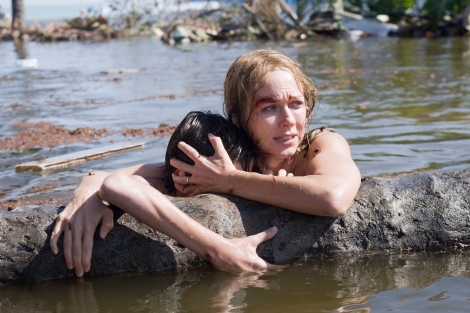
The Impossible tells an almost unbelievable story about a family that survived the 2004 Indian Ocean tsunami.

Naomi Watts | The Impossible

Playing the real-life survivor of the disastrous 2004 Indian Ocean tsunami, Watts had what she admits is the toughest, most daunting role of her career playing Maria Belon, who struggles to survive and bring her family back together after the waves hit their hotel and separate them. From a physical sense, there are few actresses who have ever had to endure more, and Watts spent the better part of a month being battered around in a water tank to demonstrate her character’s sheer will to live. But physical challenges aside, what makes Watts so effective here is also the essence of great screen acting. She plays it with her eyes, those soulful eyes that tell us so much about what she is going through and who she is. Watts is the sole nominee for this extraordinary film, so she might have an uphill climb, but if voters watch it, she could be the big surprise on Oscar night.
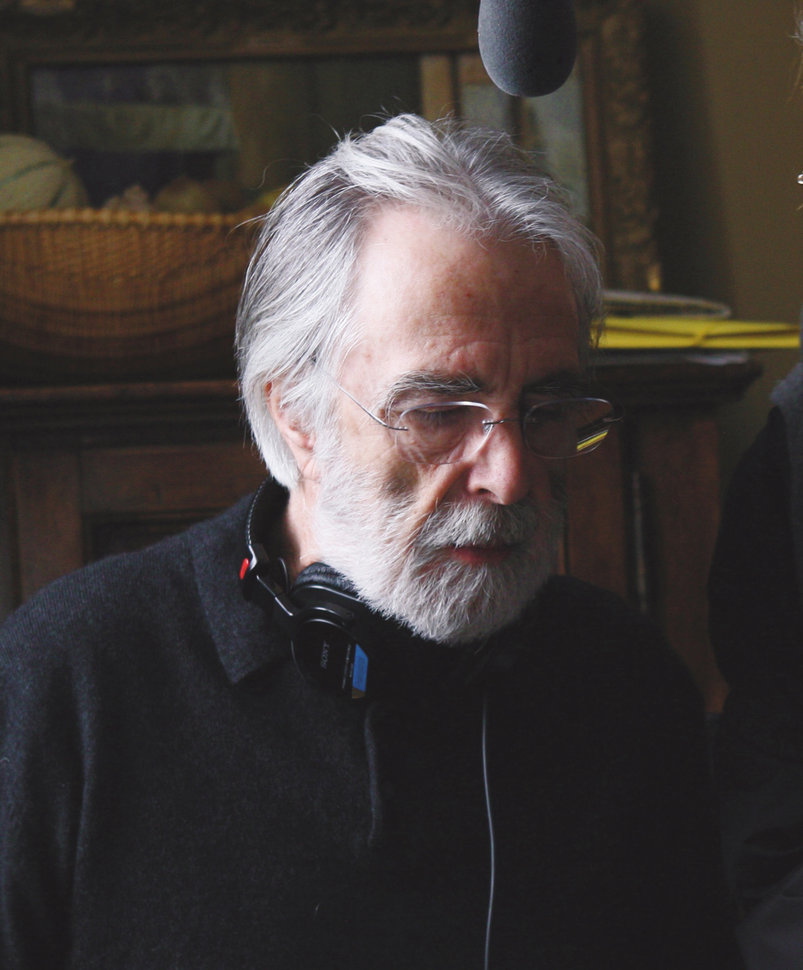
Q&A: Michael Haneke On ‘Amour’

David Mermelstein is an AwardsLine contributor.

Though his films might lead you to believe otherwise, Michael Haneke is surprisingly good-humored in conversation. His latest film, Amour, is nominated for five Oscars: best picture, foreign-language film, director, original screenplay, and actress. It soberly and precisely charts the decline of an aged French couple, played to a fare-thee-well by Jean-Louis Trintignant and Emmanuelle Riva. The film might be the writer-director’s most personal to date, for though it retains the intense focus and absence of sentimentality present in his other work, its plainly expressed—and inevitably touching—humanity was inspired by a chapter from Haneke’s own life. Until Amour, Haneke was best known in America for the Oscar-nominated The White Ribbon (2009), which chillingly depicts village life in pre-World War I Germany and hints at the foundations of Nazism, and Cache (2005), which plumbs issues of memory, guilt, and identity. Speaking from Madrid, during rehearsals for a production of Mozart’s Cosi fan Tutte, the filmmaker discussed with AwardsLine various issues connected with his recent film work.

AWARDSLINE: What compelled you to make Amour?

MICHAEL HANEKE: Nothing forced me [to make the film], but what motivated me was a case in my family. I was forced to look on as someone very close to me suffered—but not specifically as depicted in the film—someone for whom I cared for very much. And that led me to make the film.

AWARDSLINE: Your films are all very distinctive, but Amour is perhaps more specifically personal. I understand that you had an aged aunt who was ill. And she asked you to help her pass away. Was that part of what made you want to write and direct this film?

HANEKE: Yes. Of course, I had to tell her that I was unable to do it. I would have been put in jail if I had done it. But I was grateful for that alibi, for I don’t know if I would have had the strength to do it otherwise. But she did it anyway, without my help.

AWARDSLINE: And were there things in the film that you took directly from your experience with your aunt?

HANEKE: No, there’s nothing at all in the film based on my own experience. What’s shown in the film was the product of lengthy research in similar situations [to what the film shows] or from my imagination.

AWARDSLINE: You are now 70 years old. Do you yourself worry about the traumas of age and infirmity that you depict in Amour?

HANEKE: Billy Wilder was asked a similar question, and he responded, “The knocking is all the more insistent”. No, not the knocking at the door, but rather that the bombardments, so to speak, are coming ever closer.

AWARDSLINE: What was the most challenging scene to direct in Amour?

HANEKE: The pigeon. You can’t direct a pigeon. At most, you can entice it to move it a certain way by placing corn on the ground. But even then, it won’t obey your instructions. Of course I’m joking when I say that. The most difficult scene in the film is the one in which he [Jean-Louis Trintignant, the husband] suffocates her [Emmanuelle Riva, the wife]. The scene is preceded by a 10-minute-long monologue. And Jean-Louis Trintignant had a broken wrist at that time, so we had to shoot around that. And Emmanuelle Riva was concerned about her safety physically. So it was difficult for everyone involved.

AWARDSLINE: What about the scene in which Ms. Riva was naked in the shower? I can’t imagine that was easy to direct.

HANEKE: As a director, it wasn’t difficult for me. It was far more uncomfortable for her. But it was clear from the beginning that it was necessary to shoot this scene—to capture the fragility of her situation, what’s forced up on you as a human being [in such circumstances]. My job as a director was to make sure I didn’t betray her—that she wasn’t shown critically or depicted in an unpleasant light, but just to show what people in such situations have to go through.

AWARDSLINE: With regard to writing the script—was there one particular scene you especially enjoyed writing, and why?

HANEKE: It’s very difficult to say. It was so long ago, I can’t remember [any details about that writing process]. But generally when it comes to screenwriting I can say that if it’s flowing, you enjoy it; if not, it’s far less pleasant. But there’s always ambivalence—the struggle to put something there on a blank page when there was nothing there before. If it’s successful, you’re happy; if not, you’re depressed.

AWARDSLINE: You remade Funny Games in English, but does Hollywood hold any allure for you?

HANEKE: No, I’m willing to work anywhere [where] I’m given the working conditions I prefer. With the exception of a fascist country, I’m willing to work anywhere where I can work as I wish to work. I really can’t say [about Hollywood] because I’ve never worked in Hollywood. But in Hollywood, producers have their say in the project and can impose their own conditions on it. In terms of the conditions I require, I’m willing to work with a producer, but if a producer wants to make his own film, then he’s free to do so, just not with me.

AWARDSLINE: Whom do you make films for? Or does that change depending on the film?

HANEKE: For everyone and for myself [I make my films]. With Funny Games, I intended an attack on the spectators who enjoyed consuming violence. Unfortunately, it didn’t reach that audience. But like every filmmaker, I make my films to reach the widest audience possible.

AWARDSLINE: Some of your films are in German and others in French. How do you decide what language to film in?

HANEKE: In the case of this film, what determined that it be in French was that Jean-Louis Trintignant and Emmanuelle Riva only exist in France. Beyond that, if I have the good luck, I can call on collaborators [which is to say, producers] in different countries. It’s great to be able to do that. It’s very difficult to finance films these days. All my films have been coproductions, and that’s made things a lot easier for me. Absolutely Amour is a story that can take place anywhere in the Western world.

AWARDSLINE: But not The White Ribbon.

HANEKE: Naturally. Well, yes and no. The film wasn’t intended to be limited to Germany. It’s rooted in the German past, but it shows the dangers of when certain ideas are transformed into ideology. The lesson of the film isn’t limited to Germany. It draws on the German past to tell a lesson that can be applied anywhere. For example you could shoot a similar story in any country with an extremist Islamic regime. The details would be different, but the basic principles would be identical. In the case of The Piano Teacher, too, it was because of the actress [i.e., Isabelle Huppert] that we filmed in French.

AWARDSLINE: And are there specific challenges attached to one or the other language?

HANEKE: I never write in French. I always write my scripts in German, and if they need to be translated, I give them to the same translator I’ve always used. Then I revise them line by line with the translator. Of course, it’s easier to work in your mother tongue. Not because it’s easier to express yourself in the script, but because it’s easier to follow what’s happening on the set if you’re working in your mother tongue. It takes a lot more effort when you’re working in a foreign language. But having worked so often in French now, the stress has diminished.

AWARDSLINE: You’ve made a number of films with Isabelle Huppert—in particular The Piano Teacher and Time of the Wolf, but also Amour, of course. What is it about this actress that you find so compelling, and can we expect to see her again in future films from you?

HANEKE: She is like a Stradivarius violin, on which you can play Bach, Mozart or Brahms, and it will always sound good. I like to write for actors I know and with whom I’ve worked before. You can write to their strengths and weaknesses and write roles that are better suited to them.

AWARDSLINE: I understand you were once a film critic. So were Truffaut and Godard, of course—and Bogdanovich too. Do you think there is a something film critics bring to filmmaking that others do not?

HANEKE: It’s hard to say. You become a film critic because you’re interested in film. I don’t know whether knowing so much about cinema leads you to make better films, but it certainly can’t hurt.

Q&A: Robert De Niro On ‘Silver Linings’

Pete Hammond is Deadline’s awards columnist. This article appeared in the Feb. 6 issue of AwardsLine.

Robert De Niro hit his stride in terms of movie recognition in 1973 when both Bang the Drum Slowly and Mean Streets put him on the map. The latter remains a special favorite because it marks the beginning of his long association with Martin Scorsese. Remarkably, De Niro didn’t come close to peaking after winning his first supporting actor Oscar for 1974’s The Godfather Part II—he’s still going strong nearly four decades later, thought by many to be our greatest living film actor. But effortlessly playing the young Don Corleone and doing it entirely in a Sicilian dialect should have signaled to anyone that this was a talent like no other. A look at the other roles that won him recognition from the Academy an impressive six times overall between 1975 and 1992 only confirms that early promise. There’s Taxi Driver, The Deer Hunter, Awakenings, Cape Fear, and of course, Raging Bull, which brought him a second statuette for best actor in 1980. But consider some of the brilliant performances Oscar didn’t recognize, and you get an idea of the career we are talking about here: The King of Comedy, The Mission, Midnight Run, Awakenings, Once Upon a Time in America, Casino, Heat, and one especially close to his heart, Everybody’s Fine, to name just a few. As a producer, entrepreneur, and founder of the ever-growing Tribeca Film Festival, De Niro is not only a multifaceted actor, he’s a multifaceted person, who might be hitting his stride again in the same year he will turn 70. After waiting 21 years, De Niro now has a richly deserved seventh Oscar nomination for his role as Pat Sr. in Silver Linings Playbook, and he’s back in the supporting actor category for the first time since the Academy started its admiration society for him 40 years ago. Will history repeat itself? For De Niro, he’s just happy to still be in the starting lineup and still getting roles as rich as this one.

AWARDSLINE: How did Silver Linings Playbook come about? The character in the book is markedly different than what Pat Sr. became in the movie.

ROBERT DE NIRO: Yes, a lot different. (David O. Russell) turned the character inside out. (Pat Sr. is) very interesting in the book, but this was another way to do it. There were more colors in a sense and the other was more consistently not communicative, kind of funny in his own way.

AWARDSLINE: How was working with David O. Russell’s directorial style? It’s freewheeling and creative, shooting at 360-degree angles…

DE NIRO: It is different. I have done some things like that, but not really. His style is very unique, specific to him, and I think it’s really great because it adds an immediacy, a spontaneity, an unpredictability. You don’t know where it is really going to go, and it has that energy to it with a lot of the handheld stuff. He will throw lines at you. You already know what you are doing scriptwise, but there are times he is going to throw lines at you that are spontaneous and right. And that’s great.

AWARDSLINE: There is a lot of Oscar buzz again for Silver Linings. Does that mean much to you?

DE NIRO: Of course I am happy about it all, but I don’t want to expect much because I don’t want to be disappointed: You expect, and you think, and it never happens. So all I try to do is be even-keel about stuff.

AWARDSLINE: Are the movies you received the Oscars for the ones you think you should have won for or are there others where you thought you should have won instead?

DE NIRO: I don’t know. There’s so much competition out there. There’s so many good performances, so many good movies I don’t know what I would be. It depends on the alignment of the stars sometimes for certain things. I think for Godfather II, Raging Bull, yes. There were others. Who knows?

AWARDSLINE: Were there any films in the past 20 years that have been really frustrating experiences for you? Looking down the list, I see one: Everybody’s Fine. I thought it was terrific.

DE NIRO: I think it was left flat by Miramax and the parent company (Disney). They said they weren’t going to do that, but of course they did. How you present it is important—I know the director (Kirk Jones) was concerned about it, in America at least. In England, they had an interesting poster which is more right for it. I never say this about myself, but I was proud of that (performance), and Kirk is a terrific director. I certainly worked very hard on that one.

AWARDSLINE: Is it tougher finding scripts you are excited by these days?

DE NIRO: It’s always hard to find good scripts. That’s just the way it is, unless it is a director like David or (Martin) Scorsese or certain directors who you know are smart and whatever they do is going to be interesting. You just have to rely on the director, because it is not always on the page.

AWARDSLINE: You seem to be working all the time—you obviously still love making movies.

DE NIRO: You do a movie, and you don’t know it is going to be received. If Silver Linings Playbook was received in another way, I would say it doesn’t really take away from everything we did. You can’t predict how the public or the audience is going to feel about something. Taxi Driver was the same thing. I just don’t know. I am happy when people like them, but you do your best, and that’s all you can do.

AWARDSLINE:  I personally loved Bang the Drum Slowly at the beginning of your career in 1973, but is there one movie that stands out from the rest?

DE NIRO: Mean Streets. I had a great time with Marty, being the first feature we did together. There’s also working on something that is not the most fun, but that could be one that’s received well. You just never know.

AWARDSLINE: Will you be teaming with Scorsese again anytime soon?

DE NIRO: Yes, we are planning on it. We are trying to narrow the time down. Its original title was I Heard You Paint Houses. They have been calling it The Irishman lately—I don’t know what it will be called. But it is me, Al Pacino, Joe Pesci, and Marty directing. I never talk about stuff—I don’t like to because it seems whenever you do, it never works out. I’m so careful. But this one I did. I am feeling good about it and hoping it will all work out.

The Best Picture Contenders, Part 3

The last in a three-part series in which AwardsLine breaks down all nine of the best picture contenders.

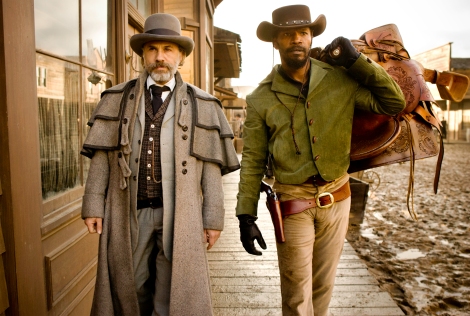
Django Unchained didn't screen for the SAG nominating committee, which meant it was left off of one of the most respected Oscar-forecasting nomination lists.
Django Unchained didn’t screen for the SAG nominating committee, which meant it was left off of one of the most respected Oscar-forecasting nomination lists.

Django Unchained

What the Academy says:  5 nominations (Picture: Stacey Sher, Reginald Hudlin, Pilar Savone; Supporting Actor: Christoph Waltz; Original Screenplay: Quentin Tarantino; Cinematography: Robert Richardson; Sound Editing: Wylie Stateman)

What the public says: $147.5M domestic boxoffice; $111.5M international (as of Feb. 1)

What Pete Hammond says: Quentin Tarantino’s spaghetti-western homage was a Christmas Day release and struggled just to meet its late-year release date. That means its five nominations including best picture are an impressive feat considering many members probably didn’t get a chance to see it because of the earlier voting schedule. It just shows the love for all things Tarantino, as this is the third film for which the director has seen a best picture nom. Although unlike Inglourious Basterds and Pulp Fiction, Tarantino didn’t earn a best director nomination this year. However, along with Michael Haneke for Amour, he’s a frontrunner for original screenplay for this wild and somewhat controversial mashup of cowboys and slaves. It has little chance to prevail as best picture, but because it’s now certified as Tarantino’s biggest boxoffice hit to date, that probably doesn’t matter.

What other awards say: 2 Golden Globes for supporting actor Christoph Waltz and Tarantino’s screenplay, 1 CCMA win for original screenplay, 5 BAFTA noms, and a PGA nom.

What the critics say: “What Tarantino has is an appreciation for gut-level exploitation film appeal, combined with an artist’s desire to transform that gut element with something higher, better, more daring. His films challenge taboos in our society in the most direct possible way, and at the same time, add an element of parody or satire… The film is often beautiful to regard. Tarantino’s Southern plantations are flatlands in spring, cloud-covered, with groups of slaves standing as figures in a landscape.”—Roger Ebert, The Chicago Sun-Times

What the producer says: “When Quentin made Reservoir Dogs, he realized that some people didn’t know they were allowed to laugh. When he made Pulp Fiction, Quentin said he needed to let the audience in on the joke,” explains Stacey Sher. “That’s the reason why humor is a part of his work, because that’s how you can take the dramatic underpinnings of everything that he’s doing that are profound and emotional and that take you on the journey. There’s always romance in Quentin’s films, whether it’s unrequited like Mia Wallace and Vincent Vega or even cartoony like Pumpkin and Honey Bunny in Pulp Fiction, and ultimately all of the stuff that has been subtexted in his movies, in these great love stories, is text in Django’s quest to find his Broomhilda. So he mixes these things. These are the colors in his tool kit. They’re sophisticated, they’re surprising and allow you to go on his journey that includes things that are rough.”

What the filmmaker says: “I was never stirred by how much I put the N-word in my script,” Tarantino said at this year’s Golden Globes. “If someone out there is saying I use it more in my movie than it was used in the Antebellum South, well, feel free to make that case. But no one is making that case. They’re saying I should lie, whitewash and massage (my script), and I don’t do that when it comes to my characters. I’m more concerned about the slavery in America: The drug laws that put more blacks in jail than they did in the ’70s, the prisoners that are traded back and forth between public and private prisons — that’s straight-up slavery.”

Jessica Chastain stars as a relentless CIA agent pursuing bin Laden in Zero Dark Thirty.

Zero Dark Thirty

What the Academy says:  5 nominations (Picture: Mark Boal, Kathryn Bigelow, Megan Ellison; Lead Actress: Jessica Chastain; Original screenplay: Mark Boal; Film Editing: William Goldenberg, Dylan Tichenor; Sound Editing: Paul N.J. Ottosson)

What the public says: $71.8M domestic boxoffice; $7.7M international (as of Feb. 1)

What Pete Hammond says: When Zero Dark Thirty started the season off by winning one major critics award after another, it appeared that it could have unstoppable momentum all the way to the Academy Awards. After all, this film was the followup project for the Oscar-winning The Hurt Locker team of director Kathryn Bigelow and screenwriter Mark Boal. And Sony Pictures had a strong release plan, opening it slowly, building awards and word of mouth, and then going wide the day after Oscar nominations. Unfortunately, controversy reared its ugly head with a trio of powerful U.S. senators and the acting head of the CIA all criticizing the film for its depiction of torture as a device used to ultimately capture and kill Osama bin Laden. The studio and the filmmakers were slow to respond and defend their film, although they eventually did come out swinging. Then the Academy’s director’s branch, as they did with Ben Affleck and Tom Hooper, surprisingly snubbed Bigelow, who was thought to be a certain nominee for her remarkable work. Although the film got five key nominations, its momentum from the critics awards slowed. Though star Jessica Chastain won at the Globes and Critics Choice, and the boxoffice was extremely strong when it finally went wide, its inevitability as a major best picture threat seemed questionable. But it is a crazy year, and another chapter might still be written for Zero Dark Thirty, especially if voters feel big government is trying to roll over artists.

What other awards say: 5 BAFTA noms, 2 CCMAs for best actress Chastain and film editing, 1 Golden Globe win for Chastain, , as well as DGA, and WGA noms.

What the critics say: Zero Dark Thirty is a puzzle that keeps changing and re-forming; we’re held by fleeting references, by the workings of Maya’s calculations. Bigelow and the cinematographer, Greig Fraser, make fluid but firm use of a handheld camera, without excessive agitation, so that you feel pitched into the middle of things but also see clearly what you need to see. A sequence in which a Jordanian who may provide access to bin Laden approaches an American military installation is drawn out to a level of almost unendurable suspense. Two unexpected bomb explosions throw you back in your seat; they have a ferocious power that makes most movie explosions feel like a mere perturbation of digits.”—David Denby, The New Yorker

What the producer says: “I didn’t want to play fast and loose with history,” says Boal, “and I wanted to track as closely as I could with what was known of the intelligence hunt and hopefully bring together all these disparate pieces of information. But you’re compressing 10 years into two hours, so that’s where all the normal things that movies do to compress time were things that I did, and you’re also trying to dramatize events to tell a story most effectively. That doesn’t mean the events aren’t true, it just means you’re making them as dramatic as you possibly can.”

What the filmmaker says: “It’s not just the modern military genre (I’m attracted to), but also it’s the topicality that I find really riveting and galvanizing,” Bigelow says. “(Boal) was certainly reporting this story as it was unfolding, and there’s a kind of urgency and timeliness to that. And at the same time, I think we both felt a responsibility to tell it in a certain way, to tell it responsibly and to be faithful to the research.”

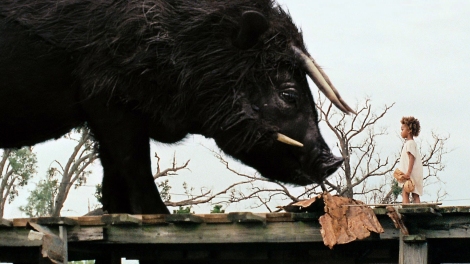
Beasts of the Southern Wild went against all of the rules of filmmaking, but the risks paid off for first-time feature director Benh Zeitlin.

Beasts of the Southern Wild

What the Academy says: 4 nominations (Picture: Dan Janvey, Josh Penn, Michael Gottwald; Directing: Benh Zeitlin; Lead Actress: Quvenzhané Wallis; Adapted Screenplay: Lucy Alibar, Behn Zeitlin)

What the public says: $11.7M domestic boxoffice

What Pete Hammond says: This is definitely the little indie movie that could. Debuting only a year ago at the Sundance Film Festival where it won the Grand Jury Prize, few would have guessed that it would become such a major Oscar player just one year later with nominations for best picture, adapted screenplay, director, and lead actress for its 9-year-old star, Quvenzhané Wallis. It is clearly a Cinderella story for this unusual film and a feather in the cap for Sundance as well as Fox Searchlight, which picked up the film and ran with it. As the only best picture nominee to come from the first nine months of the year, it also stands out as the beneficiary of a passionate support base in the Academy. However, like last year’s Searchlight nominee, The Tree of Life, the love probably stops with the nomination, but it could triumph the day before at the Independent Spirit Awards.

What other awards say: 4 Cannes Film Festival awards (FIPRESCI Prize, Golden Camera, Prix Regards Jeune, and Ecumenical Jury), 2 Sundance Film Festival wins (cinematography, Grand Jury Prize), 4 Indie Spirit noms, 1 CCMA win for Wallis as best young actor/actress, and 1 BAFTA nom for adapted screenplay.

What the critics say: “Played by Quvenzhané Wallis, an untrained sprite who holds the camera’s attention with a charismatic poise that might make grownup movie stars weep in envy, Hushpuppy is an American original, a rambunctious blend of individualism and fellow feeling. In other words, she is the inheritor of a proud literary and artistic tradition, following along a crooked path traveled by Huckleberry Finn, Scout Finch, Eloise (of the Plaza), Elliott (from E.T.), and other brave, wild, imaginary children. These young heroes allow us, vicariously, to assert our innocence and to accept our inevitable disillusionment when the world falls short of our ideals and expectations.”—A.O. Scott, The New York Times

What the producer says: “The premise was a challenge from the get-go, and we weren’t backed by a major studio. We made it with Cinereach, a nonprofit that is challenging the world with the movies they’re putting out. We went in saying, ‘We want to make a movie with a 6-year-old who’s never acted before and put her opposite someone who’s never acted before.’ And Cinereach said, ‘Yes, that’s the miracle of the movie,’ ” says Gottwald.

What the filmmaker says: “When we shot the last scene between Quvenzhané Wallis and Dwight Henry,” says Zeitlin, “when both actors had to cry—they were first-time actors, so they didn’t have years of training to know how to just switch on the waterworks, so we all had to work together at that moment to make it happen. And then I was crying, the cameraman was crying, the boom operator was crying, the producers were crying—we all put ourselves in the mindset of losing a parent, and when I got the take, it was that moment where I knew we had gotten the film.”

The Best Picture Contenders, Part 2

The second in a three-part series in which AwardsLine breaks down all nine of the best picture contenders. This article appeared in the Jan. 30 issue of AwardsLine.

Silver Linings Playbook: David O. Russell’s funny and moving character study of two broken people who use each other to mend was perhaps the critical and audience consensus winner at Toronto and the one to beat come Oscars.

Silver Linings Playbook

What the Academy says:  8 nominations (Picture: Donna Gigliotti, Bruce Cohen, Jonathan Gordon; Directing: David O. Russell; Lead Actor: Bradley Cooper; Lead Actress: Jennifer Lawrence; Supporting Actor: Robert De Niro; Supporting Actress: Jacki Weaver; Film Editing: Jay Cassidy, Crispin Struthers; Adapted Screenplay: David O. Russell)

What the public says: $71.4M domestic boxoffice; $19.8M international (as of Feb. 1)

What Pete Hammond says: Because it is a comedy, albeit one laced with drama, Silver Linings Playbook is at a disadvantage right out of the starting gate because comedies don’t traditionally win best picture Oscars. But this critically acclaimed story about two broken people who are trying to get their lives back together benefits from a passionate base of admirers, and that’s key in building a best picture campaign. Plus, it has the Oscar campaign know-how of the Weinstein Co., which has won the best picture Academy Award for two years running. And now it has achieved a landmark in Oscar nominations, becoming the first film since Warren Beatty’s 1981 film Reds to win nods for picture, screenplay, director (for David O. Russell who was overlooked by the DGA), and all four acting categories. Additionally, it even got an editing nomination, which every best picture winner has had since 1980. The pundits say it is an underdog, but the tea leaves are starting to say it could really happen.

What other awards say: 3 BAFTA noms, 4 CCMA wins for acting ensemble, best comedy, best actor in a comedy for Bradley Cooper, and best actress in a comedy for Jennifer Lawrence; 1 best actress in a musical/comedy Golden Globe for Lawrence; 5 Spirit Award noms; 1 SAG Award for lead actress Lawrence; plus a WGA nom for Russell.

What the critics say: “Lawrence and Cooper face off in the most convincing way, matching each other stride for crazed stride. It would spoil the fun to even hint at all what goes down between two people equally possessed by partners who are not coming back, but you can be sure it won’t be dull. That’s also true for Silver Linings Playbook as a whole. Russell’s gift for smart, honest, and unexpected dialogue and situations keeps you off-balance in an almost addictive way. He’s brought a reality to the world’s damaged, uncertain strivers that makes them next door to irresistible, and that can’t have been an easy thing to do.”—Kenneth Turan, Los Angeles Times

What the producer says: “I don’t want to speak for (Russell), but he does say this all the time, that having had the experience on The Fighter in dealing with the creative core of that movie, he felt as though he could extend what he was exploring in that film,” Donna Gigliotti explains. “He really does think about these two films as companion pieces. And you can see why he thinks that. They’re dealing with similar themes. So while it wasn’t easy—I don’t want to undersell this idea that it was like, ‘Oh, great, he made The Fighter. Fine, let him make Silver Linings’—there were a lot of issues going on in terms of how I got him the budget that he needed, putting together textiles in Philadelphia, shooting it on a schedule that made sense for the budget. After The Fighter, he wanted to go back to work; there were other projects out there. But I never doubted that this was the one that he was most attached to emotionally.”

What the filmmaker says: “I needed to work, I needed to write something and I needed to make a living,” Russell says. “And I also really, really responded to the material. So it was a matter of having the tone right. You had to not stop working on the tone all the way through the editing process. The key to the whole thing is to keep it real, is to keep the people’s emotions committed and real.”

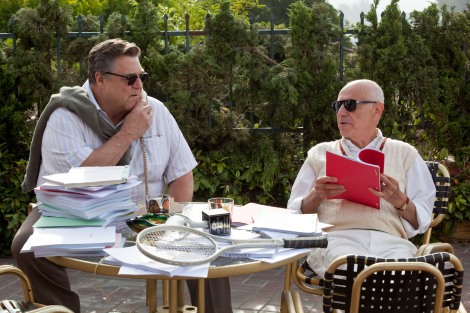
John Goodman, left, and Alan Arkin play Hollywood insiders who collaborate with the CIA in Argo.

Argo

What the Academy says:  7 nominations (Picture: Grant Heslov, Ben Affleck, George Clooney; Supporting Actor: Alan Arkin; Film Editing: William Goldenberg; Original Score: Alexandre Desplat; Sound Editing: Erik Aadahl, Ethan Van der Ryn; Sound Mixing: John T. Reitz, Gregg Rudloff, José Antonio García; Adapted Screenplay: Chris Terrio)

What the public says: $118.2M domestic boxoffice; $71.5M international (as of Feb. 1)

What Pete Hammond says: With its director Ben Affleck famously dissed by the directors branch, this extremely well-liked (if not loved) movie managed to land seven nominations overall, a good showing that keeps it in the race—and remember Affleck still got one of those noms as a producer of the film with Oscar veteran George Clooney and Grant Heslov. But can it become the first film since 1989’s Driving Miss Daisy to win best picture without a director nomination? Time will tell if it can and also if, oddly, it only wins best picture, considering the film is not really thought of as a frontrunner in any of the other six categories in which it is nominated. Now wouldn’t that be an Oscar twist for the ages?

What other awards say: 7 BAFTA noms, 2 Golden Globe Awards for best director and best drama, 2 CCMA wins for best picture and director, 1 SAG Award win for ensemble, PGA Zanuck Award, plus DGA and WGA noms.

What the critics say: “Mr. Affleck handles his own roles, on camera and behind it, with a noticeable lack of self-aggrandizement. He doesn’t show off with his direction or the performances, going for detail instead of bombast with eerie silences, traded glances, trembling gestures, and beaded sweat. (It’s a good guess that he’s committed the unnerving opening of Three Days of the Condor to memory.)”—Manohla Dargis, The New York Times

What the producer says: “We thought it would be a tricky film to market because it’s got an odd title, and it’s a very hard film to sell,” says Heslov. “On one hand, it’s a real nail-biter thriller, and on the other hand, there’s a lot of comedic moments. But it’s not a comedy. If you sell it as a comedy, people are going to be disappointed. So it was tricky, but I think the studio did a great job. We’re really happy with what they did with it.”

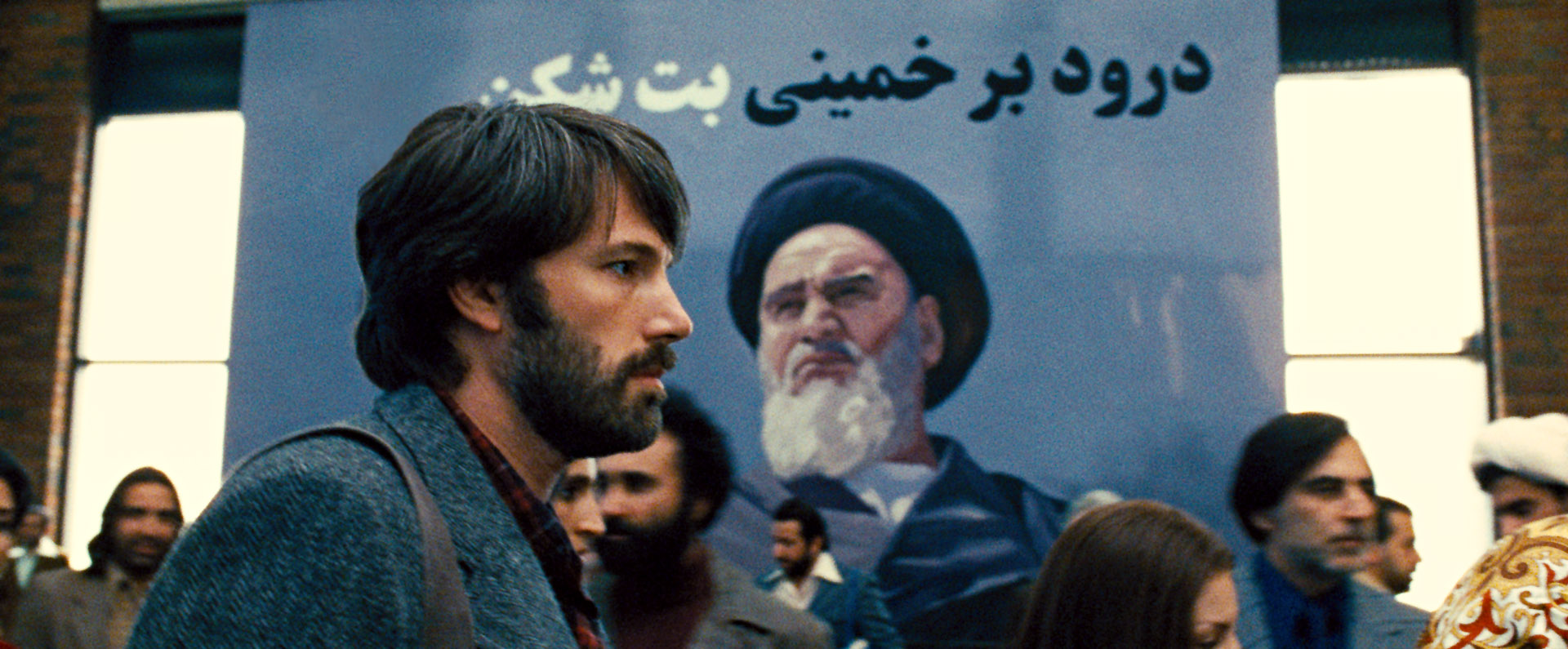
What the filmmaker says: “L.A. turned out to be our saving grace. Had we just stayed in Turkey, we would have been completely screwed because we couldn’t get any Farsi speakers,” Affleck says. “Then I was told there’s a huge population of Iranians here—they call it ‘Tehrangeles,’ and there are half a million Persians here. It was like realizing that you’re sitting on a gold mine. Not only that, but there’s this very robust theater tradition and acting history, and all these bilingual people. They really understood what you wanted in English, and they could do it well in Farsi. So we switched the airport scene (to L.A.), and we had 500 Persians in Ontario, CA, pretending to be stopping our houseguests from leaving Tehran. We had so much enthusiasm. For them it was like someone was telling their story. They knew the airport. They knew that the tile in the bathrooms was teal, to the point where I would go, ‘That’s good. We don’t need all that, we don’t have any scenes in the bathroom.’”

The French-language Amour follows a husband who must care for his ailing wife.

Amour

What the Academy says:  5 nominations (Picture: Margaret Ménégoz, Stefan Arndt, Veit Heiduschka, Michael Katz; Directing: Michael Haneke; Actress: Emmanuelle Riva ; Original Screenplay: Michael Haneke; Foreign Language Film: Michael Haneke [Austria])

What the public says: $1.8M domestic boxoffice; $13.1M international (as of Feb. 1)

What Pete Hammond says: One of the rare films to win both best picture and best foreign language film nominations (Z, The Emigrants, Life Is Beautiful, Crouching Tiger, Hidden Dragon were the others), Amour looks very strong with directing, writing, and lead actress bids as well. However, no foreign language movie has ever won best picture, and it is a long shot to think the Academy will award it both picture prizes since it is a foregone conclusion it wins in the foreign film category. An original screenplay win for writer-director Michael Haneke is probably most likely to be the only other Oscar category it could take, matching the feat of another film that starred Amour’s leading man, Jean-Louis Trintignant, when A Man and a Woman won both in 1966. But in a year with so many genuine contenders and the possibility of a widely split vote among as many as six films, could this one sneak in? It has a passionate fan base in the Academy, and anything is possible in this topsy-turvy year.

What other awards say: Cannes Film Festival Palme d’Or winner, 4 European Film Awards (best actor, actress, director, film), 1 Golden Globe win for foreign language film, 4 BAFTA noms, 1 CCMA win for best foreign language film, and an Indie Spirit nom for best international film.

What the critics say: “Considering Haneke’s confrontational past, this poignantly acted, uncommonly tender two-hander makes a doubly powerful statement about man’s capacity for dignity and sensitivity when confronted with the inevitable cruelty of nature. Acquired by Sony Pictures Classics before Cannes, this autumnal heartbreaker should serve arthouse-goers well—not for first dates, but for those who’ve long since lost count.”—Peter Debruge, Variety

What the producer says: “When I first met Michael Haneke, it was during the sound mixing of The Piano Teacher, and he said to me, ‘Perhaps we can do something together?’ I said, ‘I’m not sure I can spend two years of my life with cruelty and blood!’ And he let out this big Austrian laugh,” exclaims Margaret Ménégoz who has worked with him since 2003’s Time of the Wolf. But did she have any sway in terms of convincing Haneke to take on more humane films like Amour? “I don’t think so,” says Ménégoz. “He decided that.”

What the filmmaker says: “I don’t think I made a film about aging or dying, but rather in my personal life, I was confronted with the case of someone who I loved very deeply, someone in my family who was suffering very deeply, and I had to look on helplessly at the suffering. That led me to think about making the film. I could just as easily have made a film about a 40-year-old couple who is coping with a child dying of cancer, but however tragic that story would have been, it would have remained an individual case, whereas old age is something all of us are going to have to cope with at some point,” Haneke explains.

The Best Picture Contenders, Part 1

The first in a three-part series in which AwardsLine breaks down all nine of the best picture contenders. This article appeared in the Jan. 30 issue of AwardsLine.

LINCOLN
Lincoln leads in Oscar nominations among every other film in contention with 12.

Lincoln

What the Academy says: 12 nominations (Picture: Kathleen Kennedy, Steven Spielberg; Directing: Steven Spielberg; Lead Actor: Daniel Day-Lewis; Supporting Actor: Tommy Lee Jones; Supporting Actress: Sally Field; Adapted Screenplay: Tony Kushner; Cinematography: Janusz Kaminski; Original Score: John Williams; Film Editing: Michael Kahn; Production Design: Rick Carter, Jim Erickson; Costume Design: Joanna Johnston; Sound Mixing: Andy Nelson, Gary Rydstrom, Ronald Judkins)

What the public says: $168.0M domestic boxoffice; $14.5M international (as of Feb. 1)

What Pete Hammond says: From the announcement that Steven Spielberg was going to direct Lincoln, this one had the hallmarks of a film that defines what the Oscars are all about. The fact that it was not an easy road for the iconic director and his screenwriter, Tony Kushner, only adds to the gravitas of the whole project. And with Daniel Day-Lewis scooping up best actor awards left and right—plus a sterling cast of supporting players led by nominees Tommy Lee Jones and Sally Field—this one smells like a winner. With a leading 12 nominations, Lincoln is also in a good place statistically because usually it is a positive sign when a film lands the most nominations. In terms of ambition, scope, and achievement, Lincoln has been the one to beat all season long. Unfortunately, expected victories at some of the earlier awards shows, like the Golden Globes and Critics Choice Movie Awards, didn’t happen (although Bill Clinton’s ringing endorsement at the Globes couldn’t have hurt). Nevertheless, the guilds might bring it back full force. Or not. Still, if you had to design an Oscar movie from scratch, it would probably be this one.

What other awards say: 1 best dramatic actor Golden Globe for Daniel Day-Lewis; 3 CCMA wins for actor, adapted screenplay, and score; 10 BAFTA noms, including film, lead actor, supporting actor, and supporting actress; 2 SAG wins for lead actor Day-Lewis and supporting Tommy Lee Jones; and other guild noms from the DGA and WGA.

What the critics say: “This is politics as it is really played, yet few writers have found a way to make it as compelling as Kushner does here. That success owes in part to the extensive character-actor ensemble Spielberg and casting director Avy Kaufman have enlisted, repaying them with dramatic roles for not only Lincoln’s entire cabinet, but more than a dozen key allies and opponents of the 13th amendment.”—Peter Debruge, Variety

What the producer says: “What’s wonderful about Lincoln is that it’s a reflection of the political process, and it’s not an attempt to show which political party is better, rather recognize the scene of the political process,” Kathleen Kennedy says. “Nowadays, ‘politician’ has become a bad word, and politicians should be lauded because our political process works. You can see that the process is working. (In Lincoln), you recognize what the founding principles are behind this political process and how it defines us and how we get things done or shouldn’t get things done. That’s why politicians on either side, Democrats and Republicans, are going to see themselves in this—by talking to one another, stepping across the party lines and identifying what’s good for the country. That’s why they’re engaged in what this movie is about.”

What the filmmaker says: “I never saw it as a biopic. I sometimes refer to it as a Lincoln portrait, meaning that it was one painting out of many that could have been drawn over the years of the president’s life, but had I done the entire presidency, had I done his entire life, that would have qualified as a biopic. I don’t believe this is a biopic,” Spielberg explains.

Life of Pi deals with issues of faith and existence.

Life of Pi

What the Academy says: 11 nominations (Picture: Gil Netter, Ang Lee, David Womark; Directing: Ang Lee; Adapted Screenplay: David Magee; Cinematography: Claudio Miranda; Film Editing: Tim Squyres; Sound Editing: Eugene Gearty, Philip Stockton; Sound Mixing: Ron Bartlett, Doug Hemphill, Drew Kunin; Visual Effects: Bill Westenhofer, Guillaume Rocheron, Erik De Boer, Donald Elliott; Original Score: Mychael Danna; Original Song: “Pi’s Lullaby,” music by Mychael Danna, lyrics by Bombay Jayashri; Production Design: David Gropman, Anna Pinnock)

What the public says: $104.0M domestic boxoffice; $421.3M international (as of Feb. 1)

What Pete Hammond says: Ang Lee’s ambitious adaptation of Yann Martel’s bestseller Life of Pi certainly seemed to resonate with the Academy. The book—an extraordinary story of a boy and a tiger fighting for survival while stranded at sea—was once thought unfilmable and went through several directors in the process until Lee finally cracked the code of how to bring to the screen. Even more impressive is the fact that none of the film’s 11 noms were for acting, making this, along with 2003’s big winner Lord of the Rings: The Return of the King, the most nominated film to do it without the help of the actors branch. This triumph immediately took Pi from the outer fringes of leading contenders and put it in a position to really go for it. “Slow and steady” is how one Fox publicist put it, and, just for the technical achievement alone, it can’t be counted out of the running, although its best chances are in the below-the-line area and possibly for Lee.

What other awards say: 9 BAFTA noms, including film, screenplay, and director; 2 CCMA wins for visual effects and cinematography; 1 Golden Globe for Mychael Danna’s score; plus guild nominations from DGA and WGA.

What the critics say: “The movie does for water and the sea what Lawrence of Arabia did for sand and desert, and one thinks of what Alfred Hitchcock, who used 3D so imaginatively in his 1954 film of Dial M for Murder, might have done on his wartime Lifeboat had he been given such technical facilities.”—Philip French, The Observer

What the producer says: “It’s in keeping with the kinds of movies that I personally am interested in making,” says Gil Netter. “Most of my movies are all positive, they hopefully are putting something good into the world, they’re about something, there is a spirituality available to people if they want to read that into the material. These are all important things in the films that I want to make. This movie stoked all those things in strong terms.”

What the filmmaker says: “3D is very daunting. You cannot trust anything people tell you, because it could be wrong, because it’s so new,” Lee explains. “And the audience hasn’t had a relationship with that yet. There’s no regulation, there’s no set of mind to watch it yet. People think, ‘Ah, it’s like tricks.’ I think it’s time that people show respect to the medium as an artistic form.”

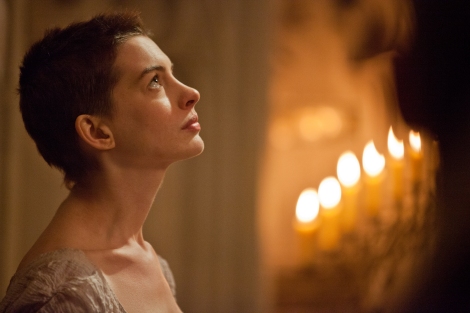
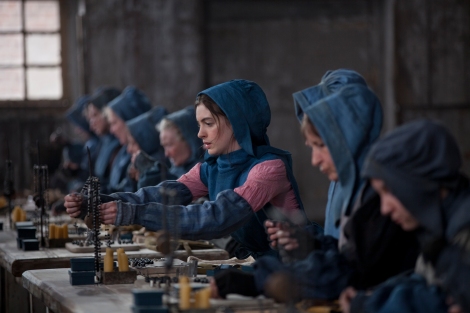
Anne Hathaway as Fantine in Les Misérables.

Les Misérables

What the Academy says:  8 nominations (Picture: Tim Bevan, Eric Fellner, Debra Hayward, Cameron Mackintosh; Lead Actor: Hugh Jackman; Supporting Actress: Anne Hathaway; Production Design: Eve Stewart, Anna Lynch-Robinson; Costume Design: Paco Delgado; Sound Mixing: Andy Nelson, Mark Paterson,  Simon Hayes; Makeup & Hairstyling: Lisa Westcott, Julie Dartnell; Original Song: “Suddenly,” music by Claude-Michel Schönberg, lyrics by Herbert Kretzmer, Alain Boublil)

What the public says: $138.7M domestic boxoffice; $175.7M international (as of Feb. 1)

What Pete Hammond says: Many thought this movie-musical adaptation of the long-running stage phenomenon would be the one to take it all based on the early ecstatic response to screenings over the Thanksgiving weekend and the fact that the cast sings live in the film. It is the kind of big-scale movie-musical that has won throughout Oscar history (though not in at least a decade), which added to the inevitability of a possible Les Mis triumph. But despite a nod from the DGA, the lack of a best director Oscar nomination for Tom Hooper and nothing from his native BAFTA dampened the film’s overall chances. Include the lack of a writing and editing nomination, and you have to go all the way back to 1931’s Grand Hotel to find a best picture winner that didn’t have at least one of those nominations. Its triumph at the Golden Globes certainly kept it in the race to fight another day, and its strong presence at PGA, SAG, and DGA was nothing to sneeze at, but a best picture win at this point has to be considered a long shot by conventional wisdom standards.

What other awards say: 3 Golden Globes for best musical/comedy film, best musical/comedy actor for Hugh Jackman, and a supporting actress trophy for Anne Hathaway; 4 SAG noms for ensemble, actor, supporting actress, and stunt ensemble; 1 CCMA for Hathaway; 9 BAFTA noms, including best film, best British film, plus noms for Jackman and Hathaway; and a supporting actress SAG Award for Hathaway.

What the critics say: “What helps make Les Misérables so vibrant and thrilling onscreen is Hooper’s daring decision to have his actors sing live. No mouthing the words to prerecorded songs. The actors wore earpieces to hear a piano give them tempo. A 70-piece orchestra was added later to bring out the beauty and thunder in the score, by Claude-Michel Schönberg, Alain Boublil, and Herbert Kretzmer. The risk pays off. The singing isn’t slick. It sometimes sounds raw and roughed-up, which is all to the good. It sure as hell brings out the best in the actors.”—Peter Travers, Rolling Stone

What the producer says: “This was one of the hardest films we’ve done,” says Eric Fellner. “It’s a genre that’s challenging by its very nature—people aren’t used to going to see a musical in a movie theater. Also, no one has ever done a live musical from beginning to end with no prerecorded music. We also had to make sure that in adapting Les Misérables, we didn’t alienate fans, and (in) having the original team, we were able to keep all the original DNA intact.”

What the filmmaker says: “There’s a moment where Jean Valjean achieves a kind of happiness where he sees that he’s done his only job in this life, which is to look after his girl, Cosette,” Hooper told Deadline Hollywood’s Mike Fleming Jr. “The moment offers us this feeling that one can transcend death, that there’s a way of coping with it that makes it meaningful. There’s a way of dealing with that moment that we’re all going to face and that will actually be a beautiful end. There’s something in that which is the secret as to why the musical’s been such a phenomenon. And we’re lucky that this film is tapping into that old-fashioned word, catharsis. It takes you to that place of suffering in your life, in your head, whether it’s the suffering of yourself, or the suffering of others, or suffering to come, and it has a way of processing it, so that you actually feel better about it by the end of the story.”

Anything Goes In This Year’s Oscar Race

Pete Hammond is Deadline’s awards columnist. This article appeared in the Jan. 30 issue of AwardsLine.

With less than a month to go, the stage is set for one of the strangest Oscar showdowns in memory. Certainly the season started with some clear favorites emerging, like Argo at Telluride, Silver Linings Playbook at Toronto, then Lincoln just after the election, followed by Life Of Pi. I thought Paramount’s Flight also might emerge as a major best picture contender around this time, but when critics awards and early nominations for Globes and CCMAs started coming in, it was clear this was mainly just a play for Denzel Washington and John Gatins’ original screenplay. At Christmas time, we got Zero Dark Thirty, Django Unchained, and the hotly anticipated Les Misérables to complete our seven-pack of best picture contenders. What many weren’t anticipating was that two small indie films that made a splash earlier in the year were also going to come in. Beasts Of The Southern Wild managed to hold on to all that momentum from its Sundance debut a year ago, and then Amour took Cannes by storm, winning the Palme d’Or and later travelling on the fall film circuit to Telluride and Toronto. That both were able to cash in that early 2012 awards goodwill and still make Oscar’s list was impressive, especially in the face of one of the most competitive and rich races for the ultimate prize in many years.

So what do we have? It’s as free-wheelin’ a race for Oscar as it can possibly be. Usually at this point, there are one or two strong contenders left in the hunt. Not this year. An argument can be made that, depending where the momentum shifts in the next month, it is almost anyone’s race, at least for best picture. But that also extends to some of the acting races (well, maybe not for you, Daniel Day-Lewis and Anne Hathaway) and even director, which has been turned on its head by the directors branch, who went their own way in snubbing DGA nominees Ben Affleck, Kathryn Bigelow, and Tom Hooper in favor of smaller films from Michael Haneke, Benh Zeitlin, and David O. Russell. At the very least, the directors have upended the race and made it a lot more interesting and less conventional. It is entirely conceivable that the guilds, which most closely reflect the Academy’s sensibilities, will further upend the race. In a year when so many movies are top quality and have their own unique constituencies supporting them, a split vote could produce some very nervous moments on Oscar night and some very unexpected results. Could a popular movie like Argo actually emerge as the best picture champ without winning any other Oscars?

It’s possible—not likely, but possible. Will the directing and picture categories split? Possible. Could Argo win DGA, Life Of Pi win best director at the Oscars, and Lincoln take home best picture? Who knows? It is a year where anything, and I mean anything, can happen.

And then there is the question of the earlier nominating period and online voting. The Academy assured me, perhaps because of all the publicity about snafus in the new voting system, that more members voted this time around than ever before. Will that continue through to the finals, especially now that there is a longer period, six weeks instead of four, between nominations and the Oscar show? Will the method of voting continue to be the story and could it affect the outcome in a razor-thin margin race like this one promises to be?

It has indeed been a rollercoaster ride for Oscar in his 85th year, and I have a feeling he’s got a few more surprises in store for us before this is all over.

Behind The Scenes On Les Miserables

Cari Lynn is an AwardsLine contributor. This article appeared in the Jan. 2 issue of AwardsLine.

When producers Eric Fellner and Tim Bevan of Working Title Films became guardians of the longest-running musical in history, they knew they were dealing with precious—and risky—material. Les Misérables, after all, has played in more than 40 countries and has been seen by more than 60 million theatergoers. But Fellner and Bevan were well aware that musicals adapted for the screen are tough sells at the boxoffice.

Anne Hathaway is the doomed Fantine in Les Misérables.

Over the decades, there had been numerous failed attempts at a Les Mis film adaptation, with Oscar-nominated director Alan Parker (Fame) coming close in the 1980s (he went on to direct the film adaptation Evita in 1996). “No one could unlock the key of how to do it,” explains lyricist Alain Boublil, who cowrote Les Misérables the musical with composer Claude-Michel Schönberg. But it was a series of fortuitous events that caused Working Title to think now might be the right time to make a film work: On Britain’s Got Talent, Susan Boyle breathed new life into the Les Mis song “I Dreamed a Dream,” not only creating a chart-topping hit from the musical for the first time, but also sparking a resurgence at the theater boxoffice. Plus, the original producer and musical-theater legend Cameron Mackintosh was planning Les Mis’ 25th anniversary concert at London’s 02 Arena, casting Nick Jonas as Marius, which would broaden the appeal to a whole new generation. “The collision of these events reopened the possibility of, yes, we could do the film,” Mackintosh says.
The Hollywood Foreign Press and Screen Actors Guild wholeheartedly agreed that the gamble paid off, bestowing four Golden Globe nominations (including best comedy or musical, Hugh Jackman for best actor, Anne Hathaway for supporting actress, and best original song), and four SAG Award nominations (including the coveted ensemble award, Hugh Jackman for best actor, Anne Hathaway for supporting actress, and stunt ensemble).

The original composers of Les Misérables wrote a new original song, "Suddenly," for Hugh Jackman to perform in the film.
Jean Valjean reinvents himself as a businessman, but still is pursued relentlessly.

Nevertheless, the phenomenon of Les Mis began humbly in 1978 when Boublil and Schönberg, two pop-song writers living in France, decided to collaborate on a story based on Victor Hugo’s 1862 tome. “We were caught by the virus of musicals, and in France there were no musicals, so we invented how one should be,” explains Schönberg. “I wanted to write a proper operatic score with a big subject and not songs that were linked.” Their stage production wasn’t long-lived, but a concept album made its way to Mackintosh, who was then producing Cats, and who immediately recognized the potential. With English translation by James Fenton and completed by Herbert Kretzmer, Mackintosh premiered Les Mis on the London stage in 1985, where it’s continuously run ever since.
When Working Title Films (Four Weddings and a Funeral, The Big Lebowski, Elizabeth: The Golden Age), which has a production deal with Universal, approached Mackintosh, everyone hoped this collaboration would stick. Working Title agreed that the original team of Schönberg, Boublil, and Kretzmer would remain intact, but screenwriter William Nicholson (Gladiator, Elizabeth: The Golden Age) was brought in to do an adaptation.
It was Nicholson who happened to mention the topic to director Tom Hooper while they were working together on another project, and Hooper rallied for a meeting with Mackintosh. Hooper at the helm didn’t seem the most logical choice—The King’s Speech hadn’t yet been released, and Hooper admits lacking musical credits. “I had not even directed a pop video,” he says. Although, he maintains he did have some musical experience. “At 10 years old, I was cast in two musicals, and through that, I discovered a love of musicals. I also learned I wasn’t a good actor, so I was glad to get that out of way.”
Just as Hooper had no musical experience, Mackintosh had no film experience, but they soon discovered they were on the same page. “When Tom and I first met, he spoke passionately about how he would do a film, and he felt it should be recorded live,” says Mackintosh. “I felt passionately about that, too. This was the clincher because Tom wanted to take what was a big leap in the dark.” In his musicals, Mackintosh had a penchant for bringing in directors with limited musical experience, such as Sam Mendes and Trevor Nunn. Moreover, Hooper had directed the HBO miniseries John Adams, which Mackintosh had admired for its large scale and gritty realism. “I’d been looking for directors over the years, and Tom came to me with a point of view, and I thought, This is the man to do it.” Working Title agreed and didn’t bother showing the script to any other director.

"Suddenly" was written specifically for the big-screen adaptation of Les Misérables.
“Suddenly” was written specifically for the big-screen adaptation of Les Misérables.

Over a year passed since the first meeting, and by this time, Hooper had won the Oscar for The King’s Speech. “I felt mightily relieved when Tom still wanted to do Les Misérables,” says Mackintosh. “We all met in New York, and Tom saw the chemistry between Alain, Claude-Michel, and myself—we go back 30 years.” This meeting inspired Hooper to pull the dialogue from the film, even though Nicholson’s adaptation had moved him to tears, and instead, do a complete version of the musical.
“Everyone was quite excited to go the braver route of honoring the way the musical was created,” says Hooper. “Musicals are a great game of consequence, of cause and effect, and so much would have to be thrown away to do it in a split form—you might risk losing the very thing that made it a success.”
Hooper put the original team to work modifying the score and composing a new song, “Suddenly.” “I don’t think Claude-Michel and Alain expected to be so involved,” says Hooper. “It was so exciting to realize I was literally re-creating the conditions under which the original creators are reunited. Fans would see that any changes had been done with the original creators’ input.”
The entire team was involved in all casting decisions as well, which included rigorous auditions for every actor. “Almost everyone cast was from the theater,” explains Mackintosh. “I had seen Sacha (Baron Cohen) and Helena (Bonham Carter) in Sweeney Todd, Hugh (Jackman) and I did Oklahoma!, and Russell (Crowe) I knew from when he left grammar school, and I saw him in musicals in Australia. I’d known Anne (Hathaway) personally for many years, and knew she was born into Les Mis [Ed. note: Her mother had performed the role of Fantine]. What Tom needed were people who were so comfortable in singing that they could reinterpret the songs with acting. This wouldn’t have worked with just straight actors.”

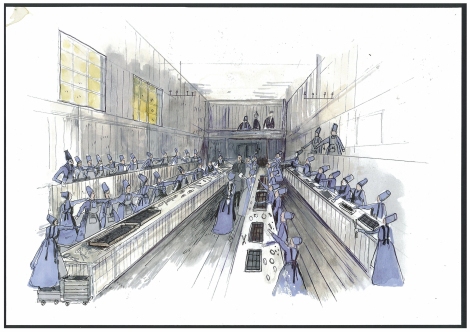
A sketch of the factory where Fantine (Anne Hathaway) works for Jean Valjean (Hugh Jackman) in Les Misérables.

For Mackintosh, the most challenging aspect was finding the balance between heightened drama, while still preserving authenticity. “It needed to seem real but with an element of style,” he says. “The style had to be similar to that of the musical, where we’re gliding in and out of spoken word and singing so seamlessly that you don’t realize they’re singing most of the time. Cinema is a medium of realism, and we had to find our brand of realism.” At one point, it was suggested to do the film in 3D, but Mackintosh vetoed that. “I felt it was already in 3D—we didn’t have to impose it.”
The live singing posed significant technical challenges, and each department had to work carefully together, creating, for example, costumes that didn’t rustle and floorboards that didn’t make any sound. “Nobody had done this before,” explains Schönberg, “and each department had to have the best people to make it work: The best musicians, the best conductor, to put music on the voices, it must be perfectly in sync.”
After several weeks of rehearsals, the 12-week shoot commenced, filming in historical locations throughout France and England and at Pinewood Studios outside of London.
The entire cast went through the ringer—almost literally in some scenes, with water from the cold Portsmouth channel pouring in over them. “The actors I chose were the kind who come unbelievably prepared,” says Hooper. “By the time we got to the shoot, they had already done more than I’d asked them to. They were conscientious, incredibly sensible, and lived like monks, or at least like opera singers. I promise you, it’s not anywhere near easy what they’ve done.”
The cast also benefitted by having the original team on set. “It was such a treat for us because Alain and Claude-Michel were there every day,” says Eddie Redmayne, who plays Marius, “and you got to ask them where something came from, or, if you did a reinterpretation of something, ‘Do you think that holds?’ ” Colm Wilkinson, who originated the role of Valjean both in London and on Broadway, had a cameo playing the kindly bishop, and many of the smaller roles went to actors from various companies of the musical.
“It was an amazing amalgam of brilliant people I was exposed to on Tom’s team, and my rehearsal team from the theater was there, and we worked in tandem,” says Mackintosh, who had joint final cut with Hooper and Fellner on the $61 million film. “It was a collaboration and couldn’t have been any other way. It was the best way.”

SAG Awards’ ‘Actors Stories’ Remain Enduring Tradition

Diane Haithman is an AwardsLine contributor. This article appeared in the Jan. 2 issue of AwardsLine.

And the winner was: Angela Lansbury.

When the Screen Actors Guild Awards first came on the scene in 1995, Lansbury was nominated for her role as Jessica Fletcher in Murder, She Wrote. She lost to Kathy Baker of Picket Fences.

But even though she did not go home with the Actor statuette, Lansbury’s introductory speech at the ceremony was such a hit that it launched a tradition that has become a highlight of the annual SAG Awards: the Actors Stories—unofficially known as the “I Am an Actor” speeches.

Lansbury gave the audience some background information on the new awards, but she also added a personal touch via a list of some of her more memorable roles: “I’ve been Elizabeth Taylor’s sister, Spencer Tracy’s mistress, Elvis’ mother, and a singing teapot.” She added: “Tonight is dedicated to the art and craft of acting by the people who should know about it: Actors. And remember, you’re one too!”

Then, as now, SAG Award winners have plenty of time to thank their agents, parents, partners, pets, and assorted deities for their success when they take the stage. But in an industry overwhelmed with awards ceremonies and endless opportunities for self-congratulation, the Actors Stories mark a refreshing change of pace, a chance for the TV audience to learn more about the craft of acting and the often-rocky road to stardom. And, for the all-actor crowd at the live awards, it was a chance to learn little-known facts about each other.

For the first eight years, the SAG Awards appointed one actor to make such a speech, says Kathy Connell, producer of the awards since their inception. That list includes such distinguished stars as John Lithgow, Ian McKellen, James Woods, Kathy Bates, and Whoopi Goldberg. Borrowing from Lansbury’s speech—or maybe Alcoholics Anonymous?—remarks have always included some variation on the phrase: “I am (name here), and I’m an actor.”

Goldberg’s 2000 speech illustrates the typical actor’s blend of pride and insecurity: “I’m an actor. I strut and fret my hour upon the stage, and I’ve done a lot of strutting because I am an actor. Am I the right age to play a mother? OK, I don’t sweat that one so much. Am I the right sex to play a Roman slave? Am I the right color to play a maid? Ha, ha. Is anybody going to believe that I could pass for a nun? Am I going to eat next week?”

For the ninth annual SAG Awards in 2003, Connell says supervising producer Gloria Fujita-O’Brien suggested replacing a single one- to two-minute speech with multiple Actor Stories of 15 to 30 seconds. The 2003 speakers included Alfred Molina, Kathy Bates (who confessed to starting her career as a singing waitress in the Catskills), Kristin Davis, Keith Williams, Halle Berry (who once dreamed of being an Olympic gymnast but “wasn’t quite good enough”), and David Hyde Pierce, who joked: “I’m still looking for a movie to do this summer. My name is David Hyde Pierce, and I’m an actor.”

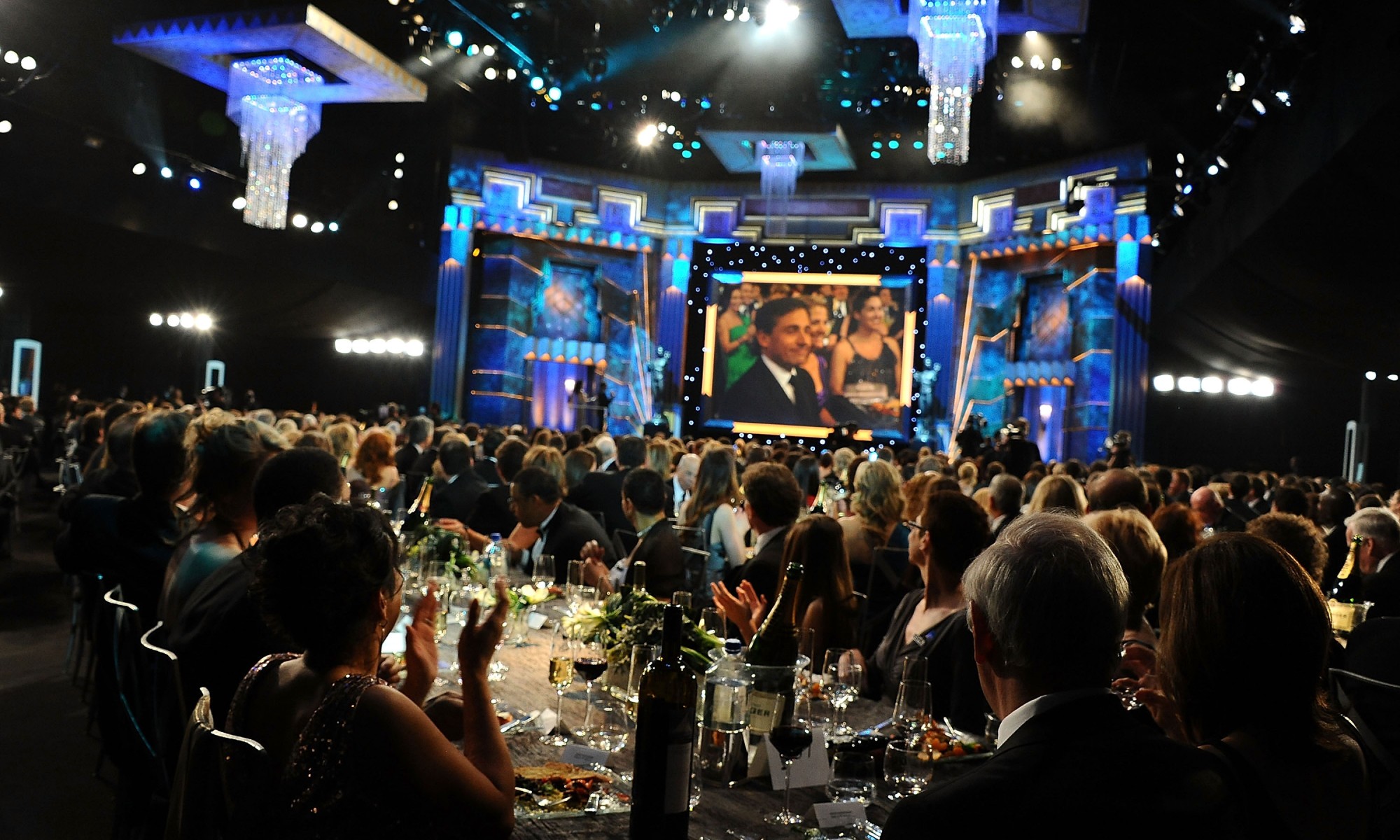
At the awards ceremony, attended only by actors and closed to the press, the actors sit at tables rather than in rows. Those chosen to speak deliver their Actors Stories from their seats. Executive producer and director Jeff Margolis says the actors who will speak are miked in the green room, and nobody, including their tablemates, knows in advance who will tell a personal story to the roving Steadicam.

“I think it’s sort of become our signature—we’re the only show that does it,” Margolis says. “It gives the actors a chance to do something other than thank 40 people that nobody knows. The people at home, as well as some of the other actors, don’t know how these people got started.”

In the years of the longer speeches, Writers Guild members wrote the comments with the actors’ input. Now actors provide their own material, giving the producers an advance copy. But that doesn’t mean there are no surprises, Connell observes. “They have thought about it, but it is also live television. Sometimes (the speech) gets tweaked, so we are all having a live moment.”

Some speeches are comic. Some are heartfelt. And some, like this 2004 Actor Story, are just plain bemused: “In 1978, I got my SAG card and since then I’ve been asked to give it back on six separate occasions. I’m Brad Garrett, and I don’t belong here.”

Behind The Scenes On HBO’s The Girl

Thomas J. McLean is an AwardsLine contributor. This article appeared in the Jan. 2 issue of AwardsLine.

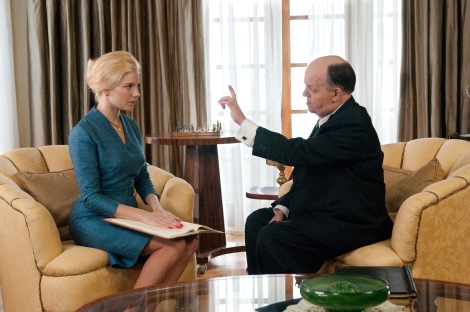
Alfred Hitchcock built his reputation as cinema’s undisputed master of suspense by using every tool and trick at his disposal to tell tales of powerless peril, circumstance, and betrayal—usually with a lovely blonde starlet front and center.

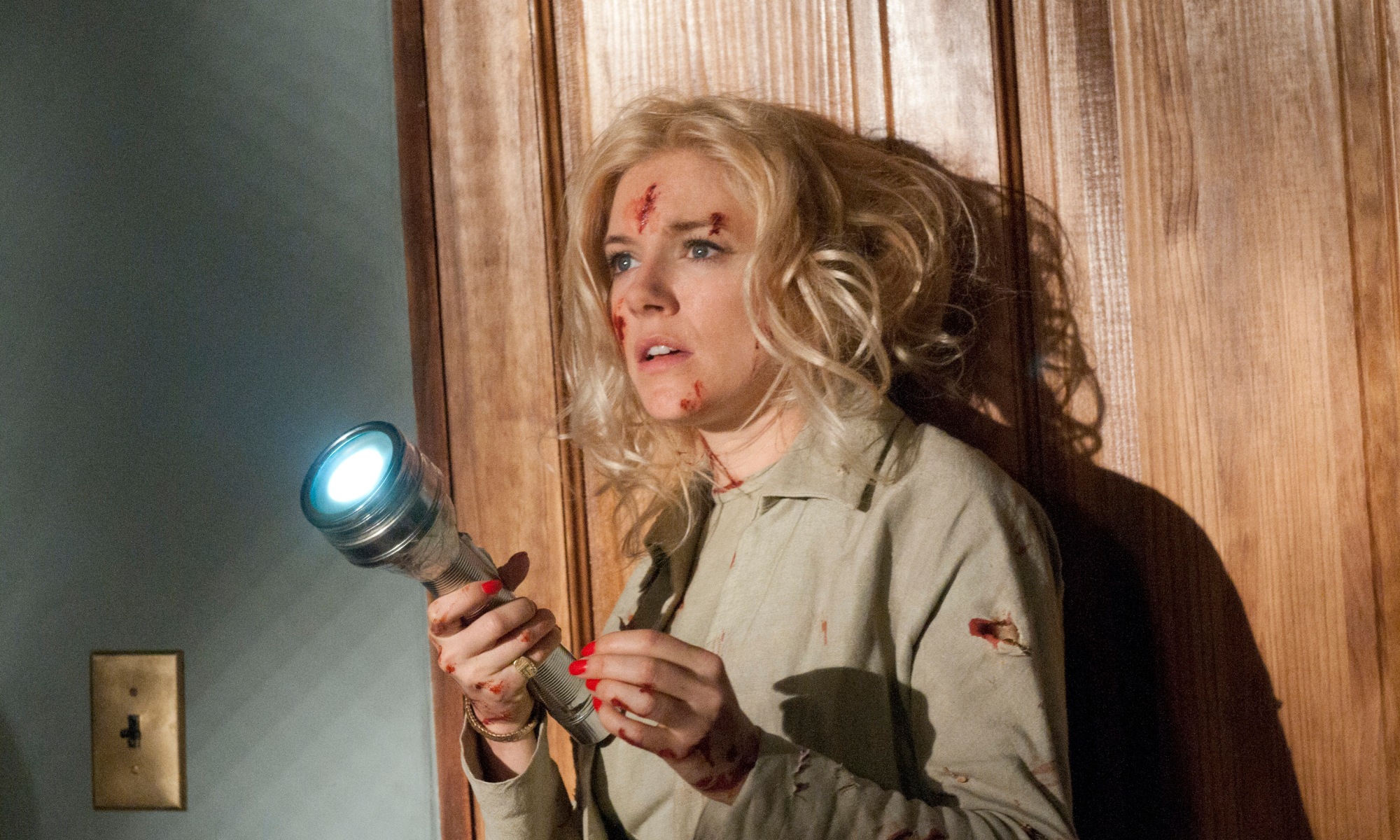
But the story behind the story has been revealed as appropriately Hitchcockian in its own way, as proven by The Girl, nominated for three Golden Globes for best TV movie or miniseries, best actor in a TV movie for Toby Jones’ portrayal of Hitchcock, and best actress in a TV movie for Sienna Miller’s take on actress Tippi Hedren.

The HBO Films and BBC presentation delves into the rocky relationship the director had at the height of his career with model-turned-actress Hedren during the making of The Birds and Marnie. Hedren’s relationship with Hitchcock, who had long developed a fascination bordering on obsession with his leading ladies, veered from charming and erudite into much darker territory that tested her limits.

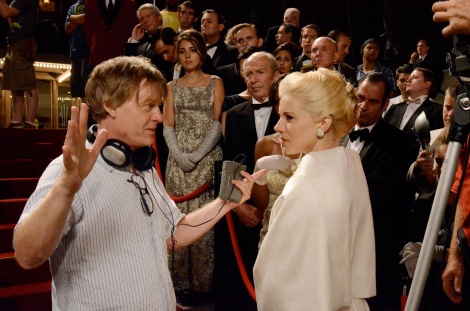
Director Julian Jarrold, left, on the set with Sienna Miller.

The story, which Gwyneth Hughes scripted based on Donald Spoto’s book Spellbound by Beauty: Alfred Hitchcock and His Leading Ladies, offered a way to explore both Hitchcock’s dark side and his creative impulses, says director Julian Jarrold.

“Hitchcock is such an extraordinary person to investigate based on his personality and his psychology,” says Jarrold, a veteran of British cinema and TV. “The kernel of the story seemed to be about his demons and obsessions, which also seemed to be reflected in his movies.”

To avoid playing just to the caricature of Hitchcock, the filmmakers turned to the chameleon-like qualities of Jones, who previously has played such diverse real-life roles as Truman Capote and Karl Rove. “He’s not ever going to do a straight impersonation,” says Jarrold.

A huge admirer of Hitchcock’s work, Jones says the role was impossible to turn down. “My concern was it would be a hatchet job on Hitchcock,” he says. “But I felt that what Gwyneth had presented in the script was this element of tragedy.”

In Miller, the filmmakers saw many of the same qualities of Hedren, who was a well-established model and independent single mother at the time Hitchcock cast her in The Birds. “There was something intriguing about her, with the kind of life history that she’s had, really, of being able to use that and be able to play against that,” Jarrold says. “She understood this character.”

Miller was drawn to Hedren’s reserved and almost icy, European quality. “I liked playing someone a little more contained than I had (played) in the past,” she says.

Toby Jones, right, plays the Master of Suspense in HBO's The Girl.
Toby Jones, right, plays the Master of Suspense in HBO’s The Girl.

The chance to meet and talk with the real Hedren, who had assisted Hughes in researching the script, was also exciting for the actress. “I’ve played real people before, but never anyone who could critique the performance at the end of it,” says Miller.

The 28-day shoot was set in Cape Town, South Africa, chosen for its resemblance to The Birds’ original shooting location of Bodega Bay, CA, in the mid-1960s. Jarrold says efficiency was the watchword on set, especially with Jones needing to undergo four hours each day of makeup, which included facial prosthetics, a fat suit, and wigs.

Jones studied recordings and footage of the director to get not just the way he moved but his iconic voice, which has elements of everything from cockney to California in it, the actor says. Once he had donned Hitchcock’s iconic suits and begun to speak like him, it was easier to stay in the role as much as 
possible on set.

“Toby would transform himself into Hitch, and we spent the day as those people,” says Miller. “He’s phenomenal, as everyone knows, as an actor, and imposing as Hitchcock. He was staying in character, but not in a way that was indulgent and creepy.”

The work on set was confusing in a fun way, Miller says, with the set itself being a set and having Jones play a director being directed by the real director. There also were moments where the pace of production and the darkening arc of the script made for some tension. “There were definitely moments where it was exhausting and nasty,” says Miller. “I think that isolation that she felt is really unpleasant, but at the same time, I had a real director who was really warm.”

Jones says the South Africa location brought the right amount of intensity to the tale. “To a visitor, there’s a certain uneasiness. You’re trying to work out the politics, and that feeds usefully into the work itself,” he says. “This is an uncomfortable story.”

Hitchcock’s famous directing style had some influence on Jarrold’s approach, but the director says he resisted the temptation to fill the movie with homages. “I wanted to give the atmosphere and feel of his style, the American style if you like,” he says.

He also moved more quickly, filming the famous attic scene from The Birds in a little more than three hours—a scene that took Hitchcock five days. “We just had it running in long shots,” Jarrold says. “It was almost like a live event.”

For Miller, the final nervous hurdle to overcome was when Hedren saw The Girl. “She was very complimentary and very supportive and very relieved,” says Miller. “She sent me this smashing email I will treasure forever.”

Q&A: Hayden Panettiere On Nashville

Diane Haithman is an AwardsLine contributor. This article appeared in the Jan. 2 issue of AwardsLine.

Hayden Panettiere, 23, began her career as a child actor on the soaps One Life to Live and Guiding Light, and met an untimely death as Kirby Reed in Scream 4. But she is perhaps best known as Claire Bennet, the high-school cheerleader with supernatural powers on NBC’s Heroes. She’s trying to change that girl-next-door image in ABC’s Nashville, portraying ambitious, conniving country-pop diva Juliette Barnes, youthful nemesis of old-school country star Rayna Jaymes (Connie Britton). Apparently the catfight chemistry is working: ABC recently handed the freshman series created by Callie Khouri (Thelma & Louise) a full-season order. And both Panettiere and Britton scored big at the Golden Globe nominations: Panettiere netted a nom for best supporting actress in a TV series, miniseries, or motion picture, and Britton is up for best actress in a TV drama.

AwardsLine: This role was a lot to take on with singing. What led you to accept the part of Juliette?
Hayden Panettiere: I love the fact that this character that Callie Khouri created is so multidimensional; there’s so many layers to her. But this was a big deal for me because I really wanted to break away from my character in Heroes. I’m so deeply blessed that I got to play that character, don’t get me wrong, but I knew after that character it would be an uphill battle for people to see me as anything besides the all-American cheerleader.

AwardsLine: As the episodes unfold, we find out Juliette has a dark past that influences her character, but it’s got to be sort of fun to play the bad girl.
Panettiere: Absolutely. But it’s more interesting when you get to play the bad girl with a heart, that back story, that thing that people can find sympathy for.

AwardsLine: What kind of relationship do you and Connie Britton share off camera? Do you try to maintain the tension by staying away from each other?

Panettiere: We definitely are close friends. I feel like the closer you are to somebody, the easier it is to really go after them (on camera) because nobody’s going to take it personally. It may sound silly, because you are acting, but some people are so Method that they won’t develop a relationship with the person they are acting across from. If this show goes on for years, that would be a very difficult person to try not to get along with. We get along brilliantly, and the closer we become, the more fun we have.

AwardsLine: Do you have any favorite “meow” moments?
Panettiere: What we have to say comes off so snarky sometimes! I mean, when they yell, “Cut,” we don’t exactly call each other names, but it cracks me up when Rayna calls me Miss Sparkly Pants.

AwardsLine: If this show lasts for multiple seasons, wouldn’t these two women eventually make peace with each other?
Panettiere: I think you’d be surprised as to the reasoning behind why people don’t get along. I’m not saying I know anything specific, but I have a feeling that there’s something personal, some nerve that Rayna has in her, and at some point people might see that and understand it. But the show does not revolve around this catfight. You cannot survive on a show where the entire thing is revolving around one catfight. You have to bring in something else to sink your teeth into. We have a lot more going on.

AwardsLine: You mention taking on the role because of the multifaceted character Callie Khouri created. What is your impression of her?

Panettiere: She is unbelievable. She is by far one of the coolest but most talented people that I’ve ever come across. I just remember seeing her for the first time, and she was just this long, lean, statuesque woman with the beautiful hair and cream-colored pants and top, these brown riding boots. I just remember being in awe of her, and just how beautiful she was. She has made this show everything that it is. It’s so grounded, and this reality and this world, because Callie has lived in it. She’s experienced it; she’s not somebody who has only heard about it in books and movies.

AwardsLine: With its look at showbiz behind the scenes, does Nashville take its cue from NBC’s Smash?
Panettiere: All of our songs are incorporated into these characters’ daily lives. We don’t break out in song midscene.

AwardsLine: Has anything been said or written about the show that you disagree with?
Panettiere: The only thing that ever kind of drove me crazy was in the beginning there was a lot of speculation that Juliette was completely untalented—it was almost like what was going on behind the scenes of our press was also going on behind the scenes of Juliette’s press. People don’t see her as a true artist, somebody who is talented, they see her as this big moneymaking machine, and she wants so desperately to be respected, for people to know that she is an amazing songwriter and that she can sing. I don’t feel like she would be as interesting a character if she had no talent. She would just be annoying.

Q&A: Connie Britton On Nashville

Diane Haithman is an AwardsLine contributor. This article appeared in the Jan. 2 issue of AwardsLine.

Connie Britton, 45, is a multiple Emmy Award nominee for her roles on Friday Night Lights and American Horror Story. But during one of her typical 16-hour workdays for ABC’s freshman drama Nashville, she says of her first Golden Globe nomination—for best actress in a TV drama series—that it never gets old: “I’m far from jaded about awards nominations.” Britton shares the honor with costar and fellow Golden Globe nominee Hayden Panettiere, 23, and talks about why their onscreen duet seems to work.

AWARDSLINE: What is the appeal of the uneasy relationship between your character, Rayna Jaymes, and her young competitor, Hayden Panettiere’s Juliette Barnes?
CONNIE BRITTON: I was talking to (Nashville creator) Callie Khouri last night, and we were both talking about just how much fun it is, particularly now that Hayden’s character and my character are really engaging. What’s funny to me is, in the first five or six episodes, we didn’t really engage that much. There is something really interesting about these two women in very different places in their lives who are fighting for their lives in different ways.

AWARDSLINE: We hear stories about actors who go to unusual lengths to stay in character on set—fellow Golden Globe nominee Daniel Day-Lewis in Lincoln is a good example. What about you two?
BRITTON: No. (Laughs.) I think Daniel Day-Lewis is one of the greatest actors that we have amongst us right now, but I don’t think if Daniel Day-Lewis was doing television, he could sustain that. We have 22 episodes.

AWARDSLINE: Before the show aired, everyone hailed it as a new Dallas. Is Nashville a soap opera or close to reality?
BRITTON: At first, I resisted the over-the-top elements of the show, and I was really pushing for complex storytelling because I think Nashville deserves that. That being said, there are some big stories in Nashville. Having a spent a little time in Nashville, hearing some of the lore of this town, I’m saying: “We’re playing it safe.”

AWARDSLINE: And yet it’s not the big platinum hair, Dolly Parton, “Rhinestone Cowboy” world.
BRITTON: I really wanted Rayna to be coming from that more simplified core storytelling place of a Bonnie Raitt or a Lucinda Williams. Such amazing women.

AWARDSLINE: How does Nashville compare with another heightened reality you are familiar with, Hollywood?
BRITTON: A friend of mine here, we were talking about the Country Music Awards, and she was saying, “It’s just like an awards ceremony in Hollywood, but everybody’s nice.” I sort of love that. Nashville is where the business is; there are more parallels with Hollywood than I originally thought. But it feels less cutthroat than Hollywood. And frankly, it’s a much smaller town where people have to live together. In Hollywood you can kind of screw somebody over and not really have to see them for a while.

AWARDSLINE: Callie Khouri has been involved in many projects, but I think many women associate her with writing Thelma & Louise, about two women literally on the road to self-empowerment. Are there any parallels here?
BRITTON: I am, and was, and always will be an enormous fan of Thelma & Louise. I really grew up with that being a seminal movie for me. So I’ve always known who Callie Khouri was; that’s why I was so excited when I got this script. Hers is an interesting kind of feminism. It’s not in your face. (In Nashville), it’s dealing with the complexities of being a woman in a society that really isn’t built for feminism. That’s what I’ve always liked about playing Southern women; some of the most fierce women I’ve known were women from the South, yet they are coming from a world that is not very welcoming to their fierceness. I think Callie really confronts those aspects of feminism in a really unique way. It’s a little subversive, actually.

AWARDSLINE: As Hayden Panettiere has said, the show wouldn’t be believable if her character were a truly bad singer. She has to be good or your character would not feel so threatened.
BRITTON: Yeah, completely. It’s not about good voice, bad voice; it’s about style and values and really the culture. Rayna comes from a tradition of country music, and Juliette is feeding into a sort of a pop-culture frenzy, she is representing this new way that people listen to things and look at things based on new media—there’s a lot less storytelling and a lot more bling. Rayna doesn’t really understand it or respect it, but she’s kind of getting knocked on her ass by it, because basically everybody’s saying, “You’ve got to pick up these new ways or you are going to be left behind.”

AWARDSLINE: Did you have any trepidation about not only taking on a singing role, but the role of someone who is supposed to be one of the great country voices of our time?
BRITTON: Terror. It was horrifying. Because I am the least-trained singer in the show, it was really important to me to be really specific about the type of music Rayna sings. It had to be more about the heart and the soul that she brings to the songs than about having the best voice in the world. Honestly, I would never have taken the role if I thought that it would be any other way.